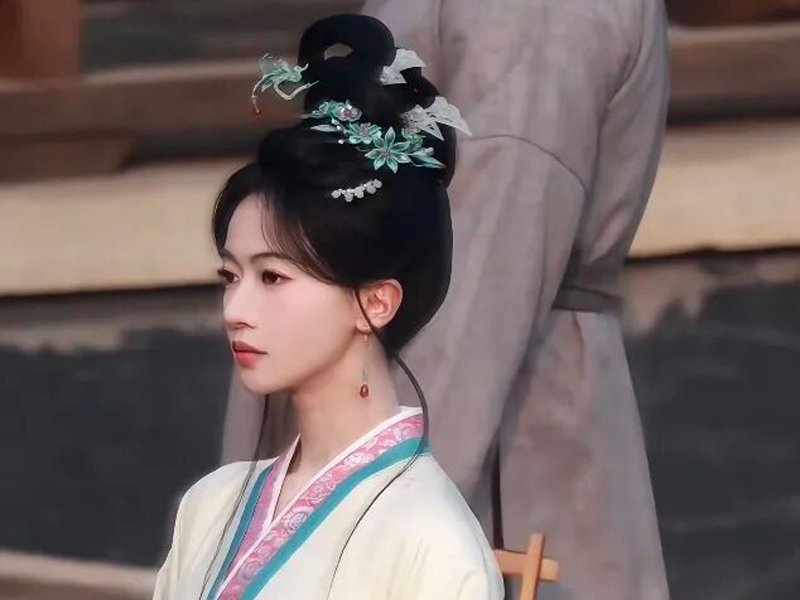
Is Wu Jinyan's (吴谨言) messy hair in the Wei-Jin (魏晋) Dynasty drama Feng Bu Qi (凤不栖) a sign of a brothel lady? Actually, those loose strands flying around her head have a formal name. They are not a stylist's mistake but a forgotten ancient fashion. This article explores why women in the Wei-Jin period loved this "untidy" look, how it reflects their free spirit, and why modern TV dramas are bringing it back. You will learn about Fen Shao (分髾), a hair tail that defied strict grooming rules, and see how a little mess can tell a big story about cultural tolerance. No pinyin, just the real history behind those weird but wonderful strands.
What Is Fen Shao?
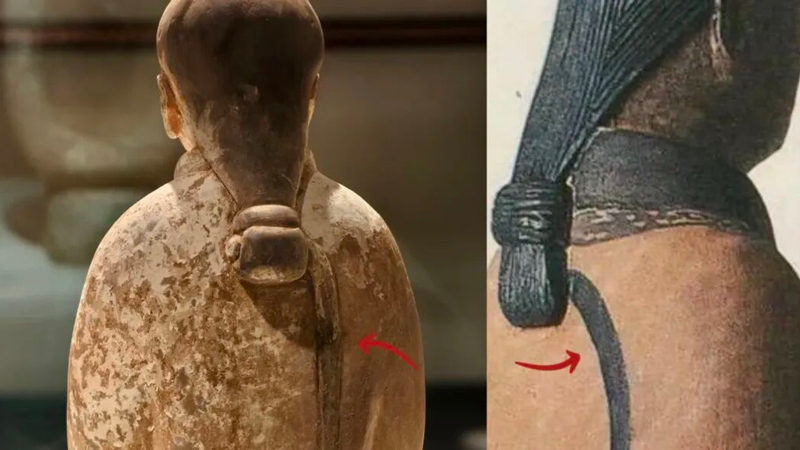
When you tie your hair today, you usually tuck away every loose strand. But in the Wei-Jin Dynasty, leaving a few ends dangling was a deliberate style. Historians call it Fen Shao. The word "Shao" literally means hair tail, as recorded in ancient dictionaries like Guang Yun (广韵). Imagine pulling your hair into a bun, and some shorter pieces naturally fall around your ears or neck. That natural fallout is one form of it. But the Wei-Jin people took it further—they designed extra hair ends to stick out on purpose, like tiny feathers or soft curves.
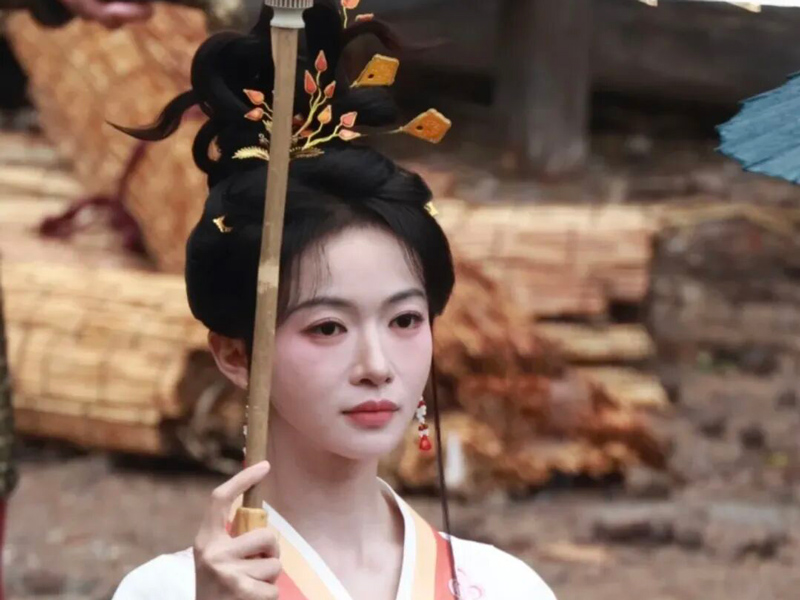
These tails appeared in different places: some hung by the ears, some sprouted from the top of a bun, others curved gently from the back of the head. Paintings and clay figurines from that era always show these small details, even when artists simplified other parts of clothing. They loved drawing those flying ends as if the hair was dancing in the wind. So no, it was not a lazy hairstylist. It was a feature, not a bug.
But why would anyone want messy hair? Today, we brush and spray our hair to keep it neat. Ancient societies often judged a woman’s character by her tidy appearance. Leaving loose strands could get her labeled as low-class or even working in a brothel. Yet the Wei-Jin period said, "Not so fast." They turned that "mess" into an art form. That is why Wu Jinyan's look in Feng Bu Qi is not a random mistake—it is a historical wink.
Wei-Jin's Open Mind
To understand Fen Shao, you have to look at the bigger hair timeline. In early Western Han (汉), women wore low buns with natural hair ends hanging down—not designed, just leftover from tying. As hairstyles moved toward high buns in the late Eastern Han, those leftover tails became more visible. The Wei-Jin period sat right in the middle of this transition. Society had not yet made rigid rules about "clean" hair. So what was once an accident turned into a fashion statement.
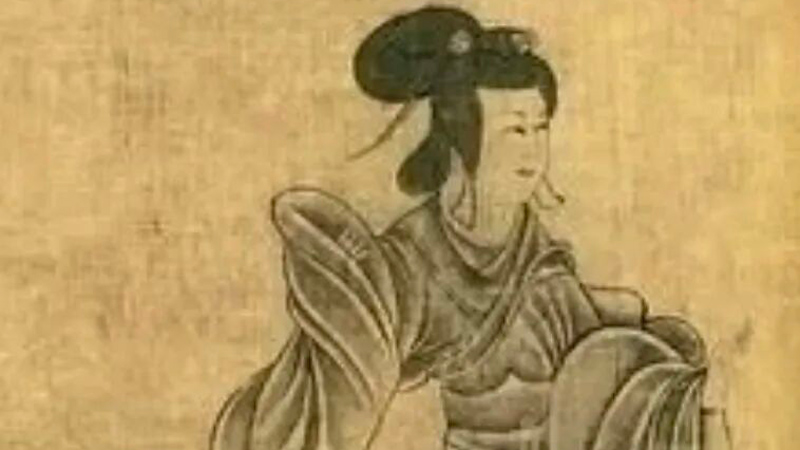
This was also a time of wild cultural exchange. The Wei-Jin people are famous for their free-spirited, almost rebellious attitude. They loved wine, poetry, and escaping strict Confucian norms. Some historians say Fen Shao reflected that inner freedom—a refusal to tie everything down. Painters even exaggerated those hair ends, making them look like dragons or phoenixes dancing. You can see it in tomb murals and figurines: women with high buns and small, playful strands floating around their faces. It was not just hair; it was a mood.
But tolerance had limits. After the Wei-Jin, dynasties like the Song (宋) brought back strict rules, especially under Neo-Confucianism. A woman with loose hair then would indeed face shame. So Fen Shao disappeared from mainstream fashion. However, it never fully died. A more complex version called Bu Liao Sheng Ji (不聊生髻) appeared in legends—though scholars still argue about its exact name. That style separated hair into many strands, each ending in a unique tail. Even today, it looks bold and strange. That is the magic of Wei-Jin: they dared to let hair fly free.
Dramas Bring It Back
When Wu Jinyan appears in Feng Bu Qi with those famously "weird" strands, she is not making a mistake. The costume team researched Fen Shao and brought it to life. This is what historical drama should do: not just pretty faces but real details from the past. By using those loose hair ends, the show creates a sense of time and place. Viewers feel like they are seeing a real woman from the Wei-Jin, not a modern actress in fake ancient clothes.
This kind of detail also teaches us something important. Respecting historical aesthetics means accepting that different eras had different ideas of beauty. What looks messy to us might have been elegant back then. The Wei-Jin people valued naturalness, individuality, and a bit of chaos. Their Fen Shao was a quiet rebellion against over-grooming. Modern costume designers who copy this style are not just being creative—they are being historians. They help us see that ancient Chinese fashion was never boring or uniform.
So next time you watch Feng Bu Qi and see those flying strands on Wu Jinyan's head, do not call it a brothel style. Call it by its real name: Fen Shao. It is a tiny piece of history that survived thousands of years. And if you ever try a traditional Wei-Jin hairstyle yourself, remember to leave a few ends loose. That small mess carries the spirit of an entire era—bold, free, and beautifully uncombed.