
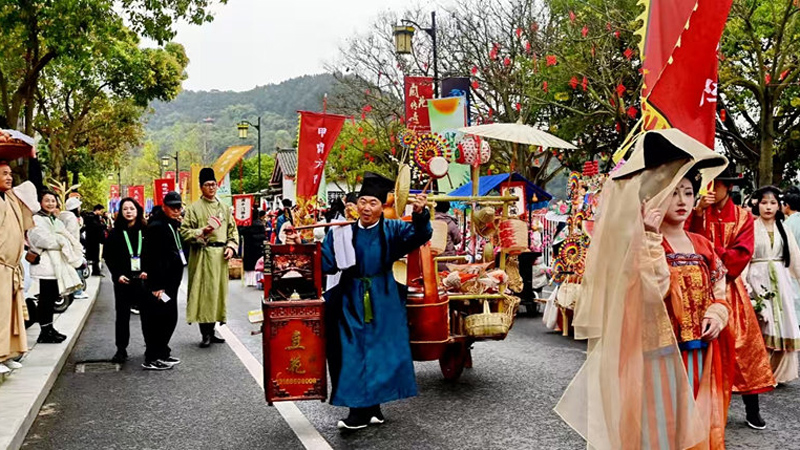
In late spring 2026, along the banks of the Jialing River (嘉陵江) in Lang Zhong (阆中) Ancient City, Sichuan, a 35-day cultural event brings the imperial examination era back to life. From March 31 to May 4, the Lang Zhong Hanfu Festival invites thousands of enthusiasts to walk where two pairs of brother Zhuang Yuan (状元)—the top scholars of the Tang and Song dynasties—once studied. As visitors wander through the ancient Imperial College and Confucian Temple, they see people dressed in flowing robes. But this raises a curious question: what did the actual candidates wear when they took the empire‑deciding exams over a thousand years ago? Let us step into the white, green, and belted garments of those who dreamed of changing their fate through ink and brush.
Tang Dynasty: The White Robe Dream
In the Tang era, a scholar who had not yet passed the Jin Shi (进士) examination remained a commoner. According to Wang Dingbao’s (王定保) Tang Zhiyan (唐摭言), such hopefuls were respectfully called “White‑robed High Officials” or “First‑Rank White Shirts.” Their uniform was a white round‑collared robe with narrow sleeves, tied at the waist, and worn with a black Futou (幞头) cap and high leather boots. This was the standard “casual wear” for all non‑official men, but on exam candidates it carried a special aura.
An excavated Tang pottery male figure from Yang Sijian’s (杨思勖) tomb in Xi’an shows the exact shape: a long robe reaching below the knees, a round collar, and a simple belt. What distinguished a scholar from a farmer or merchant was not the cut but the color—pure white. The fabric was hemp or coarse silk, affordable for poor families. Yet society already saw him as a future noble. He might have only a bamboo book basket and a single brush, but that white robe held the promise of “morning in humble cloth, evening in purple and gold.”
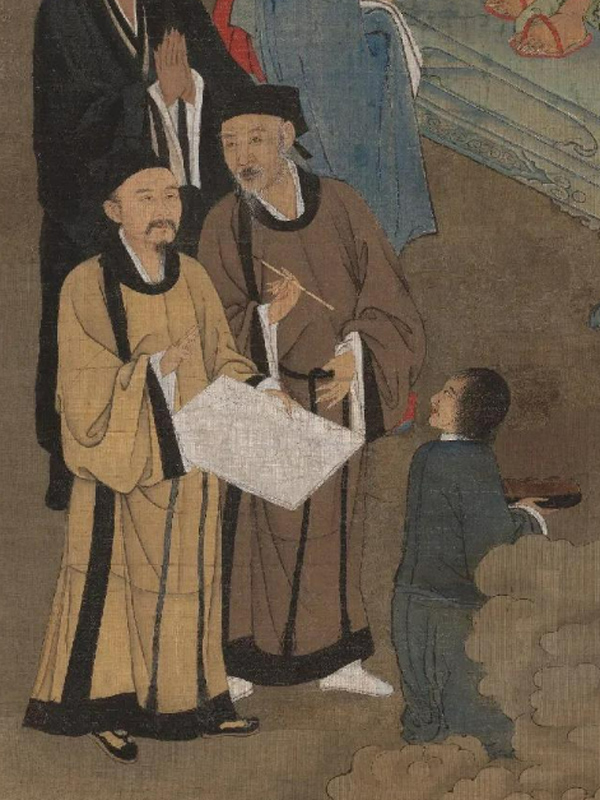
The dream was real. Many Tang prime ministers started as such white‑robed candidates. The robe was a blank canvas for ambition. It said: I have nothing but my mind and my will. And because the examination system was open to almost all free men, that white robe became a symbol of social mobility unseen anywhere else in the medieval world. It did not shout wealth. It whispered hope.
Song Dynasty: The National Scholar Uniform
By the Song Dynasty, the government standardized the scholar’s look. The Lan Shan (襕衫), or “belted robe,” became the official uniform for every student in county and prefectural schools, as well as for Ju Ren (举人) and Gong Shi (贡士) traveling to the capital. The Song History (宋史) describes it precisely: made of fine white linen, round‑collared with wide sleeves, and featuring a horizontal seam—the Lan—across the lower section, plus pleats at the waist.
Why that extra seam? It was a nostalgic tribute to the Han dynasty Shenyi (深衣), a traditional deep‑gown. The designer cut the robe and sewed it back together just above the hem, creating a clear visual division between upper and lower garment. This belt line was pure ritual, not function. But it gave Song scholars a look both ancient and fresh. Paired with a soft cloth cap and cloth shoes, the Lan Shan turned every exam candidate into a walking emblem of Confucian discipline.
And it was truly national. From the cold northern plains to the humid southern rivers, young men wore the same white belted robe to take the same multi‑day exam in sealed cells. The uniform erased regional differences. It made them one brotherhood of test‑takers. When you saw a line of Lan Shan entering the exam hall under torchlight, you knew: the empire’s future leaders were about to sweat over classical texts and policy essays. No armor, no silk—just linen, ink, and ambition.
Commoner to Official: The Green Robe Honor
Unlike Tang officials who needed a second round of selection, Song Jin Shi graduates received official posts immediately. And with that post came a new wardrobe. Emperor Taizong (太宗) decreed in 977 CE: every new Jin Shi shall be awarded a green robe, boots, and a wooden tablet. This green robe was identical to the uniform of a seventh‑rank or higher official. So the ultimate fantasy for any Song scholar was “enter in linen, exit in green.”
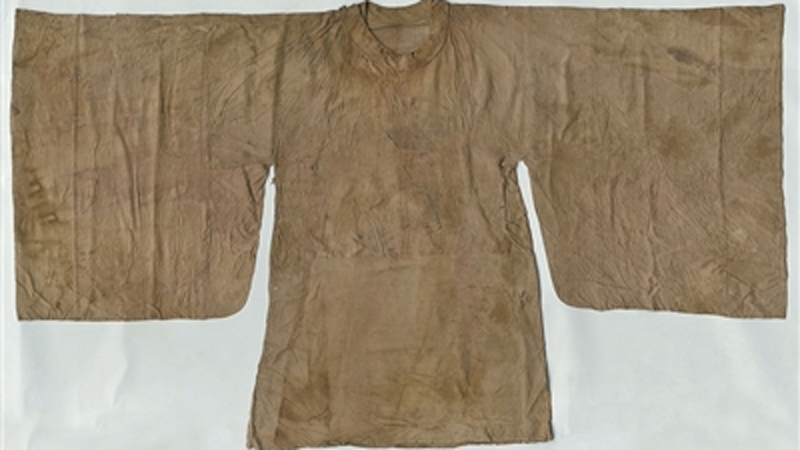
One stunning artifact proves this. In 2016, a tomb in Huang Yan (黄岩), Zhejiang, belonging to a Southern Song official named Zhao Boyun (赵伯澐), yielded the only complete set of Song civil servant’s formal wear ever found. He held the rank of eighth‑grade Wenlin Lang (文林郎), and his robe was originally bright green—the color for officials of rank six to nine. Centuries of groundwater turned it brownish‑yellow, but the shape, the tablet, and the wooden Hu< all match historical records. It is the real green robe of a real exam‑winner.
Putting on that green robe meant more than a promotion. It meant your parents were honored, your village proud, and your future secured. It was the color of passing the test of a lifetime. Today, at the “Lang Zhong Hanfu Festival”, young men and women don white Lan Shan to sit in the replica exam hall of the North Sichuan Road Imperial College. Others wear green robes and walk under the Zhuang Yuan Archway engraved with the names of past top scholars. They are not taking exams. But they are connecting with a thousand‑year‑old spirit: that a simple piece of clothing can carry the weight of dreams, family, and a civilization’s faith in merit over birth.
