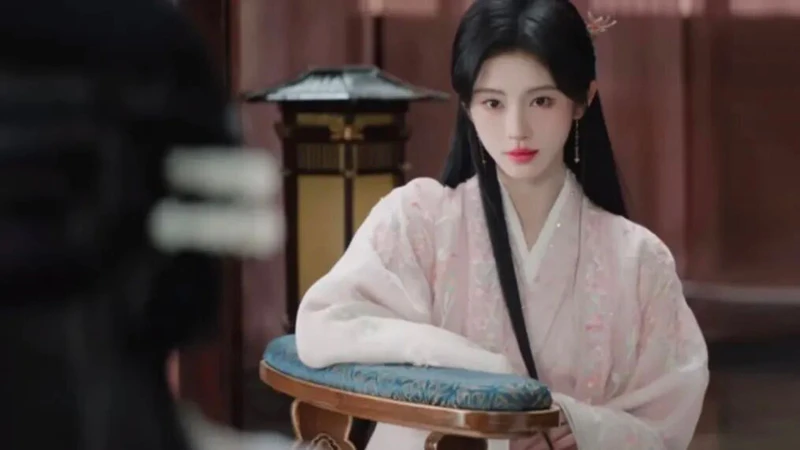
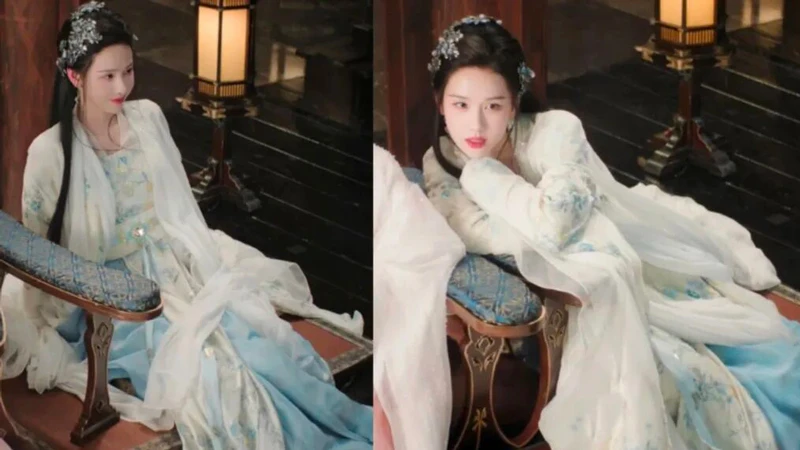
Have you noticed how characters in Chinese dramas never seem to sit straight? In Veil of Shadows (月鳞绮纪), Ju Jingyi (鞠婧祎) as Lu Wuyi (露芜衣) leans lazily on what looks like a chair armrest. The same thing appears in The Legend of Shen Li (与凤行), Nirvana in Fire (琅琊榜), and The Story of Minglan (知否). It looks comfortable—almost too comfortable. But here’s the catch: that thing isn’t a chair at all. It’s an ancient piece of furniture called Yinji (隐几), also known as Pingji (凭几) or Yiji (倚几).
Think of it as a portable sofa armrest from thousands of years ago. People placed it on a bed or mat, leaned an elbow on it, and instantly felt like they were floating. No back support, no cushion—just a wooden frame that somehow works. And the best part? It was designed to be moved outside. So next time you see a historical drama character slouching in perfection, know that they’re not being rude. They’re just using the original lazy tool.
The ‘Lazy Rest’ Explained
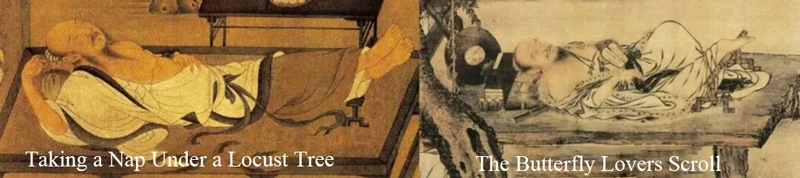
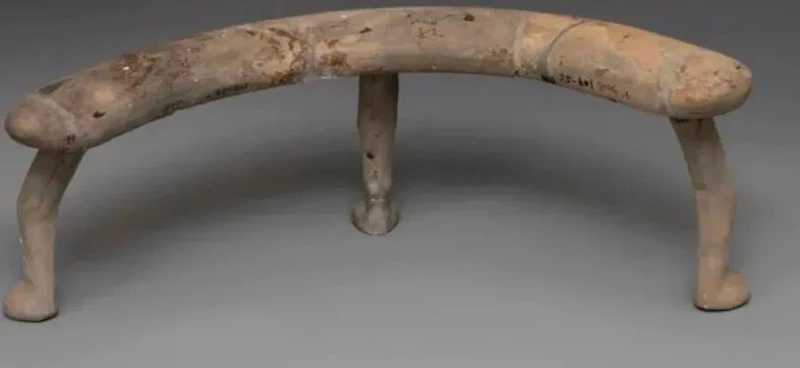
The earliest record comes from Zhuang Zi (庄子), specifically the chapter “On the Equality of Things,” where a master sits while leaning on a Ji. That’s over two thousand years ago. The Yinji had either two or three legs, making it easy to carry around. It wasn’t just for leaning, either. Some people used it as a footrest. If you look at the Song Dynasty painting Taking a Nap Under a Locust Tree (槐荫消夏图), you’ll see a scholar with his feet propped up on something that looks exactly like today’s footstool. Others placed it under a low table to stabilize their posture while reading. Imagine a stretched-out camping stool that also holds your books. That’s the Yinji.
But here’s what’s wild: it wasn’t always a resting tool. In the Zhou Dynasty, the Ji was a ceremonial object. Kings placed it next to their thrones, but they never actually leaned on it. It was pure status—a piece of furniture that said, “I’m so important I don’t need to be comfortable.” Nobody touched it. It just sat there, looking noble. That changed by the Warring States period, when people realized leaning is way better than looking important.
By the Tang and Song Dynasties, scholars had fully embraced the Yinji as a lifestyle device. They’d lean on it and do nothing. Literally nothing. Just stare into space, arm resting on wood, brain on airplane mode. It became the ultimate symbol of “lying flat” before the term even existed. One Song Dynasty text even gave it a nickname: Lanjia’er (懒架儿), which translates to “Lazy Rest.” That’s right—ancient Chinese people called it the lazy thing. And they loved it.
A History of Leaning
The Yinji wasn’t always curved. Early versions were straight, which meant they weren’t very ergonomic. But during the Wei and Jin Dynasties, a three-legged version with an arc appeared. That arc followed the natural curve of the human body. Suddenly, leaning became a science. You could put it in front, on the side, or even behind your back. It paired perfectly with the Ta (榻), a low bed-like platform. Together, they formed the ultimate chill zone for Scholars of the Wei and Jin Dynasties. If you put one on a modern tatami mat today, you’d never get up.
Then there’s the story from Mencius (孟子). The philosopher Mencius didn’t want to talk to someone, so he leaned on his Ji and pretended to sleep. The text says: “He sat and spoke, but received no reply. He leaned on his Ji and lay down.” That’s the ancient equivalent of putting on headphones and ignoring your roommate. The Yinji became a tool for polite avoidance. And in the Song Dynasty text Xuanhe Yishi (宣和遗事), an emperor rests on his Lanjia’er while taking a break. It was everywhere—from royal chambers to scholar studios.
The poet Bai Juyi (白居易) wrote a whole poem about it. In “Yinji Zeng Ke” (隐几赠客), he describes leaning on his Ji, holding a scroll of books, and sipping wine. He gave one to a friend as a gift—not because it was expensive, but because it carried a feeling. “Take this,” he was saying. “And remember to slow down.” That’s the kind of friendship ancient scholar-official valued: one that reminded you to lean back and breathe.
Why You Need One Now
Look at your own life. When was the last time you just leaned? Not scrolled. Not worked. Just leaned. Modern people are too busy even to slouch properly. We sit on expensive office chairs with lumbar support and still end up with back pain. Meanwhile, ancient scholars leaned on a wooden stick and felt great. Why? Because they weren’t trying to be productive every second. The Yinji wasn’t about ergonomics. It was about permission—permission to stop, to rest an arm, to stare at a tree and think about nothing.
You don’t need to buy an antique. Look at how people throw themselves onto sofa armrests today. That’s the modern Yinji. That sideways slump, one leg up, phone in hand—that’s your inner ancient scholar saying, “I’ve earned this.” The difference is, we feel guilty about it. We call it lazy. They called it a lifestyle. The Chinese saying “better to channel than to block” applies here. If you’re tired, rest. If you’re stressed, lean. Forcing yourself to sit straight won’t make you more productive. It’ll just make you more tired.
So here’s the takeaway: lying flat isn’t new. Leaning lazily isn’t shameful. It’s ancestral. The next time you catch yourself drooping over the couch armrest, don’t straighten up. Just smile and say you’re practicing an ancient tradition. Your back will thank you. Your mind will thank you. And somewhere, a Wei-Jin (魏晋) scholar is nodding in approval, elbow on his Yinji, doing absolutely nothing.