-

Why Do Ancient Heroines Always Keep Those Two Strands of Hair?
If you have watched any historical Chinese drama in the past few years, you have likely noticed a peculiar styling trend. Whether she is a noble lady, a wandering swordsman, or a celestial being, the female lead almost always sports a pair of thin, wispy strands framing her face. To the modern eye, these "baby hairs" or "catfish whiskers" might seem natural—even flattering, as they contour the jawline and create a youthful, effortless look. However, for a growing number of viewers, this recurring design choice feels jarring. It clashes with the grandeur of period costumes, pulling the audience out of the ancient world and dropping them right back into a modern salon. But is this just a matter of personal taste, or is there a deeper historical and aesthetic reason why these loose strands feel so out of place in the Forbidden City? Ancient Manners, Modern Rules The core issue lies in a fundamental conflict between contemporary fashion and ancient social etiquette. In traditional Chinese culture, particularly among the Han ethnic group, the grooming of one's hair was not merely a personal choice but a profound ritual symbolizing social status and civility. While it was perfectly acceptable for children to… -

What Did Zhao Liying’s Headwear in The Battle of Penghu Really Mean?
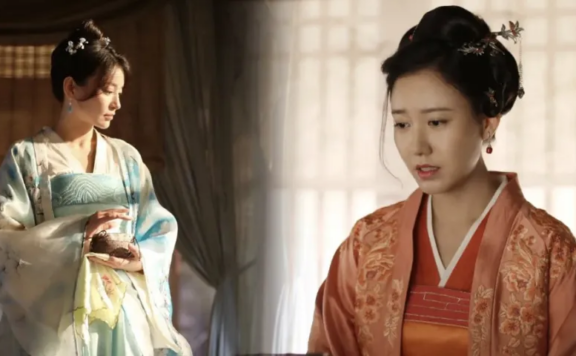
When the trailer for The Battle of Penghu (澎湖海战) dropped, a single frame stopped viewers cold. Zhao Liying (赵丽颖), as Huang Heniang (黄和娘), appeared in two strikingly different Ming Dynasty outfits. One featured a towering, jeweled crown. The other showed a modest, coiled hairpiece. Fans immediately compared her look to Minglan (明兰) from The Story of Minglan (知否). But this time, something felt more intense, more historically grounded. Was she playing a first-rank noblewoman? A secret empress dowager? The answer lies in two Chinese words: Zhai Guan (翟冠) and Di Ji (䯼髻). One meant power at court. The other meant grace at home. Together, they reveal how a single hairstyle could dictate a woman's entire social standing in the late Ming era. Royal Headdress The first look that grabbed everyone’s attention was the golden, phoenix-like crown. But here is the twist: it was not a true phoenix crown. That honor belonged only to the empress and the crown prince’s wife. Instead, Zhao Liying wore a Zhai Guan, a crown decorated with Zhai birds. How to tell the difference? Look at the tail feathers. A phoenix’s tail flares like flames. A Zhai bird’s tail shoots straight like an arrow. That single detail… -
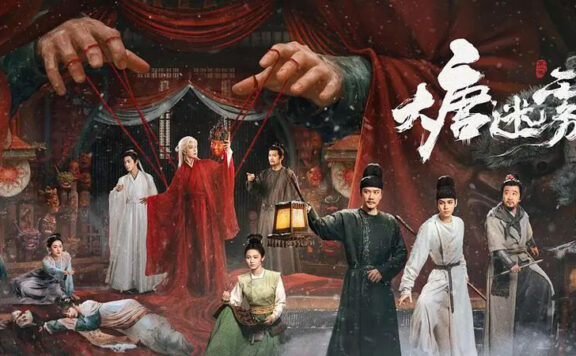
Di Renjie’s Silent Justice in The Tang Mist
A bloated corpse drifts down the Ruan River (阮江). Ropes have carved deep grooves into its neck and limbs. An old man kneels in a riverside mansion, swearing on his own remaining years that his dead son never killed anyone. This is the opening of The Tang Mist (大唐迷雾), a new Chinese drama that throws viewers into a familiar trap. You think you are watching a murder mystery: find the killer, crack the alibi, expose the perfect crime. But the show’s real trick is that it refuses to play that game. The victim you pity may have bloodier hands than the accused. The suspect you chase may never have touched a weapon. Within two days of its release, the first of five story arcs—the “Water Ghost Case”—has already shattered every expectation about historical suspense dramas. Monsters and ghosts are just a disguise. What lurks beneath is a brutal question: when hatred takes over reason, who among us can truly stay human? The Mute Inquisitor Most viewers remember actor Feng Shaofeng (冯绍峰) as the dashing warrior Gu Tingye (顾廷烨) in The Story of Minglan (知否)—a man on horseback, full of life. His new role as Di Renjie (狄仁杰) could not be…- 19
- 0
-
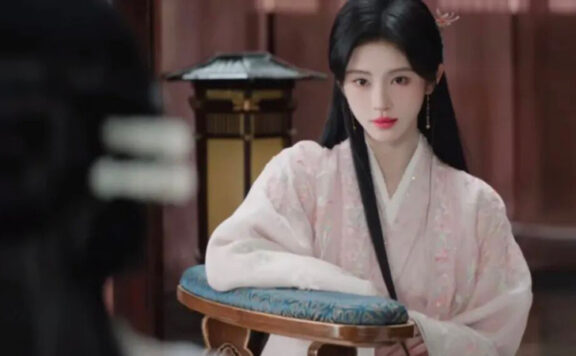
The Ancient Lazy Rest in Veil of Shadows
Have you noticed how characters in Chinese dramas never seem to sit straight? In Veil of Shadows (月鳞绮纪), Ju Jingyi (鞠婧祎) as Lu Wuyi (露芜衣) leans lazily on what looks like a chair armrest. The same thing appears in The Legend of Shen Li (与凤行), Nirvana in Fire (琅琊榜), and The Story of Minglan (知否). It looks comfortable—almost too comfortable. But here's the catch: that thing isn't a chair at all. It's an ancient piece of furniture called Yinji (隐几), also known as Pingji (凭几) or Yiji (倚几). Think of it as a portable sofa armrest from thousands of years ago. People placed it on a bed or mat, leaned an elbow on it, and instantly felt like they were floating. No back support, no cushion—just a wooden frame that somehow works. And the best part? It was designed to be moved outside. So next time you see a historical drama character slouching in perfection, know that they're not being rude. They're just using the original lazy tool. The 'Lazy Rest' Explained The earliest record comes from Zhuang Zi (庄子), specifically the chapter "On the Equality of Things," where a master sits while leaning on a Ji. That's over two… -
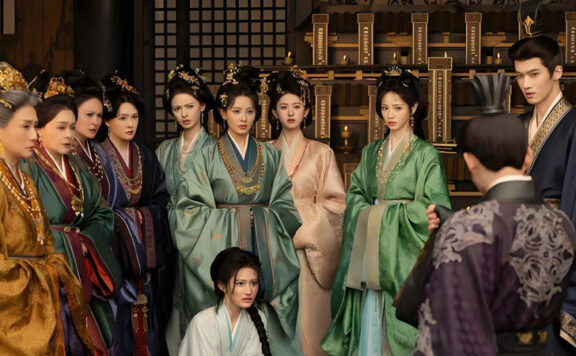
Transfer Gold Hairpin: A Marriage of Wits
What happens when a street-smart outcast is forced to marry a prejudiced nobleman? The new costume drama Transfer Gold Hairpin (嫁金钗) serves up a refreshing tale where female intelligence battles tradition, and love blooms only after a strategic game of wits. With Tian Xiwei (田曦薇) delivering a stunning dual role and an ensemble cast of formidable actresses, this series promises to break free from the clichés of the ancient house fight genre. The Duality of Survival: One Actress, Two Opposing Forces The drama’s core strength lies in its central performance. Tian Xiwei takes on the challenge of portraying two women bound by fate but separated by circumstance. On one side is A Chou, an orphan scraping by in the mud as a night-soil cleaner. She is no damsel in distress; her eyes hold a quiet ambition and a fierce will to survive. Her posture is deliberately submissive—shoulders hunched, gaze lowered—a tactic to hide her sharp mind in a world that dismisses the lower class. In stark contrast stands Jun Dai, the fake daughter who has usurped A Chou’s place in the marquis’ household. She is arrogance personified, her chin held high, her eyes flashing with cruelty as she schemes to…- 704
- 0
-
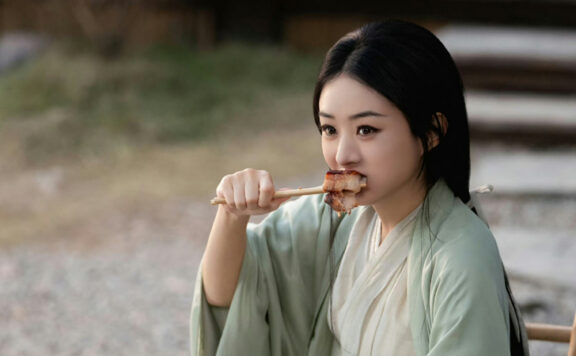
Top 6 Performances That Made Zhao Liying a Star
Zhao Liying's (赵丽颖) career is a fascinating study of an actress who consciously built her legacy, one role at a time. She didn't just become a star; she curated a portfolio of characters that resonated deeply with audiences, moving from sheer likability to profound respect. Her journey from being dismissed as unsuitable for leading roles due to her "round face" to becoming a benchmark for dramatic excellence in Chinese television is a narrative of talent, strategic choice, and raw, undeniable connection with the viewer. This exploration looks at six pivotal performances that defined her path, each one a distinct chapter in her evolution as one of China's most compelling actresses. The Story of Minglan (知否知否应是绿肥红瘦) After the explosive emotions of Xianxia, Zhao sought a role grounded in reality, a character whose battles were fought not with magic, but with quiet wit and emotional intelligence. The Story of Minglan was that role. Set against the intricate social tapestry of the Song dynasty, this series is widely considered her magnum opus. As Sheng Minglan (盛明兰), a neglected daughter of an official, Zhao delivered a performance of extraordinary subtlety, built on glances, pauses, and the silent strength of a woman who learns to…- 124
- 0
-
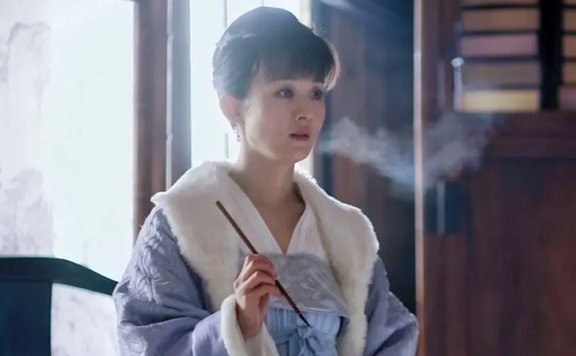
Hairstyle Codes in The Story of Minglan
When audiences first tuned into The Story of Minglan (知否知否应是绿肥红瘦), they were drawn into a world of intricate family politics and personal growth. A subtle visual detail caught many eyes: the hairstyle of the protagonist, Sheng Minglan (盛明兰), played by actress Zhao Liying (赵丽颖). In her youth, she wore hair that fell over her forehead, much like contemporary bangs. After marriage, this style vanished, replaced by a formal, swept-back updo. This shift is far from arbitrary; it is a deliberate reflection of ancient Chinese societal codes, where hair served as a clear indicator of age, status, and personal responsibility. This exploration goes beyond the drama, uncovering how hairstyles functioned as a silent language in historical China, marking the significant transition from the carefree days of childhood to the weighted duties of adulthood. Decoding Childhood Hair In ancient China, the hairstyle we now loosely associate with bangs was exclusively a child's privilege. This look, known as Liu Hai (刘海), originated from the term "childhood-specific hairstyle", meaning "hair left for a child." From the Zhou Dynasty onward, both boys and girls wore their hair in this manner during their early years. Historical artworks, such as the painting Children at Play in an… -
Popular Cdrama Hairstyle - Two Strands of Hair
In the period drama The Story of Minglan, there's a line about "loosening the hair buns and letting the hair fall, imitating the styles of courtesans". Is leaving two strands of bangs by the temples really a style of the demimonde? Is there really such a saying? Then, have most period dramas nowadays fallen into this trap? Let's start with the conclusion. Many of us now call a similar hairstyle the "catfish whiskers". In fact, it also has a prototype. For example, during the Han and Jin dynasties, especially after the Eastern Han, there were two strands of hanging hair called "chuí tiáo" (垂髫). You can see this in themes like paintings of immortals in the Wei and Jin dynasties and the hairstyles of ancient children. Strictly speaking, this kind of chuí tiáo is not bangs, but neatly arranged strands of hair falling from the hair bun, forming a decorative structure. However, the period when this hairstyle with hanging strands on both sides was popular was relatively short, mainly during the Wei and Jin dynasties, the so - called era of "Wei and Jin elegance". It's still different from the "catfish whiskers" we see in today's cdramas. Even though later…
The Story of Minglan

Scan to open current page
-
$CouponsLimitation of use:Expired and UnavailableLimitation of use:
before
Limitation of use:Permanently validCoupon ID:×Available for the following products: Available for the following products categories: Unrestricted use:Available for all products and product types