Before smartphones and delivery apps, you might think our ancestors had to cook every meal or dine out. But ancient Chinese people were already mastering the art of takeout—sometimes with more flair than we do today. From a quick bowl of meat soup in the Han Dynasty to a full-scale banquet arranged in hours during the Tang, and even professional runners who’d fetch your favorite snacks in the Song, the history of takeout is far older than you’d imagine. Let’s time-travel and see how they did it, no Wi-Fi required.
1. Han Origins
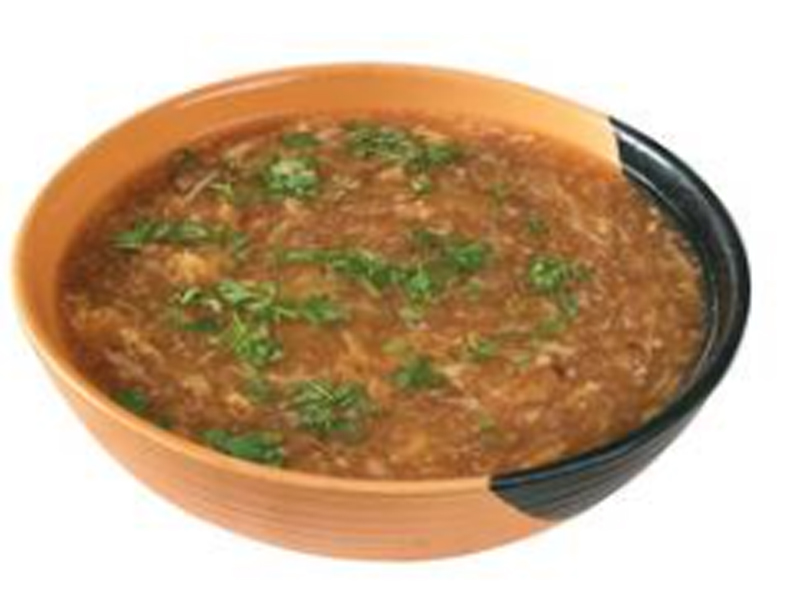
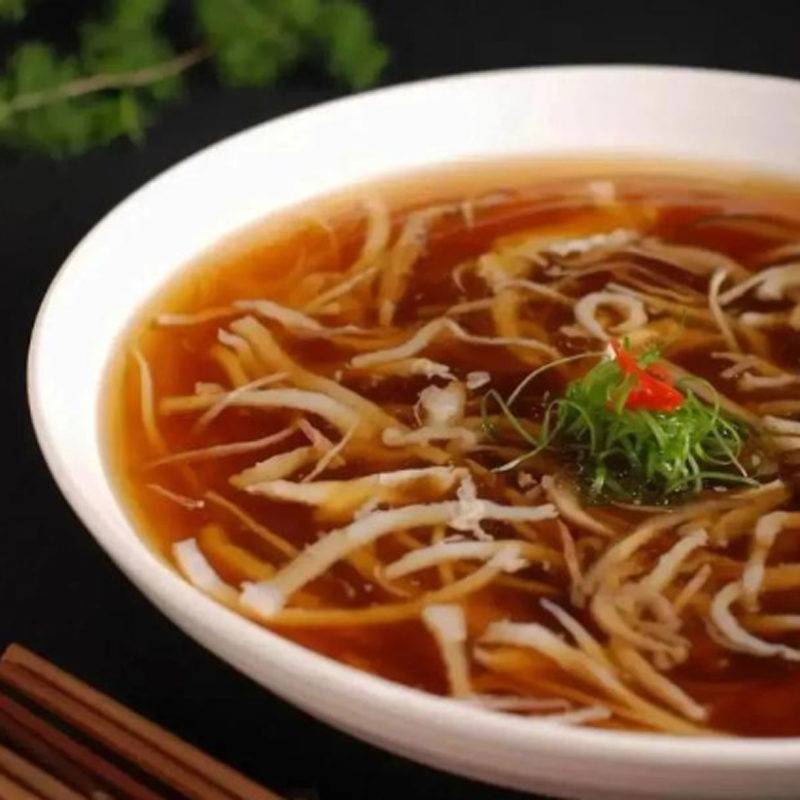
Two thousand years ago, during the Han Dynasty, a strange incident hinted at the birth of takeout. According to the Book of Han (汉书), a famine was ravaging the land. The usurper Wang Mang (王莽) asked his attendant Wang Ye (王业) about the people’s condition. To make things look better than they were, Wang Ye went into the city, bought a serving of “Liang Fan Rou Geng (梁飰肉羹)”—a dish of rice and meat soup—and presented it to his boss, claiming even the starving peasants could afford such food. That might be the earliest recorded “takeout” in Chinese history.
Fast forward to Emperor Huan’s reign in the late Eastern Han. Takeout even became a social ritual. A newly appointed official named Tang Xuan (唐玹) was greeted by the capital’s mayor, who feared Tang’s powerful brother. The mayor went to a restaurant to “buy a meal” as a sign of respect. So yes, ancient officials also ordered takeout to impress their guests. But back then, this luxury was reserved for the rich and powerful. Common folks rarely got a taste.
2. Tang Feasts
The Tang Dynasty changed everything. As cities flourished, takeout began reaching ordinary homes. The most astonishing feat? Tang people could prepare a banquet for three to five hundred people in no time. The Supplement to the National History of Tang (唐国史补) tells a legendary story: During Emperor Dezong’s (德宗) reign, a noble named Wu Cou (吴凑) was suddenly appointed mayor of the capital. He needed to host a feast immediately. When he arrived home with his guests, the banquet was already ready! How? The steward explained: “In the two main markets, banquet sets are available daily. Just bring your pots and take them away. So a meal for five hundred can be arranged instantly.” That “instant arrangement” was the Tang version of high-end takeout service.
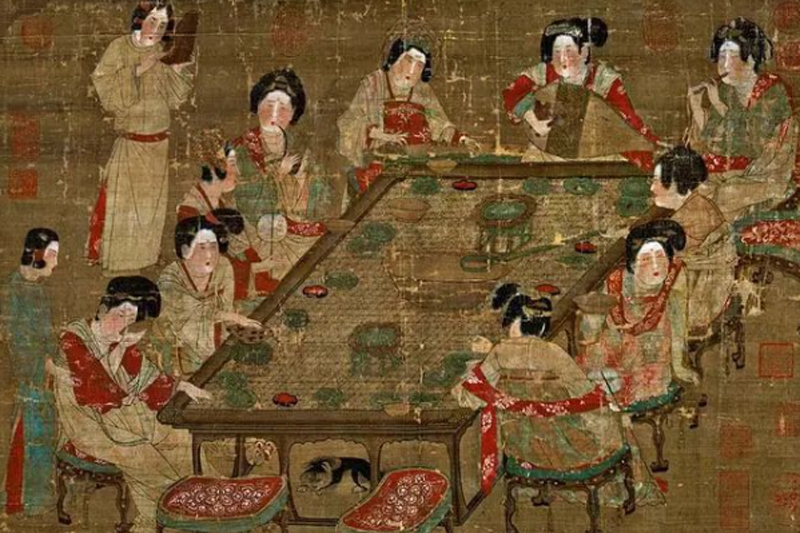
And there was more. The Tang also had specialized agencies called “Jinshi Tuan (进士团)”—literally “scholar-exam banquet teams”—that organized everything from venue to food for newly minted officials. Think of it as an ancient event planning company. However, due to limited food preservation, most Tang takeout consisted of portable items like flatbreads and dried meat. The popular “Hu Bing (胡饼)”, a sesame flatbread similar to today’s naan or pizza crust, was likely the top delivery order.
3. Song Peak
If any dynasty deserves the crown of ancient takeout, it’s the Song Dynasty. For the first time, the actual term “takeout” appeared in writing. The Dream of Splendor of the Eastern Capital (东京梦华录) records: “Also sold as takeout are soft lamb, various stuffed buns, pork and lamb pouches, roasted meat and dried meat, jade-like cakes…” That’s the first known use of the word in Chinese literature. And how much did Song people love ordering in? The same book notes that “working families in the market often buy meals from shops instead of keeping vegetables at home.” In modern terms: urban office workers basically lived on takeout every single day. Sound familiar?
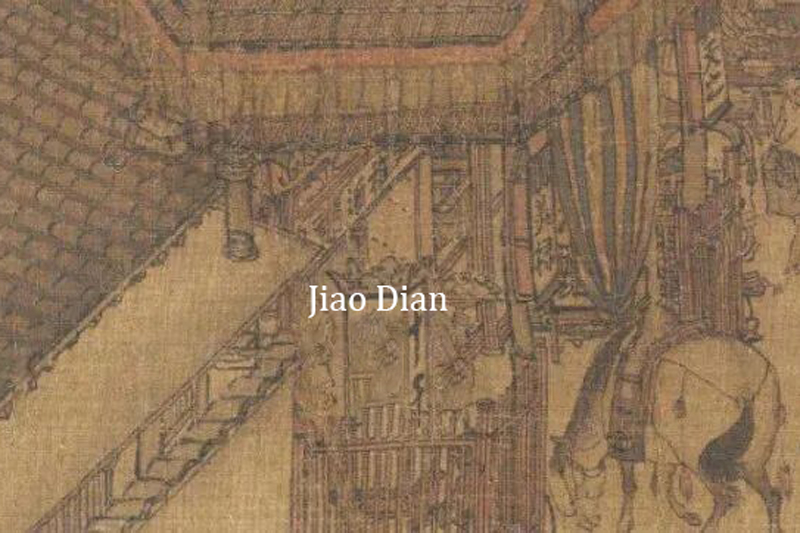
In the capital Bianjing (汴京, today’s Kaifeng), there were over a hundred wine shops. High-end “main shops” rarely delivered, but mid-range “Jiao Dian (脚店)” and budget “Fen Rong (分荣)” were the takeout warriors. Whatever you craved, “delivery was available at any hour.” It was the Song equivalent of “on-demand” food service.
4. The Delivery Guys
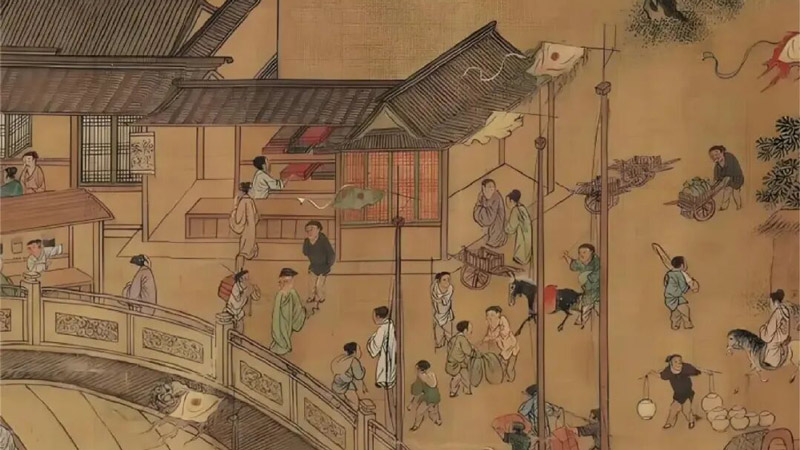
Who ran these ancient errands? Besides waiters moonlighting as couriers, the Song Dynasty created a dedicated profession: the “Xianhan (闲汉)”, or “idle fellow.” According to the Dream of Splendor of the Eastern Capital, “There are commoners who enter wine shops, spot young gentlemen drinking, and carefully approach to offer service—running errands, buying things, summoning entertainers, or delivering money and goods. They are called Xianhan.” These guys hung around taverns all day, proactively asking customers if they needed anything. They were the medieval version of a full-service courier—think DoorDash but with zero technology.
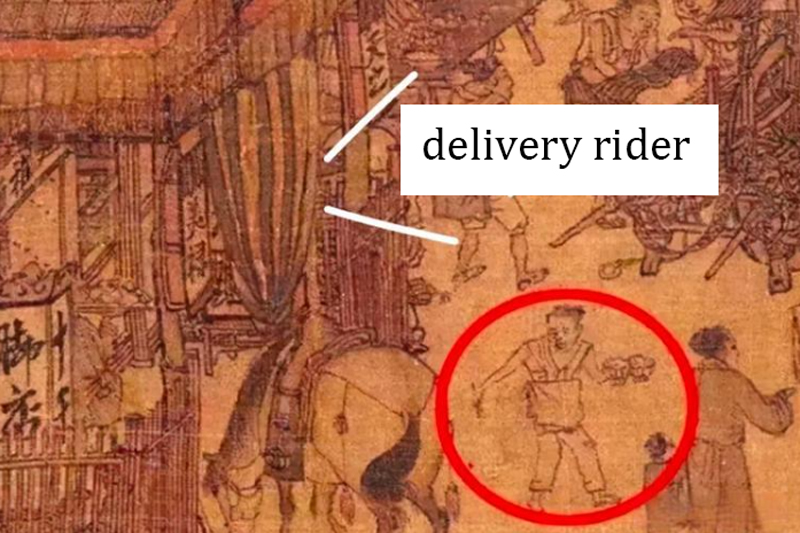
You can actually see one in the famous painting Along the River During the Qingming Festival (清明上河图). Next to a wine shop marked “Jiao Dian,” a man dressed as a waiter rushes out. He holds two bowls in his left hand, chopsticks in his right, and wears an apron around his waist. Art historians believe this is a Song Dynasty “takeout guy.” No smartphone, no GPS—just fast legs and a sense of urgency.
5. Imperial Orders
Even emperors got in on the action. After retiring, Emperor Gaozong (高宗) of the Song often sailed on West Lake in Hangzhou. One day, he craved the fish soup made by a certain Song Fifth Sister, a refugee from the fallen capital of Bianjing. The lady herself delivered the steaming bowl to his boat. The emperor loved it and, feeling nostalgic for his lost homeland, rewarded her handsomely. Overnight, “Song Fifth Sister’s Fish Soup” became a viral sensation—the ancient equivalent of a TikTok food trend. She grew rich, and her shop remained famous for centuries. That’s what we call royal influencer marketing.
His son, Emperor Xiaozong (孝宗), was an even bigger takeout addict. During the Lantern Festival one year, he couldn’t resist a midnight snack. He ordered “Southern Tile Zhang’s Glutinous Rice Balls” and “Granny Li’s Fish Soup” for a late-night feast. After eating, he was so delighted that he gave double the tip—an item worth one string of cash, he paid two strings. That’s like tipping 100% on a delivery app today. The imperial order had a special name: “Yuqian Suohuan (御前索唤)” or “Xuan Suo Shishi (宣索市食)”, meaning “summoned market food before the throne.”
6. Four Bureaus Six Offices
But the ultimate ancient takeout experience was the “Si Si Liu Ju (四司六局)”—the Four Bureaus and Six Offices. This was a private, professional banquet service that would come to your home. Whether for weddings, funerals, or just a fancy picnic, you placed an order, and a team of specialists showed up. The Tent Bureau set up canopies, hung paintings, and arranged seating. The Kitchen Bureau handled all cooking. The Tea and Wine Bureau greeted guests and poured drinks. The Tray Bureau served dishes and cleared cups.
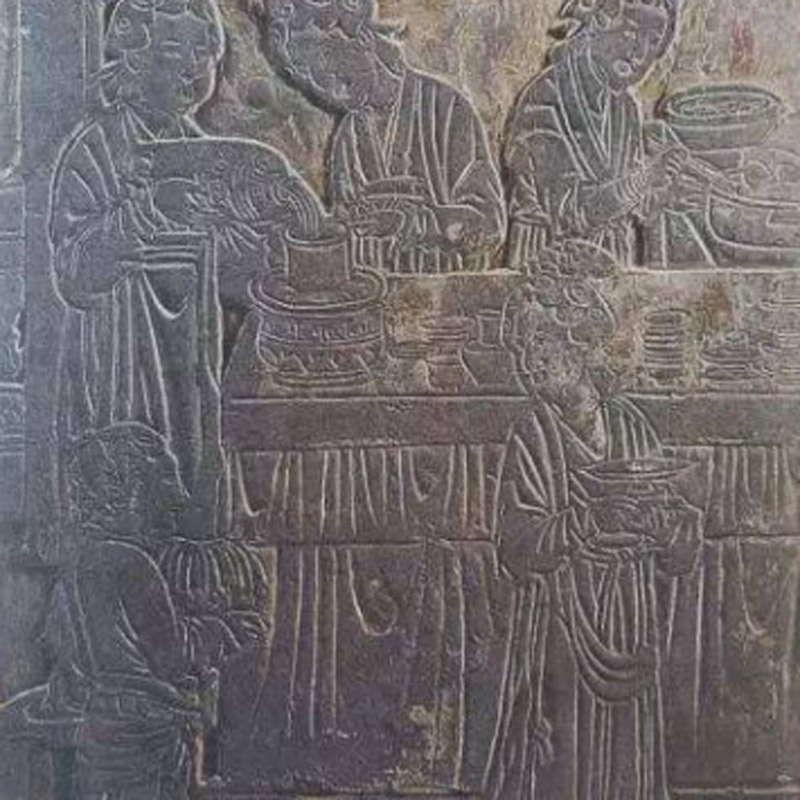
Then came the six finer offices: the Fruit Office prepared fresh fruit platters; the Candied Office made sugar-preserved flowers and fruits; the Vegetable Office selected seasonal greens; the Candle Office managed lighting and heating; the Incense Office burned incense to refresh guests and sober them up; and the Decor Office hung art, arranged flowers, and swept floors. This wasn’t just takeout—it was a full-service event team knocking on your door. From a simple bowl of meat soup in Han times to a five-hundred-guest instant banquet in Tang, and the “Xianhan” runners of Song, the ancient Chinese knew how to eat well without lifting a finger. No apps, no delivery platforms—just ingenuity, hustle, and a timeless love for good food brought to your doorstep.