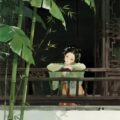
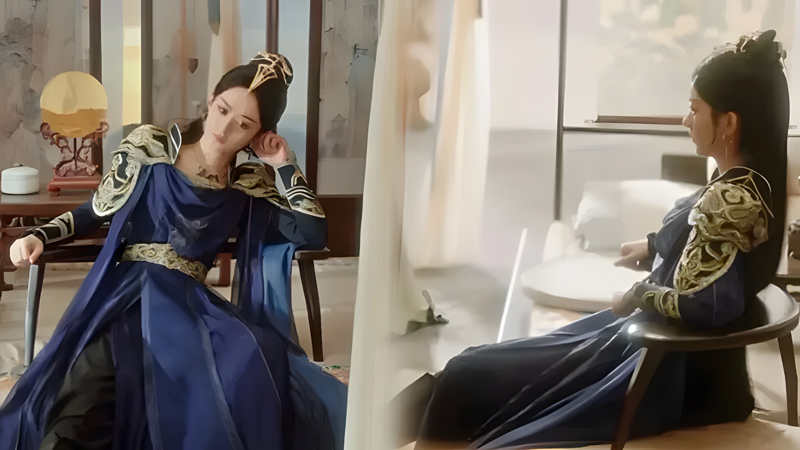
You have seen it in countless historical Chinese dramas, from The Story of Minglan (知否) to Nirvana in Fire (琅琊榜). A character, perhaps Shen Li (沈璃) from The Legend of Shen Li (与凤行), lounges gracefully, not on a chair, but on a piece of furniture that looks like a curved armrest. It seems incredibly comfortable, a perfect prop for scenes of scholarly contemplation or leisurely repose. But what is this object? It is not a chair at all. This is the Yinji (隐几), an ancient support that was the epitome of comfort and intellectual attitude for centuries of Chinese literati. More than just furniture, it was a portable sanctuary for relaxation and a symbol of a mindful approach to life.
Not a Chair
The Yinji, also known as a leaning stool or armrest, was a quintessential item in ancient Chinese interiors, particularly for use on a Ta (榻), a low platform bed. Its primary function was to provide support for the back, the arms, or even the side of the body. Imagine a portable sofa arm that could be placed wherever one desired a comfortable lean. It was designed for ease of movement, often light enough to be carried outdoors for a rest in the garden. Historical texts like the Zhuangzi (庄子) make reference to it, describing sages leaning on their Yinji in deep thought.
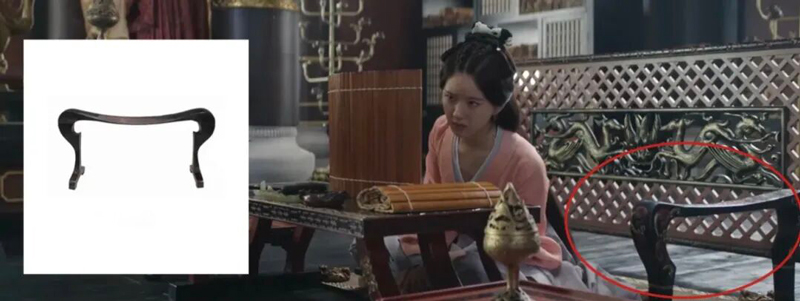
These supports came in different forms, typically with two or three legs. Their versatility was remarkable. While leaning was the main use, people also employed them as footstools, much like the figure depicted in the Song Dynasty painting Enjoying the Cool Under a Locust Tree (槐荫消夏图). Some even used them as low reading tables, stabilizing their posture or placing books upon them. This multifunctionality made the Yinji an indispensable item for daily life and leisure.
Its history, however, began with more ceremonial purposes. During the Zhou Dynasty, a "Ji" was initially a ritual object placed beside the ruler's seat. It was a symbol of status and authority, not something to be physically used. Over time, its function evolved. By the Warring States period, it had transformed into a personal comfort object, as evidenced by the philosopher Mencius who famously "leaned on his stool and pretended to sleep" to avoid an unwanted conversation.
Design for Comfort
The most ergonomically advanced version emerged during the Wei and Jin periods. This was a three-legged Yinji with a gracefully curved top. This arc was designed to better fit the body's natural contours, a testament to early human-centered design. With three stable legs, it could be positioned in front, to the side, or even behind the user for back support. This design sparked a trend that resonated through subsequent dynasties.
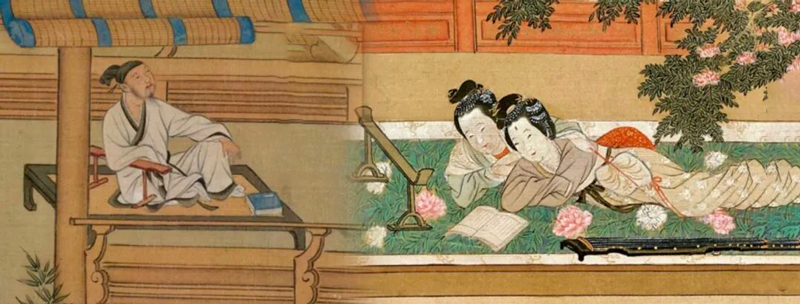
Paired with a Ta, this curved Yinji became the centerpiece of a scholar's leisurely space. It represented a specific attitude towards life—one that valued quiet reflection and personal comfort. In modern terms, we might call it an ancient form of "mindfulness" or conscious relaxation. The user could recline, read, or simply gaze into the distance, supported perfectly by this simple yet brilliant object.
Its popular nickname, the "Lanjia'er" (懒架儿) or "Lazy Frame," leaves no doubt about its purpose. It was an object dedicated to enjoyment and ease. Historical records, including the Xuanhe Yishi (宣和遗事) from the Song Dynasty, mention emperors and commoners alike using it for a temporary rest. It was the perfect aid for spacing out, resting an arm, or propping up a foot. The philosophy was simple: use it in whatever way feels best.
A Lasting Mindset
The great poet Bai Juyi (白居易) captured the spirit of the Yinji perfectly in his poem Leaning on the Stool, For a Guest (隐几赠客). He described a life of quiet contentment: sometimes leaning on the stool, feeling detached from the world's bustle, resting with a book, or enjoying a cup of wine. The Yinji was more than wood and lacquer; it was a vessel for meaning. Giving one to a guest was a gesture of deep friendship, a wish for them to also find such peace.
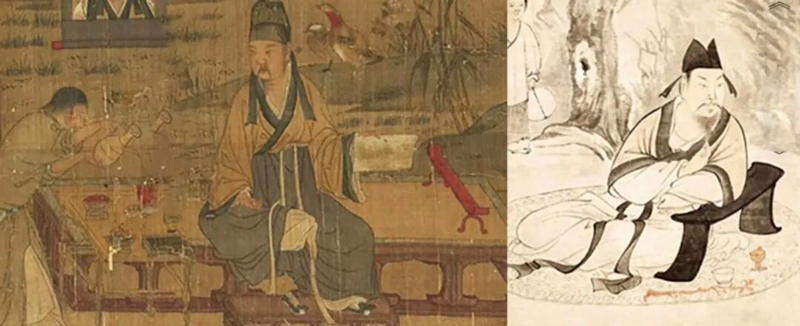
Scenes of figures leaning on a Yinji in ancient paintings are not just artistic conventions. They depict a philosophy of "dwelling in peace," a conscious choice to slow down. In our modern world, where busyness is often worn as a badge of honor, the image of the Yinji offers a powerful contrast. It reminds us that constant motion is not a prerequisite for productivity or a meaningful life.
The core idea is not to resist fatigue but to yield to the need for rest. The principle of "dredging is better than blocking" applies here. When you are tired, rest. When you are troubled, relax. Taking care of your own comfort is not laziness; it is the foundation for effective action. The next time you slump into the corner of your sofa, think of it as your own modern Yinji. That desire to lean back and take a moment for yourself is a timeless, inherited code for well-being.

I had no idea that this was a thing! What a beautiful melding of philosophy and design
So glad you discovered it! That blend is what makes it so special. 😊