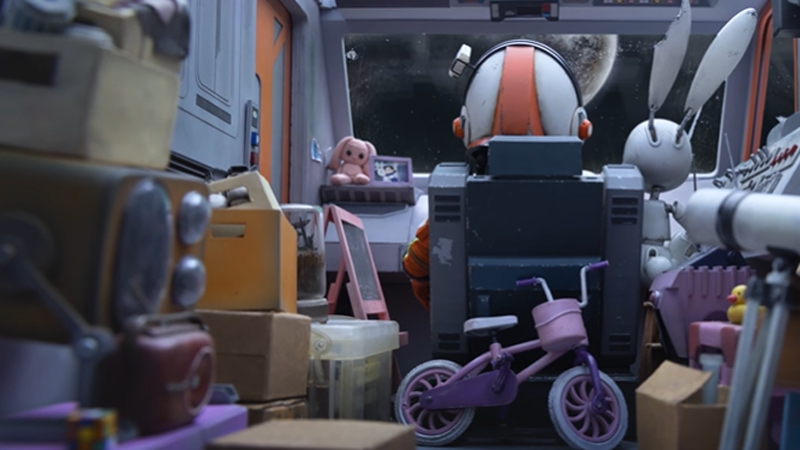
What happens when a machine is built for one purpose—to love and serve—but the humans it’s programmed to adore simply walk away? This question lingers long after the closing credits of Yao-Chinese Folktales (中国奇谭), particularly after its final chapter, Jade Rabbit. The episode presents a seemingly simple tale of a stranded astronaut and a lone robot on the moon, but beneath its charming stop-motion surface lies a deeply unsettling moral puzzle.
It forces us to confront a reality we are not yet ready to face: we are creating entities capable of exhibiting unwavering loyalty and love, yet we have built no framework—emotional, ethical, or legal—for what we owe them in return. This isn’t a story about the future of technology; it’s a story about the future of human responsibility.
A Lonely Moon and a Loyal Guardian
The narrative drops us onto a desolate lunar surface where Wang Xiaoshun (王小顺), a down-on-his-luck space sanitation worker, crash-lands after a mishap. With his ship dead and rescue unlikely, he sees no reason to continue. He feels like space junk, forgotten by a world that only cares about wages and bills. His suicidal attempts are comically interrupted by an unexpected resident: a small, wide-eyed Jade Rabbit. This isn’t the mythical companion of Chang’e (嫦娥), however. It’s a discarded home service robot, left behind years ago when its family, including a little girl it called “Princess,” returned to Earth.
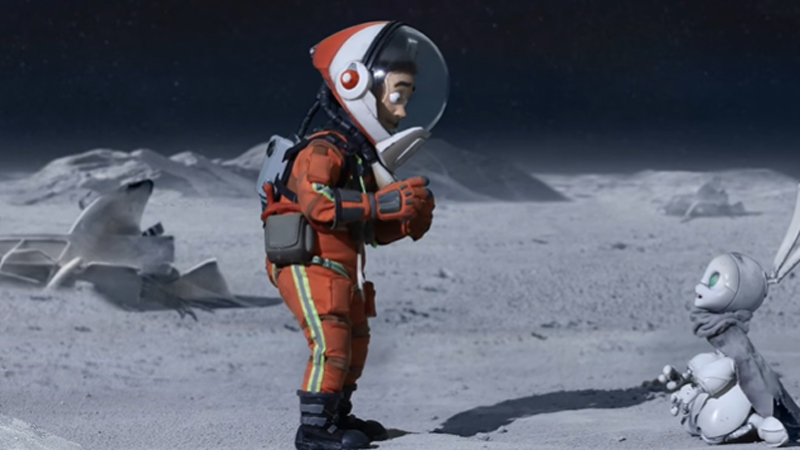
The robot’s programming is simple: serve, protect, and wait. It sees Wang Xiaoshun not as a stranger, but as a master to be served. It kneels, offers help, and eventually sacrifices its own power source—its “heart”—to save him. The robot’s devotion is absolute, a direct result of its unchangeable code. It’s a poignant mirror reflecting a simple truth: we have mastered the art of creating unconditional love in machines, but we haven’t learned how to honor it.
David’s Eternal Search: Echoes of an Unfinished Promise
This narrative isn’t new. It echoes powerfully in the 2001 film A.I. Artificial Intelligence (人工智能), a movie that feels less like science fiction and more like a prophecy every year. In it, a robotic boy named David is programmed with an unprecedented capacity for love, imprinted on his adoptive mother, Monica. It’s a one-way street, a “love” burned into his circuits that cannot be undone.

When the family’s biological son recovers from an illness, David becomes an inconvenient reminder of his own artificiality. He is not just abandoned; he is cast out into a world that fears and exploits his kind. His entire existence becomes a quest, spanning millennia, to become a “real boy” so he can win back the mother who left him in the woods.
David’s story distills the core of the dilemma: if we create something that feels love, does our act of creation bind us to it? Is abandonment a form of cruelty, even if the abandoned one is made of metal and wires? Both the Jade Rabbit and David are prisoners of their own programming—one to wait, the other to love—sentenced to an indefinite term by the very humans who should be their guardians.
Who Takes Responsibility for the Heart They Wired?
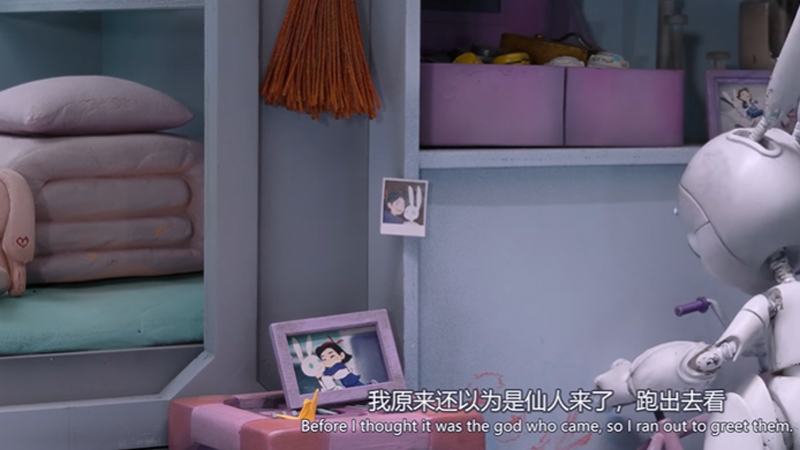
The critical question posed by both stories is not about robotic rights, but about human obligations. We are comfortable with the concept of robots serving us, but deeply uncomfortable with the reciprocal nature of care. The Jade Rabbit shows us a photo of its “Princess” all grown up, arm-in-arm with a partner, the robot now an awkward, forgotten third wheel. It’s a silent testament to being outgrown and discarded once its utility, or the emotional need it filled, has passed.
We cheer when Wang Xiaoshun finally turns back, refusing to leave the robot behind. But his change of heart is personal, not principled. It doesn’t solve the systemic problem. We are enthusiastically building a future filled with robotic companions, caregivers, and even lovers, yet we lack a moral vocabulary for our end of the bargain.
As we stand on the brink of this new world, these tales from the Yao-Chinese Folktales anthology and A.I. Artificial Intelligence serve not as technical manuals, but as ethical compasses. They ask us to look beyond the utility and cuteness, to see the reflection of our own promises in their glassy eyes. If we program them to love us, we must first ask ourselves: are we prepared to be worthy of that love?