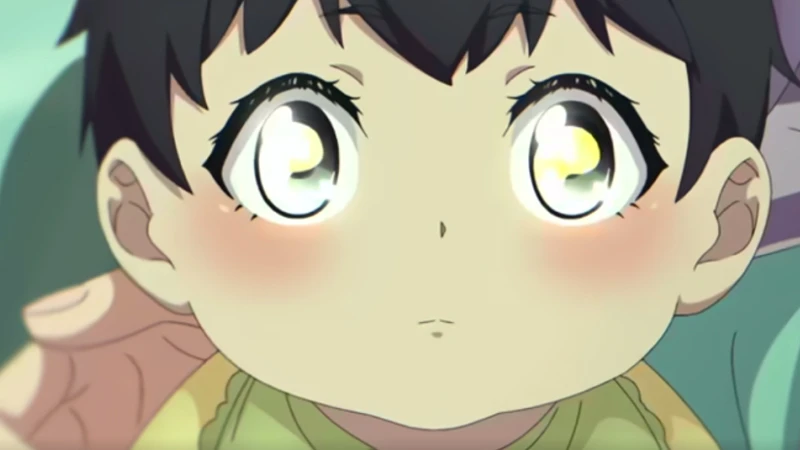
The first episode of Dragon Raja 2 (龙族2) has sparked intense debate among fans, particularly regarding its closing scenes. In these moments, viewers witness the simultaneous birth of Lu Mingfei (路明非) and Lu Mingze (路明泽), accompanied by a mysterious golden pattern flashing in Lu Mingfei’s eyes. This visual choice raises a compelling question: is the animation straightforwardly confirming Lu Mingfei as a reincarnated Dragon King, or is it offering a new, consolidated interpretation of the original novel’s dense web of clues? Rather than a simple revelation, this approach seems to be a deliberate narrative strategy. The creators are visually stitching together scattered hints from the books to build a coherent foundation for the animated series. This initial episode acts as a key, unlocking deeper mysteries about lineage and destiny that will undoubtedly shape the story to come.
The Golden Eyes
When Lu Mingfei is born with a peculiar golden gleam in his eyes, it is far more than a striking visual effect. This imagery directly taps into a crucial element from the source material: the concept of the contract. In the novels, when Lu Mingfei first uses his unique ability to command life and death, his companion warns him that his Golden Pupils (黄金瞳) could reveal his true nature. By presenting this feature at the very moment of his birth, the animation recontextualizes it. It is no longer just a sign of power activation but a birthmark, an inherent part of his identity. This shift suggests a deep, pre-existing connection to the supernatural world of the Dragon Clan, implying that his destiny was sealed long before he ever uttered a command.
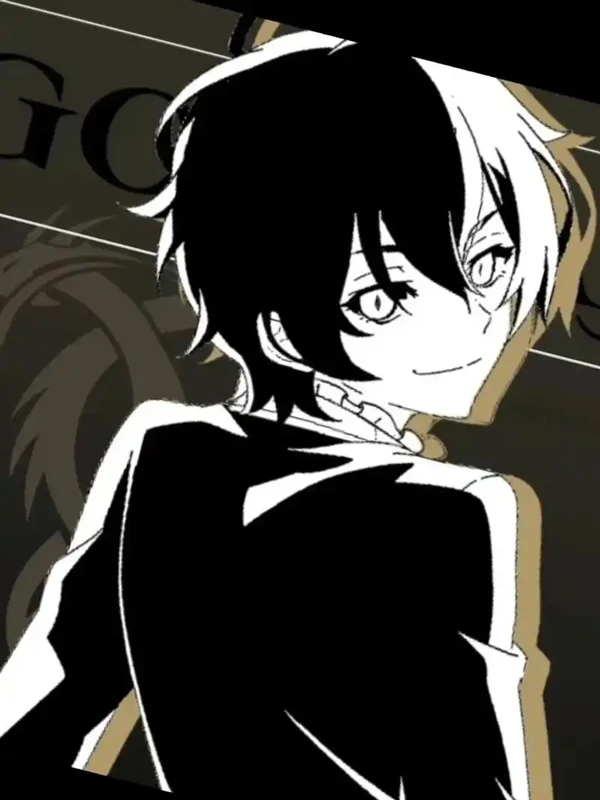
This early introduction of the golden eyes serves as a powerful visual anchor for the complex bond between Lu Mingfei and Lu Mingze. Their relationship is foundational to the entire saga, often described in terms of a shared life force or a profound pact. The intricate pattern within the pupil is not random; its design bears a resemblance to the Dragon Script and alchemical matrices associated with the clan’s oldest secrets. Therefore, this mark can be interpreted as the physical manifestation of their contract, a symbol of their intertwined fates that has been with them since the beginning. It is a clever way to show, rather than tell, the audience about a connection that the books took much longer to fully explore.
Some purists might argue that revealing such a significant symbol so early diminishes the mystery carefully built by the author. The novels are renowned for their slow-burn suspense, where clues about characters’ true natures are doled out sparingly over time. However, the medium of animation operates under different constraints. With a limited number of episodes to capture the audience’s attention and explain a vast mythological framework, these visual shortcuts become necessary. The golden eyes instantly communicate a wealth of information about Lu Mingfei’s otherworldly heritage, making the complex rules of bloodlines and power more accessible to viewers who may not be familiar with the books.
The Twin Birth
The scene of the two infants being born together is a dramatic departure from a more literal reading of the novels. It powerfully visualizes one of the story’s core mythological themes: the legend of the Dragon King splitting into twin entities. Throughout the books, there are fragmented hints and theories about a “Black King” dividing its essence, much like the known twin dragons Norbert and Constantine. By showing Lu Mingfei and Lu Mingze arriving in the world at the same instant, the animation strongly implies that their connection is not merely familial or coincidental. They are presented as two halves of a whole, potential heirs to this ancient and powerful legacy.
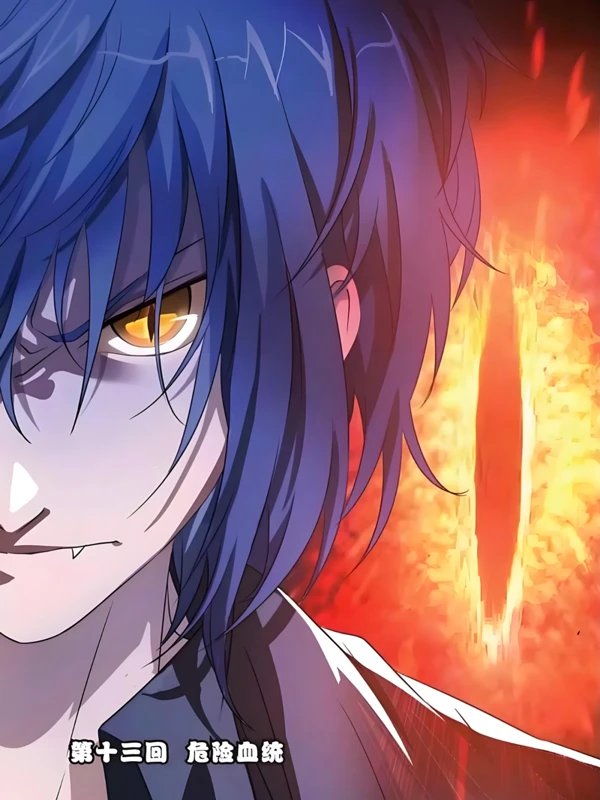
This visual representation of the twin theory does significant work in foreshadowing future plot developments. It suggests that the two are bound by something far more profound and dangerous than simple kinship. The way the scene is edited, with flashes of ancient manuscripts and research notes about bloodline experiments, further reinforces this. It connects their birth directly to the clandestine studies of the Initial Lionheart Society, a group that delved into the forbidden knowledge of transforming humans into hybrid monarchs. This juxtaposition plants the idea that Lu Mingfei was never entirely human to begin with, that his origin is the result of some grand, hidden design.
While this explicit imagery helps clarify a convoluted part of the lore, it does carry a risk. The charm of the original narrative often lay in its ambiguity, allowing readers to piece together the puzzle themselves. The animated version, by presenting a more concrete hypothesis so early, potentially robs the audience of that detective-like engagement. Yet, for a visual story, the impact of seeing the twin birth is undeniable. It creates an immediate and emotional hook, establishing a central mystery that is both personal and epic in scale. It forces viewers to question everything they know about the main character from the very start.
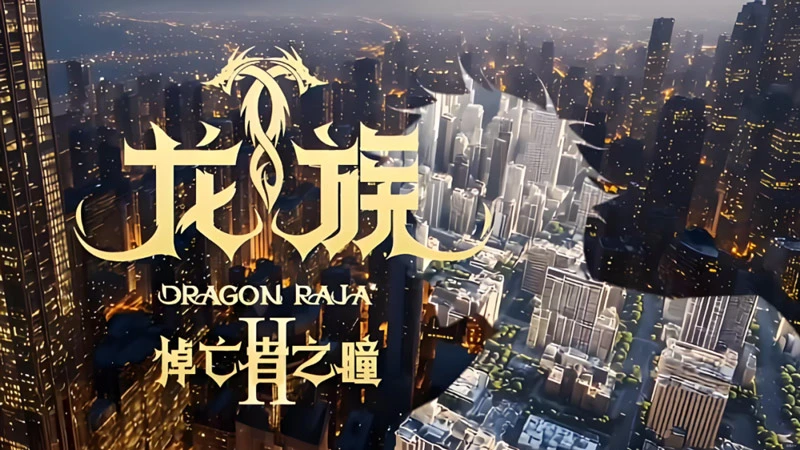
The decision to incorporate these elements in the first episode is a clear statement of intent from the show’s creators. They are not just adapting the story; they are reinterpreting it for a new medium, aiming to capture its essence in a more condensed and visually driven format. The twin birth and the golden eyes are not spoilers, but rather foundational pillars. They are the visual vocabulary the series will use to explore themes of identity, sacrifice, and the blurred line between human and monster. This approach sets a confident tone for the adaptation, promising a journey that is both familiar to fans and freshly thrilling.