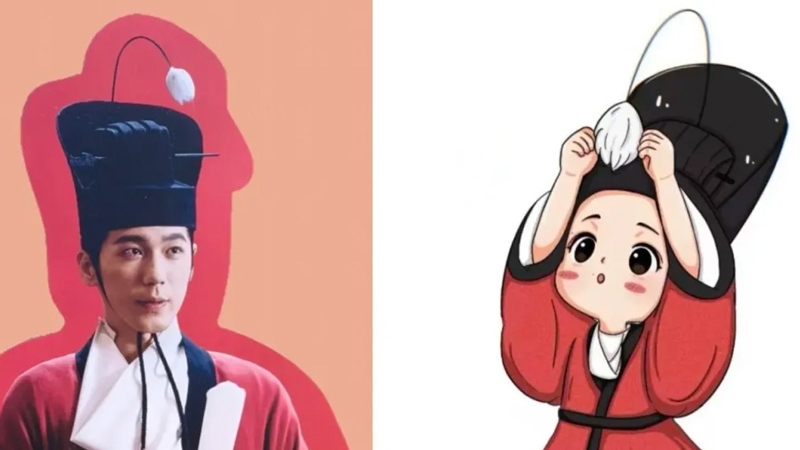
Viewers of the historical drama Swords into Plowshares (太平年) were met with an unexpected sight: actor Bai Yu (白宇), playing a court official, sporting what looked unmistakably like a cat teaser stuck in his headwear. This peculiar accessory, far from a whimsical costume designer's choice or an ancient fashion faux pas, is actually a meticulously researched detail rooted in centuries of Chinese bureaucratic tradition.
Known as a Zanbi (簪笔), or "hairpin brush," this item tells a story of practicality evolving into potent symbolism, marking the wearer's rank, duty, and intellectual authority within the rigid hierarchy of the imperial court.
A Practical Beginning
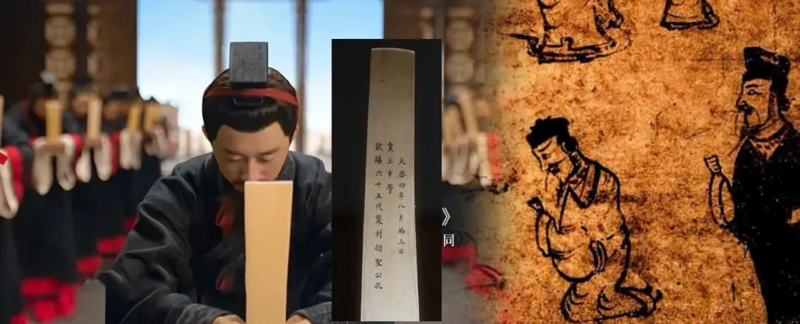
The origin of the Zanbi is wonderfully utilitarian. During the Han Dynasty, officials attending court sessions needed to record the emperor's commands directly onto their handheld Hu boards (笏板), tablets made of jade, ivory, or wood. Once a note was taken, the official had no desk to place his brush. The simplest solution was to tuck it behind an ear or slot it into a headband or cap, keeping it readily accessible for the next command. This act of carrying a brush in one's hair is recorded as early as the Records of the Grand Historian (史记·滑稽列传), in a story about the official Ximen Bao (西门豹).
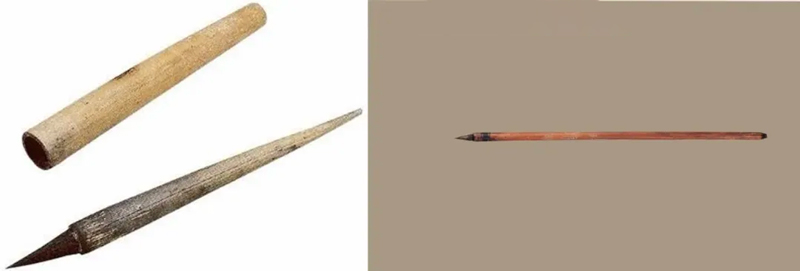
This practice was born purely from necessity. The Hu board served as a portable notepad, and the brush was its essential partner. With no other convenient place to store the writing instrument during lengthy audiences, the hair or headgear became its logical home. This early form of the Zanbi was a functional tool, its sharpened end designed to hold securely in place, demonstrating how ancient bureaucrats solved everyday problems with straightforward ingenuity.
Imagine the scene: rows of officials in solemn court attire, each with a brush casually tucked away like a modern pencil behind an ear. It was a common, unceremonious sight. This humble beginning stands in stark contrast to the highly formalized and decorative object it would later become, its transformation mirroring changes in furniture, administrative practices, and the culture of officialdom itself.
Tool to Token
As time progressed, the practical reason for the Zanbi faded. The widespread adoption of high tables and chairs meant officials could place their brushes down. However, the brush in the cap did not disappear; instead, it morphed into a powerful symbolic ornament. By the Wei, Jin, and Northern and Southern Dynasties periods, the brush carried in the crown was specifically a "white brush," with its tip left clean of ink, signifying its shift from a writing implement to a ceremonial badge.
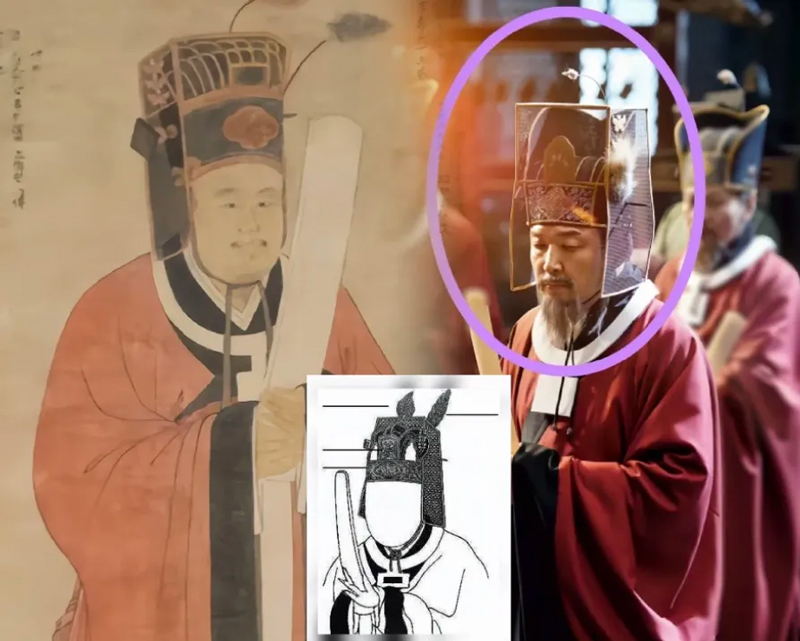
This evolution marked a key transition. The white Zanbi ceased to be a tool and became a regulated symbol of civil official identity and the duty to document. Its presence on an official's head proclaimed his literary qualifications and his role as a recorder of history and imperial decree. Intriguingly, the symbolism also expanded to imply a balance of civil and military virtues, suggesting the ideal official was both a scholar and a strategist.
The formalization reached its peak during the Tang Dynasty, when sumptuary laws explicitly decreed that civil officials of the seventh rank and above must wear the white Zanbi as part of their court dress. The specifications—length, material, placement—were codified. In the Song Dynasty, the privilege extended to some military officers as well. The design became more ornate, often a bamboo rod wrapped in red silk with yellow silk forming the brush tip, resembling the decorative "cat teaser" viewers see today.
Reading the Rank
In Swords into Plowshares, Bai Yu's Zanbi immediately signals his character is a civil official. But the detail goes deeper. The number of horizontal ridges, or "beams", on his Jinxian Crown (进贤冠)simultaneously reveals his approximate rank—a visual shorthand understood by every contemporary. A three-beam crown was for the highest echelons (first to third rank), two beams for mid-level officials, and a single beam for those of lower rank.
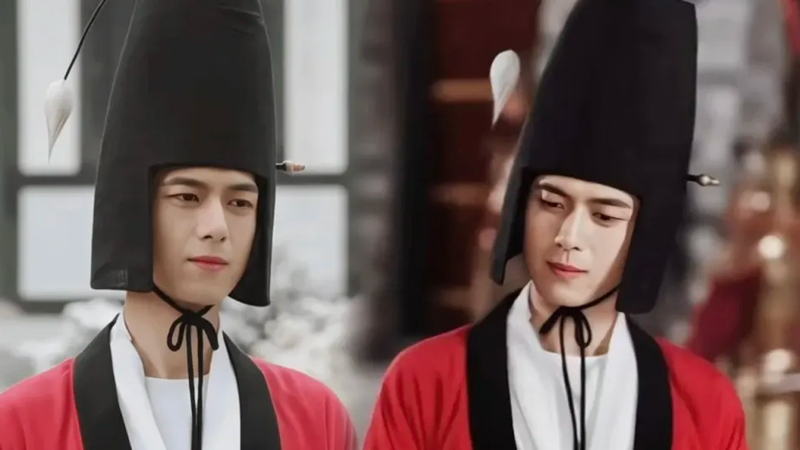
Bai Yu is not the first actor to wear this detail accurately. Li Xian's (李现) character in the drama Flourished Peony (国色芳华) also correctly sports a Zanbi. Its appearance across various historical films and series, though often subtle, demonstrates increased attention to authentic sartorial detail by production teams aiming for credibility. These accessories were a fundamental part of the bureaucratic uniform's visual language.
While the courtly Zanbi is a relic of the past, the instinct to stash a pen in one's hair persists. Many people still absentmindedly tuck a pencil behind an ear or slide a pen into a bun while multitasking. This modern, casual act is a faint echo of the Han officials' practicality. However, the next time you see that strange "cat teaser" in a historical drama, you'll see more than a quirky hat. You'll see a story of evolving function, a badge of office, and a complex symbol of authority, all neatly tucked behind a court official's ear.