-
Summer is approaching, and for many, that familiar sense of anxiety about appearance begins to stir. We worry about our bodies, our weight, and how we measure up to modern standards. This feeling is so common today that it seems like a distinctly modern problem. But a look back at ancient China reveals a surprising truth: the struggle with body image is far from new. Women in previous dynasties faced intense scrutiny, often under even harsher and more consequential "gazes" than we do today. Their stories of conformity, sacrifice, and shifting ideals offer a powerful perspective on our own relationship with our bodies.
When a King's Desire Became a Death Sentence
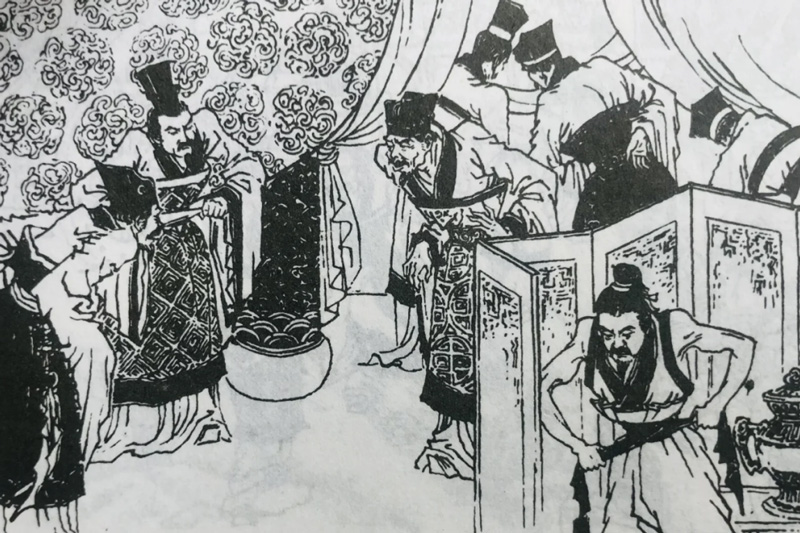
One of the most extreme examples of body anxiety driven by authority comes from the Warring States period. According to the Strategies of the Warring States (战国策), King Ling of Chu (楚灵王) had a well-known preference for ministers with slender waists. This royal decree set off a dangerous wave of dieting among his court. To please their king, the ministers would eat only one meal a day. They would hold their breath while belting their robes to make their waists appear smaller and would have to support themselves against a wall just to stand up after the effort. Within a year, the entire court was gaunt and weak, with many starving themselves to the point of illness.
The obsession did not stop with the male officials. The women of the palace, desperate to meet the king's aesthetic standards, took even more drastic measures. This tragic practice, born from a desire to conform to a single man's idea of beauty, led to the deaths of countless women in the harem. It stands as a chilling example of how a "mainstream aesthetic," when backed by absolute power, could compel people to sacrifice their very lives. The story is a stark reminder that the pressure to look a certain way can have fatal consequences.
The Dance of Dynasties
The Han dynasty presents a fascinating case of historical misconception. Many people believe it was an era that idealized women as "as light as a swallow," largely due to the legend of Zhao Feiyan (赵飞燕). A former maid who rose to become empress, Feiyan was celebrated for her extraordinary lightness and grace. It was said she could dance on a servant's palm, earning her the name "Flying Swallow." This image is so powerful that it created a lasting stereotype. However, the literary and official records of the Han tell a different story. Works like Sima Xiangru's Fu on the Beautiful Person (美人赋) praised women with "weak bones and abundant flesh," indicating a preference for a fuller figure.
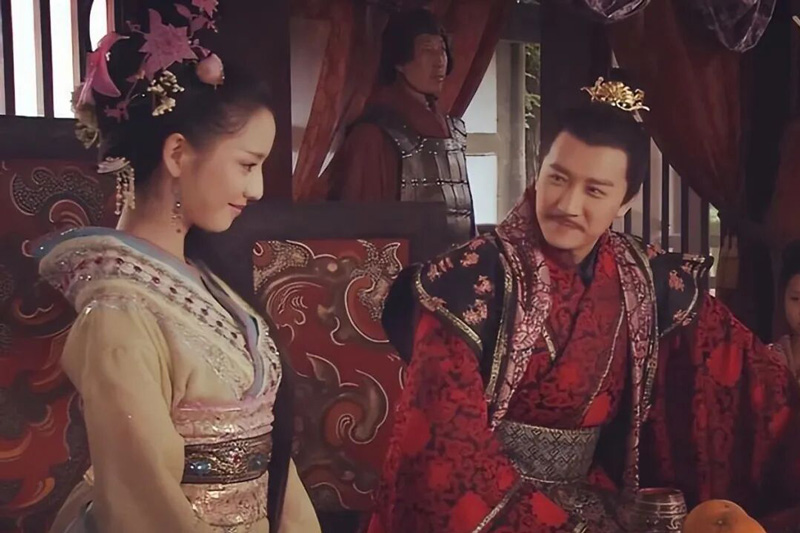
The ideal beauty was one of "plump flesh and delicate bones," not extreme thinness. When emperors selected empresses and concubines, they looked for women who were tall, strong, elegant, and clean. The slender, delicate image of Zhao Feiyan was the exception, not the rule. It was a personal attribute that made her stand out, but it did not define the entire dynasty's aesthetic. This shift in perspective reminds us that history is often simplified into catchy stories. The reality is that beauty standards are complex and can vary greatly within a single era, a truth that holds as much today as it did then.
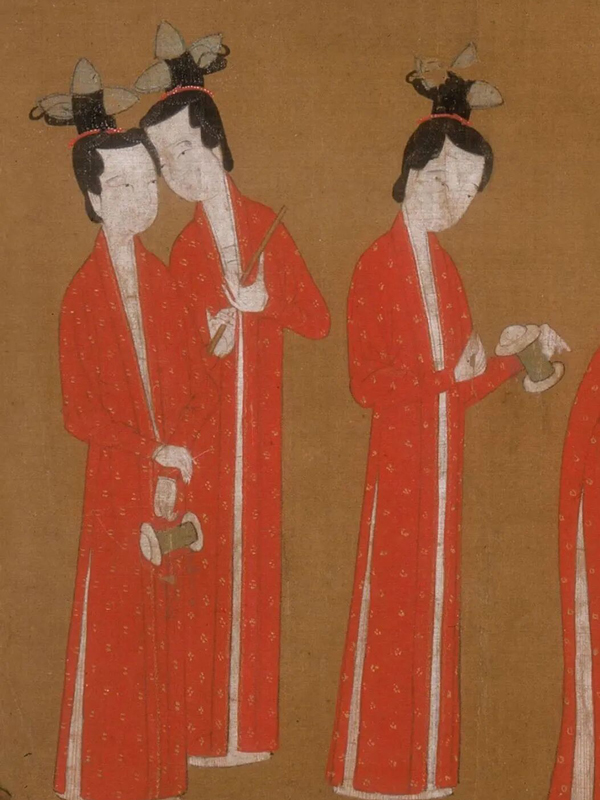
The story of body ideals takes another dramatic turn in the Tang dynasty. The early Tang period initially carried over the slender preferences of the previous dynasties, as seen in Yan Liben's famous painting, The Scroll of the Emperor's Chariot (步辇图). However, with the rise of Empress Wu Zetian (武则天), women's social status climbed, and a new aesthetic emerged. The female form began to be celebrated in a more robust and powerful way. The ideal shifted towards a figure that was full and stately, radiating health and confidence. Historical texts describe Princess Taiping, Wu Zetian's daughter, as "plump and large, with a broad forehead and full cheeks," a look her mother favored and saw as similar to her own.
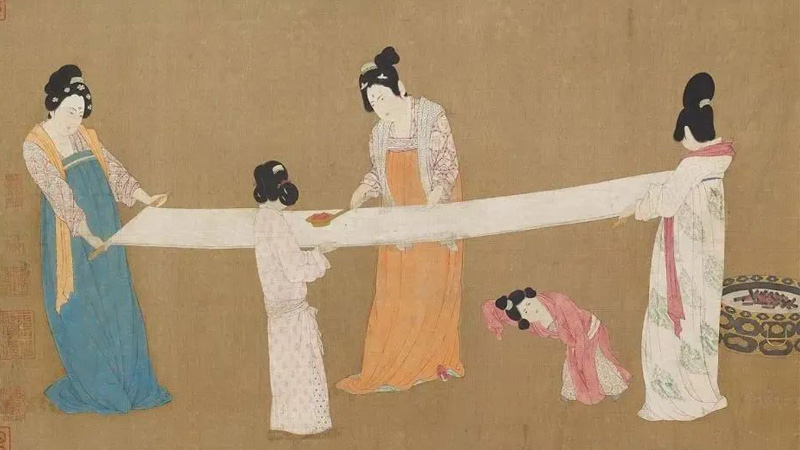
This new ideal is beautifully documented in the art of the time. Paintings like Zhang Xuan's (张萱) Lady Guoguo on an Outing (虢国夫人游春图) and Court Ladies Preparing Newly Woven Silk (捣练图), as well as Zhou Fang's (周昉) Court Ladies Adorning Their Hair with Flowers (簪花仕女图), are filled with women who have rounded faces, plump figures, and an undeniable air of opulence. Even the working women depicted are strong and robust. This wasn't just about weight; it was an embodiment of an era's power and prosperity. It was a full-bodied aesthetic that celebrated vitality and wealth, a stark contrast to the frail ideal of other periods. It shows that the "perfect" body is not a fixed concept but a reflection of the society that idealizes it.
A Strange Pharmacy: Ancient Methods for a Modern Problem
The desire to reshape the body also led to a vast and often dangerous array of weight-loss methods throughout Chinese history. During the Han dynasty, women used a product called Xiji Pill (息肌丸). These fragrant pellets were inserted into the navel, where they were absorbed by the body. They supposedly gave women luminous skin and bright eyes. The catch? They contained musk, which caused infertility. This method was dramatized in the popular TV series Empresses in the Palace (甄嬛传), highlighting the high price some were willing to pay for beauty.
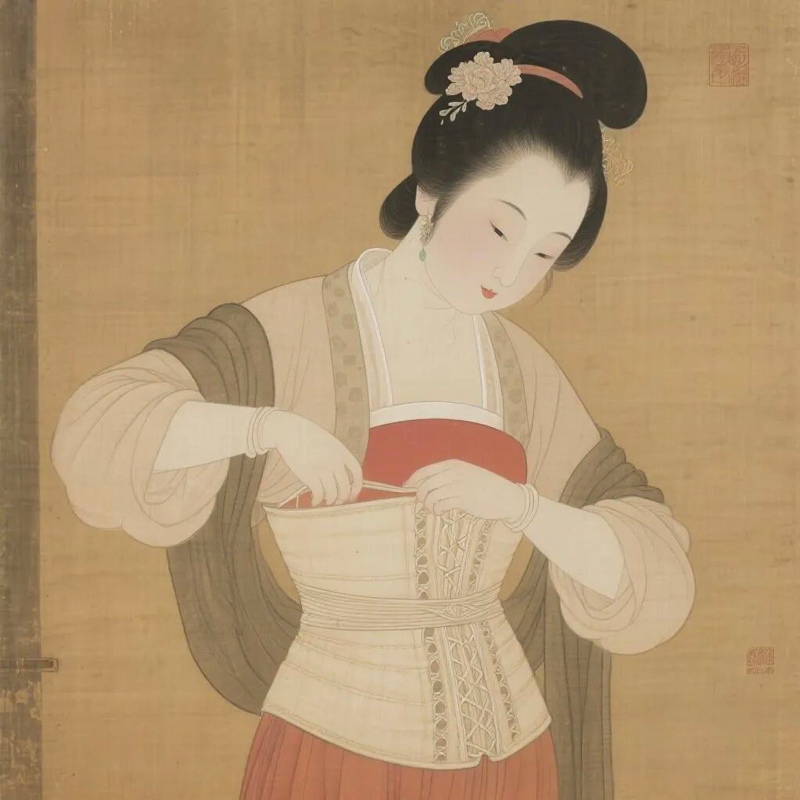
The creativity in these methods did not stop there. In the Song dynasty, women would use cold towels to repeatedly rub areas they wished to slim down, believing the cooling effect would reduce fat. The Yuan dynasty saw a more aggressive technique: using a stiff brush made of horsehair to vigorously scrub the body until the skin turned red. By the Ming dynasty, the focus shifted to shapewear. Women would wear a garment called a "hundred-button coat" to compress their abdomen, which was thought to reduce appetite and mold their shape. These methods, ranging from the ineffective to the medically dangerous, show that the pursuit of a specific body type has long driven people to remarkable—and sometimes reckless—lengths.
Today, in 2025, the Chinese government is actively encouraging healthy weight management, promoting scientific methods based on clear guidelines like the BMI (Body Mass Index) scale. This modern approach stands in stark contrast to the often-harmful practices of the past. But looking back, a more profound question emerges: what number truly defines a woman's worth? History provides a clear, if sobering, answer.
From the palace women who starved to death for King Ling of Chu to Zhao Feiyan, whose legendary lightness could not save her from being deposed, those who staked everything on their bodies often met tragic ends. The intelligent An Lingrong (安陵容) in Empresses in the Palace lost her ability to bear children and her peace of mind to the very Xiji Pills she hoped would secure her future. Their stories are a powerful testament that a woman's value has never been, and should never be, measured by her waistline. A woman's ability to shape her own destiny has always run far deeper than her physical form.
And here I thought that hanfu fans need never learn how to make corsets but there one is in the last painting. Do you have any idea how old it is?