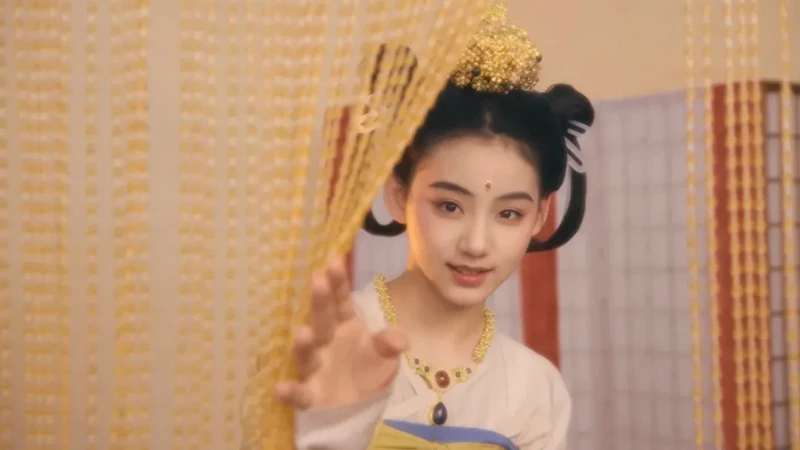
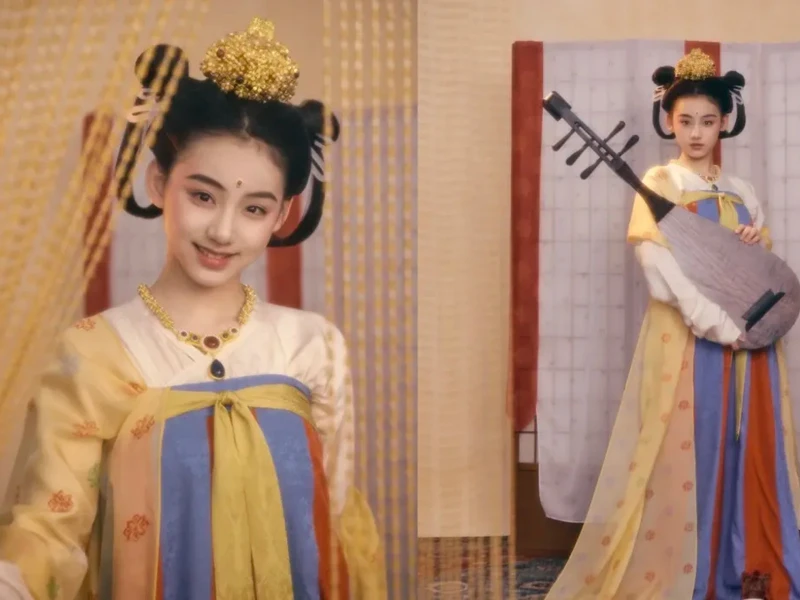
When 13-year-old actress Liu Jiaxi (刘佳玺) recently shared a photo series recreating the style of a 1,400-year-old noble girl, the internet took immediate notice. Dressed in Sui Dynasty-inspired attire, her image struck a chord far beyond typical historical cosplay. Many viewers instantly connected her look to her upcoming role as the young Dou Zhao (窦昭)) in the highly anticipated series Blossom (九重紫). Yet, the figure she portrays, Li Jingxun (李静训), represents a far deeper and more poignant story from China’s past. This act of transformation bridges centuries, turning ancient artifacts into a living conversation about memory, art, and the fleeting nature of life itself.
The Girl in the Tomb
Known affectionately as “Li the Child,” Li Jingxun’s short life was one of extraordinary privilege and profound tragedy. Born into the pinnacle of Sui Dynasty aristocracy as the great-granddaughter of Emperor Wen and granddaughter of Empress Dowager Yang Lihua (杨丽华), she was enveloped in luxury. Historical records describe a girl “instructed in the deep palace,” raised with immense care and expectation. Her world, however, was brutally brief. At just nine years old, she succumbed to pneumonia after being caught in a storm while on an excursion. Her early death, a personal tragedy, was followed by a familial catastrophe.
Soon after her burial, her family was purged under Emperor Yang of Sui due to political prophecies about the Li surname rising to power. This twist of fate made her lavish, undisturbed tomb a tragic irony: she became the only member of her line to escape a violent end, preserved in death with the honors denied to her kin in life.
The discovery of her intact tomb in Xi’an (西安) in 1957 offered an unprecedented window into the opulence of the era and the affection heaped upon this young girl. The burial was not merely ceremonial; it was a profound expression of grief and love from her grandmother, Yang Lihua, who ensured the child would carry all her worldly treasures into the afterlife. This context transforms the exquisite objects from mere artifacts into vessels of deep emotional history. They tell a silent story of loss, a family’s hope for her comfort in another realm, and a civilization’s intricate artistry dedicated to a life cut short.
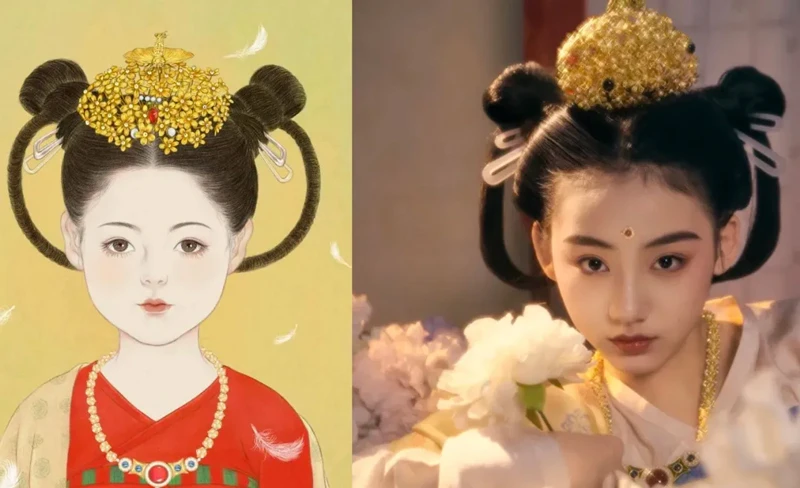
Artifacts of Love and Loss
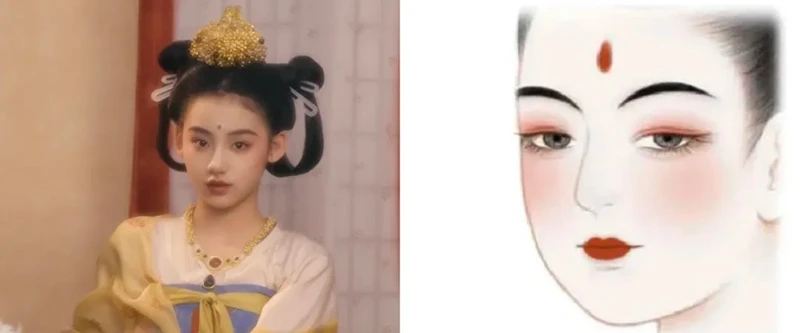
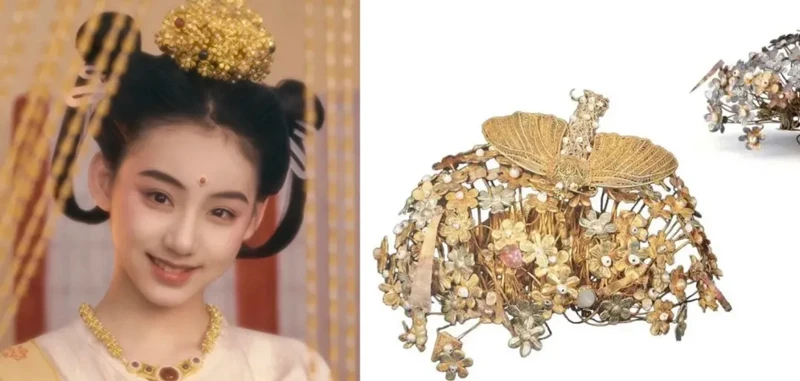
Central to Liu Jiaxi’s recreation are two stunning pieces from Li Jingxun’s trove, both housed in the National Museum of China. The first is the breathtaking Gold Hairpin with Pearl, Gemstone, and Moth Motif. Often mistakenly portrayed in modern art as a large crown, this piece is, in fact, a delicate hair ornament roughly 8 centimeters wide. Its name, “Nao E Chai” (闹蛾钗), evokes a lively moth alighting upon flowers.
Crafted with astonishing filigree work, the moth’s body is a hollow gold mesh inlaid with pearls, possibly once holding perfume. Its wings are delicate sheets of gold, and its antennae are fine golden wires. This combination of technical mastery and playful symbolism—a moth drawn to fragrant blooms—creates an object of intimate beauty, meant for a child’s hair.
The second masterpiece is the Gold Necklace Inlaid with Pearls and Gemstones, widely considered the most exquisite necklace unearthed from ancient China. It consists of 28 spherical gold beads, each formed by welding twelve tiny gold rings and adorned with ten pearls. These are interspersed with vibrant gold pendants holding polished sapphires and rubies. The harmony of color, the precision of its granulation, and the sheer grandeur of its design speak of access to the finest craftsmen of the day. It was a statement of supreme status, yet its final purpose was funerary. Like the hairpin, it was an object of love that she likely never wore in life, placed with her to adorn her eternal rest.
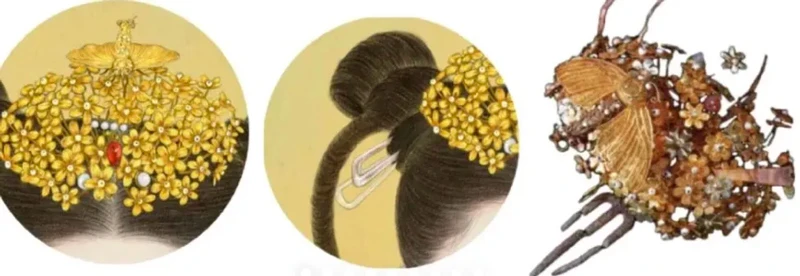
A Modern Resonance
Liu Jiaxi’s interpretation brings scholarly and archaeological details into a living, visual format. Her styling corrects common misconceptions: the hairpin is sized appropriately as a small accessory, not a dominant crown. Her hairstyle, a pair of Ya Ji (丫髻) or “y-shaped” buns, is historically plausible for a nine-year-old girl. The makeup features the subtle, curved “Moon Ridge” eyebrows fashionable in the Sui and Tang periods. Her attire—a narrow-sleeved, cross-collared blouse and high-waisted skirt—accurately reflects Sui Dynasty Hanfu styles, distinct from later Tang fashion. This attention to detail moves the recreation from costume play into the realm of informed historical representation.
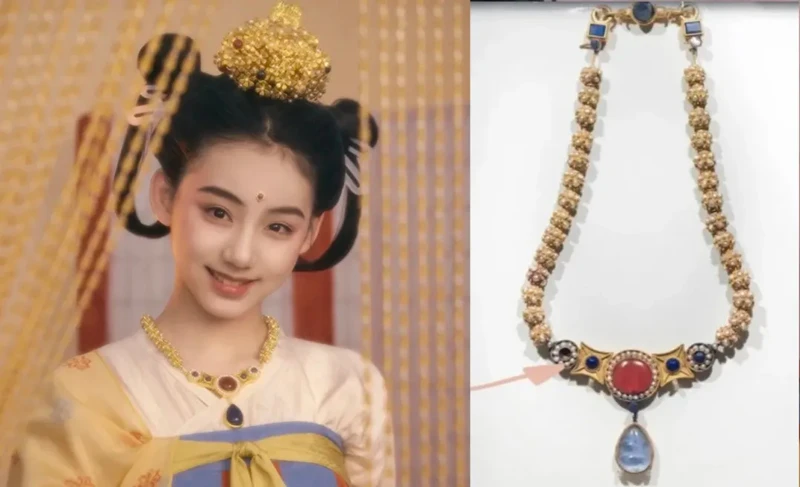
The public’s enthusiastic reaction reveals a growing hunger to connect with history in tangible, personal ways. Seeing a young actress embody Li Jingxun makes a distant historical figure relatable. It prompts questions about her personality, her dreams, and the society that mourned her. Furthermore, Liu’s upcoming role in Blossom creates a unique cultural link. Audiences will see her transition from portraying a real historical child of tragedy to a fictional character navigating the complex intrigues of a noble household. This duality enriches both performances, layering our understanding of childhood, resilience, and legacy across different narratives.
Ultimately, the fascination with Liu Jiaxi’s Li Jingxun is about more than a pretty picture. It represents a contemporary dialogue with the past. It is an attempt to reach across time to honor a singular life, to appreciate the artistry born of grief, and to reflect on the fragile thread of history that connects us all. In carefully reconstructing these symbols of love and loss, we do not just remember a little girl who died centuries ago; we acknowledge the enduring human impulses to cherish, to memorialize, and to beautify even our deepest sorrows.