A truth long buried finally surges to the surface. In the mercantile world of late Qing dynasty, a hidden patriarch sees his meticulously crafted empire begin to fracture. The schemes designed to control destinies, even those of his own blood, unravel under an unexpected light.
Li Wantang (李万堂), a titan of commerce, secretly orchestrated the official rehabilitation of Gu Pingyuan (古平原). His aim was twofold: to remove a formidable rival from his son Li Qin's (李钦) path in the salt trade and to publicly absolve himself of past familial neglect. He believed this act of patronage, following a recommendation by Viceroy Ruilin (瑞麟), was a masterstroke.
His plan hinged on anonymity. However, in a dramatic confrontation, Gu Pingyuan's mother publicly identified Li Wantang. The viceroy's recommendation was revealed as part of a larger trap. The patriarch stood exposed, his machinations laid bare before all.
With Li Wantang's influence broken, the landscape shifts. Recognizing Gu Pingyuan's superior acumen, Li Qin concedes defeat and proposes an alliance. Meanwhile, Su Zixuan (苏紫轩), a key figure caught in the crosscurrents, departs, leaving the future of these entangled fates uncertain.


1. The Web of Silk and Ledgers
In the bustling port cities of the late Qing, wealth was a language, and merchants were its most fluent poets. Among them moved Gu Pingyuan, a man whose past was a blank scroll and whose future was a ledger yet to be balanced. His shrewd mind had drawn the attention of powerful figures, none more calculating than Governor Ruilin. To the world, Ruilin’s support for Gu was a reward for reviving the South's economy. But in the shadowed corridors of power, a different calculation was being made. The governor’s aid was not a gift; it was the first carefully baited hook in a trap set for a ghost from Gu’s own bloodline.
A Governor's Gambit
Ruilin was no sentimental patron. The dire state of the southern provinces demanded a cold pragmatism. He saw in Gu Pingyuan not just a talented merchant, but a unique key. Through discreet investigation, Ruilin had uncovered a secret: the legendary, elusive merchant prince Li Wantang was Gu’s biological father, vanished for twenty years. Li was a shadow, protected by his own myth and the patronage of a Beijing prince. To force such a man into the light required a lure he could not resist.
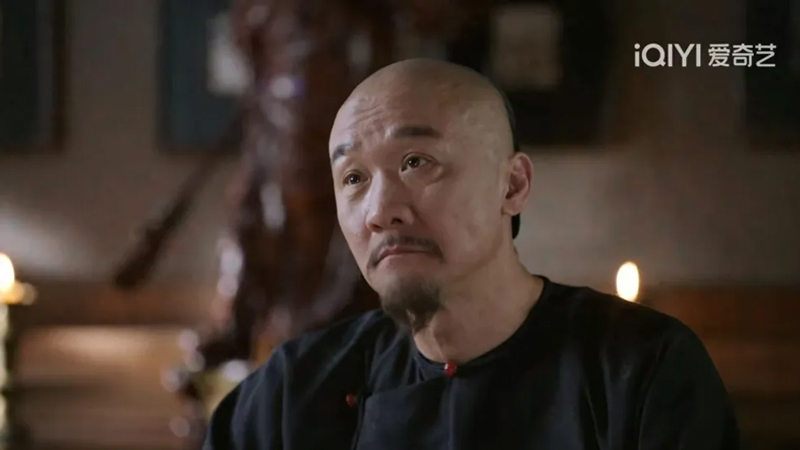
The restoration of Gu’s official scholarly status was that lure. Ruilin delayed this move, first sending Gu to manage critical infrastructure projects. This established Gu’s public worth without immediately threatening Li’s interests. Timing was everything. Ruilin initiated the restoration process at the precise moment when Li, ever vigilant, would perceive it as a strategic move he could influence from behind the scenes.
The ploy worked perfectly. Li Wantang, believing he was subtly shaping events, used his vast network to secure an official post for the newly recognized scholar-merchant. In doing so, he moved from the shadows onto Ruilin’s board. His intervention was a silent confession of paternity, a connection only one other living soul—Gu’s mother—could confirm. Ruilin had made the phantom tangible.
The Fractured Bond
This revelation was merely the first twist of the knife. Ruilin’s deeper design aimed to sever Gu Pingyuan from any potential alliance with his newfound family. Li Wantang’s world was one of high-stakes political allegiance, answerable to the Sixth Prince. Allowing a father-son reunion would inevitably pull Gu into that rival orbit, depriving Ruilin of his most capable economic operative. The governor needed Gu isolated, dependent, and wholly his.

The strategy exploited the unspoken bond between Gu and Li’s acknowledged heir, Li Qin (李钦). The two men, unaware they were brothers, had developed a fraternal camaraderie through shared trials. Ruilin’s grant of status violently altered this dynamic. Gu, once a rootless merchant with a stained heritage, was now an official. In the rigid hierarchy of the time, Li Qin would be forced to show formal deference to the man he saw as a peer.
This engineered inequality was a poison. Ruilin anticipated the resentment festering in Li Qin’s heart, a pride wounded by sudden, state-mandated inferiority. A few whispered words could transform confusion into jealousy, corroding their friendship beyond repair. With the paternal bond exposed and the fraternal one shattered, Gu would find himself alienated from the House of Li, his path back to them blocked by pride and protocol.
A Cage of One's Own Making
Stripped of potential familial allies, Gu Pingyuan’s position grew perilously exposed. The merchant world was a stormy sea where connections were the only anchor. Without the unspoken protection of Li Wantang’s formidable influence, which had subtly smoothed his path before, Gu’s commercial ventures would face unprecedented headwinds. Ruilin ensured Gu understood this new vulnerability with chilling clarity.
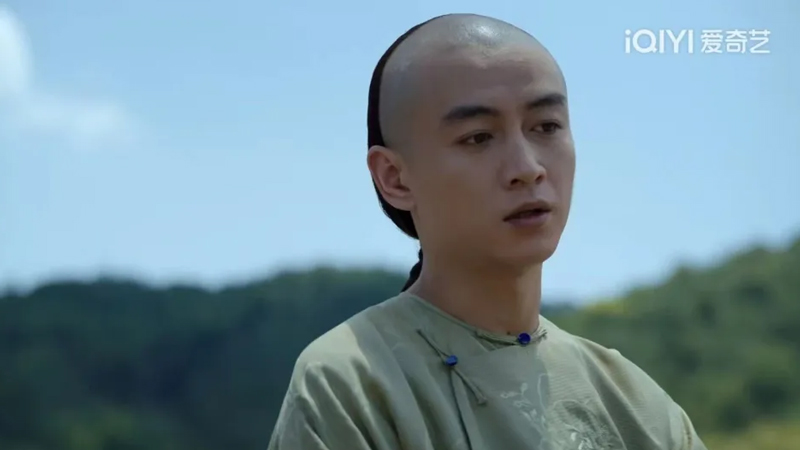
The governor’s scheme was a masterpiece of political jujitsu, using his target’s own instincts and affections against them. He presented Gu with a single, stark choice: navigate the treacherous waters alone, vulnerable to every current, or accept the shelter of the governor’s official mantle. For a man with a family to protect and a vision for regional recovery, the calculus was brutal and simple.
Thus, Ruilin achieved his quiet coup. He excised Li Wantang’s influence from his domain not through force, but through psychological maneuver. He transformed Gu Pingyuan from a reluctant asset into a compelled ally. The trap did not snap shut with violence, but with the soft, inevitable click of a lock turning, forged from the very metal of identity, legacy, and fractured love. The economic revival of the South would proceed, but its architect would now build it from within a gilded cage of another’s design.

2. Li Qin’s Journey After the Fall of Li Wantang
The departure of a dominant figure often creates unexpected opportunities for those left behind. When a powerful presence suddenly withdraws, the vacuum it leaves behind becomes a testing ground for ambition, capability, and self-awareness. This dynamic plays out in business, politics, and families, where the removal of a central authority forces subordinates and rivals to confront their true strengths and weaknesses without a safety net.
Freedom Through Absence
For Li Qin, his father's sudden incapacity was a liberation disguised as a crisis. He had long operated under the immense shadow of Li Wantang, a formidable merchant whose approval seemed perpetually out of reach. Every initiative he undertook was scrutinized, interrupted, or outright commandeered. He believed his efforts in disciplining unscrupulous traders and managing coastal repairs were sound, yet they were consistently dismissed without a fair hearing.
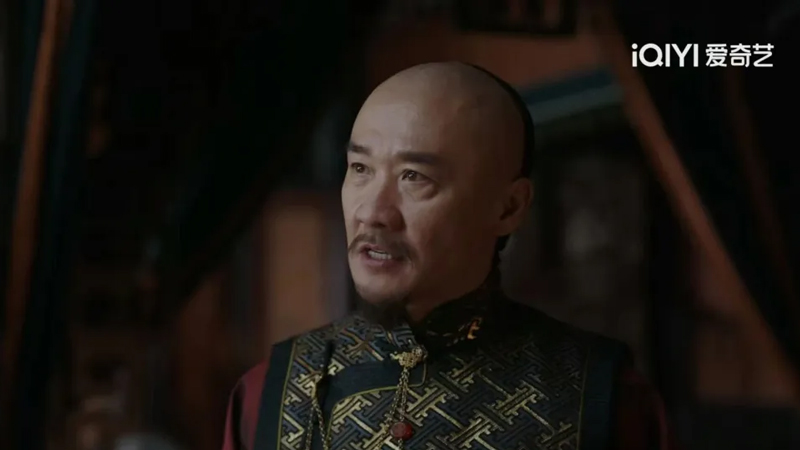
This constant oversight bred a deep-seated resentment and a gnawing uncertainty about his own abilities. Was he truly incompetent, or was he never given the space to succeed? The psychological weight of a hyper-critical patriarch stifled his development. When Li Wantang fell ill, the external pressure vanished, but an internal pressure mounted: the need to prove himself, finally, on his own terms.
He seized control of the family's salt trade operations in the Liangjiang (两江) region, seeing it as his moment. His primary objective shifted from obeying his father to defeating his father's favored rival, Gu Pingyuan. This was no longer just business; it was a personal trial by fire. Victory would validate his lifelong belief in his own talent, a belief his father had systematically undermined.
The Clarity of Defeat
The confrontation with Gu Pingyuan did not bring the triumph Li Qin envisioned. Operating without his father's indirect support or intervention, he faced the market's raw reality. His strategies, once blamed on his father's interference, were now undeniably his own. The resulting failure was a bitter but essential lesson.
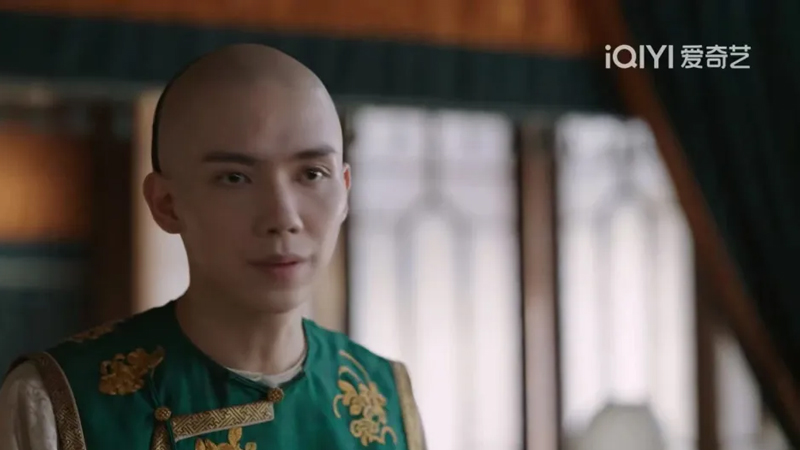
This loss provided a strange kind of clarity. For the first time, he could assess his skills without filters or excuses. He realized his father had not only been a critic but also an unseen guarantor, mitigating the consequences of past missteps. Stripped of this buffer, Li Qin's actual capabilities became painfully apparent. He saw the gap between himself and Gu Pingyuan not as an injustice, but as a simple fact.
This acceptance was transformative. Instead of fostering jealousy, it sparked genuine respect. He understood that Gu's prowess was earned, not gifted. The childish drive to "win" against his father's proxy evaporated, replaced by a pragmatic assessment of how to move forward. His goal shifted from proving a point to achieving success, even if it meant playing a supporting role.
New Alliances, New Foundations
This self-knowledge led to a strategic pivot. Li Qin approached Gu Pingyuan not as a defeated foe, but as a potential partner. He offered the substantial capital and resources of the Li family business to complement Gu's visionary acumen. This alliance was born from practicality rather than pride, a combination of financial might and operational genius.
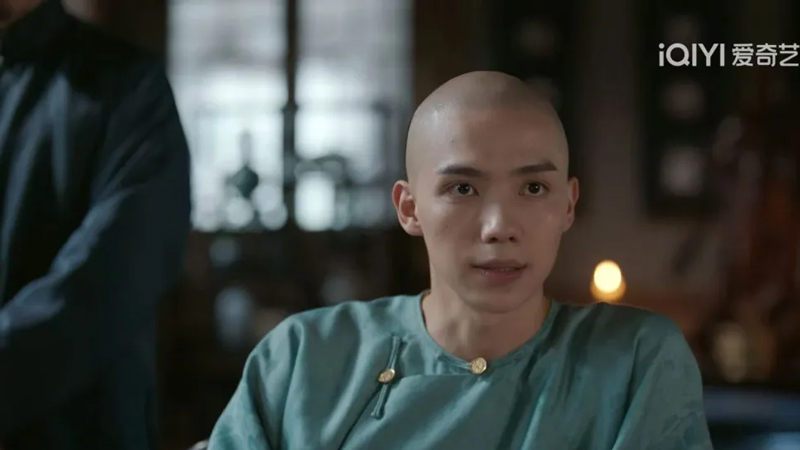
Meanwhile, another player, Ruilin, had orchestrated Li Wantang's downfall to remove a key obstacle in the salt trade. His machinations also sidelined Su Zixuan, who had been cultivating a rebellion by appealing to the honorable nature of a military leader, Jiu Shuai (九帅). Su's tactics involved demonstrating loyalty and righteousness, saving the subordinates of Jiu Shuai's ally, Li Cheng (李成), to draw a contrast with corrupt imperial officials.
To further prove his faction's capability, Su Zixuan had recommended Gu Pingyuan to revitalize Liangjiang's economy. Gu's rapid success in Nanjing, implementing projects that tangibly helped common people, served as a powerful advertisement for Su's cause. It was a demonstration that his group possessed not just martial ambition, but practical administrative talent.
The landscape was irrevocably altered. The old order, represented by Li Wantang's overwhelming control, had collapsed. In its place, new equations formed: a partnership based on complementary strengths between Li Qin and Gu Pingyuan, and a political struggle where economic competence became a weapon for recruitment. The field was now open, defined by ability rather than inheritance, where yesterday's rivals could become tomorrow's allies.

3. The Strategist's Ultimate Victory
In the narrative tapestry of Legend of the Magnate (大生意人), personal ambition often clashes with collective survival. This story examines how individuals manipulate social bonds for power, where every gesture of goodwill may conceal a deeper scheme. The most successful players are those who perceive hidden motives and turn them to their advantage.
False Alliances
Su Zixuan sought to strengthen her position by offering Gu Pingyuan as a tool to Rui Lin. She believed this gesture would secure favor with Jiu Shuai, a powerful commander. However, Rui Lin immediately recognized the proposal as a strategic ploy designed to benefit Su Zixuan alone. Instead of accepting the offer at face value, he analyzed its potential risks and rewards.
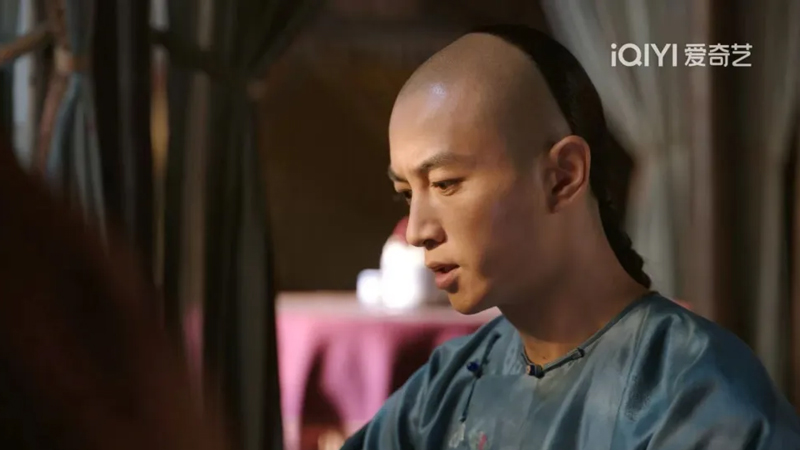
Rui Lin’s response was not rejection but subtle appropriation. He accepted Gu Pingyuan but on his own terms, ensuring Su Zixuan derived no future leverage from the arrangement. This move stripped her of any bargaining power she hoped to gain. By controlling the narrative, Rui Lin prevented her from using the connection as a recurring asset.
The interaction demonstrates that in such environments, overt generosity is frequently a trap. Rui Lin’s ability to decode Su Zixuan’s intent allowed him to neutralize the threat without direct confrontation. His actions transformed a potential liability into a controlled variable, setting a precedent for his later maneuvers.
Exploitative Relationships
Jiu Shuai engaged with Su Zixuan, enjoying the benefits of their association without offering any formal commitments. He utilized her resources and networks to advance his personal interests, always maintaining a cautious distance. This approach allowed him to harvest advantages while avoiding any binding obligations that could limit his freedom.

Similarly, Rui Lin observed this pattern and adapted it. He understood that Jiu Shuai’s primary concern was self-preservation and enrichment. By mirroring this detached engagement, Rui Lin could collaborate with Jiu Shuai when necessary without becoming dependent on him. Their interactions were transactional, based on mutual benefit rather than trust.
This section highlights how characters like Jiu Shuai operate within a framework of calculated selfishness. They create relationships that serve as tools for immediate gain, discarding them when they cease to be useful. Su Zixuan, in contrast, failed to impose conditions on these exchanges, leaving her vulnerable.
The decisive maneuver
Rui Lin’s cleverest action involved removing Li Wantang from contention. With a single, well-timed scheme, he isolated Li Wantang from the core power struggle. This was achieved not through brute force but by manipulating existing tensions and alliances, making Li Wantang’s position untenable.

Concurrently, Rui Lin tightened his grip on Gu Pingyuan, ensuring his cooperation. He then staged a performance with Jiu Shuai, creating a scenario that deceived Su Zixuan completely. This coordinated act left her with no viable options, forcing her to depart. Meanwhile, Gu Pingyuan joined forces with Li Qin, forming a new partnership under Rui Lin’s indirect influence.
The outcome solidified Rui Lin’s dominance. While others were eliminated or sidelined, he emerged with enhanced control over the situation. His success stemmed from anticipating others’ moves and countering them preemptively, always staying several steps ahead in the strategic game.

4. When Buried Truths Shatter a Merchant Dynasty
The intricate web woven by ambition and secrecy was irrevocably torn. Viceroy Ruilin emerged as the ultimate strategist, having masterfully dismantled Li Wantang's hidden patriarchy and ensnared Gu Pingyuan's loyalty. In the aftermath, a new order dawns not through familial legacy, but through pragmatic alliance, as Li Qin’s concession to Gu Pingyuan forges an unexpected partnership. Su Zixuan’s departure leaves a silent question hanging over the future—a reminder that some currents, once set in motion, flow beyond any single player's control. The merchant world, cleansed by the surge of long-buried truth, now rebuilds upon foundations of exposed reality and hard-won acumen, where every debt, even that of blood, must finally be settled.