

In the gripping palace drama Love & Crown (凤凰台上), Ling Cangcang (凌苍苍) finds herself thrust into a role she never desired. Forced into marriage by Xiao Huan (萧焕), who threatened her family, she becomes the queen of Da Qi (大齐) but carries a heart full of resentment. Her husband's actions—killing her mentor and harming Luo Xianxue (罗冼血)—leave her isolated in the royal court.
Days pass without her paying respects to the Empress Dowager or reclaiming the Phoenix Seal, a symbol of her authority. It is only after a pivotal moment during her return home, urged by Luo Xianxue and driven by a need to protect her loved ones, that she resolves to confront the Empress Dowager. What unfolds is a masterclass in tactical resistance, where Ling Cangcang employs three clever strategies to turn the tables on her adversary. This isn't just a story of palace intrigue; it's a lesson in asserting power when faced with deliberate opposition.
Stating Intentions
Upon returning to the palace, Ling Cangcang prepares a thoughtful gesture—bringing the Empress Dowager's favorite cheese—to formally pay her respects. However, she is met with resistance at the door by Chan GuGu (婵姑姑), who claims the Empress Dowager is resting and cannot be disturbed. Recognizing this as a deliberate snub, Ling Cangcang doesn't retreat. Instead, she calmly states her purpose: she is there to offer a gift and show filial piety. When Chan GuGu dismisses her again, citing the Empress Dowager's need to fast for health reasons, Ling Cangcang adapts. She suggests giving the cheese to Chan GuGu instead, subtly shifting the dynamic and refusing to be dismissed as insignificant.
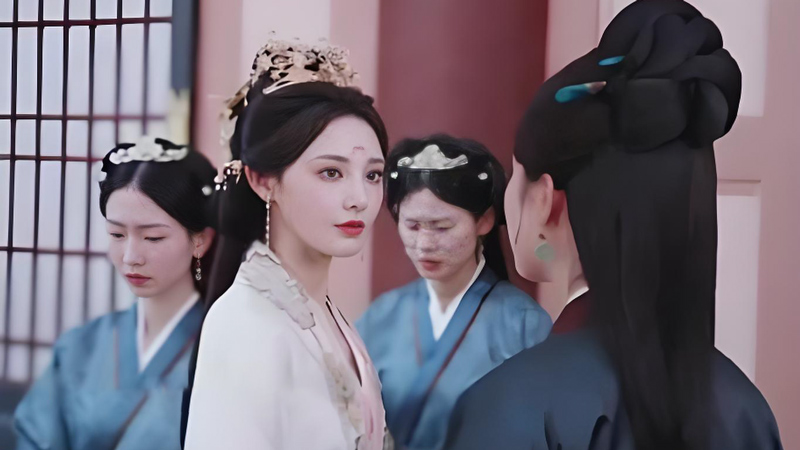
As Chan GuGu persists in blocking her way, Ling Cangcang decides to wait outside, demonstrating patience and resolve. This move forces Chan GuGu to escalate by striking one of Ling Cangcang's maids under the guise of correcting impropriety. In response, Ling Cangcang slaps Chan GuGu back, declaring that she won't tolerate bullying from someone overstepping their bounds. This act isn't mere retaliation; it's a calculated statement that she won't be intimidated. By standing her ground, she signals that she respects the hierarchy but won't accept disrespect, compelling the Empress Dowager to finally invite her in.
This approach highlights a key principle: when faced with someone who aims to suppress you, clearly stating your intentions and responding proportionally can dismantle their tactics. Ling Cangcang's actions show that yielding to unreasonable demands only invites further pressure. Instead, by asserting her position without aggression, she reclaims control and sets the stage for the next phase of her strategy.
Seizing Initiative
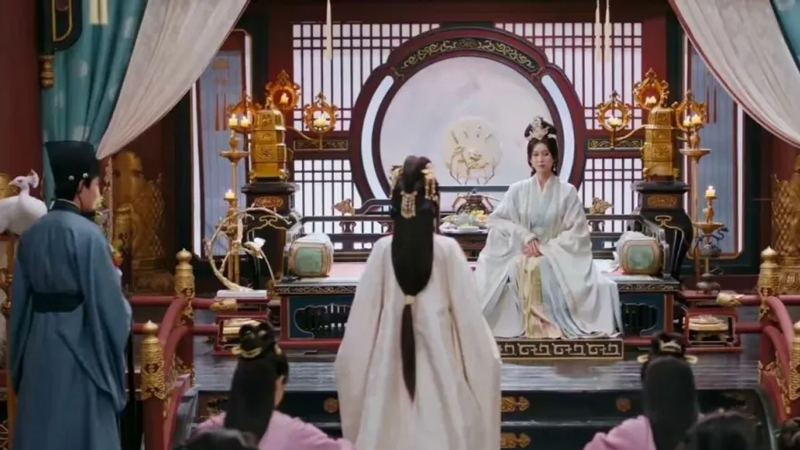
Once inside, the Empress Dowager immediately criticizes Ling Cangcang for striking her attendant, accusing her of arrogance. Rather than apologizing, Ling Cangcang seizes the initiative by defending herself. She explains that she came with cheese as a gesture of goodwill, but Chan GuGu lied about the Empress Dowager's health, claiming she was too overweight to receive visitors. This direct accusation shifts the focus from her actions to Chan GuGu's deceit, putting the Empress Dowager on the defensive.
Ling Cangcang strengthens her position by pointing out the inconsistency: the Empress Dowager's table is laden with fruits and pastries, contradicting the fasting excuse. By highlighting this, she frames herself as the wronged party, appealing for fairness. This move isn't just about defending herself; it's about controlling the narrative. She uses facts to undermine her opponent's credibility, ensuring that her voice is heard before others can distort the truth.
In doing so, Ling Cangcang demonstrates the power of proactive communication. By speaking up first, she prevents others from defining the situation to her disadvantage. This tactic is crucial in any conflict where power imbalances exist—taking charge of the conversation can expose falsehoods and rally support, turning a potential defeat into an opportunity for validation.
Leveraging Power
As the confrontation intensifies, Chan GuGu denies ever making the derogatory remarks and accuses Ling Cangcang of fabrication. Sensing the need to escalate, Ling Cangcang leverages her authority as queen. She reminds everyone that, despite her youth, she holds a higher rank than Chan GuGu, who is merely a servant. This assertion of hierarchy forces the Empress Dowager to acknowledge Ling Cangcang's position, making it difficult to dismiss her claims without appearing unjust.
Ling Cangcang then portrays herself as the victim, emphasizing that she only sought to honor the Empress Dowager but was met with obstruction and disrespect. By framing the incident this way, she puts the Empress Dowager in a bind—if she defends Chan GuGu, she risks appearing complicit in the misconduct. This strategic use of social leverage ensures that the Empress Dowager has no choice but to discipline Chan GuGu to maintain her own image of fairness.
This final strategy underscores the importance of using existing structures to your advantage. Ling Cangcang doesn't rely on brute force; she applies social and positional power to achieve her goals. It teaches that in hierarchical settings, understanding and wielding your status can compel others to act in your favor, especially when they are caught in their own contradictions.
