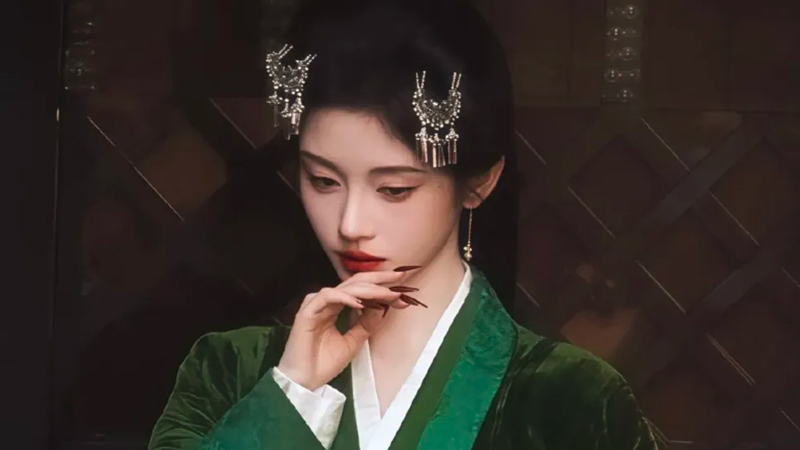
In the visually rich world of Chinese historical dramas, certain aesthetic elements capture the audience's imagination, prompting questions about their origins and authenticity. One such detail is the delicate hair ornament draped from the temples, often seen adorning characters in series like those featuring actress Ju Jingyi (鞠婧祎). These accessories, with their flowing pendants, serve not only as decorative highlights but also as functional pieces designed to enhance facial structure and hairstyle volume.
This adornment, known historically as Yan Bin (掩鬓), which translates to "covering the temples," has a deep-rooted evolution in Chinese fashion history. Its journey from ancient rituals to modern screens illustrates how traditional elements are reinterpreted, blending historical accuracy with contemporary style to create that iconic look viewers admire today.
Han Origins
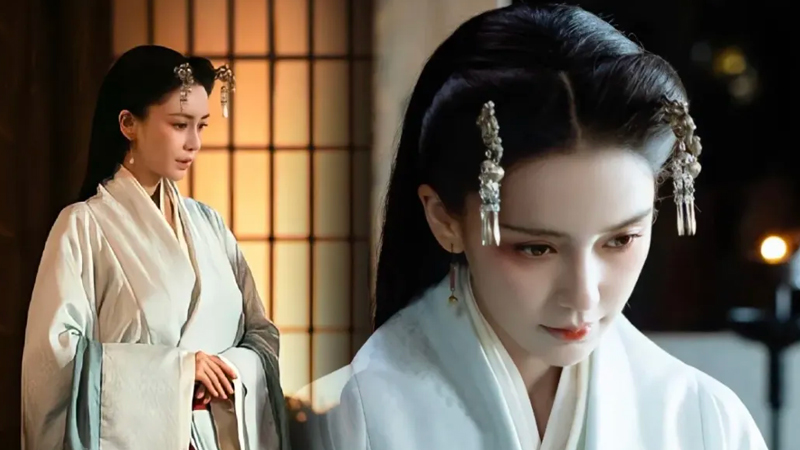
During the Han Dynasty, the precursor to Yan Bin emerged in the form of Bu Yao (步摇), a term meaning "step shake" that described hairpins with dangling beads or pearls that swayed with movement. These were not merely decorative; they symbolized elegance and status, often depicted in artifacts like the Mawangdui (马王堆) silk paintings. For instance, noblewomen would wear them on both sides of their head, adding a dynamic, graceful touch to their appearance as they walked. This early version focused on enhancing the wearer's aura through motion, and it laid the groundwork for later developments in temple adornments.
The design of Bu Yao was practical, too, as it helped balance the hairstyle and draw attention upward, creating the illusion of a higher cranial crown. Historical records and artistic depictions show that these ornaments were crafted from materials like jade or metal, reflecting the era's craftsmanship. In modern portrayals, such as the drama The Wind Blows From Longxi (风起陇西), characters sport similar styles, though adapted for visual appeal. This connection highlights how ancient techniques influenced later periods, showing a continuity in the desire to use accessories for both beauty and practical enhancement.
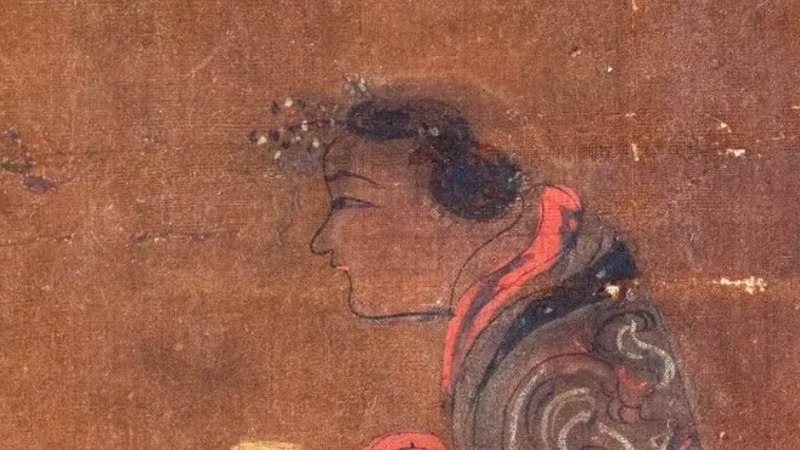
Over time, Bu Yao evolved beyond mere functionality, becoming a cultural symbol in itself. It was often mentioned in poetry and literature, emphasizing its role in daily life and ceremonial occasions. As dynasties changed, so did the interpretations of these ornaments, setting the stage for more intricate designs in subsequent eras. The Han approach, with its emphasis on fluidity and subtlety, demonstrated how hair accessories could transform a simple hairstyle into a statement of refinement and artistry.
Tang Refinements
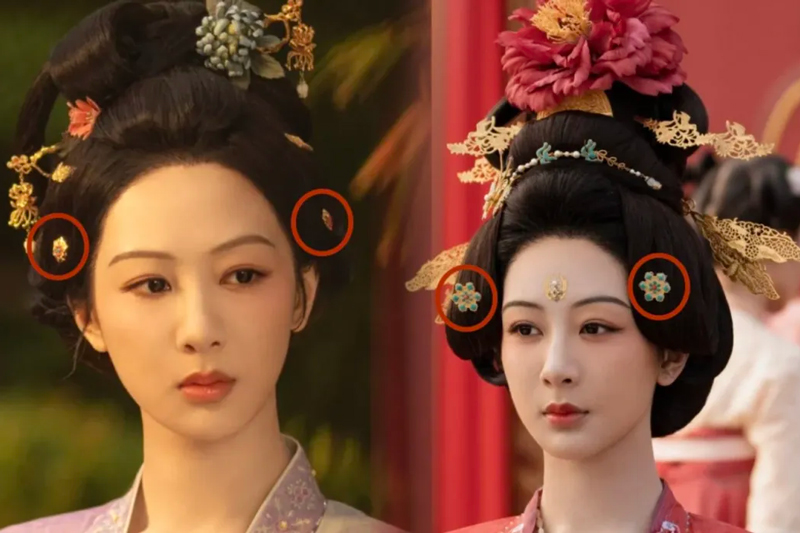
The Tang Dynasty witnessed a flourishing of artistic expression in hair ornaments, where Yan Bin elements incorporated combs and Hua Dian (花钿), which are delicate floral or geometric decorations. These were often made from gold, silver, or ivory and inserted into the hair at the temples to fill gaps in the coiffure, adding layers and richness. Combs, in particular, were popular; they came in various sizes, with smaller ones used for the sides and larger ones for the crown, allowing for versatile styling that could range from understated to opulent.
Hua Dian served a dual purpose: they could be attached to the hair as pins or even glued to the skin on the forehead or cheeks using adhesives like fish glue. This versatility made them a staple in Tang fashion, as described in Shen Congwen's Research on Ancient Chinese Clothing (中国古代服饰研究), which notes the trend of women adorning their hair with multiple small combs. The emphasis was on creating a balanced, harmonious look that complemented the voluminous hairstyles of the time, showcasing the dynasty's love for extravagance and detail.
This period also saw these ornaments become more accessible across social classes, with simpler versions made from wood or bone for commoners. The Tang innovations not only refined the visual impact of Yan Bin but also reinforced its role in everyday aesthetics, influencing neighboring regions. As trade and cultural exchanges expanded, these styles spread, laying a foundation for future adaptations that would further personalize the art of temple adornment.
Song to Ming
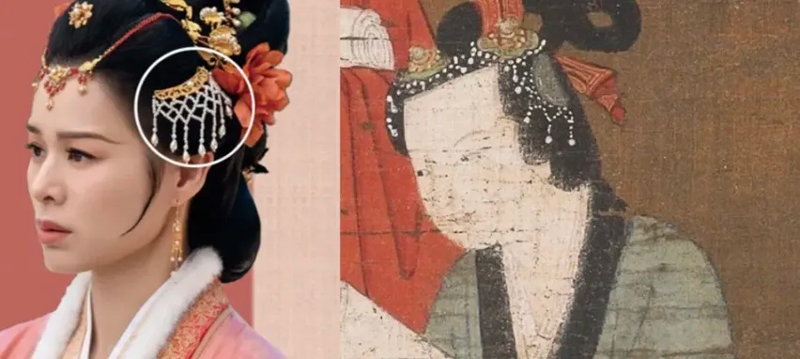
In the Song Dynasty, Yan Bin designs shifted toward elegance and subtlety, with pearls and jade carvings adorning combs known as Lian Shu (帘梳), or "curtain combs," which featured dangling beads or metal chains. This added a new dimension to hairstyles, increasing the decorative surface and allowing for more flexible arrangements. The focus was on creating a refined, scholarly aesthetic that aligned with the era's cultural values, moving away from the Tang's opulence toward understated beauty.
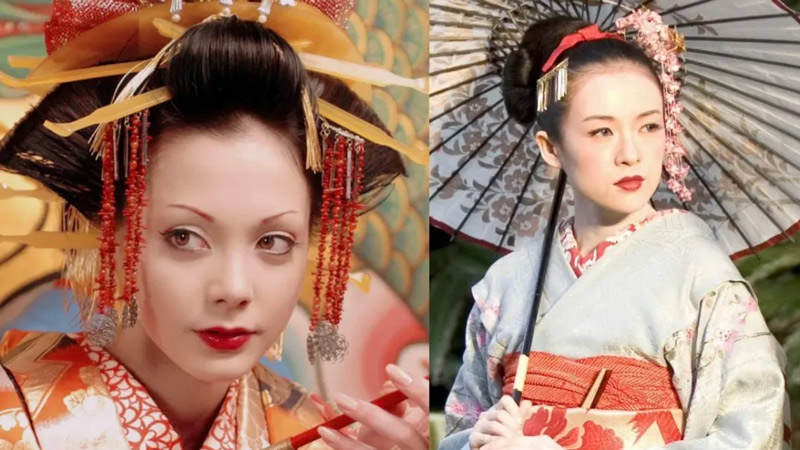
By the Ming Dynasty, Yan Bin had solidified as a key component of formal headdresses, often crafted into cloud or floral shapes and referred to in texts like Guest Seat Talk (客座赘语). These pieces were essentially hairpins, part of a larger set of accessories that completed a woman's ensemble for important occasions. They served to frame the face and enhance the overall symmetry of the hairstyle, demonstrating how historical practices were systematized into standardized fashion rules.
The evolution from Song to Ming highlights a gradual codification of beauty standards, where Yan Bin became more than just an ornament—it was an integral part of cultural identity. This period also saw its influence extend to other parts of East Asia, where it was sometimes mistaken for styles like geisha accessories due to regional adaptations. However, its roots remain firmly in Chinese tradition, illustrating how local innovations can gain broader appeal while retaining their unique heritage.
Modern Adaptations
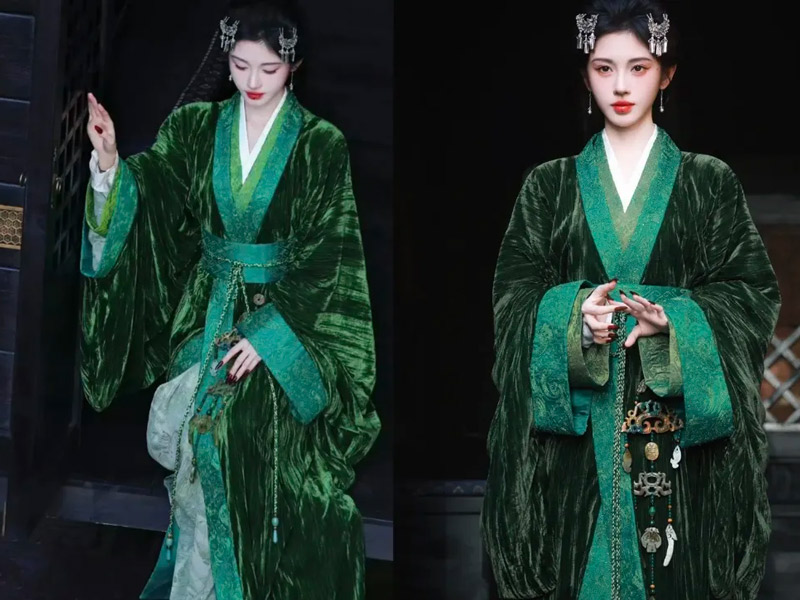
In contemporary settings, Yan Bin has found new life in historical dramas and fashion shoots, where it is often blended with elements like Miao silver (苗银) styles to create a hybrid look. This modern interpretation prioritizes visual impact over strict historical accuracy, as seen in Ju Jingyi's costumes, which use the ornament to achieve a "high cranial crown" effect that appeals to today's beauty ideals. Unlike ancient times, where accessories were fixed, current designs allow for more creativity, using materials like synthetic beads and lightweight metals to mimic the traditional look.
This revival speaks to a broader trend of rediscovering traditional Chinese aesthetics in global fashion, where Yan Bin serves as a bridge between past and present. Designers and stylists experiment with its form, incorporating it into everyday wear or cosplay, making it accessible to a wider audience. The ornament's ability to modify facial contours and add drama to hairstyles aligns with modern desires for customizable beauty solutions, showing how ancient wisdom can inform current trends.
In the future, Yan Bin's potential for innovation is vast, as it could inspire sustainable fashion or digital avatars in virtual worlds. Its enduring appeal lies in its simplicity and effectiveness—a testament to how traditional elements can evolve without losing their essence. By embracing such pieces, we not only honor history but also enrich contemporary culture, ensuring that these small yet significant adornments continue to captivate and inspire for generations to come.