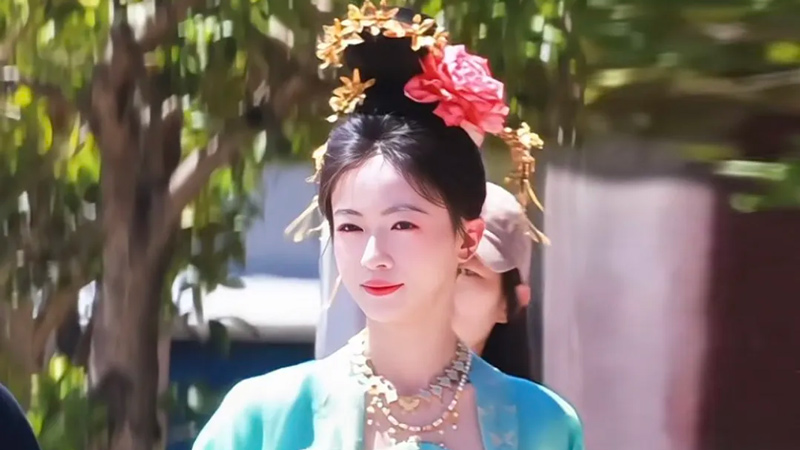
When actress Wu Jinyan (吴谨言) appeared in the historical drama Jiang Shan Wei Pin (江山为聘) with a headpiece adorned with a row of shimmering golden flowers, audiences were captivated. Each delicate bloom trembled with her movements, sparking lively debates online. Many wondered if such opulent accessories were truly part of ancient attire or merely artistic exaggeration. This curiosity opens a window into the rich tapestry of historical Chinese fashion, where hair ornaments were not just decorative but carried deep cultural weight. The dazzling display in the series invites a closer look at how these items reflected societal values and personal identity across different eras.
Ancient Beginnings
The use of floral gold decorations in hair, known as Dian (钿, gold flower ornament), dates back to the Wei (魏) and Jin (晋) periods. During this time, artisans began crafting thin gold sheets into flower shapes, which were then attached to hairpins or directly into hairstyles. These items gained prominence as symbols of status and beauty, evolving through subsequent dynasties. In the Tang (唐) era, Dian became highly popular, with intricate openwork designs that showcased advanced metalworking skills. Archaeological finds from Tang tombs include numerous gold flower pieces, confirming their widespread use among the elite.
By the Song (宋) dynasty, the fashion for Dian had expanded into more elaborate forms. One notable style was the Qiaoliang Zan (桥梁簪, bridge hairpin), which featured multiple gold flowers arranged in a fan-like pattern on a single pin. This design created the illusion of several hairpieces worn together, adding volume and grandeur to the wearer's appearance. Made primarily from gold or silver, these hairpins were often curved to fit securely into elaborate updos. Their popularity underscored a preference for complexity and elegance in daily adornment, blending artistry with practicality.
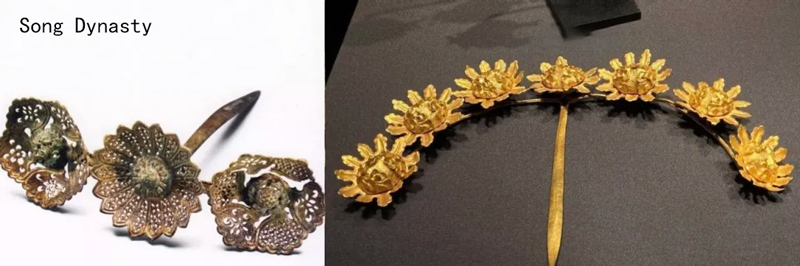
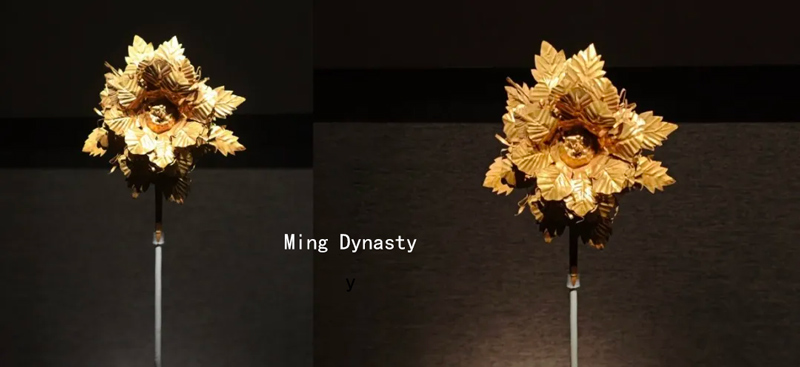
The Ming (明) period saw a fascinating shift as men began incorporating large gold flowers into their attire for special occasions. Events like spring festivals, weddings, or scholarly examinations became opportunities to display these accessories. Excavations from sites such as the tomb of Prince Zhuang of Liang (梁庄王) revealed gold peony hairpins designed for male use, often paired with hats or crowns. These pieces were typically larger than those worn by women, emphasizing boldness and prosperity. This practice highlighted how hair ornaments transcended gender, serving as markers of celebration and social identity.
Symbolism and Style
Beyond mere decoration, Dian and similar hair ornaments held profound symbolic meanings. Flowers like peonies represented wealth and honor, while the act of wearing them expressed hopes for a fortunate future. In poetry and literature, such as the works of Bai Juyi (白居易) from the Tang dynasty, references to Huadian (花钿, floral makeup) illustrated their cultural resonance. Lines describing fallen hair ornaments in chaotic scenes evoked empathy, showing how these items were intertwined with personal and collective experiences. They served as silent narrators of life's joys and struggles.
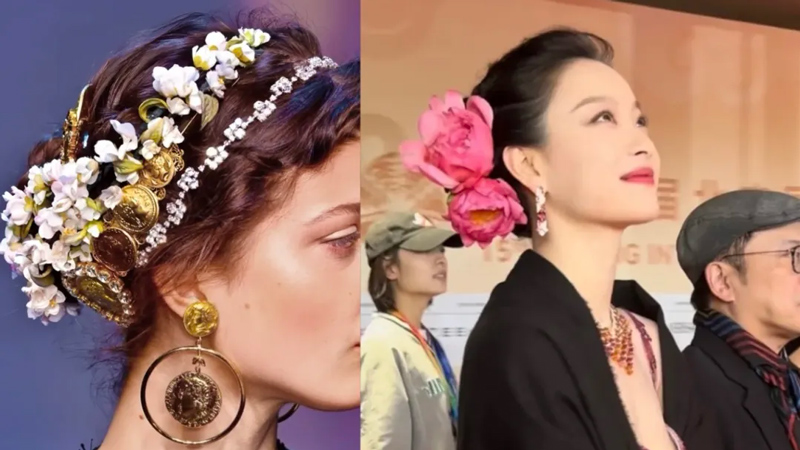
The application methods for these ornaments varied widely. Some were attached via slender metal stems that slid into hair knots, while others were glued or painted onto the skin as part of Huadian makeup. This versatility allowed for creative expression, with wearers mixing materials like pearls or gemstones for added brilliance. In the Song era, the bridge hairpin exemplified innovation, enabling multiple flowers to be worn as one cohesive piece. Such designs not only enhanced beauty but also demonstrated practical ingenuity in historical fashion.
Today, the legacy of these adornments continues to inspire modern interpretations in media and fashion. The portrayal in Jiang Shan Wei Pin resonates because it taps into a universal appreciation for beauty that bridges time and culture. Whether in ancient courts or contemporary screens, the desire to adorn oneself with meaningful symbols remains a shared human trait. This enduring appeal reminds us that aesthetics often carry stories of identity, hope, and connection across generations.