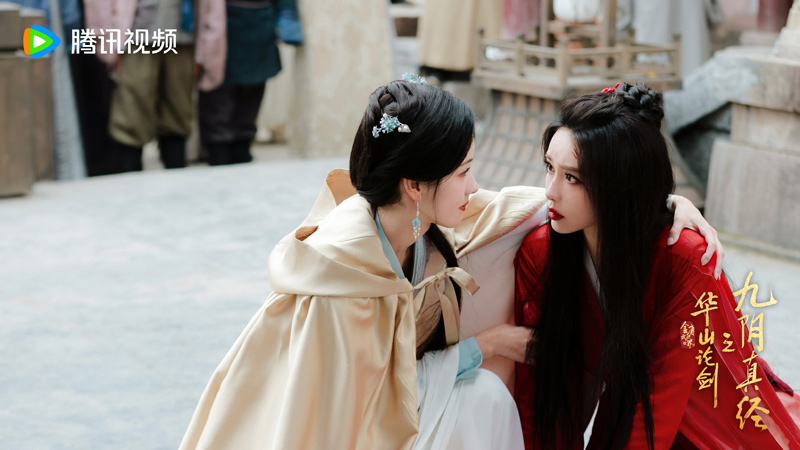
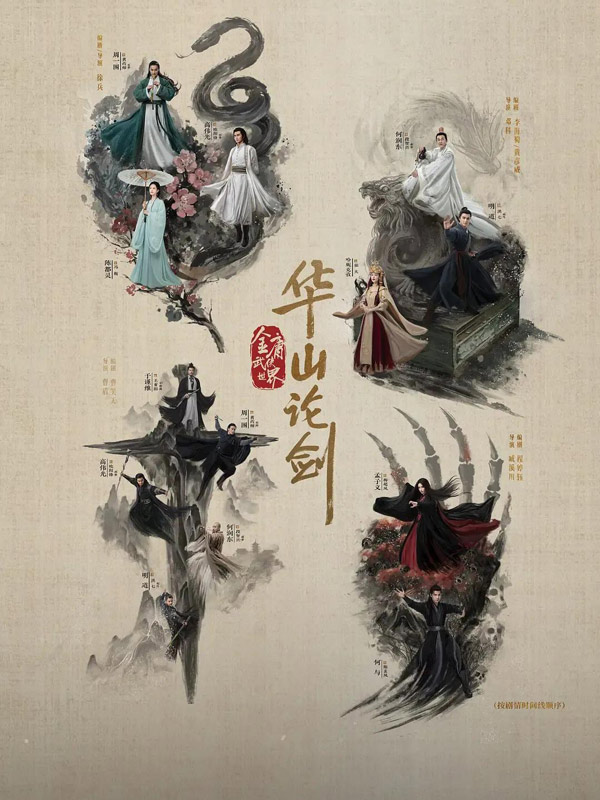
Recently, the wuxia drama Duel on Mount Hua (华山论剑), co-produced by Tencent Video and Yaoke Media, directed by Xu Bing, Deng Ke, Cao Dun, and Zang Xichuan, officially wrapped up. The cast lineup (listed by story timeline) includes Zhou Yiwei, Gao Weiguang, Chen Duling, Peter Ho, Hankiz Omar, Ming Dao, Meng Ziyi, and He Yu.
Last year's Iron Blood and Loyal Heart (铁血丹心) followed the classic spirit of Jin Yong's original, while Duel on Mount Hua takes a bolder approach. Its four story arcs—Eastern Heretic and Western Venom (东邪西毒), Southern Emperor and Northern Beggar (南帝北丐), The Five (五绝争锋), and Nine Yin True Sutra (九阴真经)—reconstruct the characters in surprising ways. Together, these two dramas create a "Jin Yong Wuxia Universe" that both respects tradition and experiments with form, bringing new energy into the genre.
In today's market, producing a wuxia drama already requires a dose of passion and chivalry. We spoke with producer Zhang Yingying, who worked on both Iron Blood and Loyal Heart and Duel on Mount Hua, to unpack how this unique Jin Yong world was shaped for modern viewers and why it resonates.
The Wuxia Starting Point, and a Fresh Unit-Story Approach
From his first novel The Book and the Sword (书剑恩仇录) in 1955 to his final work The Deer and the Cauldron (鹿鼎记) in 1972, Jin Yong created a vast wuxia world in just 17 years. His stories shaped generations of readers, and countless adaptations followed—so many that, even decades later, his influence is still impossible to ignore.
When Tencent acquired the Legend of the Condor Heroes IP (射雕英雄传) and handed it to Yaoke, it was a perfect match: Tencent's ambition plus Yaoke's passion for wuxia. Both wanted to find a new way to present Jin Yong's works to today's audience.
During development, the Yaoke team consulted many Jin Yong experts: Peking University scholars, Liu Shen Leilei (a media writer with a million followers for his witty Jin Yong commentary), and veteran director Zhang Jizhong, who has adapted many of Jin Yong's works. Out of all this input, the idea of building a "Jin Yong Universe" slowly took shape.
Traditionally, adaptations pick a single novel and stick to it. But Yaoke wanted something different—reassembling Jin Yong's world by focusing on the characters. Each arc becomes a unit that connects multiple figures across stories, filling in blank spaces from the original and expanding brief mentions into full storylines. The result: a wuxia world that feels more layered, interconnected, and expansive.
Producer Zhang explains:
"When we first designed the project, we arranged it strictly by timeline. The story order should be Eastern Heretic and Western Venom, Southern Emperor and Northern Beggar, The Five, Nine Yin True Sutra, then Iron Blood and Loyal Heart. The first two arcs show the youth and backstories of Eastern Heretic, Western Venom, Southern Emperor, and Northern Beggar. The Five brings them together at Mount Hua to fight for the Nine Yin True Sutra. Then in Nine Yin True Sutra, Mei Chaofeng and Chen Xuanfeng steal the text from Peach Blossom Island and flee, ending with six-year-old Guo Jing stabbing Chen Xuanfeng—directly linking into Iron Blood and Loyal Heart.
In the earlier arcs, we allowed ourselves more freedom: creating new character setups, like Eastern Heretic and Western Venom being friends in their youth, Southern Emperor and Northern Beggar swapping life paths, or the Five Masters teaming up against the Ming Cult (明教). By contrast, Iron Blood and Loyal Heart holds closer to the original.
Ideally, we hoped to broadcast everything in story order, so both plot and character development would feel clearer and more immersive for viewers. But because of policy requirements and scheduling decisions, Iron Blood and Loyal Heart aired first. We're now adjusting things on Tencent's platform—special features already list the episodes in chronological order. If possible, we'd love audiences to rewatch it that way. The immersion is much stronger."
Preparatory Work
Zhang Yingying officially took over the project in March 2022, kicking off pre-production and confirming choices for directors, cast, and the broader production team.
1. Contact Main Five Directors and the Art Director
"The first director we locked in was Cao Dun. He had already been involved back when the concept of a Jin Yong wuxia universe was first being laid out. From the start, he was set to direct Five Masters' Confrontation, the climactic chapter that brings all the key figures together. In practice, though, this was the last unit shot. Cao Dun has an unusually rigorous sense of structure: he needed the arcs, characters, and locations from the previous units to be firmly established so that the logic would hold together smoothly.
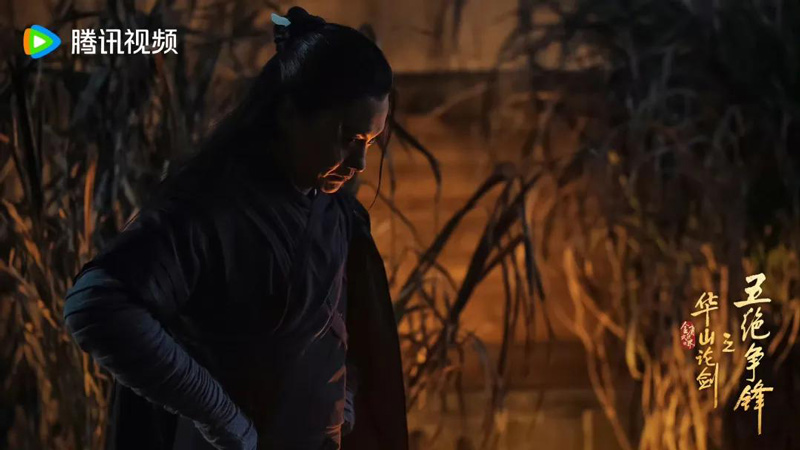
Cao is a very technical director, with exceptional control over lighting. Since The Longest Day in Chang'an (长安十二时辰), he has often preferred shooting night-for-day, which lets him bypass sunlight entirely and maintain full control over the look. Five Masters' Confrontation contains many such night-for-day sequences. He also made extensive use of cutting-edge tools, including virtual production stages. The sheer visual impact of that unit relied heavily on his technical and directorial mastery.
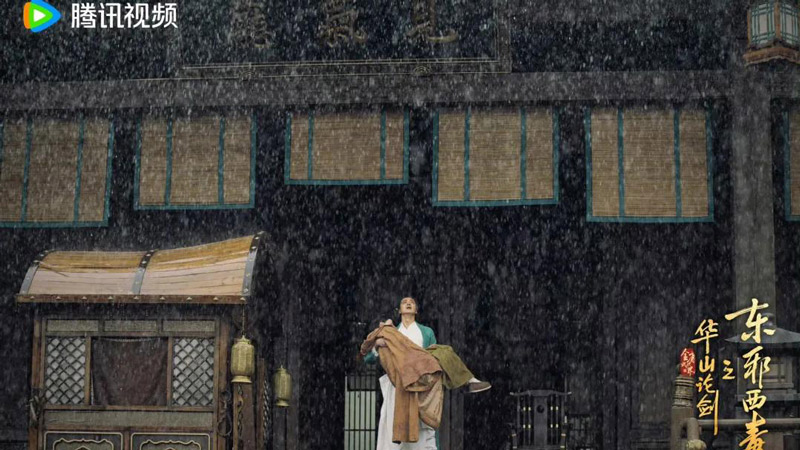
With Xu Bing, the team originally wanted him just to write the script. Xu chose to focus on the Eastern Heretic and Western Venom, two characters he felt strongly about. Once the team read his script, however, it was obvious his unique sensibility could only be fully realized if he directed it himself. That's how he came to helm Eastern Heretic and Western Venom. It's a unit that carries a very strong authorial signature. Xu Bing's literary depth infuses the entire piece with a kind of romantic, art-house aura. At the same time, Eastern Heretic and Western Venom features a number of seasoned actors with superb martial arts choreography, giving the fights a fluidity and weight that recall the old-school wuxia flavor.
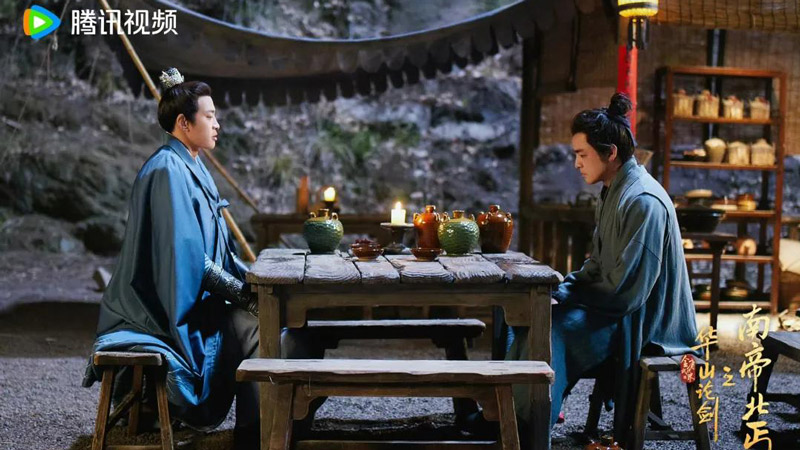
Southern Emperor and Northern Beggar and The Nine Yin True Sutra followed a different process: first came the scripts, then the directors. Southern Emperor and Northern Beggar was designed from the outset as a lighter, more comedic piece, which fit perfectly with Deng Ke. Deng runs a highly industrialized directing system, with a clearly defined team structure under him — separate directing groups handling different elements in sync with the main director. The result is a smooth, efficient workflow and a breezy tone.
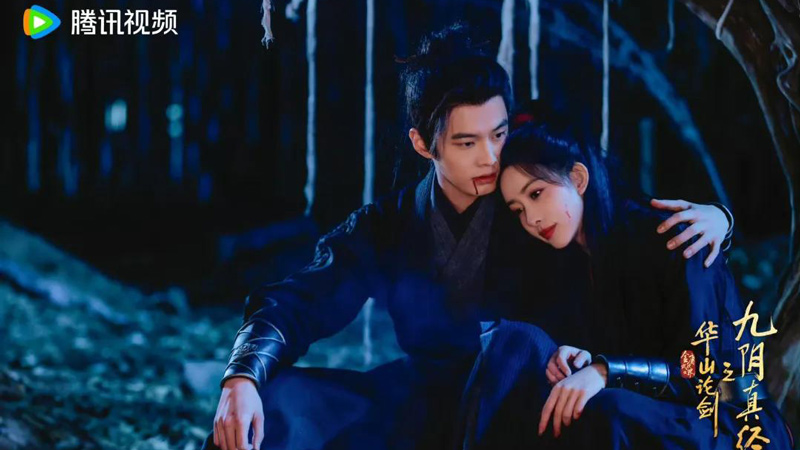
The Nine Yin True Sutra came together under more urgent circumstances. Director Zang Xichuan stepped in during the pandemic on short notice and had to adapt quickly. He is especially skilled at guiding actors to find their performances, and in this unit he helped the cast get into the right emotional space. Zang had previously directed The Justice, a revenge drama led by women, which made him a natural fit for handling the tragic arc of Mei Chaofeng in The Nine Yin True Sutra.
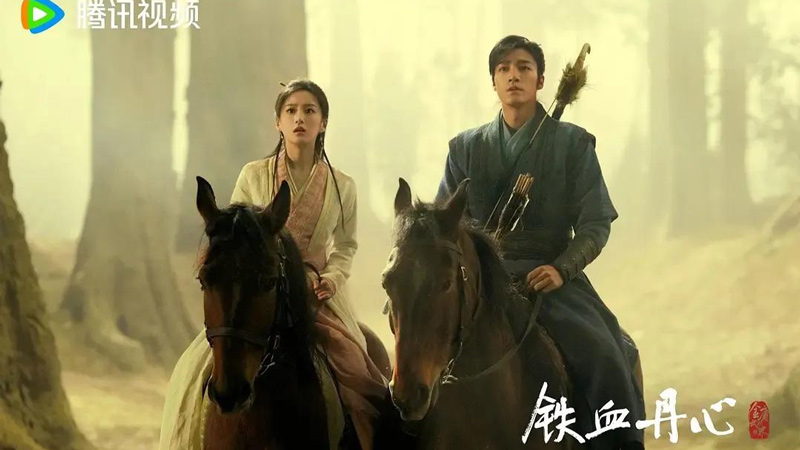
Finally, Yang Lei directed Iron Blood and Loyal Heart , the most faithful to the novel, centering on the classic duo of Guo Jing and Huang Rong. From the beginning Yang set the tone for this unit: loyal to the original, honoring the classic, while still pushing aesthetic innovation. His focus was on the coming-of-age journey of Guo and Huang, emphasizing youthful growth. Yang himself has a strong sense of childlike wonder, which bled into the work. He also brought in young screenwriter Luo Yiwei to inject fresh perspectives that align with contemporary sensibilities, keeping the story close to how today's audience thinks."
When the Five Greats clash on Mount Hua, it's not just the characters testing their limits — the five directors are also showcasing their own unique skills inside this "arena" of Jin Yong's universe. By pairing different directors and writers with different story units, each chapter gains its own aesthetic flavor, keeping the series diverse and dynamic. But all of it still had to belong under one consistent stylistic umbrella, which is a long-standing principle at Yaoke.
"Our production design, costumes, stunt team, music, and lead cast were all unified, controlled by the production side, based on how we positioned the project from the very beginning," Zhang explains.
Take production designer Shao Changyong, for instance — the team chose him because his work on Nirvana in Fire (琅琊榜) captured the stark realism they wanted. Costume designer Ru Meiqi had also worked on Nirvana in Fire and The Story of Minglan (知否), bringing a grounded, lived-in sensibility to the looks. Action director Gu Xuanzhao had handled choreography for films like Shadow (影) and Raging Fire (怒火重案). Hair and makeup lead Yang Xiaohai joined as well. Together they formed what Zhang calls a "top-tier team," strong enough to stabilize the core vision and let each director play to their strengths while keeping the whole cohesive.
2. Actor Casting
Casting followed a similar philosophy, stressing both stylistic fit and the potential for long-term collaboration.
"When we first talked about Ouyang Feng, the very first person we thought of was Gao Weiguang. His features have a distinctly Western look, and our earliest concept sketches for the role were all based on Ouyang Feng. Later, once Xu Bing's script came in, his version of Ouyang Feng carried this innocence and youthful romanticism. That convinced us even more that Gao was the only choice. Luckily he himself had always dreamed of acting in a wuxia, so it was a perfect match."
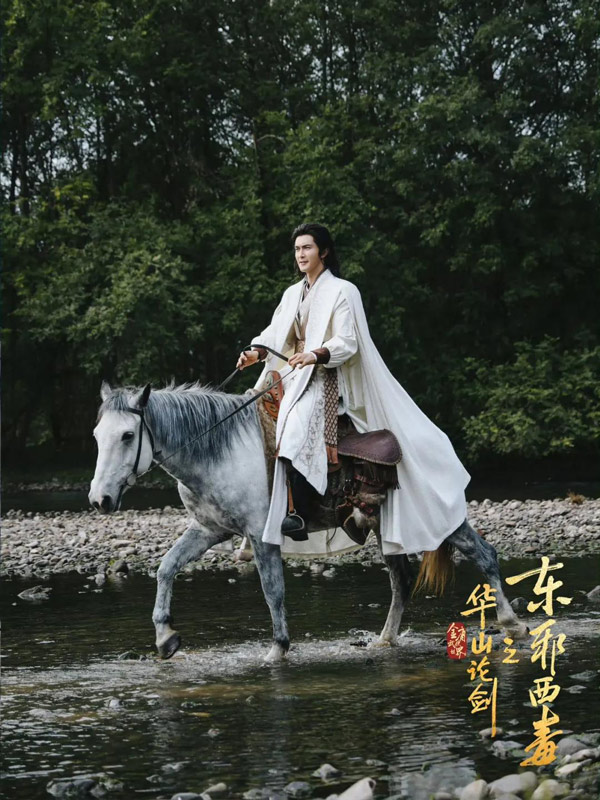
For other roles, temperament was the key. Huang Yaoshi needed both a detached, lofty aura and a touch of eccentricity from someone just stepping into the martial world — Zhou Yiwei captured that complexity effortlessly. Chen Duling's cool elegance and poise matched Feng Heng. As for the Southern Emperor, Duan Zhixing, he's a noble prince yet brimming with natural honesty and warmth — Peter Ho brought that layered combination to life. Ming Dao's Hong Qigong carried both humor and uprightness, embodying the earthy chivalry of a man of the people. Hanikezi's striking exotic beauty made her a natural fit for Yihuo, the Wuman princess. Meng Ziyi's mix of allure and tragic intensity made her the "chosen one" for Mei Chaofeng. And Chen Xuanfeng needed a sense of youthful vitality, overturning the usual rigid image of the "Bronze Corpse" — He Yu was the obvious pick.
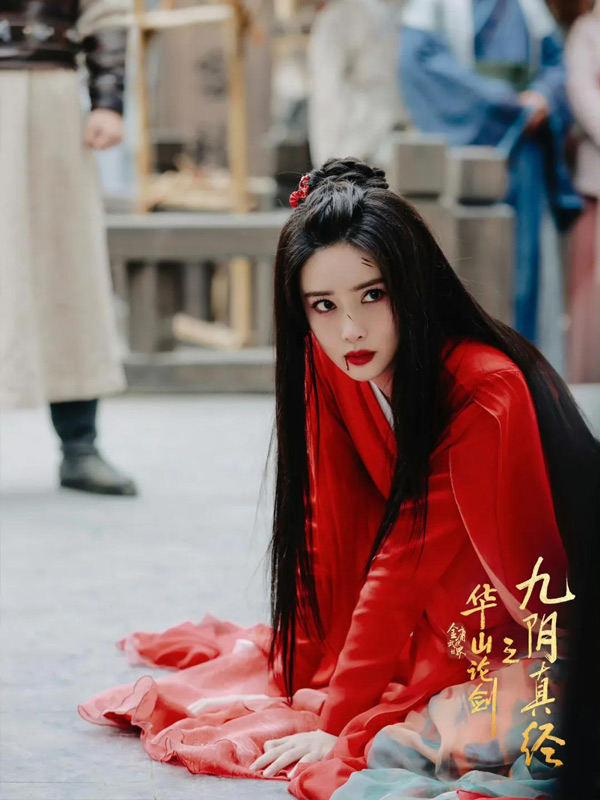
In most cases, these actors had already been imagined for their roles during the scriptwriting stage, so later conversations went smoothly. From the start, the team was upfront: this isn't just a single show, but an entire Jin Yong universe. Actors would need to play their characters both as younger leads in these units and later as supporting figures in adaptations that follow. The plan even includes returning for The Return of the Condor Heroes. The actors were enthusiastic about the idea and eager to commit long-term, building this universe together step by step.
The Scale of the Jianghu
To bring this kind of martial world to life required a massive crew and an unusually long schedule. Zhang Yingying shared some staggering numbers with us.
"Our total production cycle was 172 days, but because we used an overlapping system, every unit had its own A and B teams — some even had a C team. If you add up all the shooting days across these parallel units, the number comes to 582. At peak, there were seven different crews working simultaneously in Hengdian. The overall crew size at its height reached 1,500 people. Visual effects covered 1,200 minutes of footage. We had 1,400 horses, 1,200 costumes, more than 10,000 design sketches, and nearly 300 major characters."
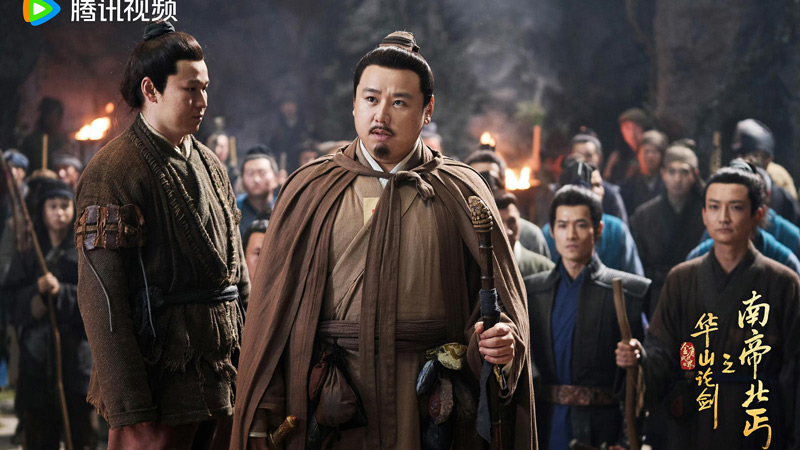
With such a large crew and so many group scenes, the production faced huge coordination challenges. On top of that, it coincided with China's reopening from the pandemic, so scheduling was often disrupted. This meant constant shuffling of personnel between units, and collaboration across creative teams was essential.
"We had to coordinate actors so they could appear in more than one unit. Directors and writers also had to align — later units needed to inherit certain choices already established in earlier scripts. For example, once Xu Bing completed the full eight-episode script for Eastern Heretic and Western Venom, that became the foundation. Subsequent writers had to build on it to maintain consistency in the characters. The later directors were also taken to the editing rooms to watch the footage already shot by earlier teams, so they could ensure continuity and unity."
The challenge was twofold: narratively, to maintain internal logic and lay a solid foundation for the upcoming Return of the Condor Heroes series; and logistically, to coordinate multiple units while navigating the unpredictability of the pandemic. The difficulty level was unusually high, even by industry standards. But the team managed to push through, delivering one ambitious sequence after another.
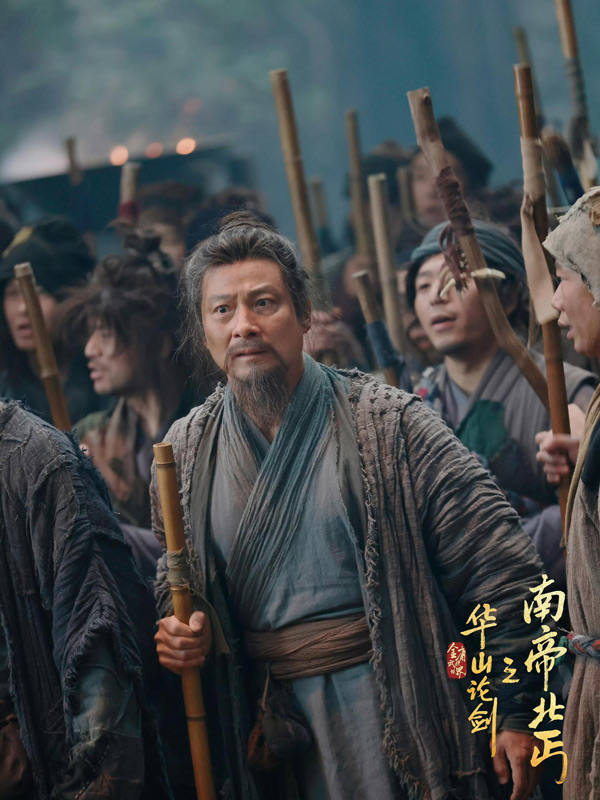
One example Zhang gives is from episode six of Eastern Heretic and Western Venom, which features a large-scale fight in a muddy village. The crew literally transformed the entire set into a mud pit. The fight scene took a full week to shoot, with Gao Weiguang and others rolling in the mud day after day — exhausting work. Another major fight sequence at Yunshuizhuang took ten straight days to film. "Every detail, every shot was ground out bit by bit," Zhang says.
A New Wave of Wuxia
When Iron-Blooded Loyalty aired last year, viewers showed an unexpectedly strong interest in the character Yang Kang. Traditionally, in adaptations of The Legend of the Condor Heroes, Yang Kang has been set up as a foil to Guo Jing — leaning more toward the role of a villain. But in this version, the writers gave him more depth, more human contradictions, which allowed audiences to see another side of him.
"After the release, we noticed that today's audiences are actually more drawn to Yang Kang than to characters like Guo Jing or the Jiangnan Seven Freaks, who represent the classic ‘hero' archetype. In our current era, viewers resonate more with characters who have flaws and vulnerabilities, who feel more like ordinary people, rather than perfect, untouchable heroes. We need to recognize this shift in values. Each generation has its own idea of what wuxia means. Going forward, in any genre, creators need to consider that audiences prefer characters who feel alive, relatable, and rooted in real emotions — and works should reflect that with a more contemporary sensibility."
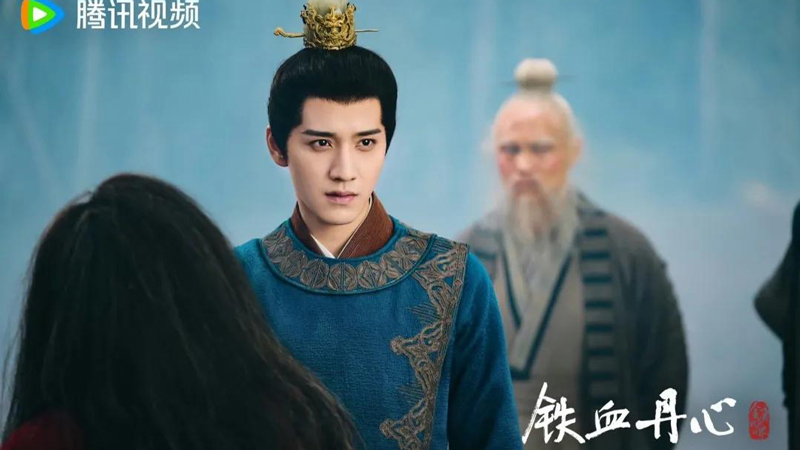
This year, the units within Duel on Mount Hua took bolder stylistic risks, especially Eastern Heretic and Western Venom, which carried the strongest personal imprint of its director. To the team's surprise, it achieved a very high completion rate on Tencent Video, and received solid feedback on platforms like Douban.
"A high completion rate is a huge encouragement for us. It means audience engagement is strong — nearly half of the people who started the show stuck with it all the way to the end. That tells us the work truly resonated."
The team had worried at first that Eastern Heretic and Western Venom might be too unconventional, but the positive reception proved otherwise. "It shows that young people still hold wuxia in their hearts. They still long for the idea of the Jianghu, but they want it expressed in a way that feels fresh and inventive. For creators, that's the best kind of encouragement. Whether it's for veterans like Xu Bing or younger teams like ours, it gives us the courage to take bigger risks and push for more innovation across genres."
Classics don't fade away. They just need to be reinterpreted, given new lenses and new storytelling methods, so that today's audiences can embrace a Jianghu that feels sharper, bolder, and more in tune with the present.