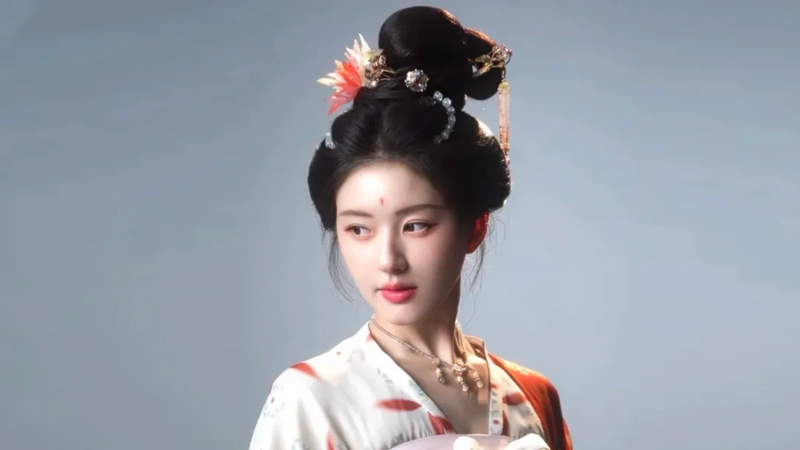
How did women in ancient China keep their elaborate hairstyles perfectly intact without modern hairspray or bobby pins? While watching historical dramas, many viewers find themselves marveling at the towering, intricate hairdos, wondering about the secrets behind their remarkable stability. These architectural marvels of hair, often adorned with glittering accessories, seem to defy gravity through palace intrigues and martial arts battles alike. The answer lies not in magical solutions but in three ingenious tools that formed the cornerstone of traditional hairstyling: natural hair fixative, supplemental hairpieces, and strategic hairpins. These elements combined to create styles that were both beautiful and durable, allowing ancient Chinese women to express their identity and status through their hair.
Nature's Hair Gel
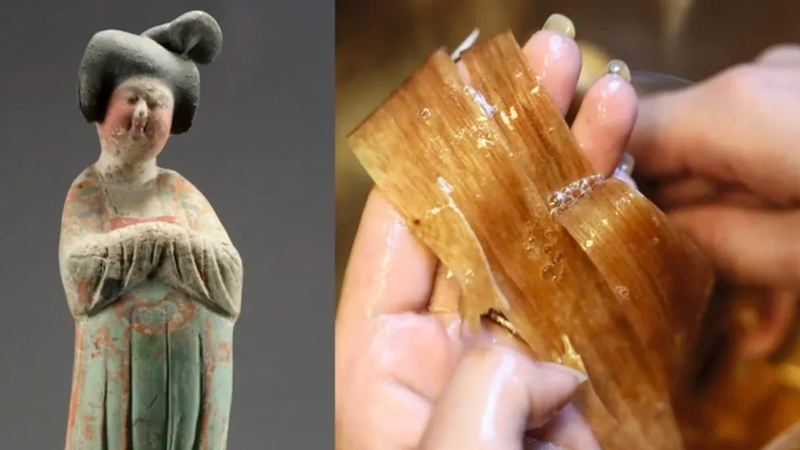
The primary solution for hair fixation came from an unexpected source: trees. Paohua Shui (刨花水), literally meaning "wood shaving water," served as the ancient equivalent of hair gel. This natural styling product was created by shaving specific types of wood into paper-thin, wavy curls, then steeping them in warm water. The most prized material came from the Yu (榆) tree, known for its high viscosity that provided superior holding power. After hours of soaking, the wood would release its natural gums into the water, creating a transparent, sticky liquid that worked as effective hair adhesive.
This botanical hair fixative was more than just practical—it was beneficial for hair health. Unlike modern chemical products that can damage hair with prolonged use, Paohua Shui actually nourished the scalp and strands while providing hold. The preparation process became a daily ritual for many women, who would brush the solution through their hair before styling. The liquid created a flexible hold that could withstand entire days of activity while adding beautiful shine to the hair.
The knowledge of which woods created the best hold was passed down through generations, with different regions sometimes preferring local varieties like peach or date wood. The preparation required patience and skill, as the thickness of the shavings and water temperature greatly affected the final product's quality. This natural approach to hairstyling reflects the broader Chinese tradition of harnessing nature's resources for beauty purposes, creating sustainable solutions that worked in harmony with the human body rather than against it.
Supplemental Hair
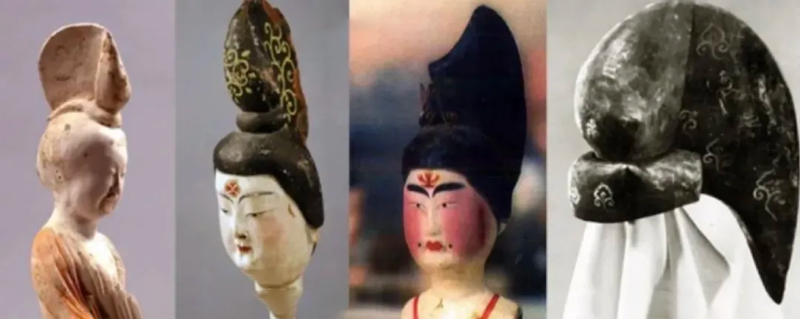
When natural hair proved insufficient for creating the voluminous styles favored by nobility, ancient women turned to hairpieces. These ready-made additions came in various forms, including pre-shaped buns that could be instantly placed on the head. Archaeological discoveries have revealed spiral-shaped hairpieces made from dyed palm fibers, constructed with linen lining and designed to be secured directly onto the wearer's head. These pieces demonstrated remarkable craftsmanship while offering practical styling solutions.
The use of supplemental hair was so prevalent that early texts like the Rites of Zhou (周礼) documented specific terminology for different types. Fu (副) referred to decorative hairpieces with attached ornaments, while Bian (编) described plain additions without decoration. Ci (次) indicated hairstyles that blended artificial hair with the wearer's natural strands. Later terminology simplified these classifications to Bi (髲) for pieces made from real human hair and Ti (鬄) as the general term for all false hair.
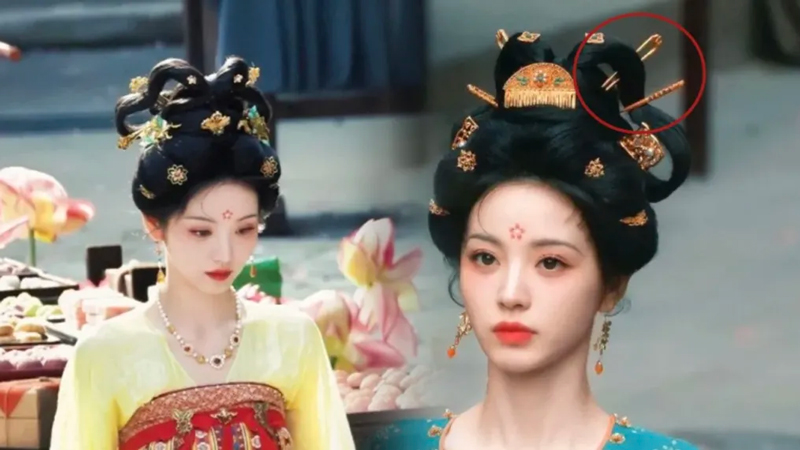
The social significance of these hairpieces extended beyond mere convenience. In an era when long, thick hair symbolized beauty and vitality, hairpieces allowed women to achieve ideal styles regardless of their natural hair's limitations. The quality and complexity of one's hair additions often indicated social standing, with elaborate pieces reserved for special occasions and wealthy households. The craft of creating these hairpieces became a specialized trade, with artisans developing techniques that have surprisingly parallels to modern wig-making, just using different materials.
Strategic Support
The final crucial elements in ancient hairstyling were the hairpins that provided both decoration and structural support. Specially designed long hairpins, measuring 20-30 centimeters, acted as hidden anchors within complex styles. Unlike their decorative counterparts, these functional pins often featured minimal ornamentation. Sometimes they had just subtle patterns carved along their length, which helped avoid visual clutter when multiple pins were used. Their streamlined design allowed them to be inserted deeply into hairstyles without peeking through.
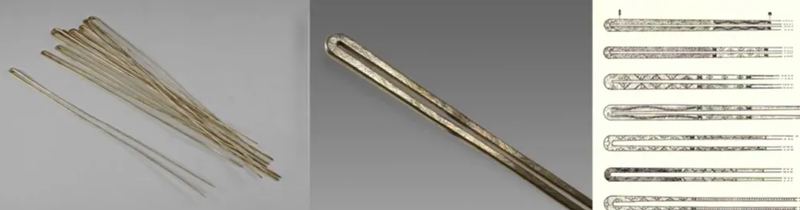
The placement of these pins required understanding of balance and weight distribution. Stylists would strategically position them to counterbalance heavy front ornaments or secure loosely woven sections. Some pins featured slight texturing along their shafts to better grip the hair, while others relied on their length alone to traverse multiple sections of a style. The most skilled hairdressers could make even the most elaborate creations feel secure and comfortable for the wearer throughout long days.
Beyond their practical function, hairpins occasionally served as emergency tools or status markers. High-quality pins made from precious materials like jade or gold represented family wealth, while the number and arrangement sometimes indicated marital status or age. The dual purpose of these implements, which are both beautiful and functional, exemplifies the practical elegance that characterized much of ancient Chinese design; in this design philosophy, form and function maintained equal importance in daily life.
Looking at these historical hairstyling methods reveals a sophisticated system developed over centuries. The time investment, which can be three to four hours for elaborate court styles, reflects the cultural importance placed on personal presentation. While modern life has largely abandoned such time-consuming practices, the ingenuity behind these ancient techniques continues to inspire admiration. The next time you see those seemingly gravity-defying styles in historical dramas like Story of Yanxi Palace (延禧攻略), you'll understand they weren't magical creations but the result of practical solutions perfected through generations of experimentation and artistry.