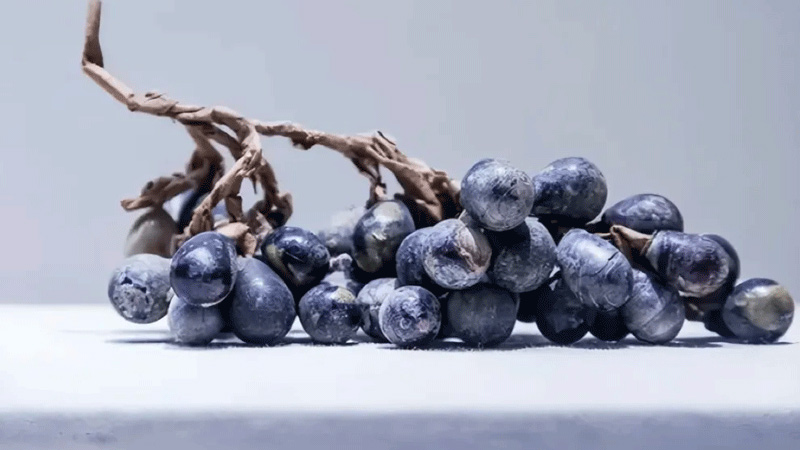
In a quiet gallery of the Dingzhou Museum (定州博物馆) in Hebei Province, a single artifact consistently stops visitors in their tracks. It is a cluster of grapes, so lifelike that one expects to see a sheen of moisture on their skin, perhaps even a stray fruit fly hovering nearby. The instinct is to reach out and touch them, to confirm they are not real. This is no ordinary piece of produce; this is a masterpiece of Liuli (琉璃, colored glass) craftsmanship from the Northern Song Dynasty, a relic that has miraculously survived for over a millennium. Its uncanny realism, complete with a delicate, dusty bloom that mimics nature's own, has ignited the imagination of a nation, connecting modern viewers directly to the astonishing skill of ancient Chinese artisans.
The story of these grapes is more than a tale of artistic achievement. It is a portal into the cultural and economic life of a sophisticated era. The artifact challenges preconceptions about technology and art, forcing a reconsideration of what ancient societies were capable of producing. It also sparks a fascinating dialogue about the humble grape itself, tracing its journey from a wild plant to a powerful symbol woven into the very fabric of Chinese culture, from mythology to fashion. This cluster of glass fruit is not merely a museum piece; it is a silent narrator of a rich and complex history.
A Masterpiece in Glass
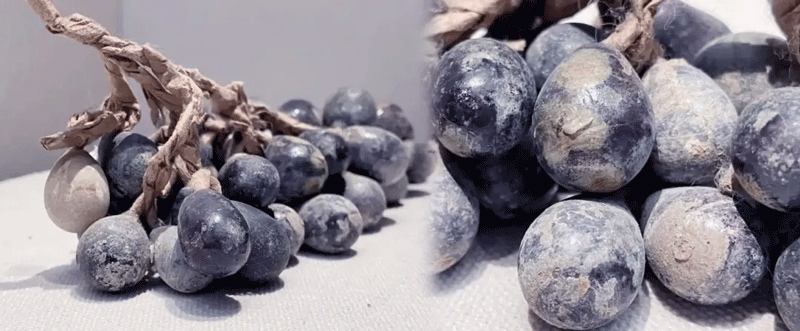
Discovered in the underground palace of the Jingzhi Temple (静志寺塔) pagoda in Dingzhou, this particular bunch consists of 46 individual grapes. Each berry is unique, varying slightly in shape and size, with diameters between 1.3 and 1.8 centimeters. The true marvel lies in their construction. Artisans employed a technique called free-blowing, where a molten gather of glass was shaped solely by blowing air through a metal tube and skillfully manipulating the resulting bubble. The result is an incredibly thin, translucent shell, with walls no thicker than a single millimeter. Holding one up to the light would reveal its delicate, hollow interior, a testament to a level of precision that seems almost impossible for its time.
The lifelike effect is heightened by the material itself. The specific composition of the Liuli gives the grapes their deep, purple-hued color, while the accidental accumulation of dust over centuries has created a natural-looking "bloom" that mimics the whitish coating found on fresh fruit. This was not mass production; it was the painstaking work of a master craftsperson whose understanding of their medium was profound. They were not simply replicating a grape; they were capturing its essence, freezing a moment of ripe perfection in a permanent, fragile form.
This artifact stands as a brilliant example of what might be called ancient "handmade non-standardized goods." In an age before industrial molds, each piece was a unique creation. The skill required to achieve such consistency and realism across dozens of individual pieces, without the aid of modern tools, is staggering. It speaks to a culture that valued extreme patience, deep observation of the natural world, and an uncompromising pursuit of artistic excellence. The survival of this delicate object for a thousand years feels like a minor miracle, a testament to both the skill of its maker and the care of those who preserved it.
Vine to Symbol
The grapes' hyper-realism inevitably leads to a historical question: how long have grapes been in China? Many assume they are a later import, but archaeological evidence tells a different story. Seeds from Chinese wild grape species have been found at sites like Liangzhu (良渚) and Jiahu (贾湖), dating back an astonishing 7,500 to 9,000 years. This proves that ancient communities were familiar with and consumed local grapes long before recorded history. However, these native varieties were often tarter than their Western counterparts.
The game-changer was the journey of Zhang Qian (张骞) during the Han Dynasty. His diplomatic missions to the Western Regions are credited with introducing sweeter Eurasian grape varieties to China. Initially, these prized fruits were a luxury item, a status symbol enjoyed only by the elite. Seeing a bowl of grapes on a nobleman's table was a clear display of wealth and access to exotic goods. This historical context adds a layer of meaning to the glass grapes. They were a permanent, imperishable version of a rare and desirable luxury, perhaps intended for a tomb to provide for the deceased in the afterlife. It even offers a playful, if anachronistic, explanation for the frequent appearance of grapes in historical dramas like those depicting Daji (妲己) and King Zhou (纣王); they were the ultimate symbol of opulence.

While the fresh fruit might have been out of reach for common people, its symbolic power was not. The grape motif, with its clusters of numerous seeds, naturally came to represent fertility, abundance, and the wish for many descendants. The winding vine symbolized family lineage and enduring prosperity. This potent imagery was eagerly adopted into the decorative arts. Grapes were woven into silks, embroidered onto garments, carved into jade, and painted onto porcelain. They were often paired with auspicious animals, such as the Ruishou (auspicious beasts) or squirrels, creating layered symbols of good fortune.
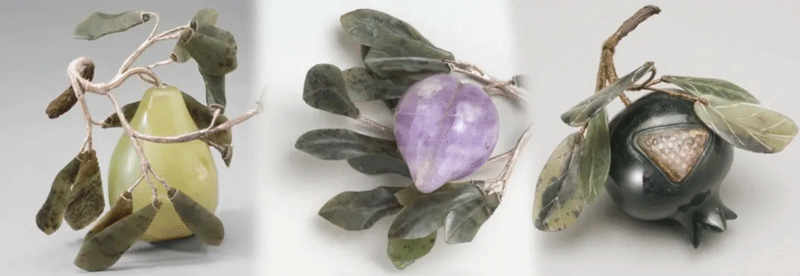
This cultural adoption was so complete that the grape transcended its botanical origins to become a universal auspicious symbol. Later artisans used materials like enamel and crystal to create grape-themed ornaments, accessories, and ritual objects. Other fruits like peaches (longevity), pomegranates (fertility), and pears (perseverance) followed a similar path. The ancient Chinese, it seems, truly mastered the art of imbuing everyday nature with profound meaning, turning simple fruit into a language of hope and blessing that resonated across social classes and centuries. The glass grapes of the Dingzhou Museum are a perfect, sparkling embodiment of this enduring cultural conversation.