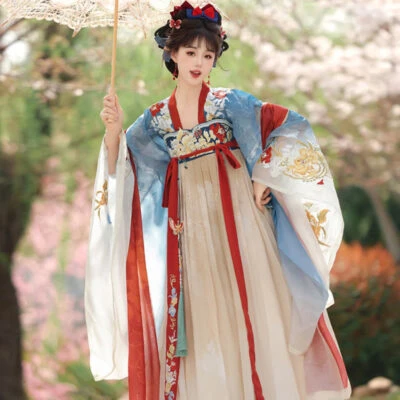
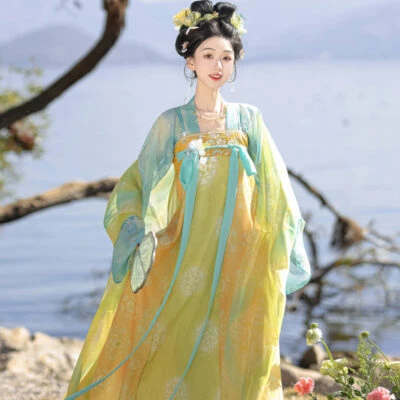
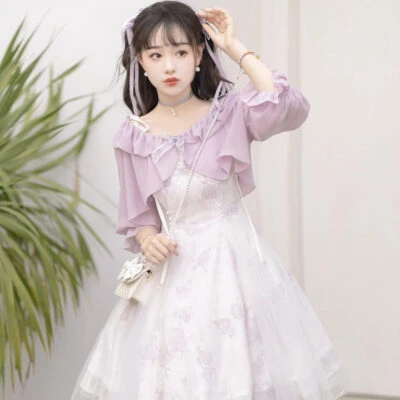
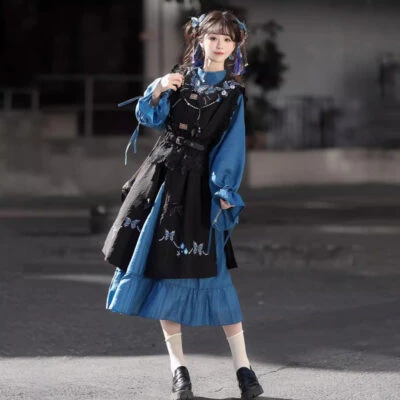
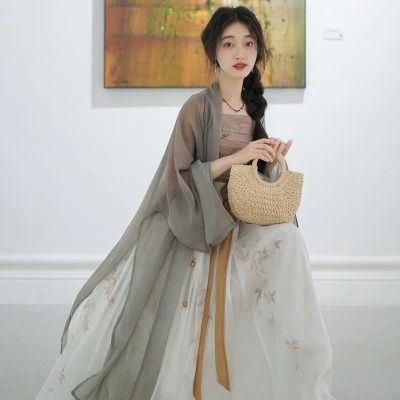
On a sewing floor in Baipu, a town on the northern bank of the Yangtze in Rugao, Jiangsu, cutters, machinists and pressers are working through orders for a label most of their neighbours have never worn. The plant belongs to Nantong Jishangjia Garment, and it is the production base for Bihai Chaosheng, a Guochao label whose Taobao storefront has accumulated 580,000 followers and whose pieces keep turning up on Chinese variety shows. The clothes are designed in Shanghai and sewn here.
Shanghai Sells, Rugao Makes
Li Cheng (李铖), who runs the company, describes the split without dressing it up. Shanghai and Suzhou handle livestream selling and product development, he said, while the Rugao base carries manufacturing and supply-chain coordination, which he called the core position for polishing product quality and holding the brand’s standard. The label was founded in 2016 and works in original Neo-Chinese design, the corner of traditional Chinese clothing where the design language is settled on camera and the garment is settled on a machine.
That division of labour is the standard shape of this generation of Guochao businesses. Design, livestreaming and content marketing have to sit next to buyers and cameras, because the product is sold by demonstration and the audience is on a platform. Pattern-making, fabric sourcing, embroidery, sewing and pressing stay in counties with trained workers and a supplier network within driving distance. The brand narrative is finished in a city office; the garment is finished in a town workshop.
Television has done part of the marketing. As Guochao demand rose, Li said, variety-show production teams began approaching the brand directly to select pieces, which put original Chinese-style design onto national broadcasts without a paid placement. For a label of this size that is the cheapest credibility available, and it also explains why the factory keeps a sample room that functions as a showroom for visiting crews.
A Tune From a Martial-Arts Novel
The name comes from literature rather than from fabric. Bihai Chaosheng is a piece of music in Jin Yong’s martial-arts novels, and Li said the tune carried the chivalrous, unbuttoned mood the founders wanted for Chinese-style clothing, which also happened to match how younger buyers want to look. The brand’s series names follow the same instinct, with lines called Shanmen and Tebie Chan sitting somewhere between temple vocabulary and streetwear.
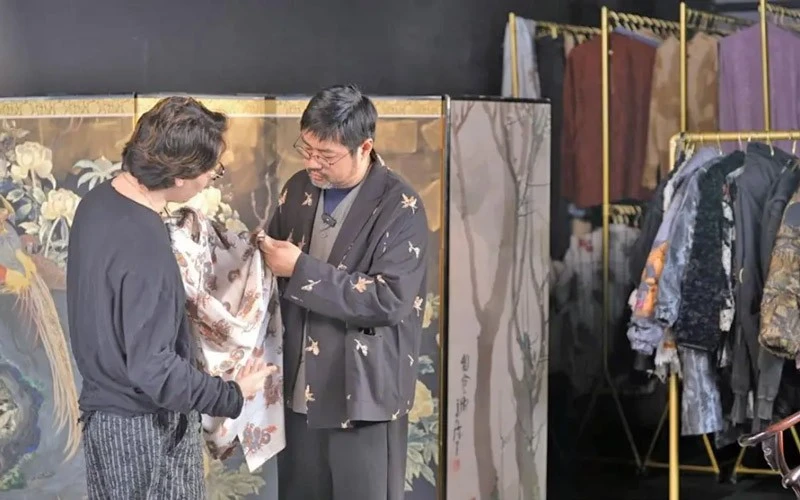
Where the designs actually come from is more concrete. In the sample room, Li showed a modified Chinese-style sportswear piece in high-end silk, the body covered edge to edge with embroidered landscape painting. The colour scheme and the butterfly motif were traced back to a Suzhou embroidery piece in the Suzhou Museum collection; the team then hunted for a silk in the same blue-green register and rebuilt the pattern’s spacing for production.
That route, from a museum vitrine to a factory table, is harder than it sounds and is now common among Guochao labels. Inspiration is the easy half. The hard half is matching a display colour on a silk that can be bought by the roll, and re-spacing a motif so an embroidery head can stitch it at speed without the pattern collapsing. Li frames the ambition in the usual terms, describing traditional culture as an inexhaustible source and the goal as making younger shoppers read Chinese style properly, but the constraint behind that sentence is technical.
What the County Gains
Placed back in Rugao, the significance is not the label’s turnover. It is that a county factory now holds one end of a brand rather than standing behind one. Companies of this type used to work as contract manufacturers, embedding themselves in someone else’s supply chain through quality control and delivery reliability. Running an own-brand line demands design judgement, content capability and the nerve to carry inventory, and none of those three live on a sewing floor.
That is exactly why the livestream and development work sits in Shanghai and Suzhou while the machines stay in Rugao. The front end needs platforms, hosts and cameras. The back end needs fabric markets, embroidery shops and experienced machinists. Splitting them lets each end do the thing it is good at, with pattern-making and delivery schedules as the joint. In its own public statements the company has been careful to describe the Rugao base as the output end for quality rather than as a contract workshop.
The competitive question for county-based Guochao labels is no longer whether a garment carries Chinese elements. Almost everything does now, and buyers have lost patience with stacked symbols. What holds a price is fabric, cut and finishing, which is the practical reason this brand anchors its inspiration in museum pieces and its construction in silk and full-coverage embroidery. Whether that is enough to keep a 580,000-follower audience buying at those prices is the part no sample room can answer.