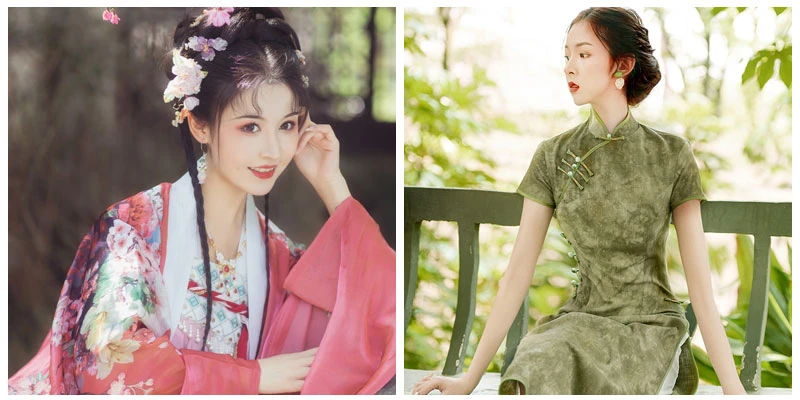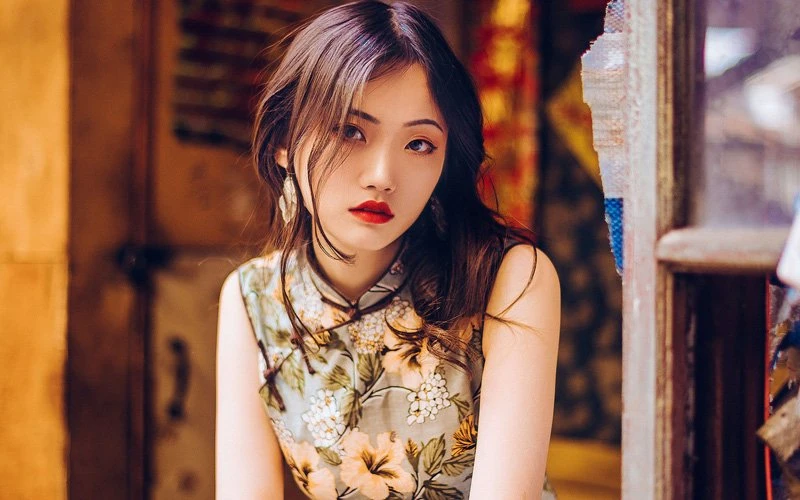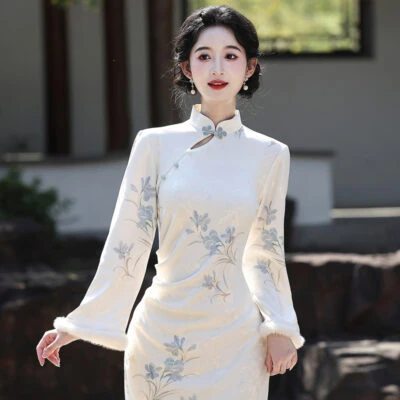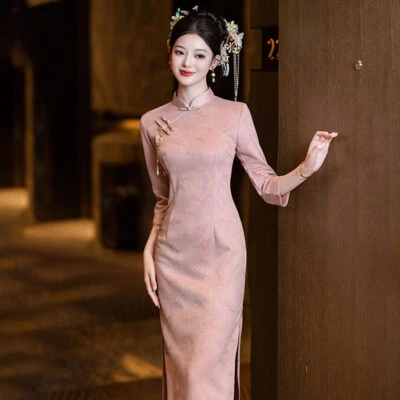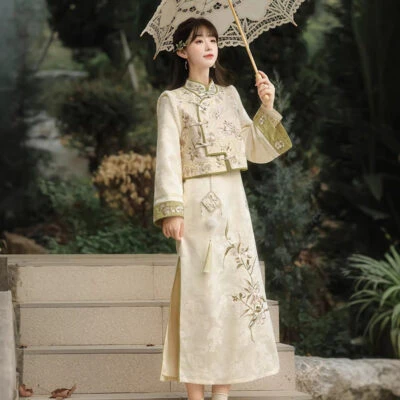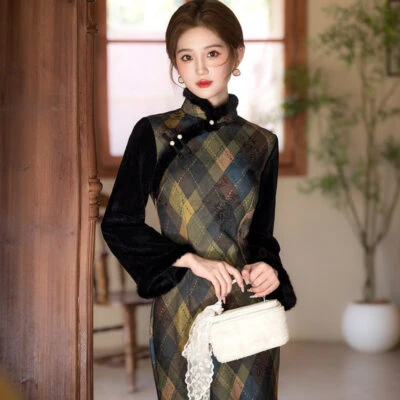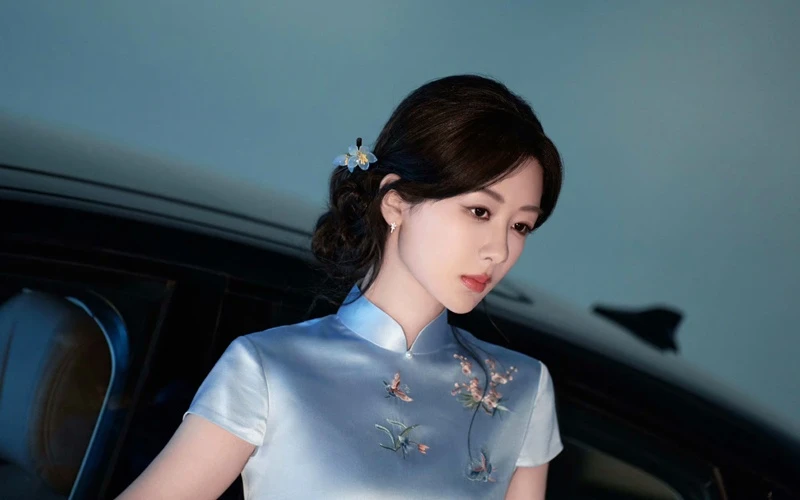
A qipao can look effortless or awkward depending on cut, fabric, and fit. This guide begins with the body, because the right dress does not hide your shape—it gives your outline a clear job. Pear, H, apple, and hourglass figures each call for different balances: waist definition, skirt line, sleeve volume, and fabric weight. After body shape, the guide turns to the 5 soul features of the qipao: collar, sleeves, front placket, frog buttons, and side slits. Each detail changes the mood, from soft and youthful to sharp and formal.
Before you shop, decide how you want to feel, then try pieces in a mirror, walk a few steps, and sit down. Comfort is part of elegance, and a good qipao should follow your movement, not fight it. Use this guide as a practical starting point, not a set of rules. The goal is confidence, not costume.

1. Pick Qipao by Body Shape
A qipao can look effortless or awkward depending on cut, fabric, and fit. Before you shop, decide the mood you want: soft, sharp, relaxed, or dramatic. Then check your body’s outline. The right dress does not hide you; it gives your shape a clear job. Below are four common shapes and practical cuts that usually work. Try them in a mirror, walk a few steps, and sit down. Comfort is part of elegance.
1.1 Pear Shape
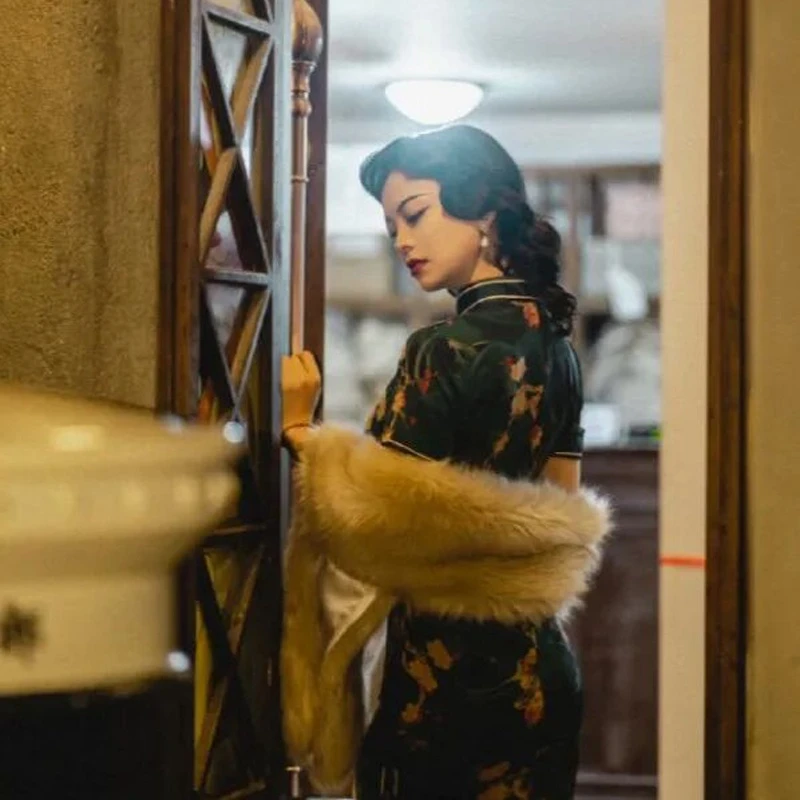
Pear shapes often carry weight at hips and thighs, with a lighter upper body. This is a strong starting point for qipao because the dress can show a narrow waist and let the skirt fall cleanly. Pick a fitted bodice and a straight or slightly A-line hem. A clear shoulder line keeps eyes up. Avoid stiff, heavy fabric at the hip; choose a fluid material that moves when you walk.
A high slit can add ease without turning the dress into a costume. If slits feel too much, use a hidden back vent or a soft side opening. Keep patterns small at the hip. A short jacket or a light cardigan can balance the lower half when the weather is cool. The goal is not to shrink your curves but to give them space and direction.
Try a qipao with a defined waist seam and a simple neckline. Test how it feels when you climb stairs or sit for tea. If the hip pulls, go up one size and adjust the waist. A tailor can take in fabric; they cannot add it. Pear shapes often look best when the top is neat and the skirt is calm.
1.2 H Shape
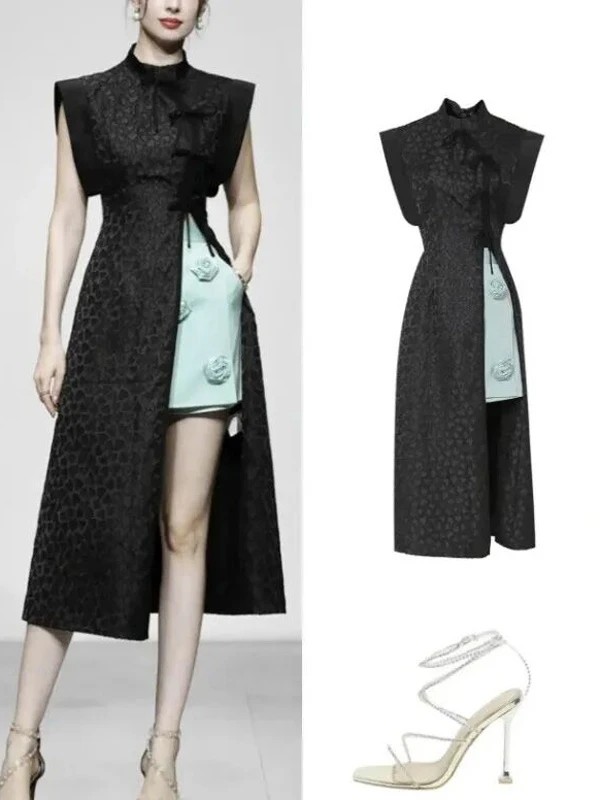
Straight or H shapes have less waist definition. A tight qipao can make the body look flat, so choose structure rather than cling. Look for a waist seam, a narrow belt, or carefully placed darts. A high slit creates a long line and gives the skirt room to move. Sleeveless cuts can show strong arms and shoulders, which often suit this shape well.
Fabric matters. Crisp cotton or light wool holds a shape; thin stretch jersey can reveal every line and feel less forgiving. A mandarin collar should sit close but not press the neck. If the dress has no waist seam, ask a tailor to add one. Small changes at the side seams can change the whole outline.
Do not assume a qipao must be body-hugging. A slightly loose panel with a clear waist can look modern and sharp. Try a short jacket over a sleeveless dress, or a long coat left open. Walk, turn, and raise your arms. The dress should follow you, not fight you.
1.3 Apple Shape
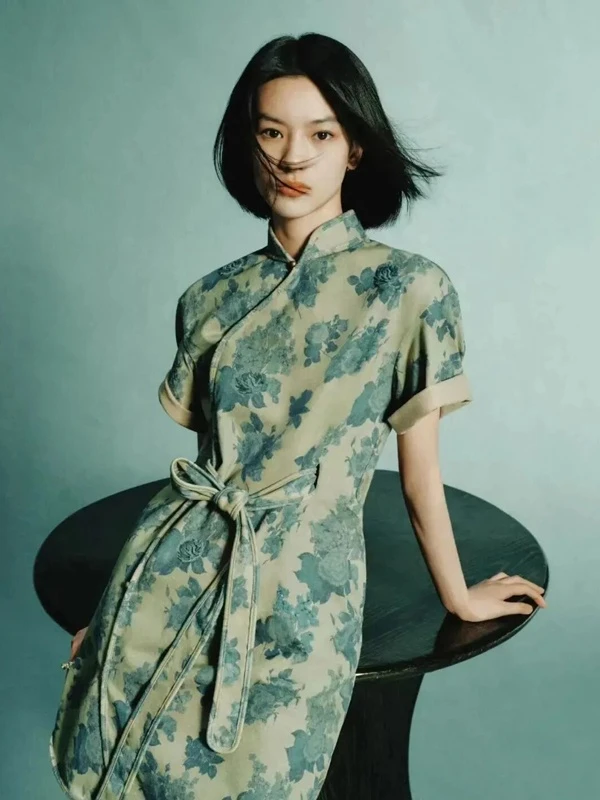
Apple shapes often have a fuller bust or upper arms, with weight around the middle. The common mistake is to cover everything with a loose sack. That can make the body look bigger. Instead, choose a qipao with a gentle waist and a skirt that falls away from the stomach. A V-shaped opening or a softer collar can open the face and neck.
Sleeves are useful. Bell sleeves, wide sleeves, or a short capelet can cover upper arms without adding bulk. Avoid tight cap sleeves. A high slit at the hem lets you show legs and adds movement. Keep details above the bust or below the hip, not right across the stomach. A small print can work; a large stiff pattern may add weight.
Try a two-piece qipao top and skirt if one dress feels hard to fit. You can choose the top for the bust and the skirt for the waist. Check how the fabric falls when you sit. If the waist feels tight after a meal, choose a back tie or side zipper that can be adjusted. Comfort helps confidence.
1.4 Hourglass Shape
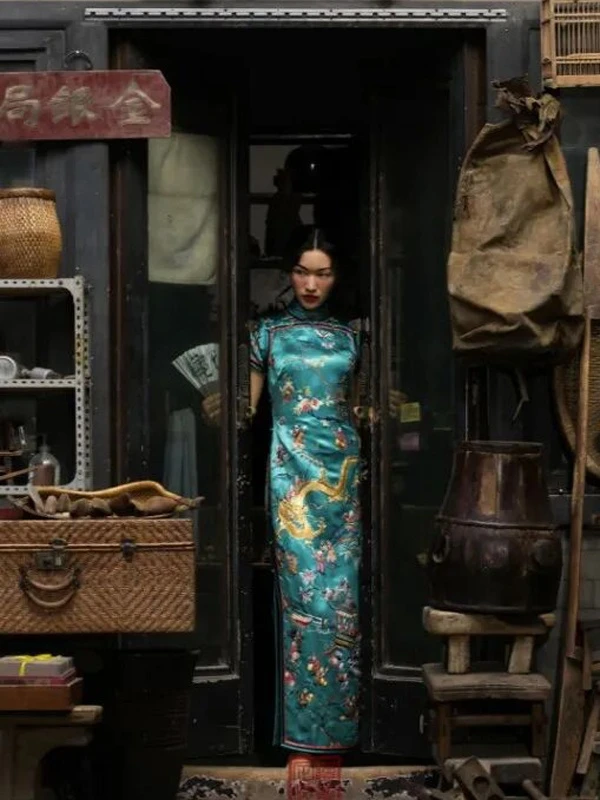
Hourglass shapes have clear bust and hip curves with a defined waist. A simple fitted qipao often works with little effort. Choose a waist seam that sits at your natural waist, not above or below it. A gentle hip line and a straight skirt can show a smooth curve. Avoid too many ruffles or heavy decoration; they can break the line.
Fabric with a little body helps the dress keep its shape. If you want a softer look, pick a matte silk or a fine crepe. If you want a sharper look, try a structured cotton. The collar and buttons should not pull. A short slit is enough for walking; a higher slit changes the mood. Test both.
Do not let the dress wear you. A clean neckline, simple earrings, and low shoes can be enough. If the bust or hip needs more room, adjust those areas first. The waist can be taken in later. Hourglass shapes often need fewer tricks, but they still need a good fit. Stand tall, breathe, and check the back view.

2. How to Choose a Qipao?
After talking about body types, let’s move on to qipao styles.
A qipao has five soul features: the collar, sleeves, front placket, frog buttons, and side slits.
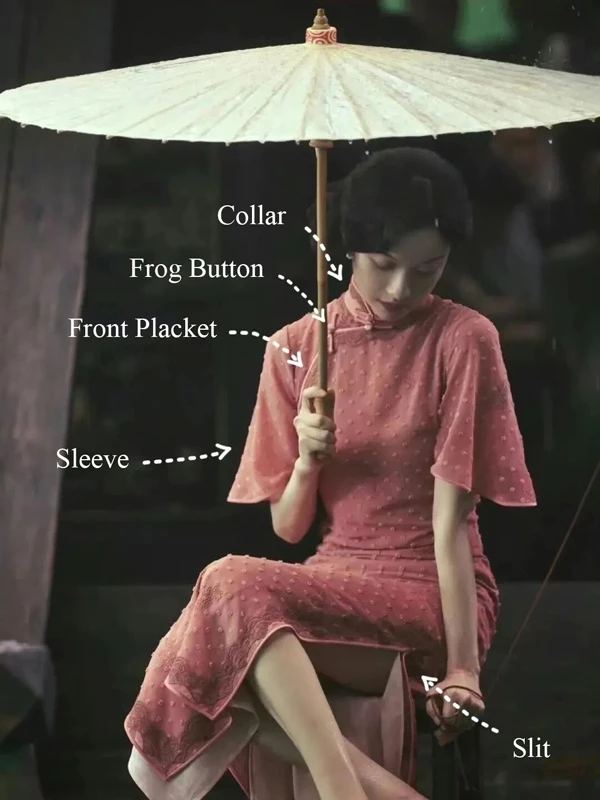
2.1 Collar Styles
The qipao collar connects the garment to the neck, and it defines the whole vibe of a qipao. Different collar shapes create totally different neckline silhouettes and feminine charm.
Below are the 12 classic qipao collar styles for you to explore.
Shanghai (上海) Collar
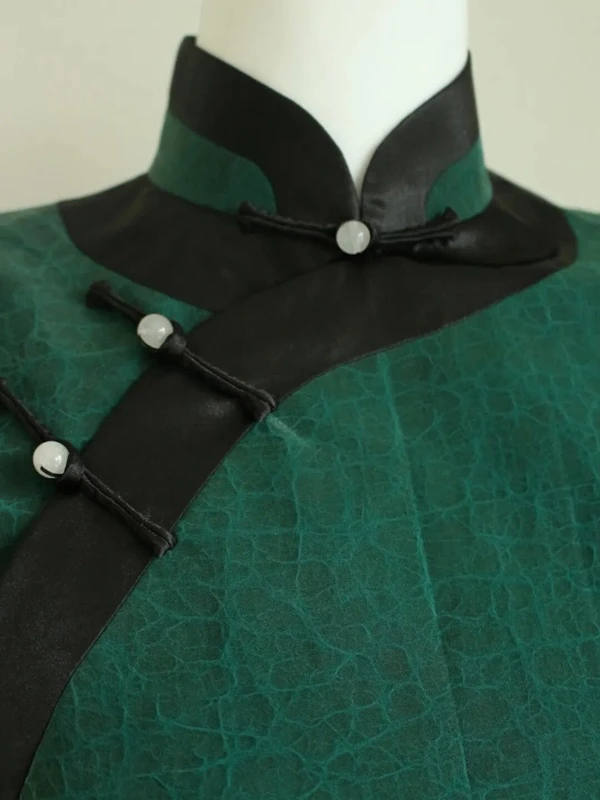
The most common and iconic qipao collar of all.
It has smooth lines and rounded collar corners with an elegant curve. As an all-rounder, the Shanghai collar flatters nearly every face shape.
- Features: Dignified, graceful, gentle.
- Best for: Daily wear and formal occasions; suitable for most women.
- Vibe: The poised young lady of the Republic of China era.
Wave Collar
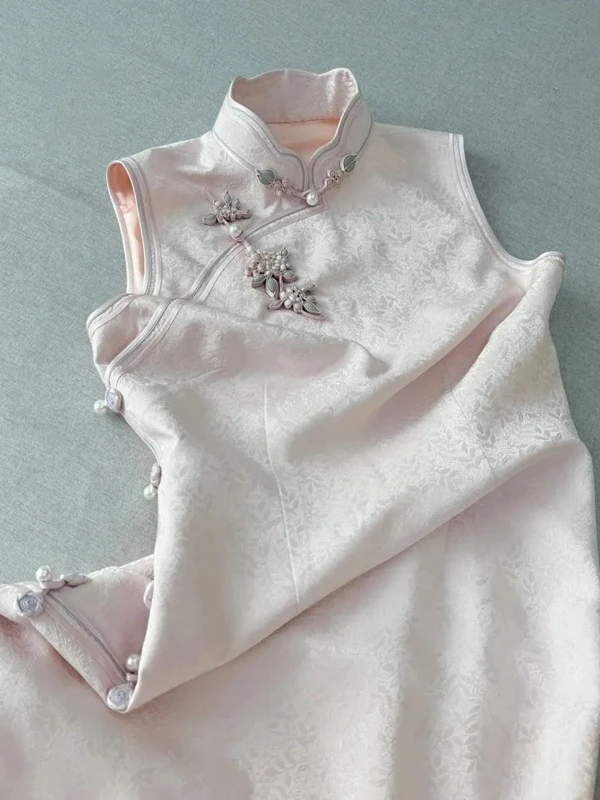
If the Shanghai collar is the “white moonlight”, the wave collar is the “crimson cinnabar mole”.
Instead of a straight edge, its collar rim forms graceful undulating curves, layered like flower petals.
- Features: Sweet, lively, artistic.
- Best for: Young women or occasions where you want a fresh twist on tradition.
- Vibe: A modern lady from old Shanghai posters — charming and lively.
Ingot Collar
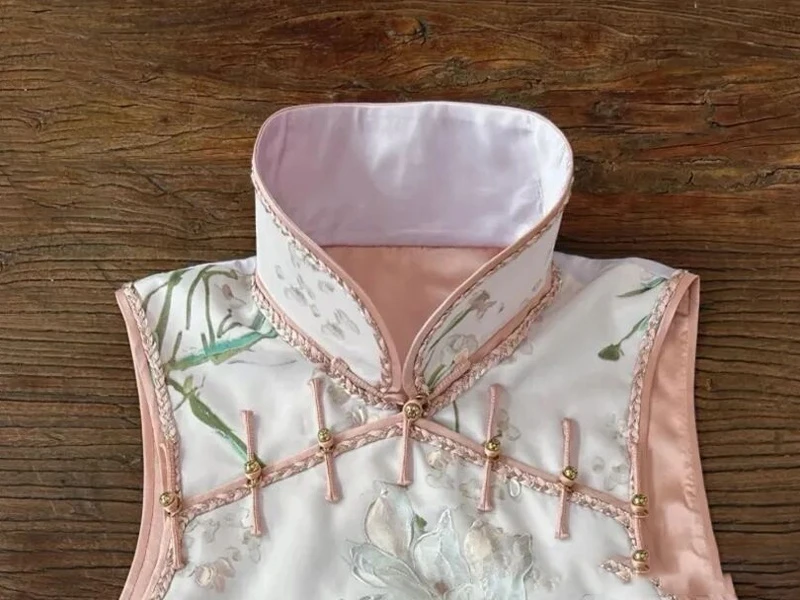
A late Qing and early Republican classic collar with an aloof, reserved aura.
It stands very high, often covering the earlobes and the sides of the cheeks, with sharp right-angle corners that hold stiffly and lift the chin.
- Features: Noble, cool-toned, lengthens the face visually.
- Best for: Long faces and oval faces; perfect for grand vintage-themed events.
- Vibe: Commanding presence, like Wang Xifeng (王熙凤) from Dream of the Red Chamber (红楼梦), or a Manchu princess of the late Qing court.
Impatiens Collar
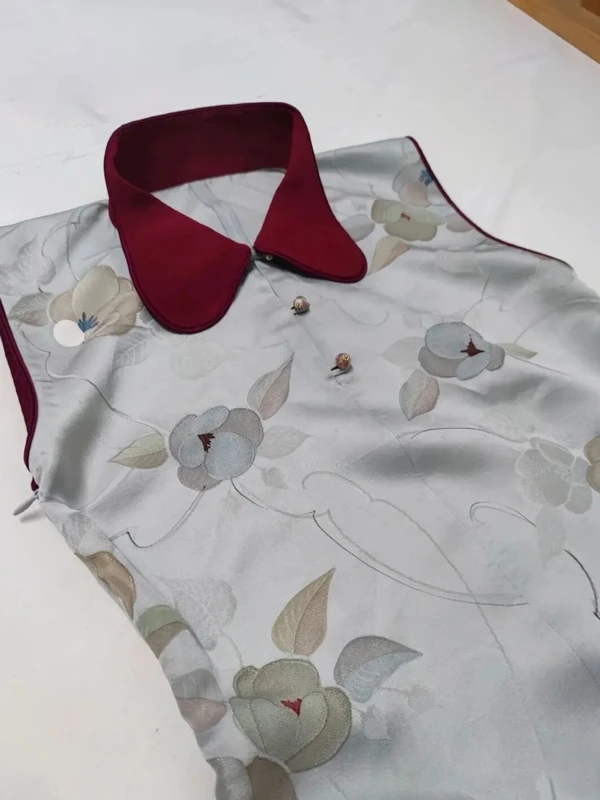
Often seen on Republic of China school uniforms and Xiuhe (秀禾) wedding robes.
It is a detachable low stand collar with a gently turned-out edge, cupping the chin like a blooming flower receptacle.
- Features: Pure, youthful, girlish.
- Best for: Round faces or short chins; softens facial lines for a sweet look.
- Vibe: Scholarly innocence, just like Leng Qiuqiu (冷清秋) in The Golden Powder Family (金粉世家).
Square Collar
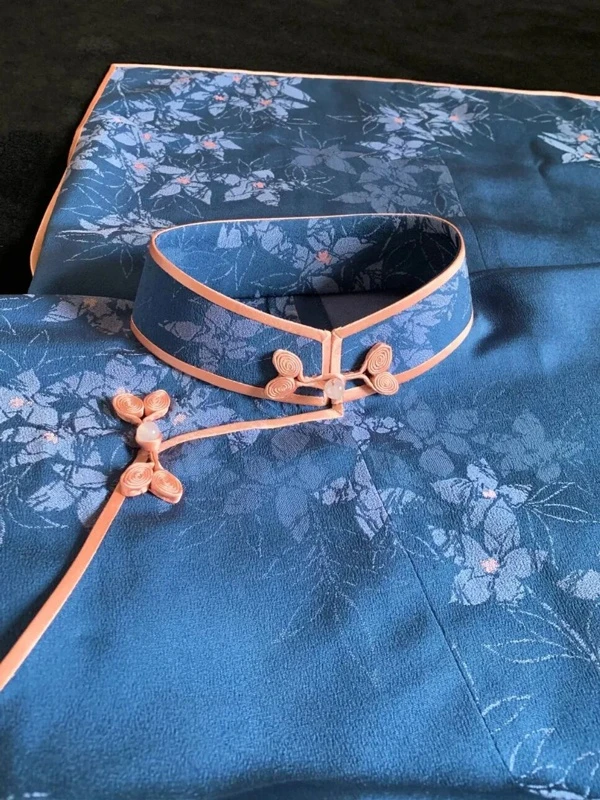
As the name suggests, it features sharp square collar corners with crisp linear edges.
This style is widely used in modern modified qipaos, giving a capable and intellectual impression.
- Features: Minimalist, contemporary, neat.
- Best for: Working women and lovers of simple aesthetics.
- Vibe: Blends Eastern softness with Western geometric beauty.
V-Neck
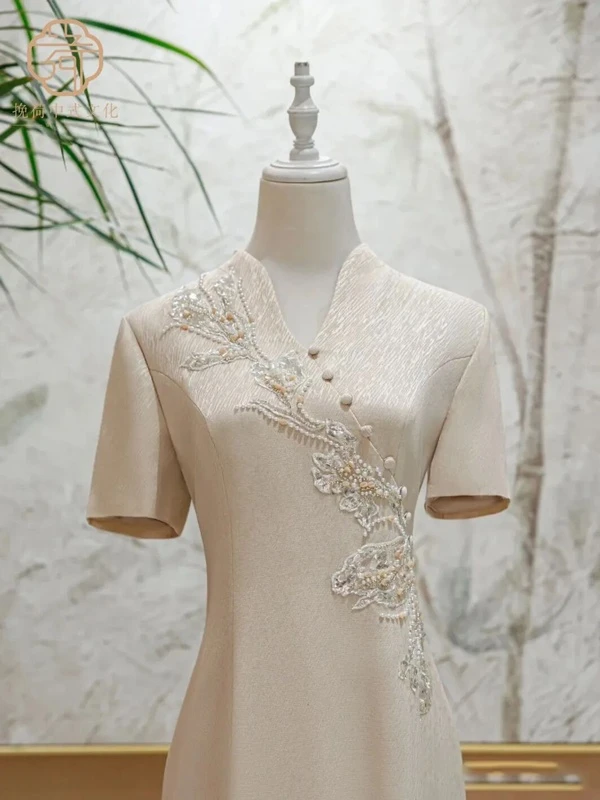
A popular cut for modern reimagined qipaos. It abandons the full neck coverage of traditional designs.
The downward V-shape visually stretches the neck.
- Features: Flattering, slimming, breathable.
- Best for: Women with short necks or round faces.
- Vibe: Retains qipao romance while carrying the fashion flair of modern evening gowns.
Teardrop Collar
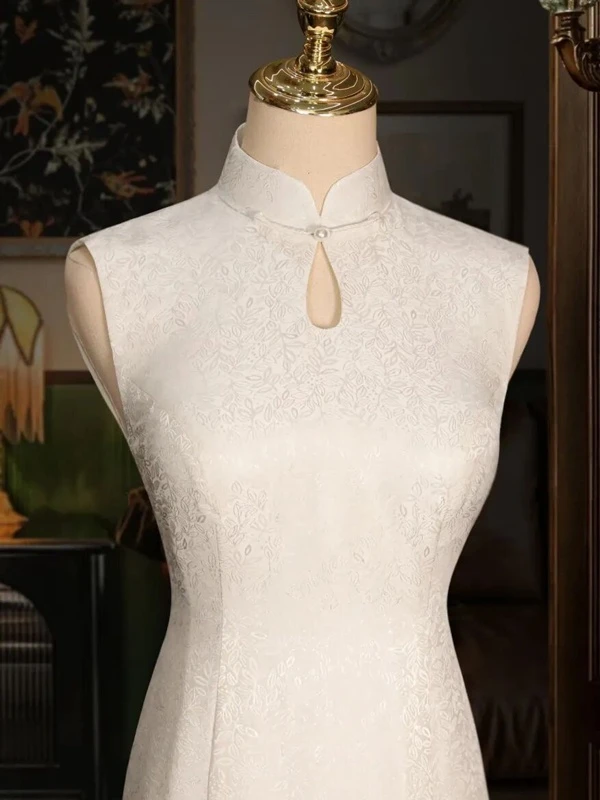
A subtle, eye-catching design.
A teardrop-shaped hollow cutout sits right at the centre of the collar, revealing a glimpse of the collarbone and neck. This restrained partial exposure is endlessly alluring.
- Features: Seductive, exquisite, full of charm.
- Best for: Evening banquets and important gatherings for a feminine look.
- Vibe: Perfectly balanced elegance — not overly sultry, nor plain.
Tube Collar (Straight Stand Collar)
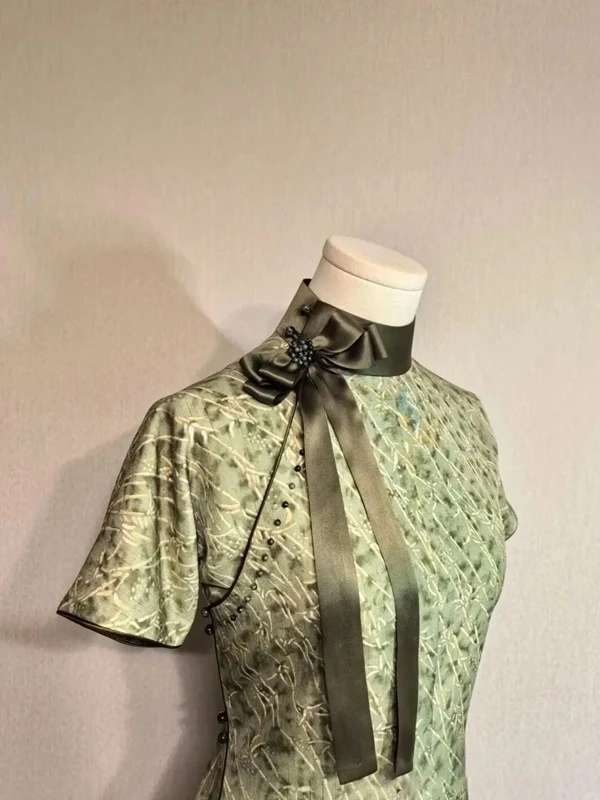
A milder version of the ingot collar.
It also stands upright, with a moderate height of 3–5 cm and softly rounded corners that fit closely around the neck.
- Features: Neat, upright, elevates temperament.
- Best for: Women with slender necks, to show off a graceful swan neck.
- Vibe: Poised and powerful, reminiscent of flight attendants or dancers.
Cowl Collar (Draping Collar)
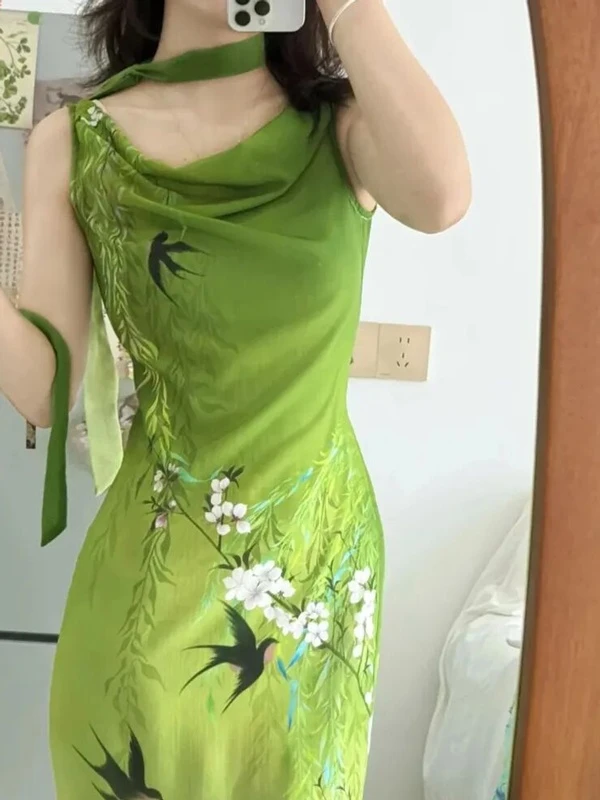
Highly modern and fluid.
It is not a stand collar. The fabric falls naturally into soft folds and curves, cascading loosely over the collarbone and chest like rippling water. It forms a V-shape to slim and lengthen the neck.
- Features: Lazy, casual, artistic.
- Best for: Those with beautiful shoulder and collarbone lines; ideal for banquets, art exhibitions and modern Chinese daily outfits.
- Vibe: Effortless high fashion, blending Eastern softness and Western tailoring — charming and free-spirited.
Cloud-Cut Collar
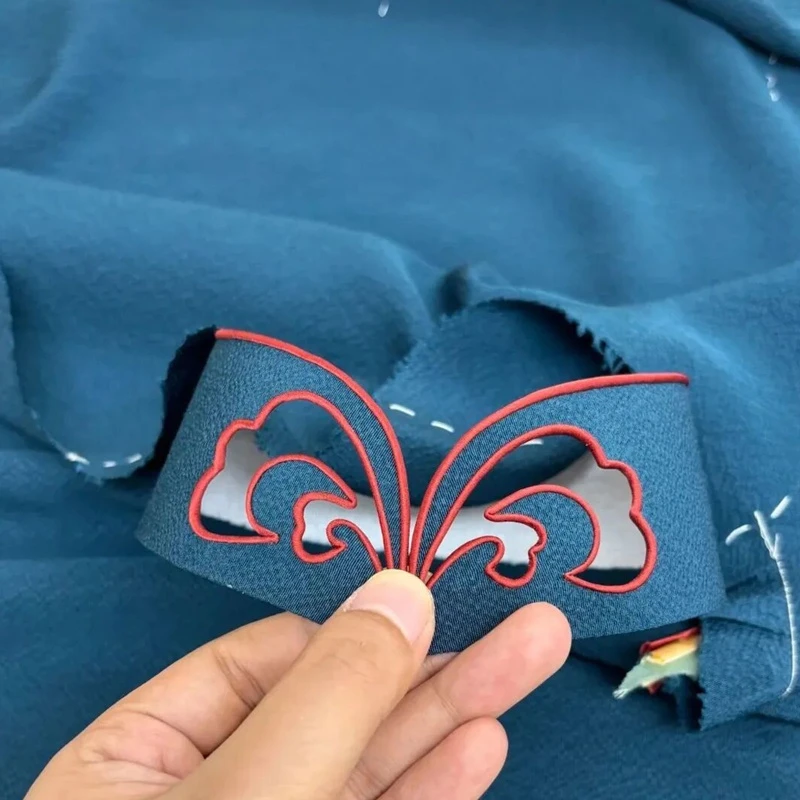
One of the most intricately crafted traditional qipao collars.
Hollowed patterns of clouds, Ruyi (如意) motifs or flowers are carved on the collar surface or corners, edged with fine stitching or binding, creating contrast between cut-out empty space and solid fabric.
- Features: Exquisite, delicate, high craftsmanship value.
- Best for: Grand ceremonies, wedding toasts and qipao collections.
- Vibe: As refined as carved jade, carrying the quiet luxury of noble ladies.
Detachable Collar
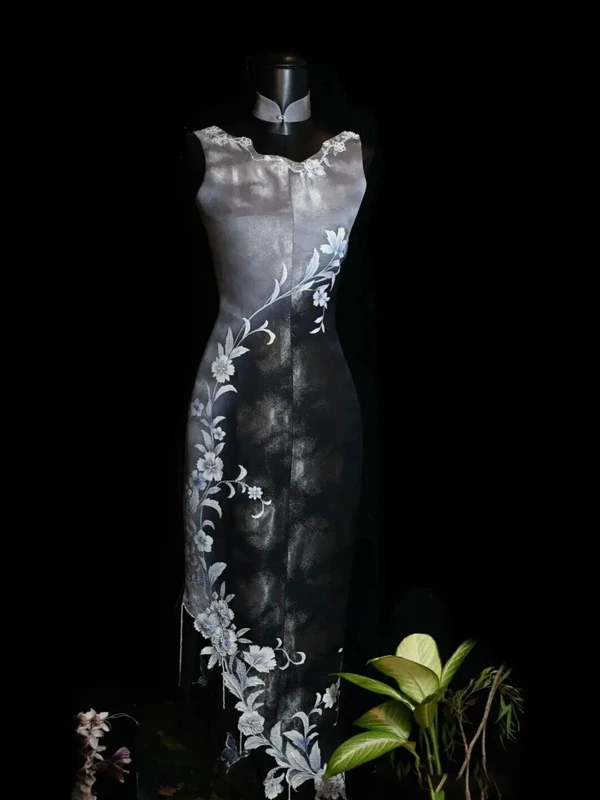
A unique Republican-era design.
It is not sewn onto the qipao, but fastened separately with hidden buttons. Stiffly starched, it can be removed, washed or swapped easily.
- Features: Practical, versatile, tidy.
- Best for: Vintage lovers and anyone who wants one dress for multiple looks.
- Vibe: Reflects the wisdom of Republican women — it carries the crispness of Western shirt collars without losing Eastern gentleness.
Collarless
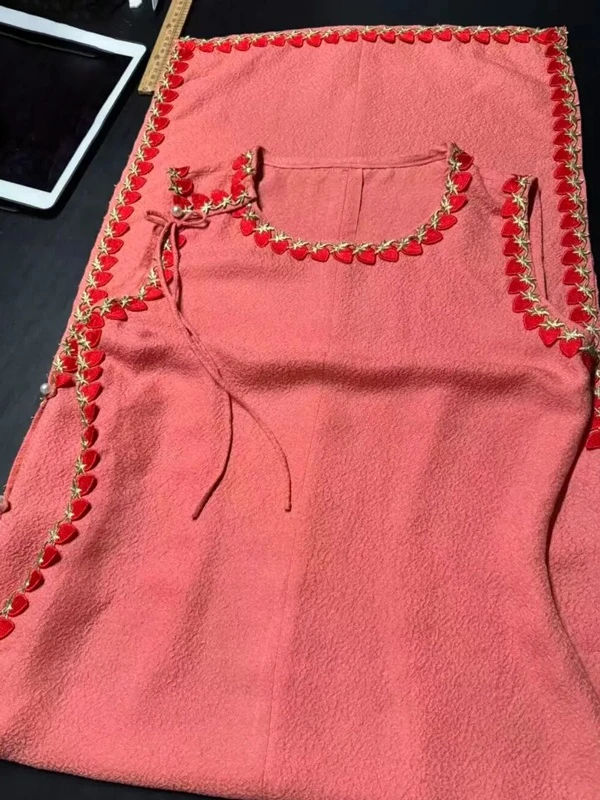
Last but not least, the collarless style.
Even without a collar, the neckline is finished with neat binding to frame its curve.
- Features: Refreshing, minimalist, comfortable.
- Best for: Summer daily wear; suits all face shapes, especially people with short necks.
- Vibe: Free from restraint, easy and relaxed.
How to Find Your Signature Collar
After seeing these 12 collar styles, are you spoilt for choice? Picking one is actually easy:
Neck length: If you have a slender neck, boldly try the ingot collar or tube collar. For a shorter neck, the V-neck, collarless cut and teardrop collar will be your saviors.
Face shape: V-necks and impatiens collars lengthen the lines of round faces; Shanghai collars and wave collars soften the sharp angles of square faces; tall stand collars visually balance long faces.
Occasion: Shanghai collars and square collars work for daily commutes. Teardrop collars and wave collars fit dates and gatherings. Ingot collars are perfect for formal ceremonies.
It shows fine craftsmanship and also reflects the wearer’s personality. Do you prefer the aloof vibe of a tall stand collar, or the allure of cutout designs?
2.2 Sleeve Styles
Are there so many details to consider for qipao sleeves? The right pick can look stunning!
Sloped Shoulder Sleeve
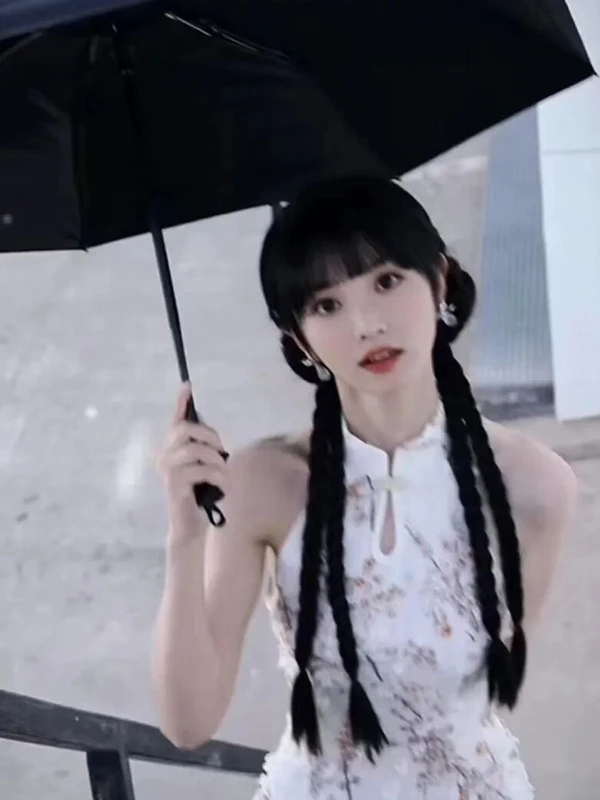
Over time, many new sleeve silhouettes for qipao have emerged. The sloped shoulder sleeve breaks from traditional designs. It creates a smooth, trimmed curve at the shoulder to accentuate shoulder lines. It flatters women with broad shoulders or slim figures wonderfully.
Sleeveless
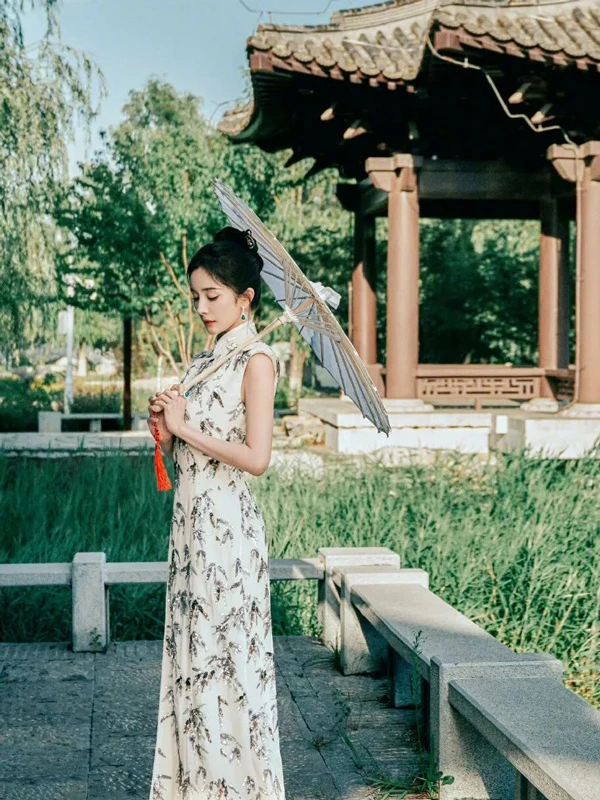
Sleeveless is a classic qipao option, suitable for most women. It reveals the full arm for great comfort and highlights mature elegance, though it works best for those with smooth arm lines.
Moon Sleeve
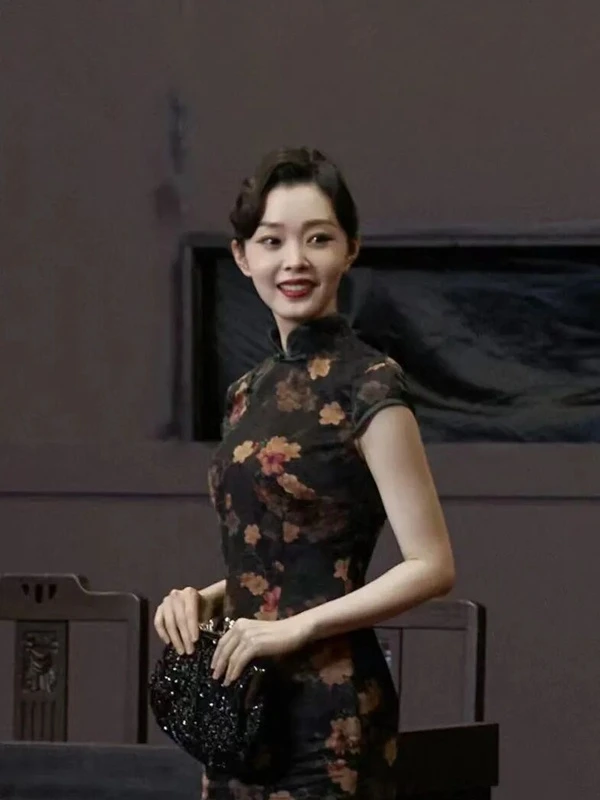
Named for its crescent‑shaped curved cuff, it is also known as the small cap sleeve. It conceals extra arm softness better than the sleeveless style.
Raglan Sleeve
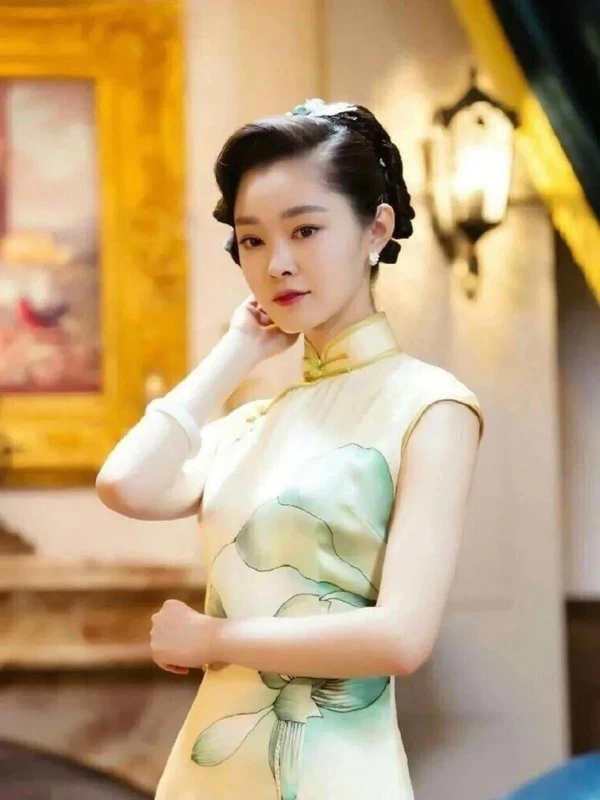
Common on flat‑cut qipaos, it is slightly longer than sleeveless styles. It softens shoulder contours and fits naturally without stiffness, solving the problem of looking broad‑shouldered, and it is very comfortable to wear.
Short Sleeve
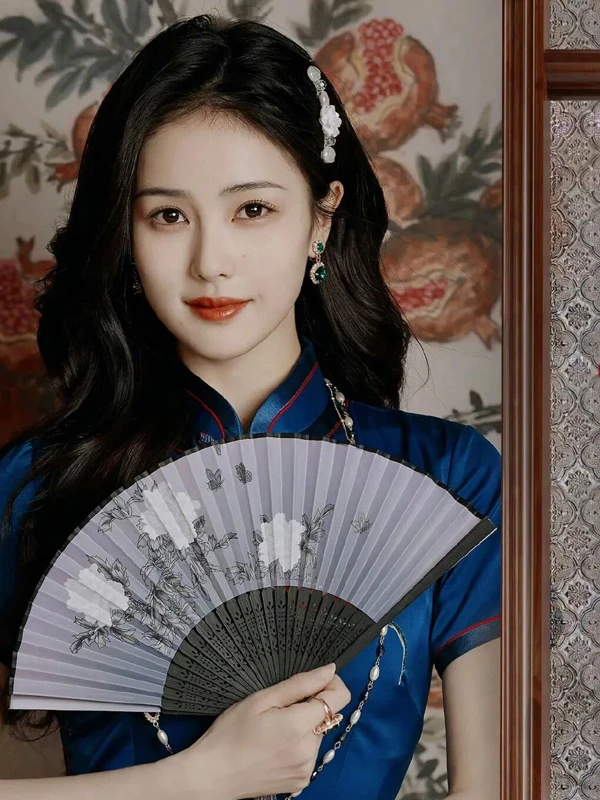
The timeless classic qipao sleeve. It delivers an elegant, intellectual vibe, fits almost all body types, flatters arm lines, and is a great choice for sloped shoulders.
Wide Flared Sleeve (Inverted Big Sleeve)
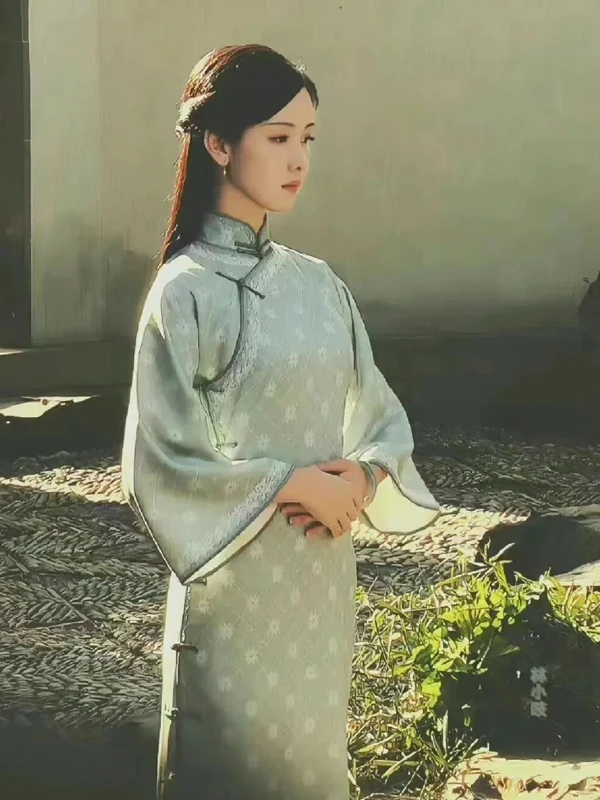
Originating from Qing dynasty qipao designs, it features generously widened cuffs that highlight slender wrists. It carries a fresh, gentle, distinct Republic‑of‑China aesthetic.
Elbow-Length Sleeve (5/8 Sleeve)
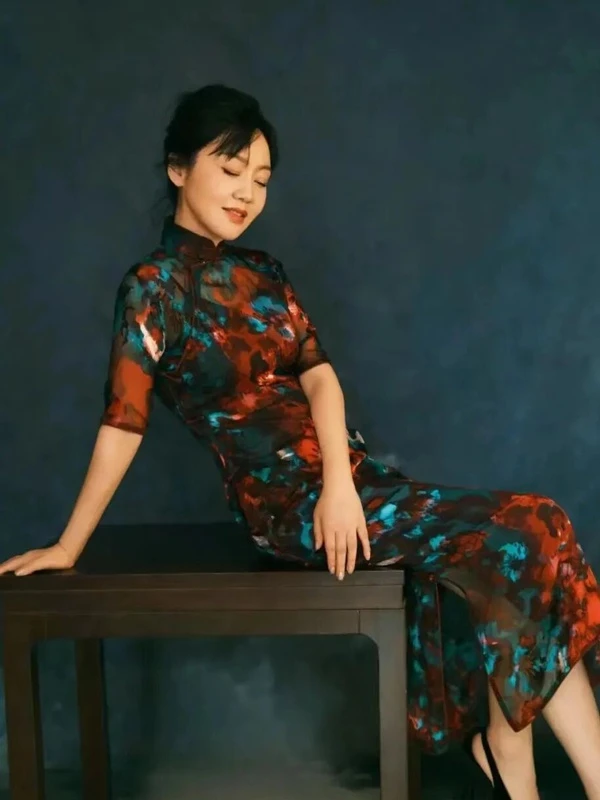
Also called five‑point sleeve. It exudes dignity and poise. Its tighter cut limits movement and can make arms look shorter and fuller. It suits women with broad or square shoulders.
Long Sleeve
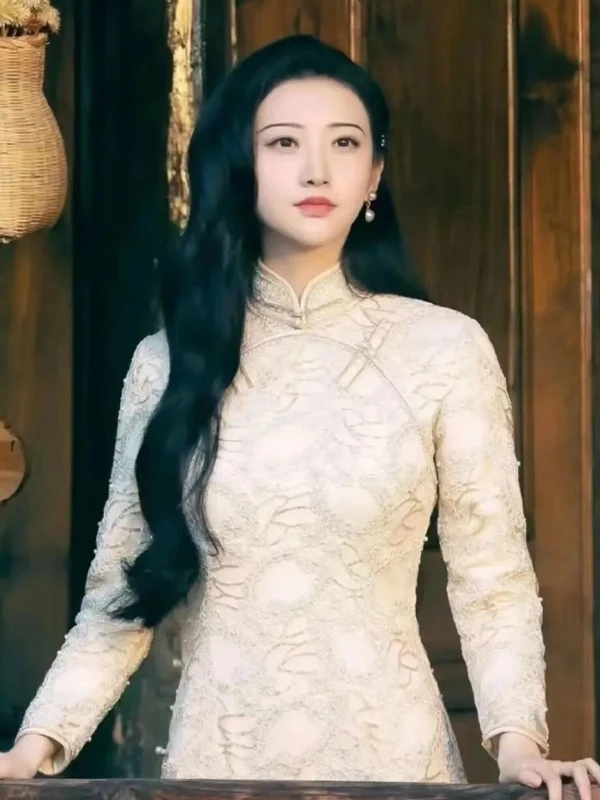
Long sleeves are selective when worn alone, suiting women with poised, stately bearing for a mature look. For most wearers, it works perfectly with outer layers in autumn and winter and keeps you warm.
The beauty of the qipao lies in its soul. It holds radiance that time cannot fade and cultural depth unlike any other garment. Some say every Chinese woman should own a qipao of her own — one that fits her and preserves her unique charm.
2.3 Placket Types
The term “placket (襟)” dates back to the Shang and Zhou dynasties in traditional Chinese costume culture. Since then, most everyday robes adopted an open placket design, predominantly right lapel.
The right lapel stands as a fundamental symbol of civilization within the Chinese cultural principle of “ritual shaping garments”, and it remains a core feature of Hanfu.
In ancient Chinese dress etiquette, the left lapel was mostly worn by ethnic minorities. Beyond customs, the difference between left and right lapels involves aesthetics, practicality, and profound cultural meaning hidden in this tiny detail.
Ruyi Placket
- Features: Originated in the Qing Dynasty, often decorated with ruyi-head patterns, full of classic vintage charm.
- Best for: Lovers of retro styles and delicate details.
- Occasions: Bridesmaid duties at Chinese weddings, traditional festival gatherings. Paired with pearl hairpins and embroidered shoes, it instantly gives you the grace of a noble lady from the Republic of China.
Straight Horizontal Placket (One-Character Placket)
- Features: Two lapels below the collar form a straight horizontal line. Rich in antique appeal with intricate craftsmanship.
- Best for: Those who favor minimalist, understated luxury, especially fans of solid plain colours.
- Occasions: Formal business dinners and art exhibitions. This placket on off-white satin or light grey silk looks quiet yet noble.
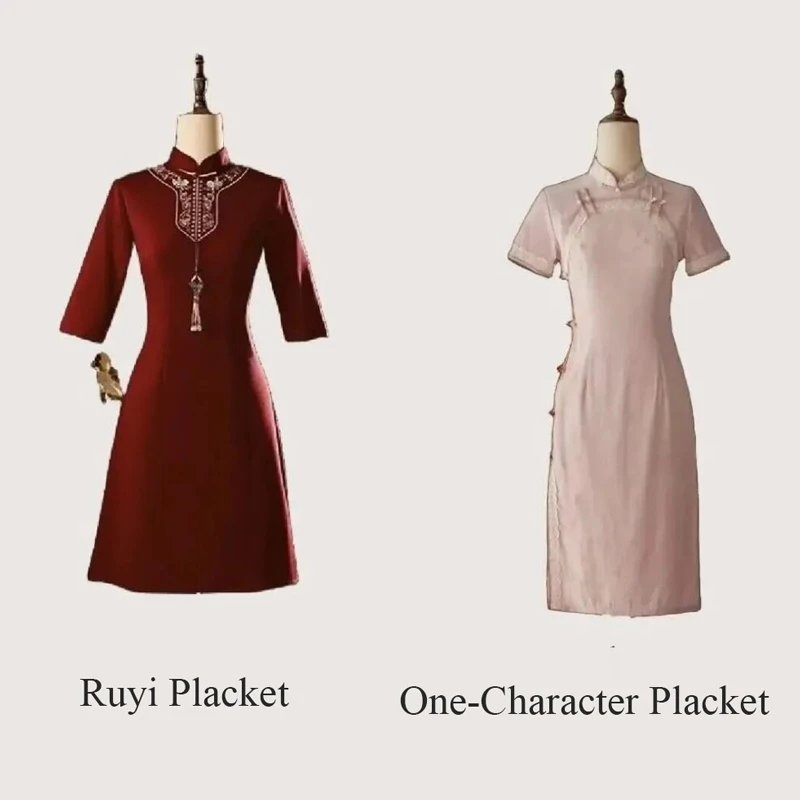
Small Round Placket
- Features: Smooth, rounded lines; one of the most common styles.
- Best for: Anyone going for a gentle, quiet look, especially petite women. It lifts the visual centre, making you look taller and elegant.
- Occasions: Daily commutes or afternoon tea with friends. Match it with a low ponytail and pearl earrings for soft grace.
Large Round Placket
- Features: Dignified, steady and commanding.
- Best for: Almost all face shapes; perfect if you want a powerful, confident aura.
- Occasions: Company annual galas and important client receptions. You will look poised and striking.
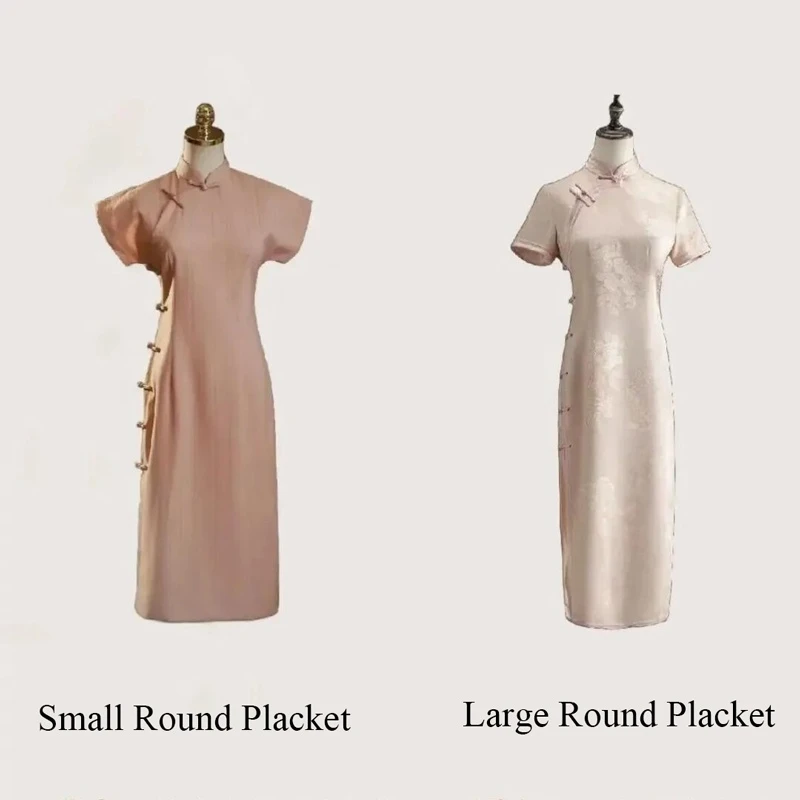
Pipa (琵琶) Placket
- Features: Similar to the one-character placket. The two lapels under the collar form a horizontal line, antique and elaborately made.
- Best for: Those who love traditional textures. Solid plain fabrics make this placket exceptionally timeless.
- Occasions: Chinese-themed parties and cultural events, helping you stand out effortlessly.
Straight Vertical Placket
- Features: A traditional old-style opening with an obtuse angle, running straight down to the hem for clean vertical lines.
- Best for: Those wishing to highlight their natural figure curves.
- Occasions: Dates and small dinner parties, beautifully showing soft feminine silhouettes.
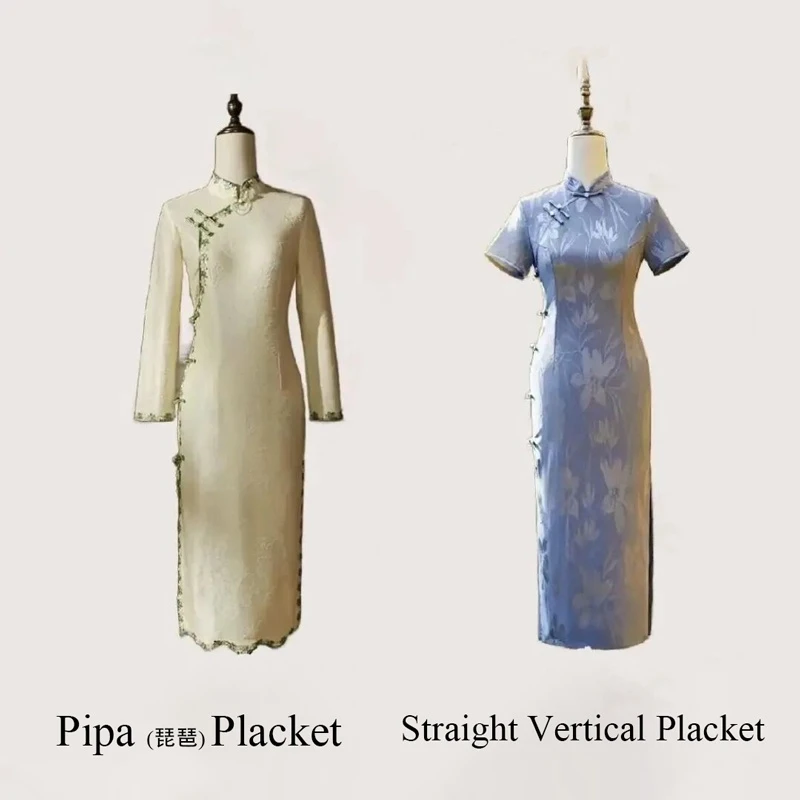
S-Shaped Placket
- Features: Angular S-shaped outline, lively and dynamic. The wide opening makes it easy to put on and take off.
- Best for: Anyone who finds qipaos troublesome to wear, allowing freer movement.
- Occasions: Casual shopping or short trips with friends — pretty and practical.
Double Round Placket
- Features: Two curved round lapels forming double arcs, playful and alluring.
- Best for: Those wanting to shine at grand events; it subtly flatters the bust line.
- Occasions: Being a wedding bridesmaid or attending large banquets, delivering an air of nobility.
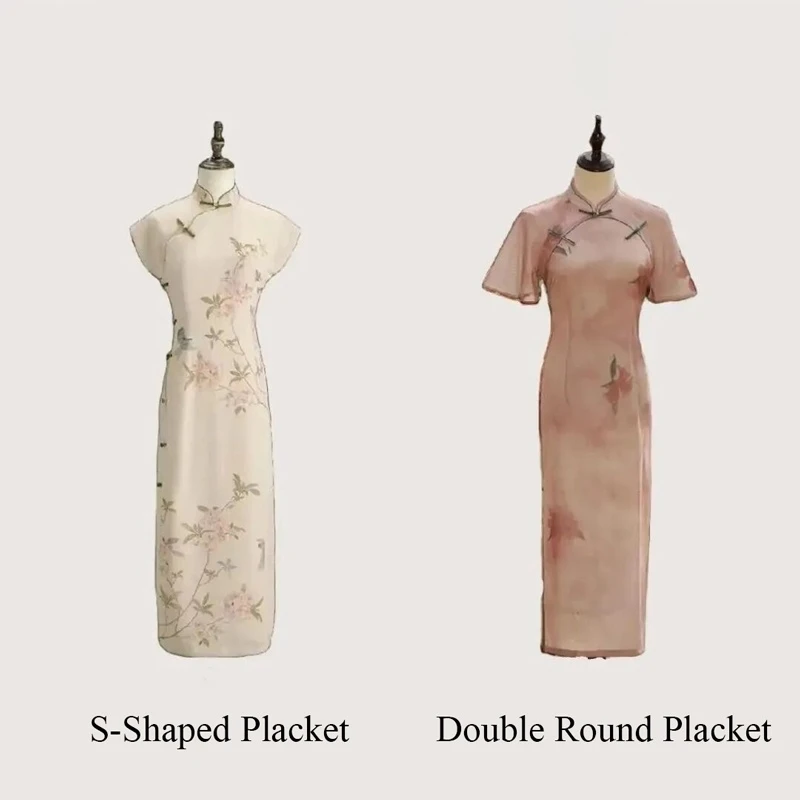
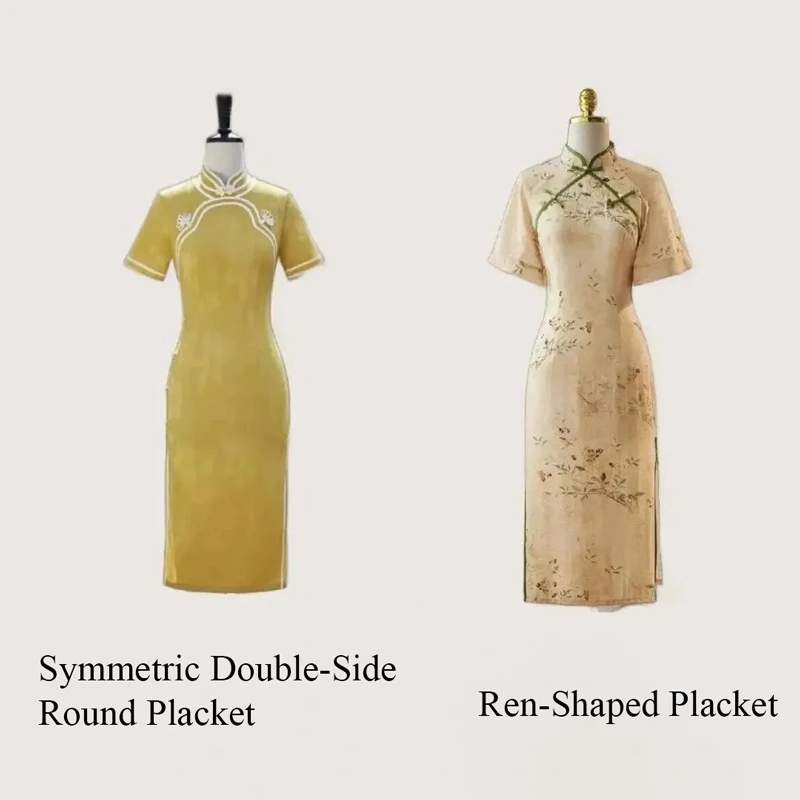
Symmetric Double-Side Round Placket
- Features: Round lapels on both sides, symmetrical and refined.
- Best for: Those wanting to soften and beautify the bust silhouette.
- Occasions: Best friend’s engagement parties and Chinese-style tea gatherings, elegant and appropriate.
Ren-Shaped Placket
- Features: Two lines dropping from the collar like the Chinese character “ren (人)”, with exceptionally smooth flowing lines.
- Best for: Round faces. It visually lengthens facial contours and makes the face look smaller and refined.
- Occasions: Class reunions and literary salons for a fresh and elegant look.
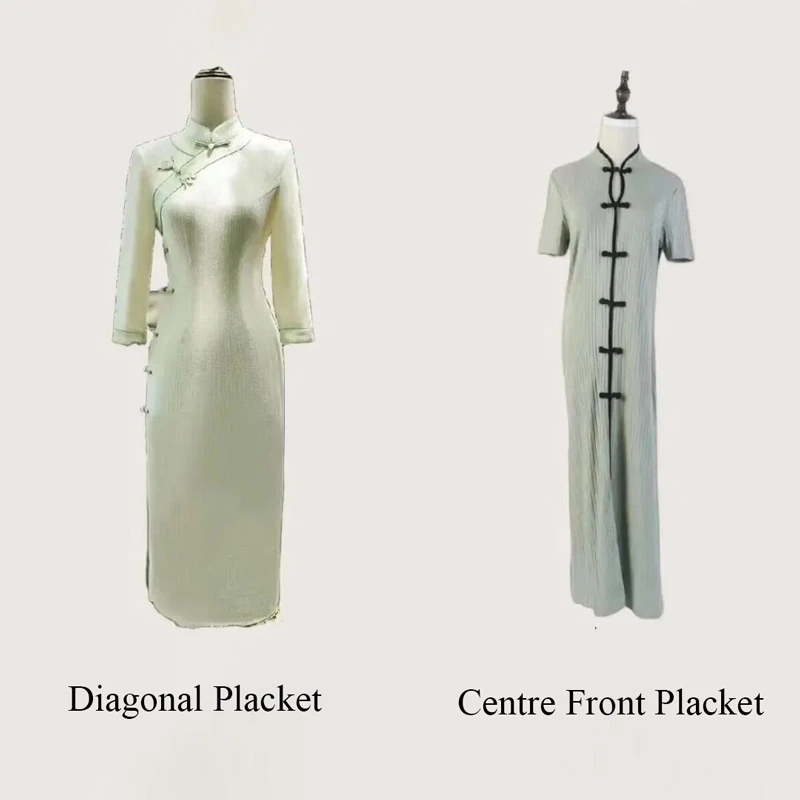
Diagonal Placket
- Features: Runs diagonally from the collar across the chest, decorated with frog buttons, overflowing with classic charm.
- Best for: Women with a delicate Jiangnan-style look. It slims the frame and stretches body proportions.
- Occasions: Short trips to water towns in Jiangnan and photoshoots in Chinese courtyards, like a figure stepping out of an ink wash painting.
Centre Front Placket
- Features: Derived from the Qing mandarin jacket, it opens straight down the centre to the hem with a row of frog buttons, solemn and grand.
- Best for: Curvy figures; excellent at flattering fuller body shapes.
- Occasions: Family reunions and important folk ceremonies, slimming and full of presence.
2.4 Frog Buttons
Frog buttons are an iconic symbol of traditional Chinese clothing.
On qipaos, they adorn collars, plackets and side slits.
They fasten the garment, carry strong Chinese style, and embody the cultural heritage of the Chinese nation.
The origin of fabric buttons traces back to ancient Chinese knot craft.
Ancient Chinese people wore loose robes secured with sashes and knotted cords.
Evolution of the Straight One-Character Frog Button

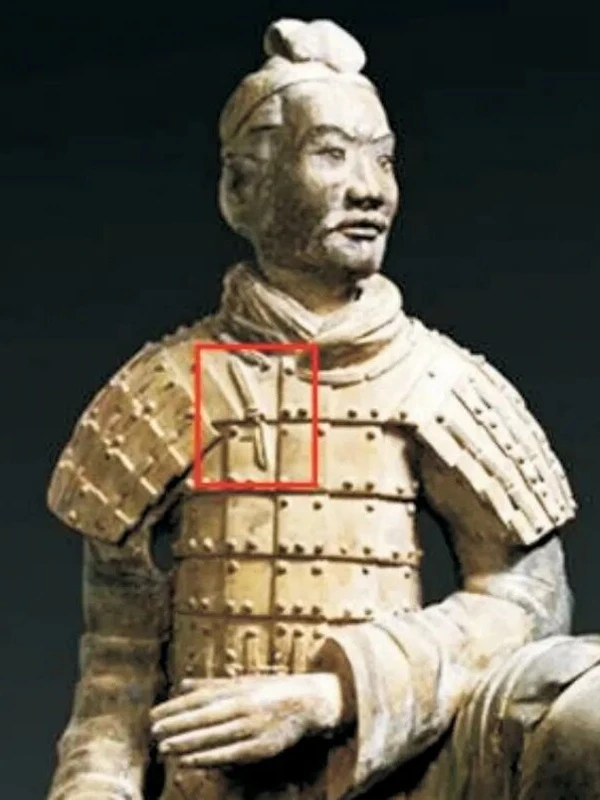
Qin Dynasty: Early leather frog buttons appeared on military uniforms in the simple one-straight shape.
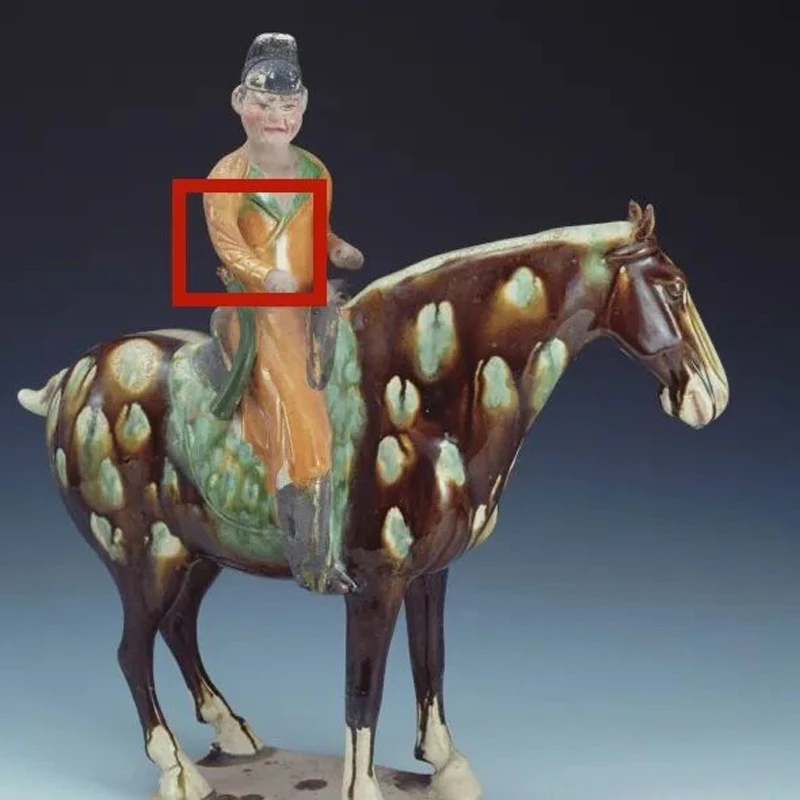
Tang Dynasty: Frog buttons were used in everyday garments, mostly short, plain straight buttons made of cotton, silk or linen.
Song and Yuan Dynasties: Straight buttons remained common; simple soft decorative frog knots emerged occasionally.
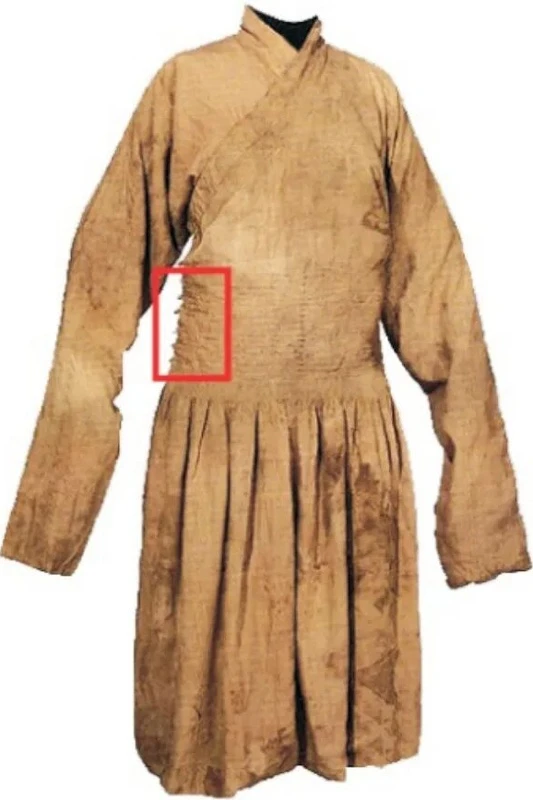
Ming Dynasty: Garments became more tailored. While straight buttons stayed popular, paired snap clasps made of metal and jade appeared.
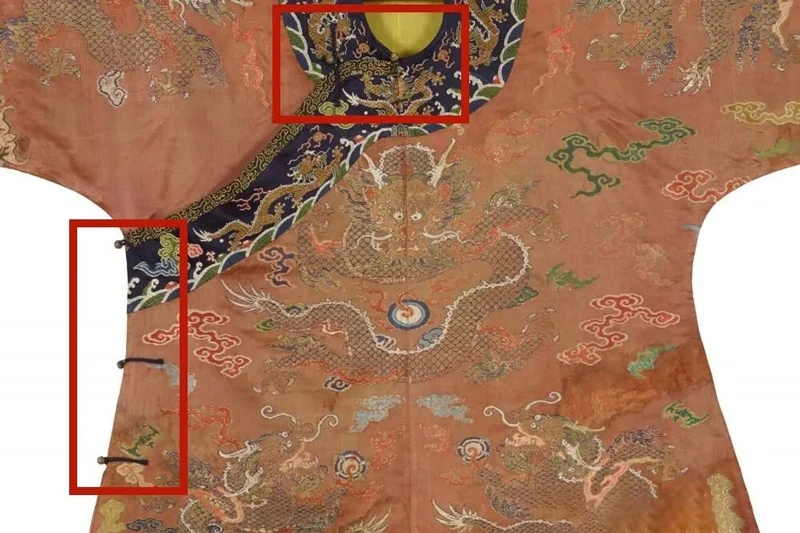
Qing Dynasty: Influenced by fitted clothing aesthetics, frog buttons replaced fabric ties and became the main fastener for Chinese garments. Most were straight cotton or silk-linen buttons with metal tips.
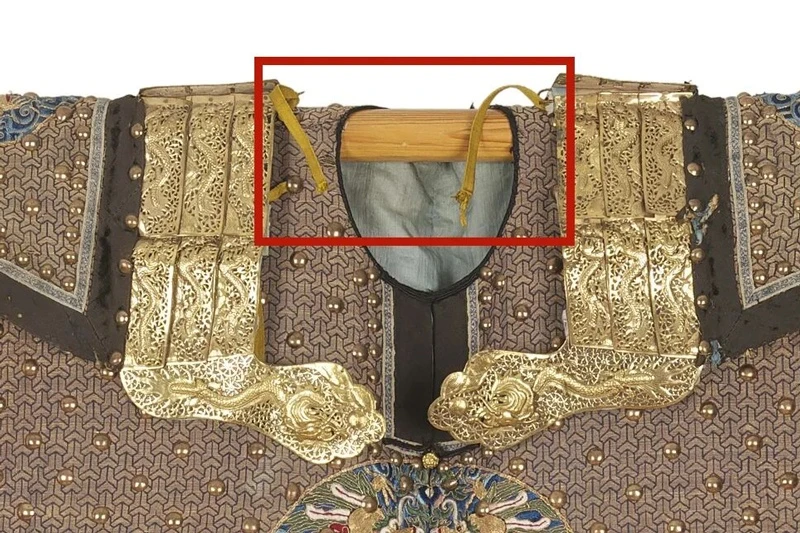
Late Qing Dynasty: Soft decorative frog knots gained popularity, shaped as auspicious motifs such as chrysanthemums, plum blossoms and butterflies.
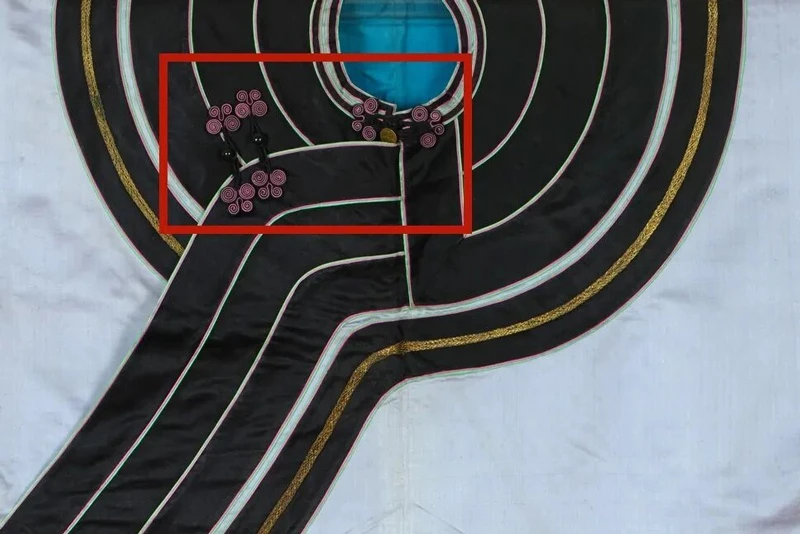
Republic of China Era: Building on Qing designs, frog buttons became the most widely used placket fastener. Solid rigid decorative frog knots thrived, featuring butterflies, phoenixes, orchids and the Chinese character for longevity. Made from silk, linen and cotton, these delicate ornaments perfectly elevated outfits.
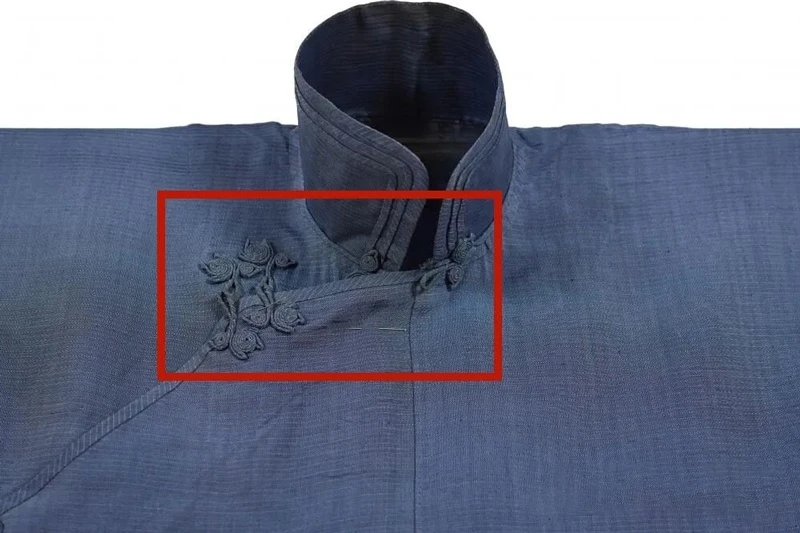
To this day, frog buttons serve not only as fasteners but also standalone decorative art pieces.
Evolving alongside Chinese attire, frog buttons do far more than close plackets — they are the crowning decorative detail of clothing.
All frog-knot patterns carry rich ethnic flair and auspicious meanings.
Style Classification:
Straight Frog Button (One-Character Button)
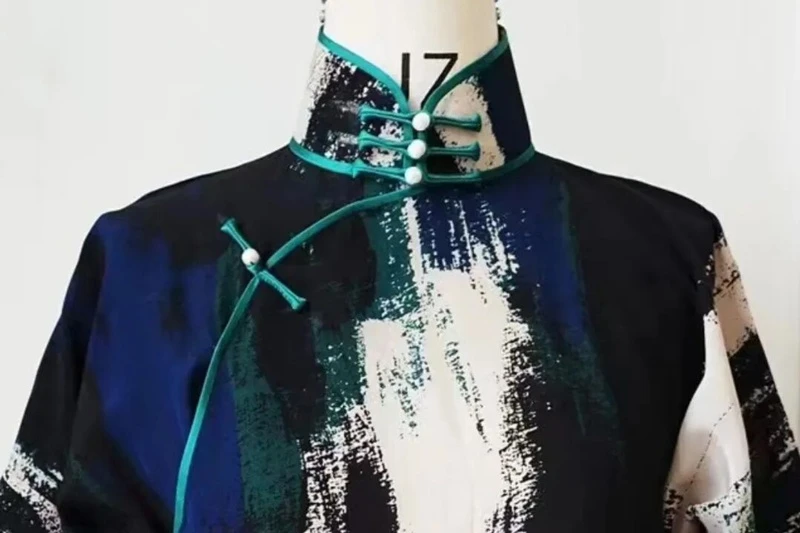
The simplest type of frog button. One fabric strip is knotted into a rounded button ball; the other strip is folded into a loop. The ball and loop are sewn onto opposite sides of the placket to fasten together.
Pipa Frog Button
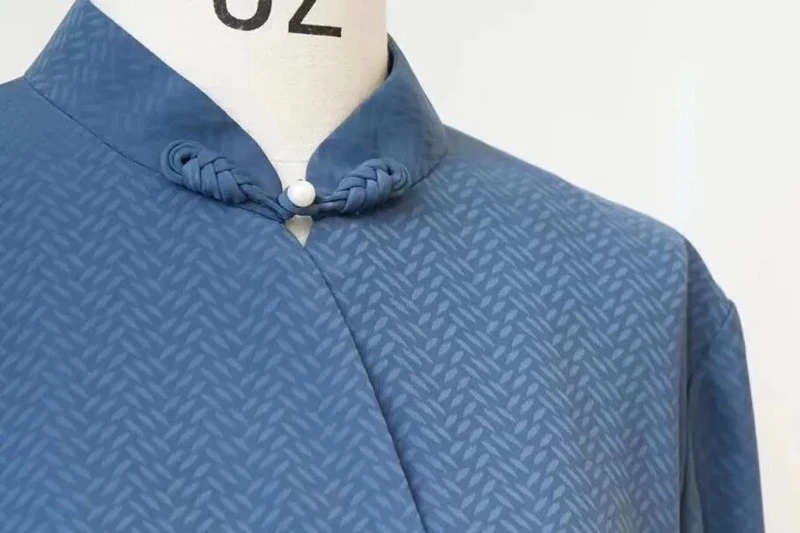
Modified from the basic button knot, it gets its name for resembling the pipa lute. “Pipa” shares the same pronunciation as loquat, a fruit symbolizing good fortune.
Chrysanthemum Frog Button
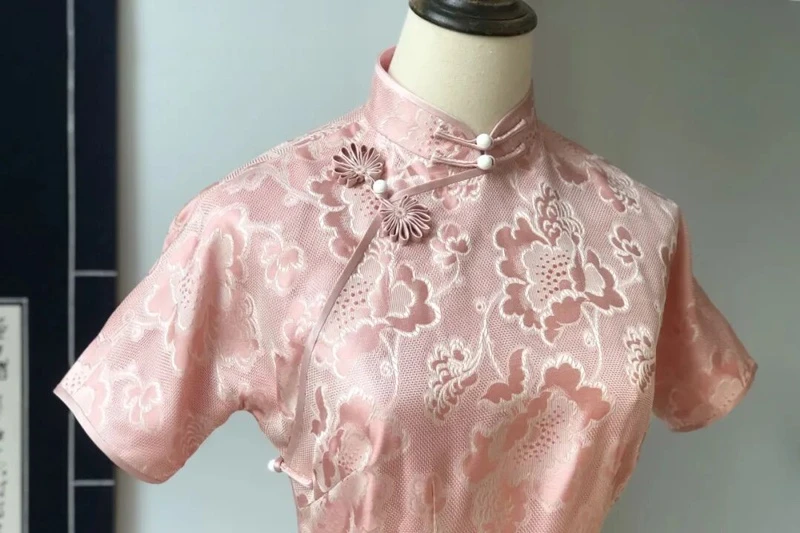
Chrysanthemums stand for purity and nobility, carrying the elegant meaning of integrity.
Flower Basket Frog Button
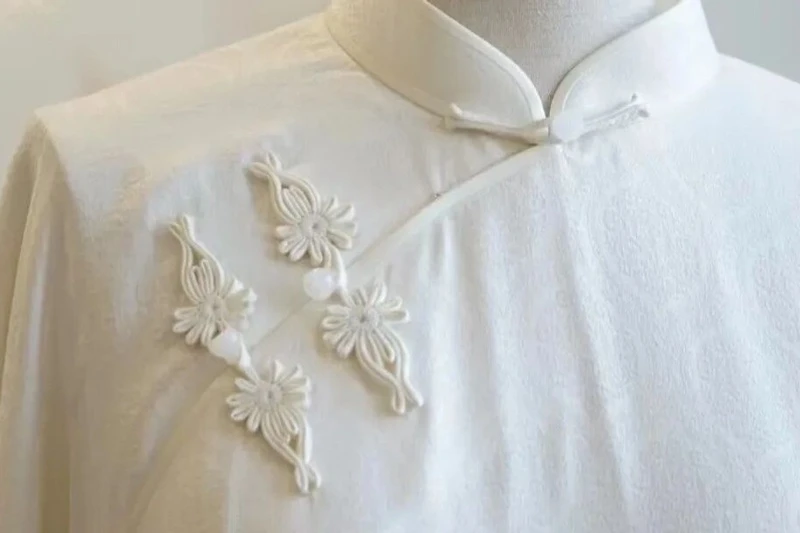
A stunning accent. The flower basket symbolizes blooming flowers, vitality, celebration and triumph.
Coiled Incense Frog Button
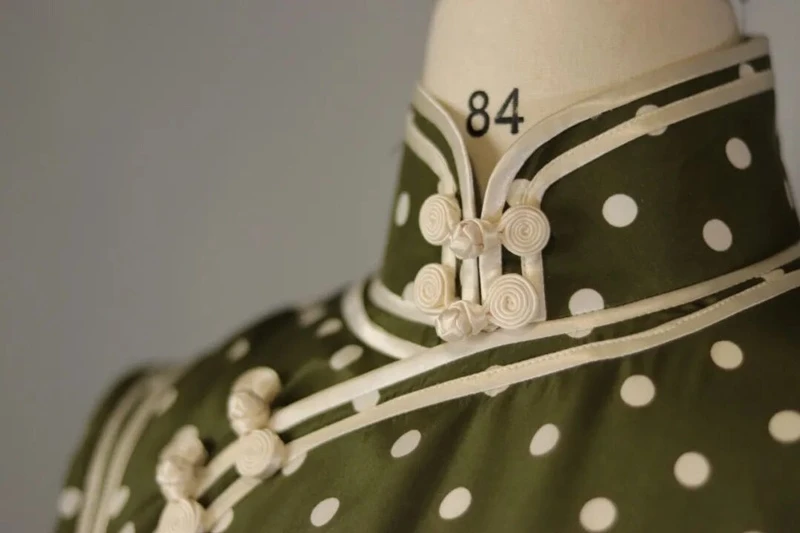
The foundational decorative frog knot. As its name suggests, it looks like a coil of incense. Thin fabric strips spiral to form this knot, which can be rearranged into composite shapes such as gourds and grape clusters.
Gourd Frog Button
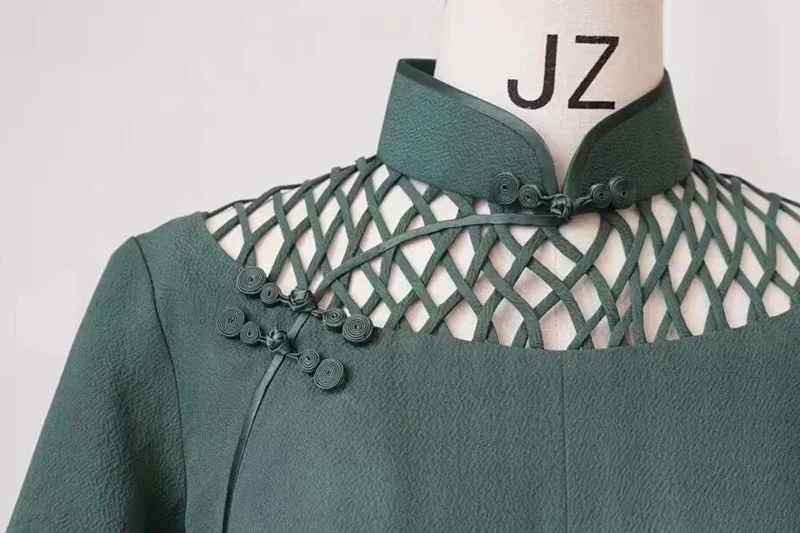
“Gourd” sounds similar to “blessing and prosperity” in Chinese. Since gourds bear abundant fruit, they also symbolize many children and good fortune.
Peach of Longevity Frog Button
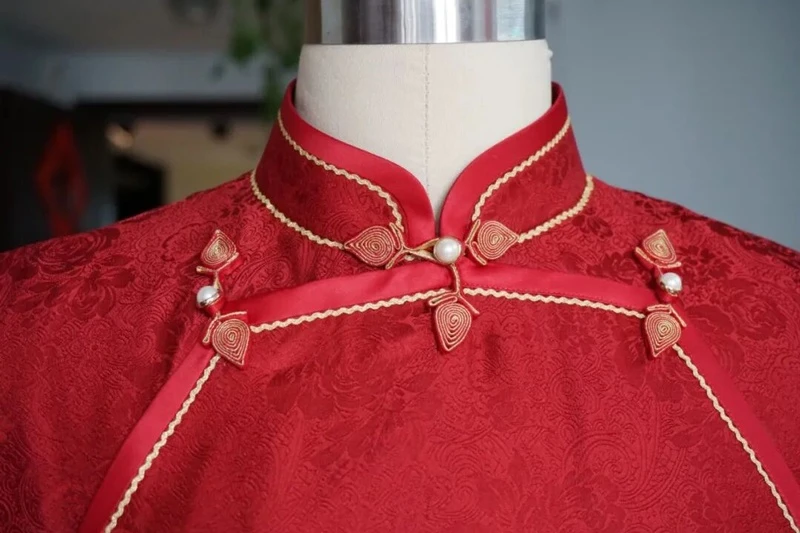
A variation of the coiled incense knot. Three small pointed tips are shaped on the outer coil to mimic a leafy longevity peach. Nearly identical to the coiled incense knot at first glance, the tiny points give it a lovely, playful look.
Wire-Reinforced Rigid Frog Button
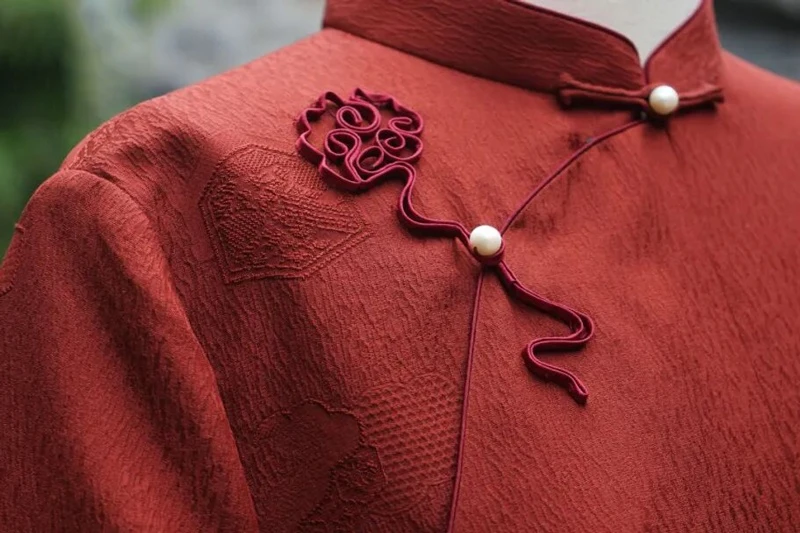
Made from starched fabric wrapped around thin copper wire to form flat strips. This construction supports intricate shapes with strong three-dimensionality. It can form delicate small blossoms or large combined patterns, with outstanding decorative appeal.
Filled-Core Frog Button
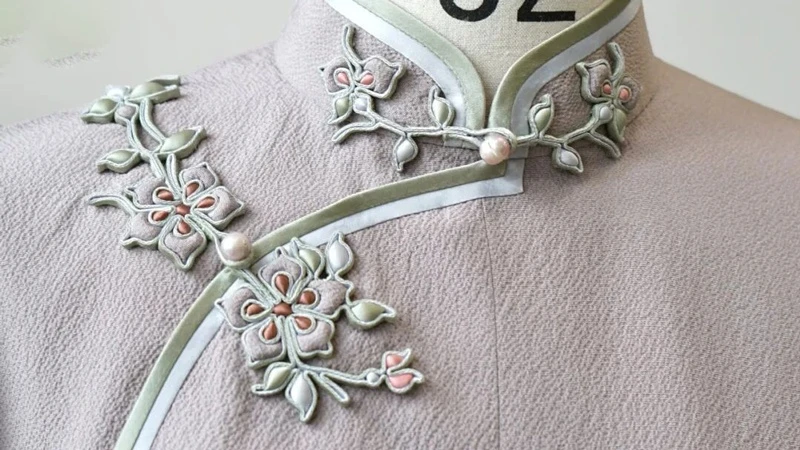
Cotton stuffing is placed inside the closed outline of a wire-reinforced frog frame, often covered with contrasting fabric. Wire-framed hollow frog buttons are also known as hollow-core buttons, while stuffed ones are called filled-core buttons.
These tiny frog buttons hold simple, genuine affection. They carry wishes for blessings and happiness, and express people’s longing for a wonderful life.
On one qipao, a handful of frog buttons subtly interpret the beauty and essence of Eastern cultural symbols.
2.5 Slits
One indispensable and iconic feature of the qipao is the slit on the skirt hem. How much do you know about qipao slits?
In this section, we will introduce several slit designs for modern qipaos and how to pick the right one.
Front Slit Qipao
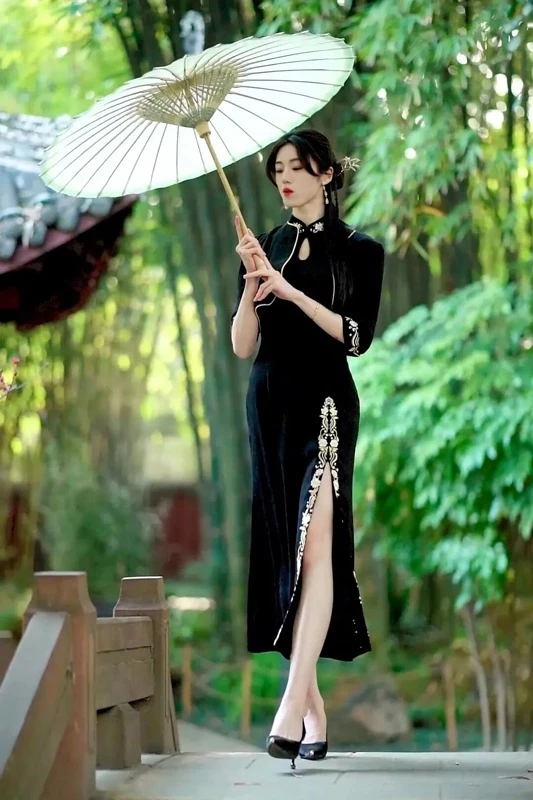
A hugely popular style of modern Chinese modified qipao in recent years. As you walk, it subtly reveals the leg line and lengthens the visual proportion of the legs. It suits those with beautiful leg contours.
The front slit should not be cut too high, or too much thigh skin will show when walking or sitting. Partial, glimpsed leg exposure often carries greater elegance and charm.
Side Slit Qipao
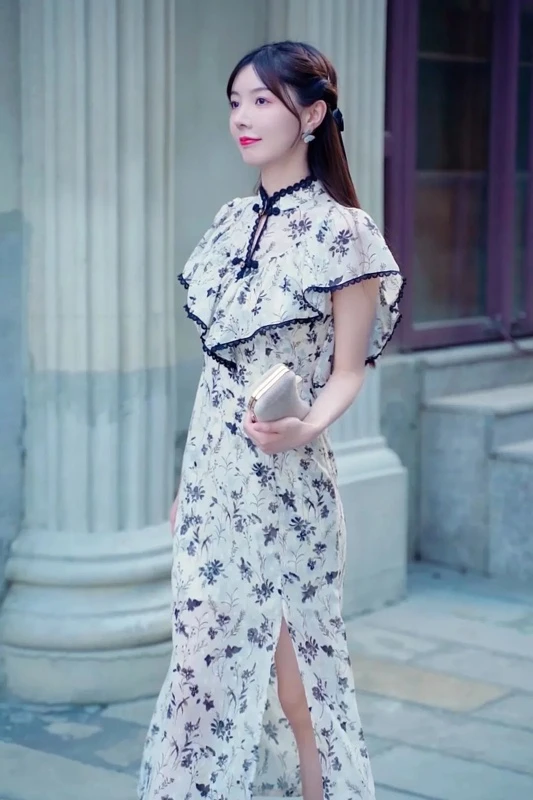
The classic, standard slit design of traditional qipaos. Usually, the slit ends 25 cm below the hip peak for free movement. It comes in single-side and double-side versions, formal and timeless.
Though side slits are the safest option, mind your posture while seated; crossing your legs is not recommended.
Slitless Qipao
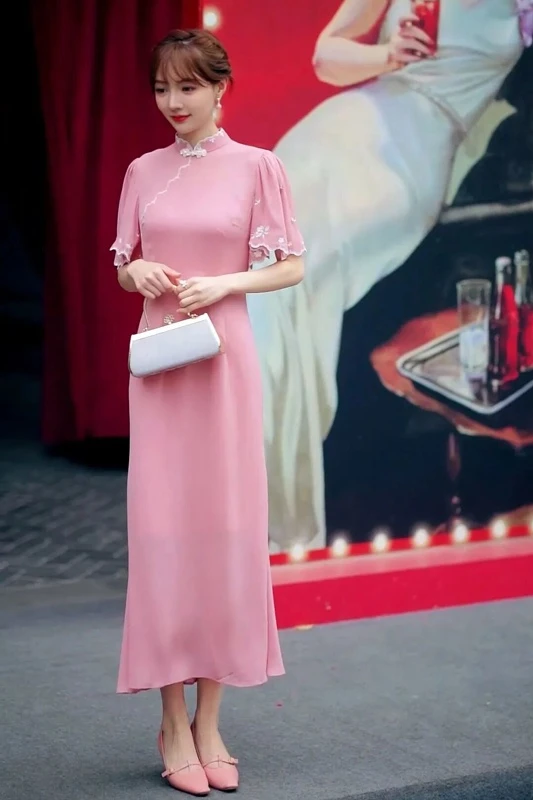
Slitless designs work well for straight-cut or A-line modified qipaos. Similar to modern dresses, they feel more fashion-forward.
Tight-fitting styles without slits restrict movement, so slitless qipaos are synonymous with loose comfort and understated modesty. They may not highlight your figure, yet they are versatile and perfect for daily wear.
Back Slit Qipao
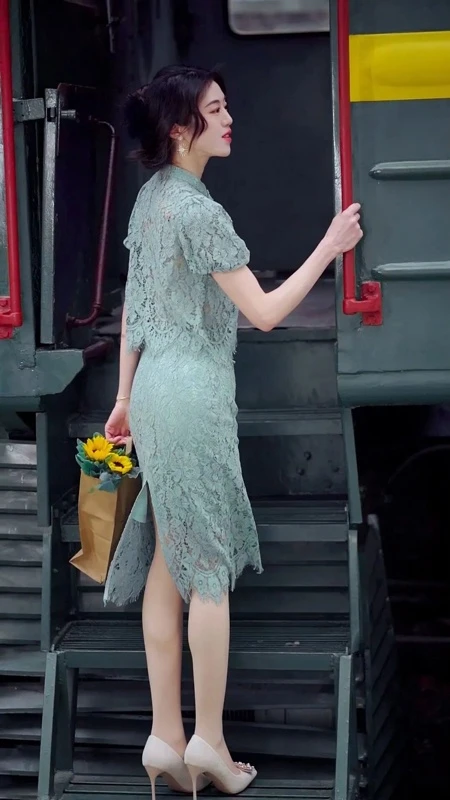
Ideal for modest wearers. The back slit allows easy walking, and it is a great choice for mothers who prefer not to show their legs.
This slit style is relatively uncommon among modern reimagined qipaos.
High Slit & Low Slit
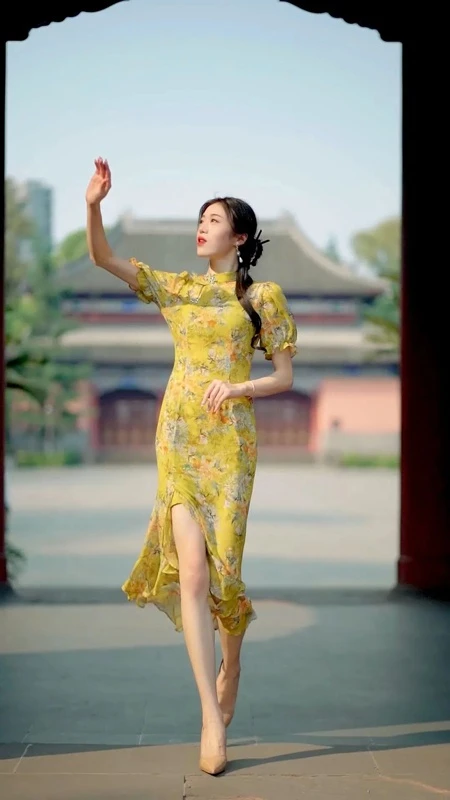
Low slits originate from the long robes of the Qing Dynasty, an era when women dressed conservatively. They match vintage, traditional qipaos.
Pros: Reserved and natural, less restrictive. Cons: The waist cannot be tightly tailored, otherwise the garment will feel constricting.
High-slit qipaos are sensual and charming, mostly modern styles for younger wearers.
They look alluring and playful, yet you need to be mindful of your range of motion.

Closing
The best qipao is not the one with the most decoration, but the one that fits your body and occasion. Start with your shape, then choose the collar, sleeve, placket, frog buttons, and slit that support your mood and movement. A defined waist, a clean neckline, and fabric with the right weight often matter more than elaborate details. If the hip or bust pulls, go up a size and adjust the waist; a tailor can take fabric in, but cannot add it.
Test the dress by walking, climbing stairs, and sitting for tea. The right qipao should feel comfortable, let you breathe, and give your silhouette direction. When cut, fabric, and fit work together, the qipao becomes not a costume but a confident, modern expression of tradition. Choose fewer tricks and a better fit. Let the dress serve you.