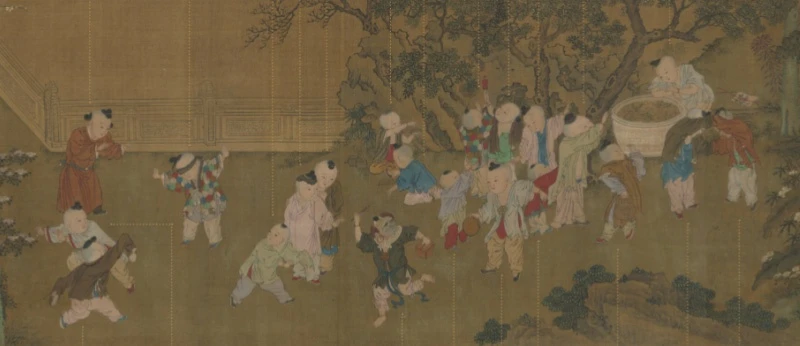
Changchun Baizi Tu (长春百子图), a long handscroll attributed to the Song court painter Su Hanchen (苏汉臣) and now held in the National Palace Museum in Taipei, shows 111 children at play. Measuring about 30.6 centimeters high and 521.9 centimeters wide, it gives each child a distinct expression, posture, and outfit. In the autumn section, clothing is not merely decorative. It records how children moved through daily life, play, and performance. The garments also reflect a broader shift in Song aesthetics. Where Tang dress could be bold and saturated, Song fashion turned toward restraint, refinement, and quiet elegance. Children’s clothes in the scroll follow that mood while remaining practical, comfortable, and full of small surprises.
Everyday Autumn Garments
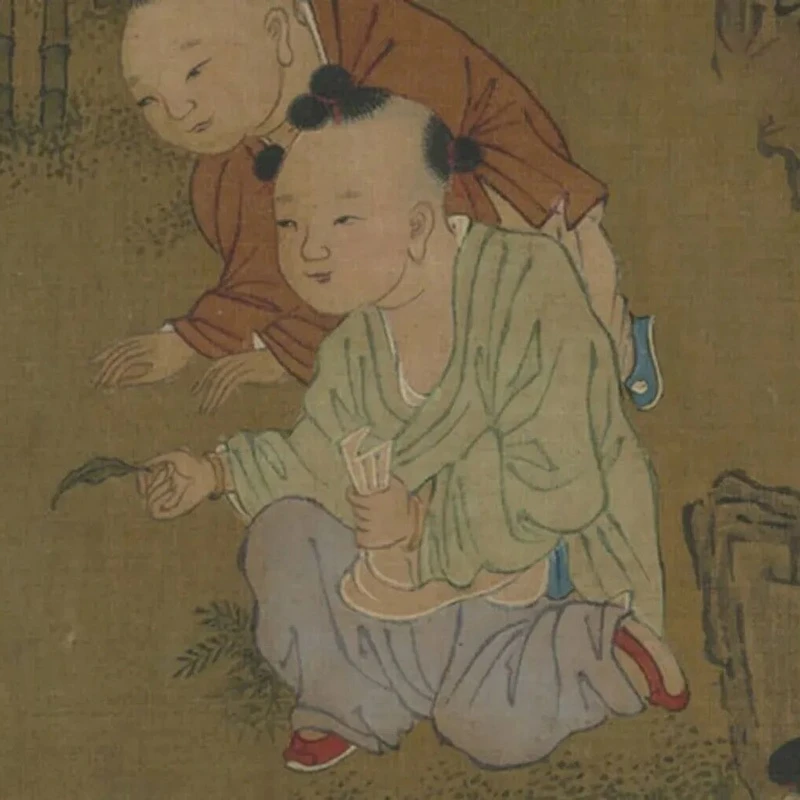
Many children in the autumn scene wear short upper garments. One boy kneels on the ground while playing a grass game, dressed in a green short shirt with a crossed collar and a side slit. Such shirts were common for active children because they allowed movement and suited the relaxed rhythms of household and village life. The scroll also shows a small child in a brown short Beizi (褙子), a lined outer jacket with straight front panels fastened by buttons. Its shape is simple, but the closure and trim make it look neatly finished.
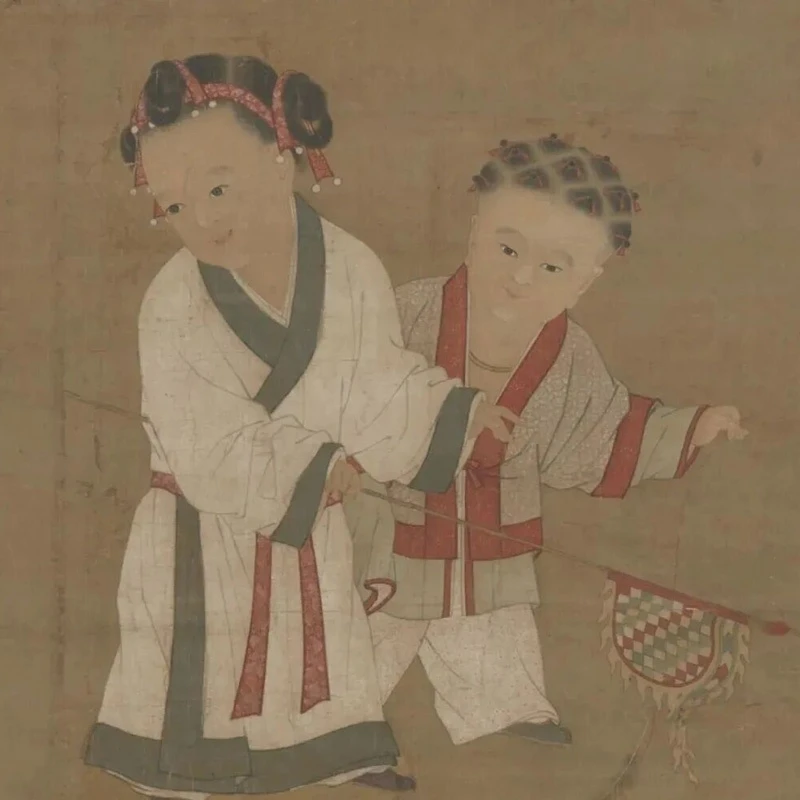
Su Hanchen’s other works help confirm these details. In Dongri Yingxi Tu (冬日婴戏图), a child with three topknots wears a long robe with a crossed right lapel, a waist sash, and bordered collar and cuffs. Another boy wears two straight-collared Beizi, one longer and one shorter, with side slits, red-trimmed edges, and ties at the front. These layered outfits show that Song children’s clothing could be modest and still carefully composed. The combination of inner and outer pieces created warmth, order, and a sense of occasion even during ordinary play.
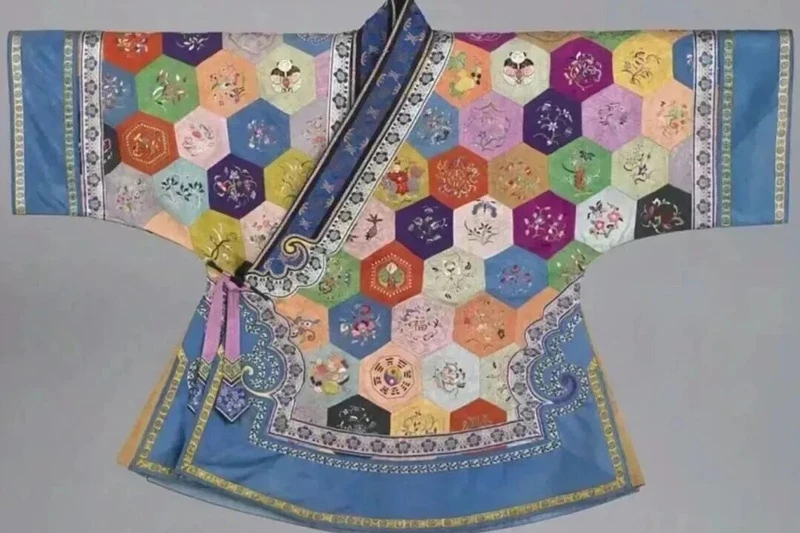
The autumn scene also includes a Baina Yi (百衲衣), a patchwork garment related to the Beizi. “Bai” suggests many, while “na” refers to stitching pieces together. Such clothes carried more than thrift. They expressed care from family and neighbors, the wish to use fabric fully, and the hope that a child would grow up strong. Bright scraps broke the plainness of rural surroundings, and the lively color pleased children’s eyes. The garment was humble in material, yet it held a cheerful visual energy.
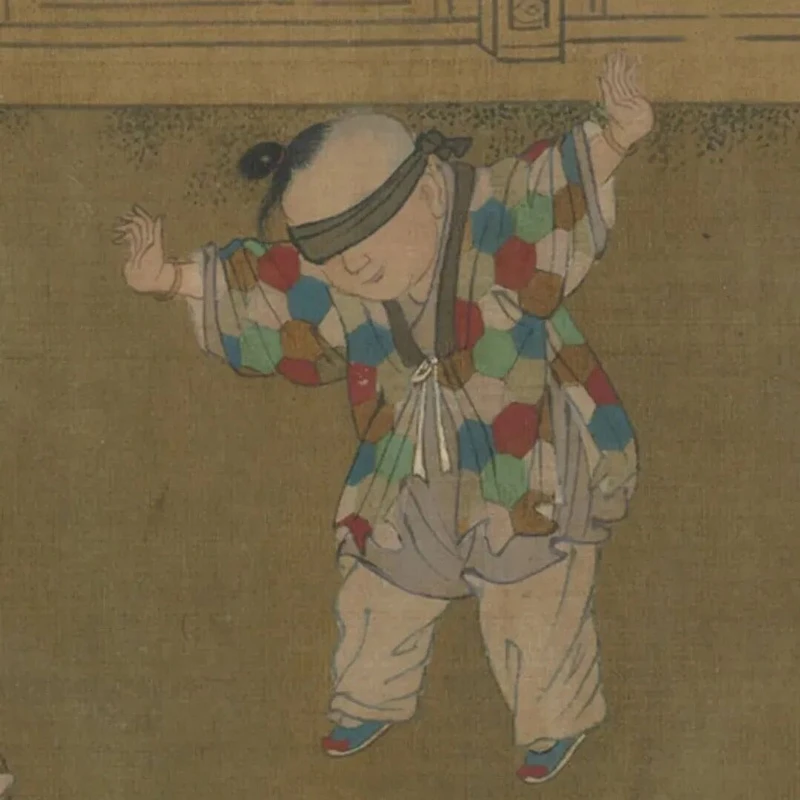
Common motifs on patchwork clothing included the Five Poisons, the Eight Trigrams, and the character for longevity. The Five Poisons usually meant the centipede, snake, scorpion, gecko, and toad. Embroidering them did not invite harm. Instead, it suggested that opposing forces could cancel danger, protecting the child from illness and misfortune. Paired with the Taiji (太极) symbol, these patterns turned needlework into a small act of blessing. The design was playful, but its intention was serious.
Children Playing at Performance
Some children in the scroll dress up as if they were adults on a stage. One wears a gray closed-collar Beizi with front opening, a false mask, a golden clasp, and a blue sash. Holding a prop, he copies the posture and authority of grown performers. This kind of imitation was not rare in Song leisure life. Urban entertainment, popular theater, and festival customs gave children plenty of models to borrow. They tried on roles, gestures, and costumes to feel part of a larger social scene.
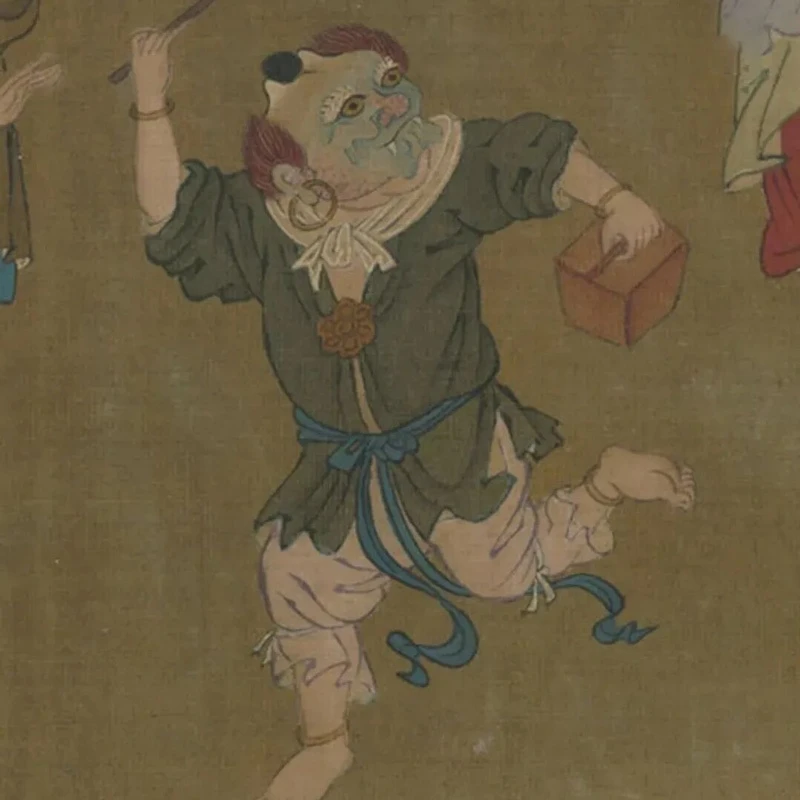
Such play often grew out of older seasonal rituals. Early festivals included dances and ceremonies meant to honor heaven, earth, ancestors, and the forces of nature. Nuo (傩) dances, village processions, and other rites once carried strong religious meaning. Over time, many of these forms became more entertaining. Children absorbed their shapes and turned them into games. A mask could become a toy; a ritual step could become a joke; a ceremonial sash could become a badge of pretend rank.
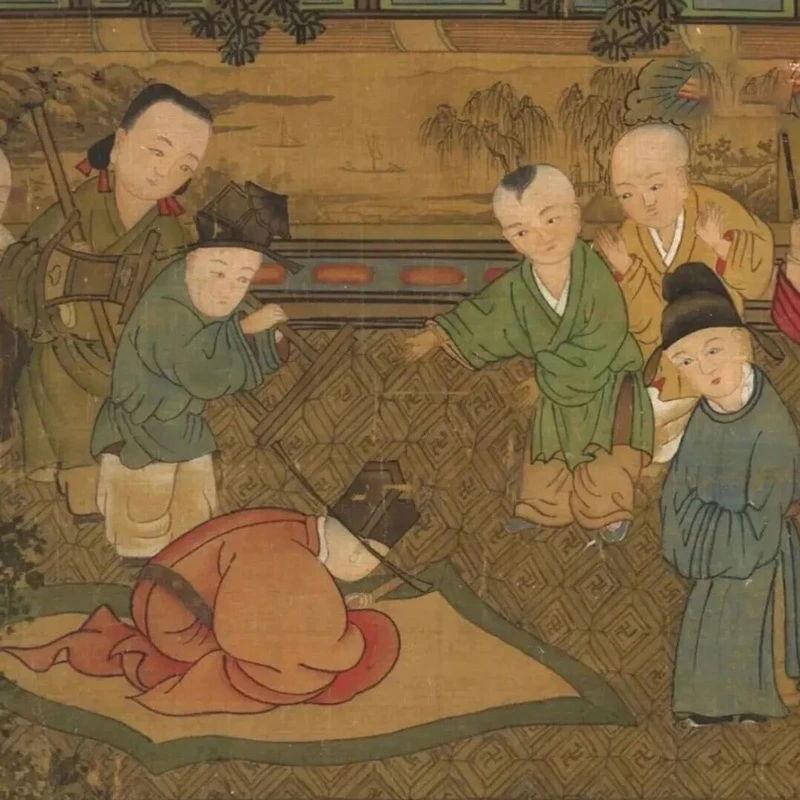
Another work linked to Su Hanchen, Wurui Tu (五瑞图), shows five boys performing “Wuhua Cuannong” (五花爨弄), a folk theatrical form with lively local flavor. The scene confirms that children’s performance dress could be more elaborate than daily wear. It did not need to follow official costume rules, but it borrowed enough from adult theater to look convincing. The result was a charming mix of sincerity and make-believe, where a child could be both himself and a character for a few moments.
Clothing as a Window into Song Life
The autumn children in Changchun Baizi Tu are dressed for real life, not for an idealized past. Their shirts, jackets, sashes, and patchwork robes fit the season and their activities. The costumes also show how Song society valued restraint without losing delight. A brown Beizi could be plain and still carry careful tailoring. A green shirt could be simple and still suit a boy’s quick movements. A patchwork garment could be made from scraps and still express affection, humor, and hope.
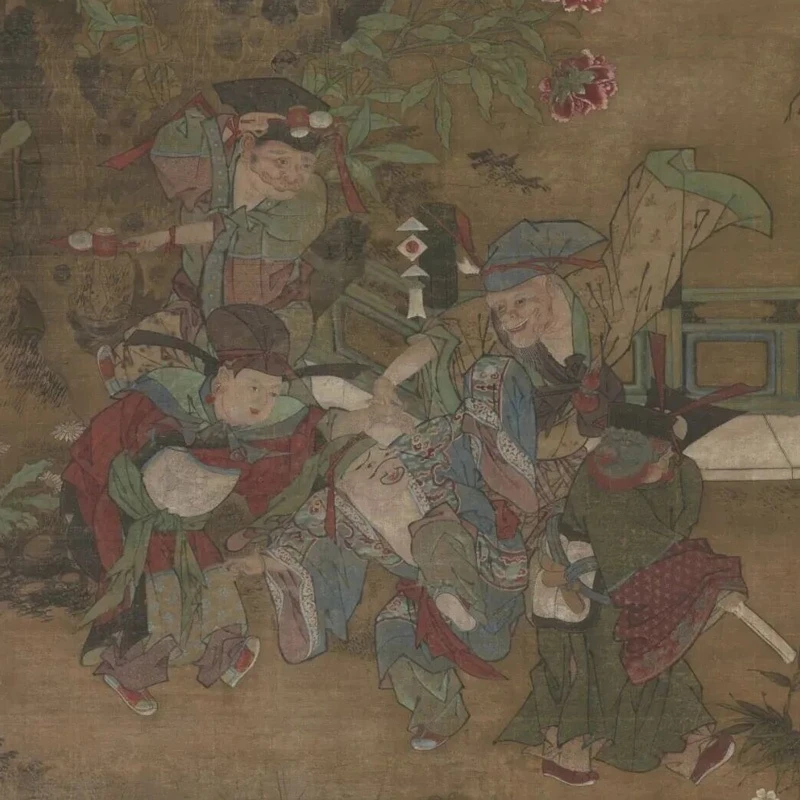
The scroll reminds us that children’s clothing can be read as social history. It tells us what fabrics families chose, how garments were layered, and how play borrowed from adult rituals. It also shows that protection and joy often lived side by side. A mask might frighten and amuse at once. A stitched emblem might ward off danger while brightening a sleeve. Su Hanchen’s children do not merely wear clothes. They wear the habits, beliefs, and pleasures of their time, captured with unusual warmth and precision.