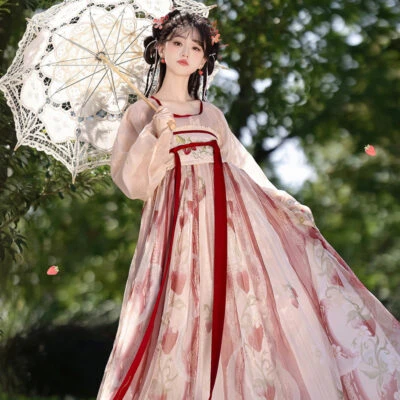
Viewers of Where the Mask Ends (嫁金钗) have been stopping mid-episode to ask a simple question: why does Lu Zhuo (陆濯) call Wei Rao (魏娆) “Xijun (细君)” instead of wife? Why does she answer her mother-in-law with “Jungu (君姑)”? And why do servants reply with a quick “Wei (唯)” before they speak? Some viewers praise the show for careful research; others suspect the writers invented fancy antique words. The truth is stranger and more interesting. The drama is fictional, but its address system borrows from Han and Wei ritual language. These words were not decoration. They marked rank, family distance, and respect. Once you notice them, small conversations start to reveal a whole social order.
Wife, Not Inferior
“Xijun” sounds like a girl’s nickname, not a wife’s title. In the Book of Han (汉书), an official took meat home for his wife and called her Xijun. Ancient notes explain that a nobleman’s principal wife was called Xiaojun (小君); “xi” meant small, so Xijun began as an honorific for a ranked wife. Over time it became a general word for wife in literary circles. It was not the humble “my clumsy wife” that a man might use before outsiders. It was respectful speech from husband to wife.
The word does not mean “weak woman.” “Xi” points back to Xiaojun, a title with status. A Han princess named Liu Xijun (刘细君) married into the Wusun people far to the west; her name sounds the same, but her story is unrelated. In the drama, Lu Zhuo’s choice matters. He treats Wei Rao as a spouse of equal standing, not as an appendage. That tone differs sharply from costume dramas where husbands toss around self-deprecating terms and call it history.

Elite Han and Wei households used speech to show rank and intimacy at the same time. Xijun belonged to that world of ritual and literature; farmers and shopkeepers likely used simpler family words. The show keeps the term inside noble scenes, which makes it feel less like a blanket “ancient flavor” and more like a social clue. It also asks viewers to slow down. A single address can tell you who holds power, who offers courtesy, and who is expected to answer fast.
Mother-in-Law’s Old Name
“Jungu (君姑)” is even more grounded. The Erya (尔雅), an early dictionary of kinship terms, says a wife calls her husband’s father Jiu and his mother Gu (姑). While they are alive, she adds Jun for respect: Junjiu and Jungu. After death, the names change to Xianjiu (先舅) and Xiangu (先姑). So Jungu means a living mother-in-law, not a random old-fashioned word. In the drama, Wei Rao uses it when she speaks to her husband’s mother.
Why call a mother-in-law Gu? Ancient cousin marriage offers one answer. A husband’s mother might also be the wife’s aunt, so the family words overlapped. Even when no blood tie existed, the address stayed. Tang poems mention bowing to Jiu and Gu in the morning after a wedding; those are parents-in-law. Later, “Popo” took over daily speech, and Jungu retreated into ritual texts. The show pulls it back into a family scene, where it sounds formal but not impossible.
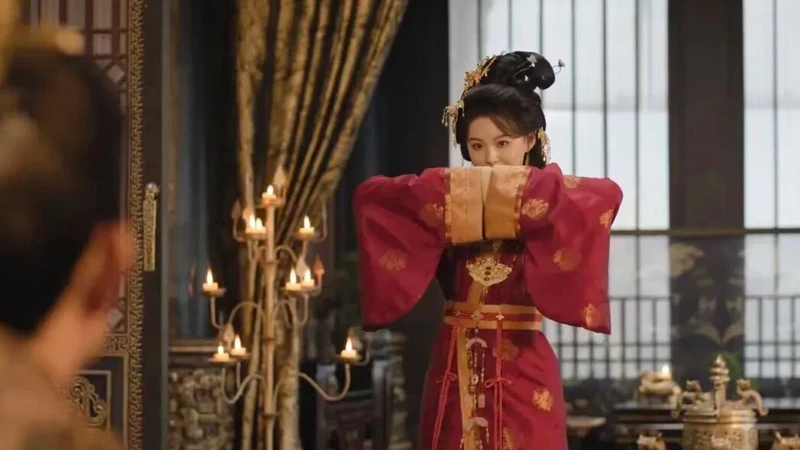
This detail does more than look old. It shows how a daughter-in-law signals her place. The word carries courtesy, but it also carries hierarchy. She is not chatting with a neighbor; she is addressing the mother of her husband inside an elite house. The drama does not force every servant and villager to use the same term. That selective use is more believable than sprinkling antique words over every line. Context gives the word its weight.
The Quick Reply
“Wei” is the easiest term to miss. Modern Chinese has “weiwei nuonuo (唯唯诺诺),” a phrase for timid agreement, so many viewers hear only obedience. In early texts, however, Wei and Nuo were two different replies. The Book of Rites (礼记) says that when a father or teacher calls, a junior should not answer Nuo; he should answer Wei and stand. Commentators explained that Wei was more respectful than Nuo. The difference was not just wording; it was speed and posture.
Wei was quick. A junior heard an order and answered at once, showing that he dared not delay. Nuo was slower and more relaxed, used among equals or from a superior to a subordinate. A young person who drawled Nuo to an elder was being rude. In the Analects, a disciple answers Confucius with a single Wei, then says nothing more. That short sound is the whole point: attention, respect, readiness.
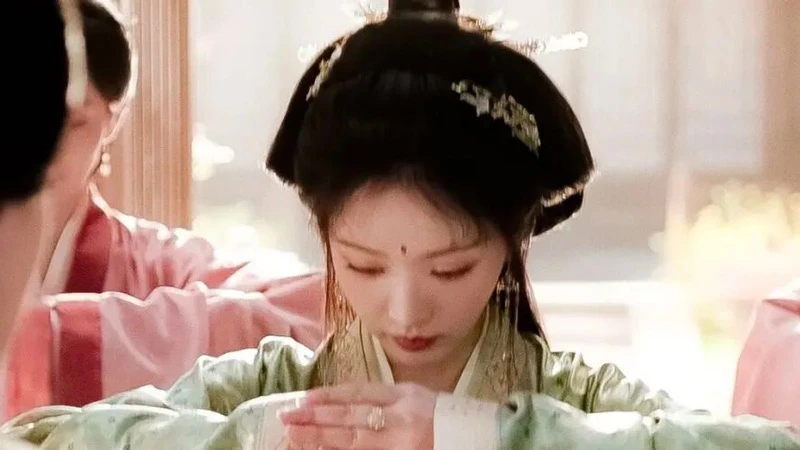
After the Qin and Han periods, other replies such as Nuo, Re (喏), and Zha (喳) spread through court and street. Wei faded from everyday talk, which is why modern audiences find it so alien. The drama places it in elite household exchanges, not as a magic ancient word but as a small cue that the speaker knows the rules. The series is fiction, not a documentary. Ordinary Han homes may not have spoken this way all day. Still, the choice rewards close listening.
A wife-honorific, a mother-in-law’s title, a one-syllable answer: these look like dusty glossary entries. Inside a scene, they become atmosphere. They show a husband’s respect, a daughter-in-law’s courtesy, and a servant’s alertness. The show may not recreate Han life perfectly, but it invites viewers to hear the small boundaries inside ordinary speech. That is why the odd words linger after the episode ends.