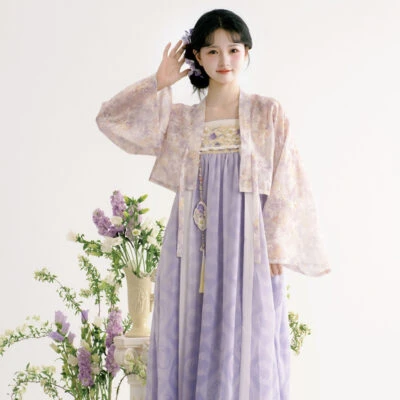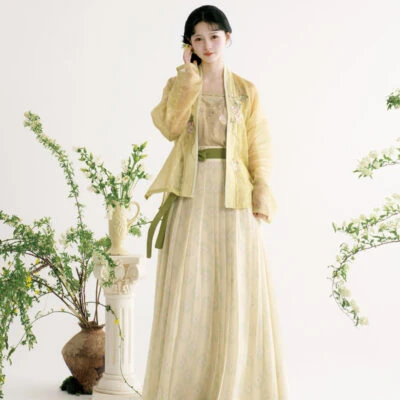
At a family photo day, a child refuses the usual dress and asks for a skirt with deep pleats. The parents pause: Is this Hanfu from the Ming court or just a modern outfit? What is the difference between a cross-collar and a round-collar? Why does one style look like a fairy and another like a young scholar? For many overseas children, Hanfu has become a visible name tag. It is not a costume box. It is history you can touch with sleeves, collars, and color. Each dynasty left a different idea of beauty. That is why one dress can feel bold, another calm, and another precise. For children raised far from China, this wearable culture often opens a door faster than a textbook.
Tang Dared More
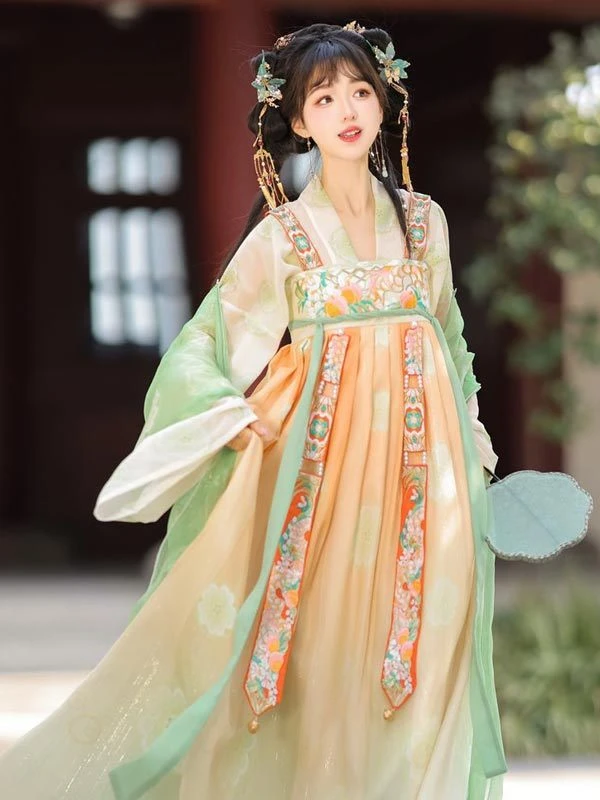
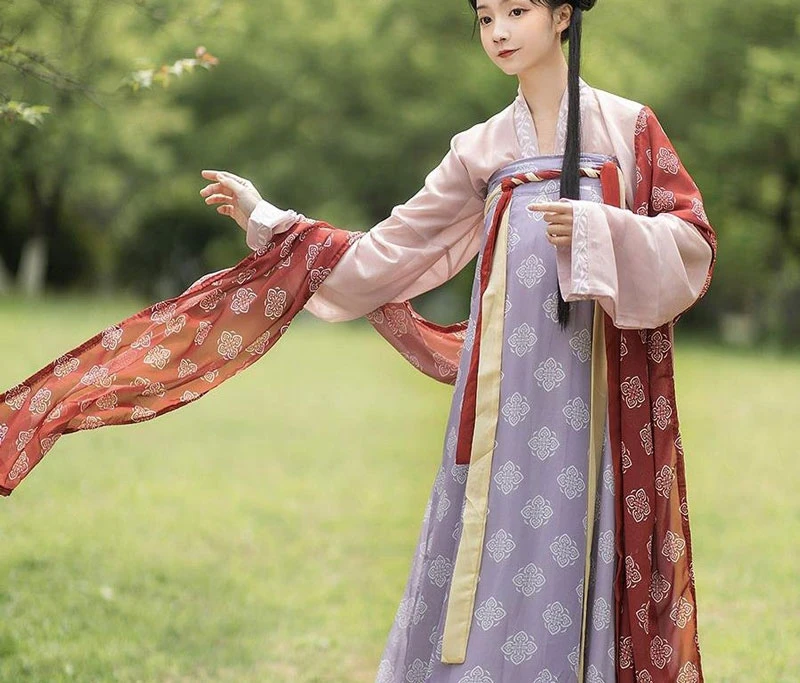
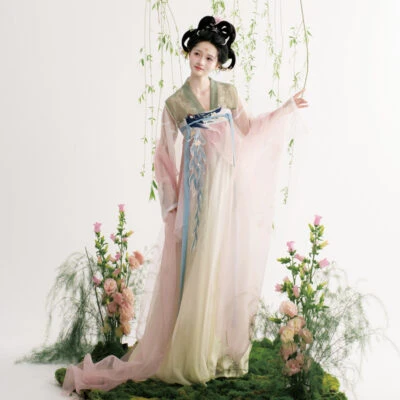
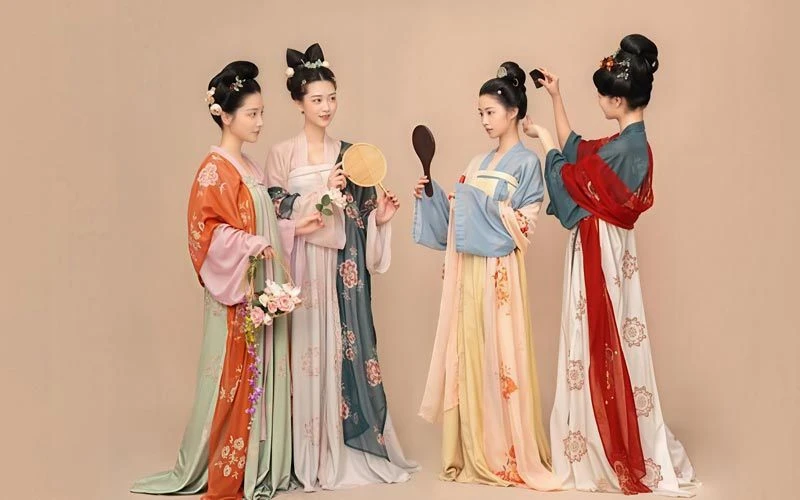
If Chinese fashion history were a runway, the Tang dynasty would turn up the lights. Women often wore three pieces: a short top, a high skirt, and a light scarf. The skirt rose to the chest; the scarf floated with each step. Today’s “Tang princess” photos borrow this shape. But the look was not fixed. Early Tang liked slim lines and quiet colors. High Tang grew louder as trade, music, and city life expanded. Low necklines, wide sleeves, and red-green-gold-blue clashes appear in murals and figurines.
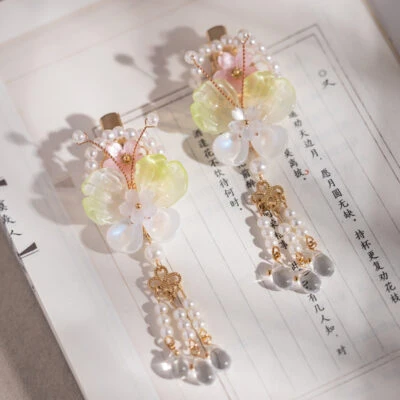
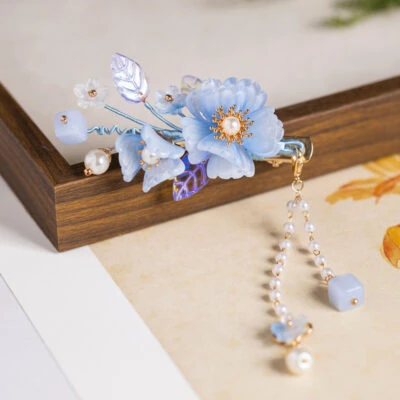
Dunhuang (敦煌) murals and Tang figurines show those brave combinations. Hair also spoke. High buns, double loops, and bird-shaped coils, plus Huadian (花钿), Buyao (步摇), and Mianye (面靥), made faces look like moving paintings. A child in this style learns quickly that clothing can carry energy, not just fabric.
For outgoing kids, Tang style gives instant presence. It says: take space, enjoy color, be seen. This confidence is not empty. It links a child to Chang’an (长安), a capital that once welcomed traders, musicians, and travelers. The outfit becomes a question starter: Who wore this? Why did width and color change? What made a society feel open enough to dress this way? Those questions matter more than a perfect photo.
Song Stayed Calm
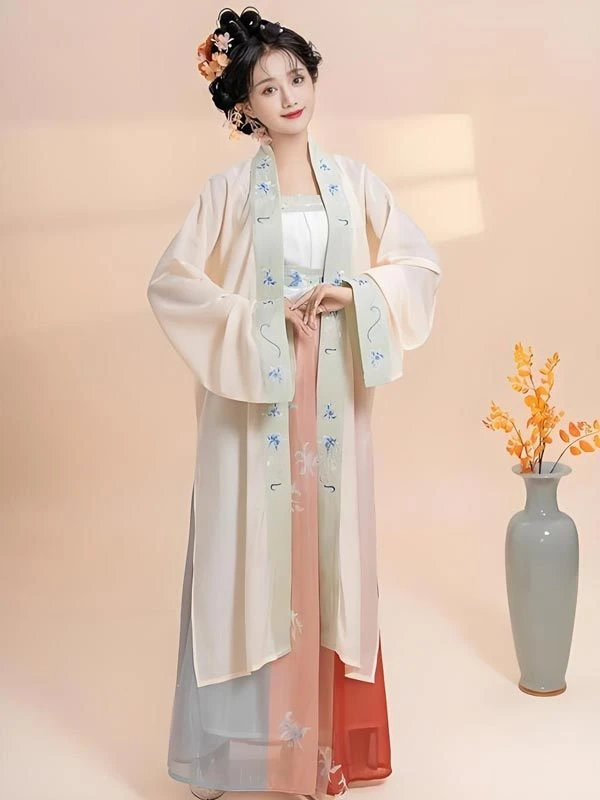
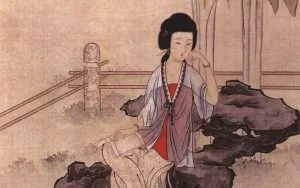
Song dynasty clothing rarely shouts. It rewards a second look. Women liked Beizi (褙子), a long straight-collar coat with narrow sleeves and side slits. It falls past the knee, light and easy. The shape is simple, but the cut is careful. Nothing feels tight or forced.
Colors were moon-white, lotus pink, sky blue, apricot yellow, and soft indigo. These names sound like lines from a poem. This taste grew from a literate culture: tea whisking, incense, flower arranging, and painting. Restraint had value. A quiet outfit could still show rank, taste, and mood through texture, trim, and a well-placed line.
A quiet child may feel at home in Song style. Movements slow down; the voice softens. Beauty does not have to be loud. Eastern calm can be strong. For parents, this is a useful lesson too: not every child needs a crown and bright silk. Some children bloom when the room gets quieter.
Ming Steps Out
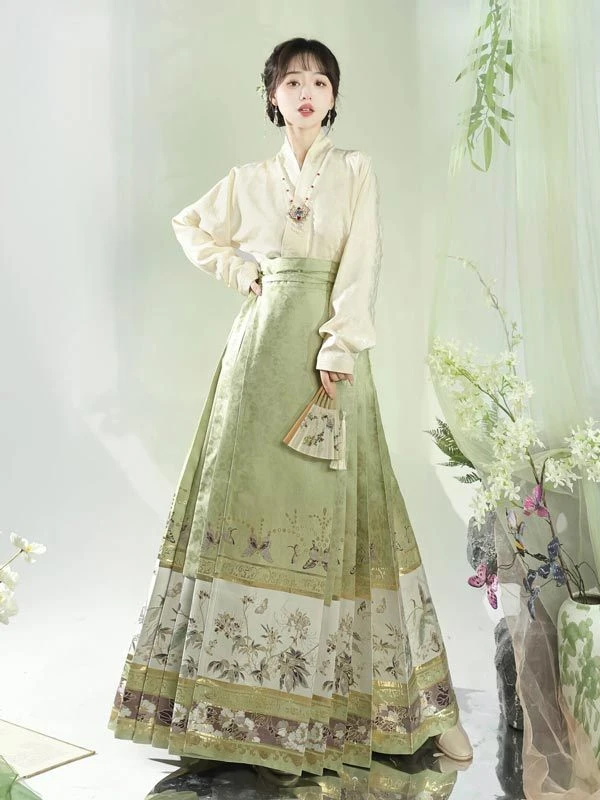
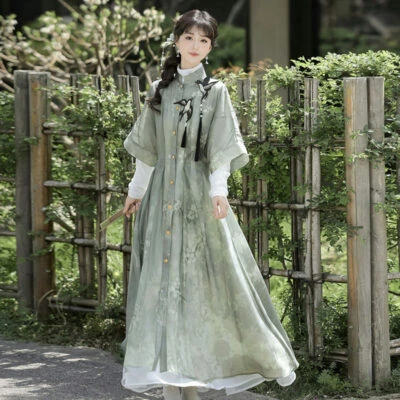
Ming dynasty clothing is the one many families meet first. The star is Mamian Qun (马面裙), a skirt with flat front and back panels and deep pleats at the sides. Standing still, it looks formal; walking, it opens like water. It pairs with a white shirt, a sweater, or a blazer without fighting the modern wardrobe.
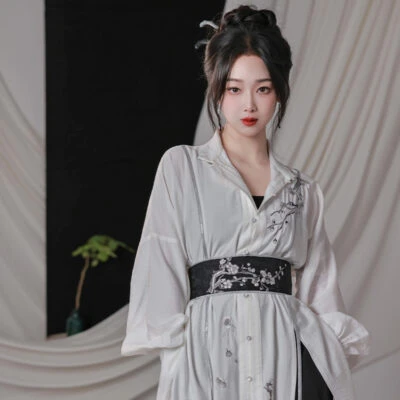
That is why it appears at graduations, street fairs, New Year parties, and campus dances. Historically, Ming women wore a top over this skirt. Dyeing and weaving had matured; red alone could be bright, peach, or watery. Gold thread, embroidery, and standing collars with buttons added detail. Men wore Daopao (道袍), a scholar’s robe, not a priest’s uniform. Wide sleeves, a waist tie, and a calm outline gave it a gentle, upright look.
Many overseas groups choose Ming style because patterns and sewing details are well documented. Yet the real value is not wearing a label. A child asks why Tang was open, why Song loved pale colors, and why a skirt is called horse-face. Those questions lead to language, history, and a deeper world.