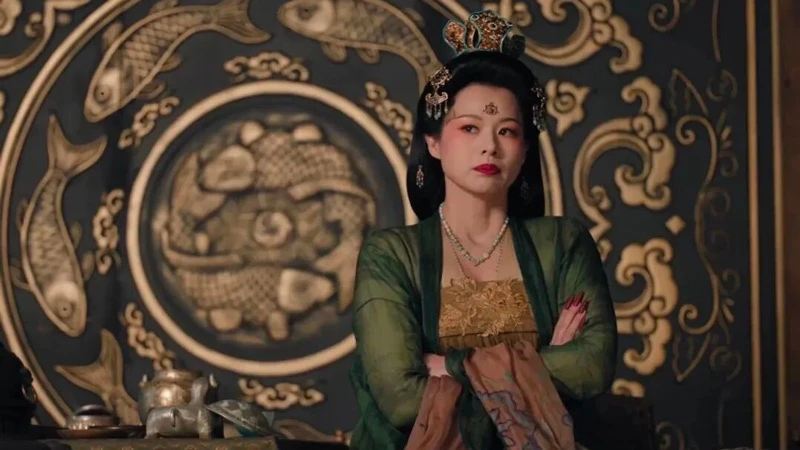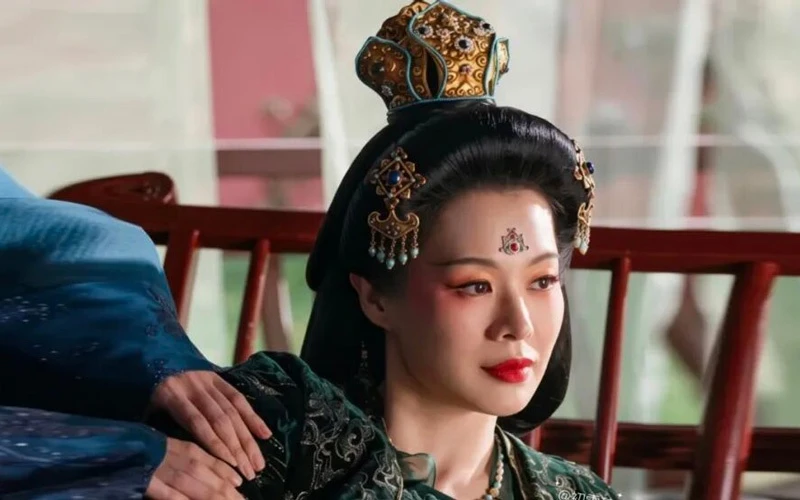
A gold flower above Myolie Wu has become the first talking point in Tigers Sniff the Rose (尚公主). The crown looks religious, almost monastic, so viewers ask whether the princess has joined a temple. The answer is more layered. This ornament began in Daoism, then entered palace fashion, then became a screen symbol. Its path explains why a single headpiece can carry ritual, status, satire, and character in one frame. The question is not simply “Is it accurate?” but “What does it do to the princess?”
Daoist Root
Daoism gave the crown its first name. It belongs to a set called the Three Crowns, a trio of ritual headpieces linked to purity and distance from dust. Tang dynasty rulers claimed Laozi (老子) as an ancestor, so Daoist dress gained prestige at court. Aristocratic women did not simply copy priests; they turned a ritual object into a fashionable headpiece. What began as religious dress slowly became a court accessory, and later a familiar image in painting and drama.
Royal women drove this change. Records list dozens of Tang princesses who entered Daoist orders, including Princess Taiping (太平), Princess Jinxian (金仙), and Princess Yuzhen (玉真). They lived as nobles while wearing Daoist robes. Their lotus crowns were often gold or jade, studded with jewels. The mix was practical: it respected religious rules and displayed rank. In tomb figures and old paintings, the layered petals look precise rather than loose. The crown had become a public language of privilege.
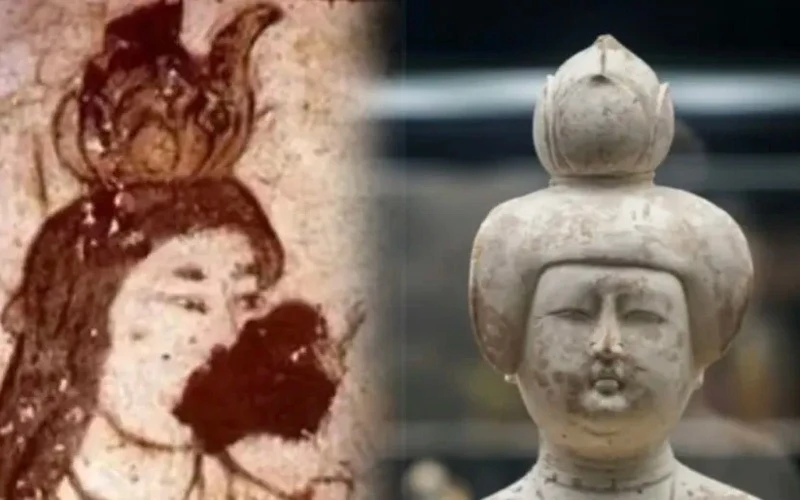
By the late Tang and the decades that followed, palace women wore lotus crowns without shock. The object had moved beyond the altar into the chamber. It still suggested purity, but it also suggested access to luxury. A princess could look otherworldly and expensive at once. That double message is why the crown survives in visual storytelling. It is not just a hat; it is a small argument about who can afford to look detached.
Court Sparkle
Wang Yan (王衍), ruler of Former Shu (蜀), pushed the style to excess. He ordered palace women to wear lotus crowns and Daoist robes, with cloud-patterned garments that made the court look like a painted heaven. Old History of the Five Dynasties (旧五代史) records the scene: gold lotus crowns, Daoist dress, a palace that seemed to float. The crown no longer pointed only to purity. It pointed to a ruler’s taste, spectacle, and spending. A religious sign had become a stage set.
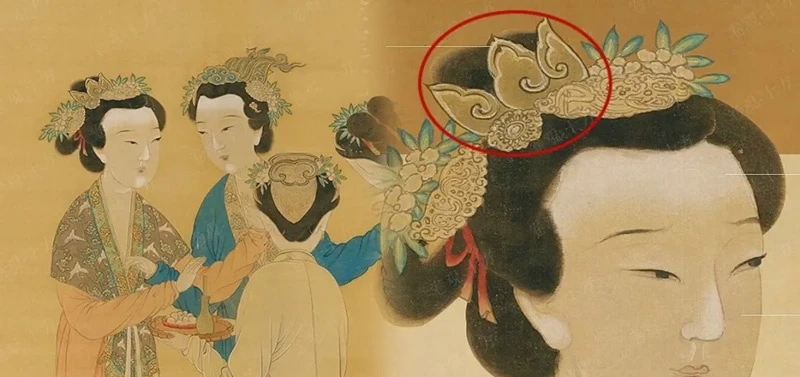
Tang Yin (唐寅) later turned that memory into satire. In Court Ladies of the Former Shu (王蜀宫妓图), four women wear gold lotus crowns and relaxed dresses. They chat, smile, and look softly worldly. His poem sharpens the edge: lotus crowns and Daoist clothes serve a king’s banquet, while flowers and willows keep competing after people are gone. The painting does not simply admire the fashion. It asks what happens when ritual becomes pleasure and pleasure becomes neglect.
The crown’s materials also carried rank. Gold and jade versions with carved petals and gems belonged to elite women. Copper or silver versions served ordinary Daoist women with simpler lines. Gauze and silk versions were light, cool, and useful for summer or private practice. Same flower, different budget, different message. After the Tang fell, the look continued in later courts. Paintings and murals show it more plainly, less spectacular, more practical. Fashion rarely disappears; it changes its volume.
Screen Return
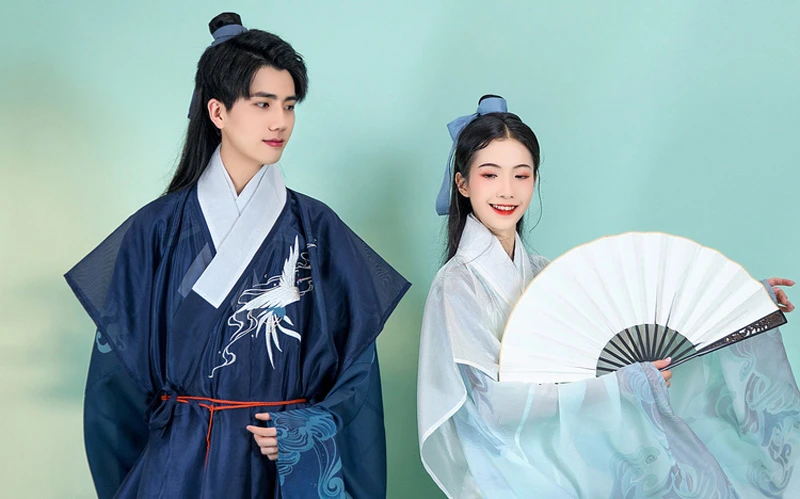
The shape also traveled. Some scholars link the heavenly crown of Nara era courts to Tang lotus crowns. Modern shrine maiden headdresses still keep a distant echo. That history matters because some Chinese costume dramas borrow Japanese crowns and call them Tang. The result is not just a design error; it flattens a complex exchange into lazy imitation. A crown can cross borders, but it should not erase the route.
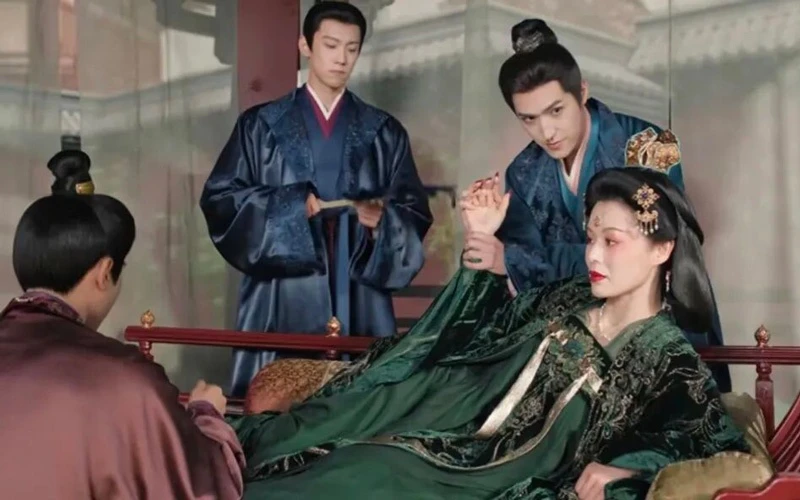
Tigers Sniff the Rose takes a more careful route. Myolie Wu’s crown recalls old forms without turning her into a temple statue. Her princess is theatrical, vain, and secretive. The gold flower sits above a face that performs calm while hiding ambition. It suits a woman who must look untouchable in a messy political world. The crown is not proof of holiness. It is a mask with history, and that makes the character more interesting.
That is why the lotus crown still works on screen. It can mean purity, power, excess, or disguise, depending on who wears it and what the story needs. In this drama, it gives the princess a visual contradiction: discipline above, desire below. The best costume choice does not answer every historical question. It makes the viewer ask better ones. Do you like Myolie Wu’s lotus crown? Which screen lotus crown has stayed with you longest?