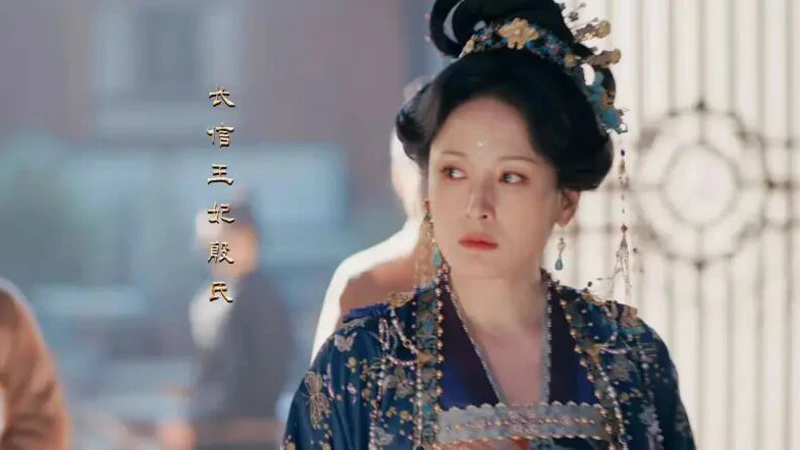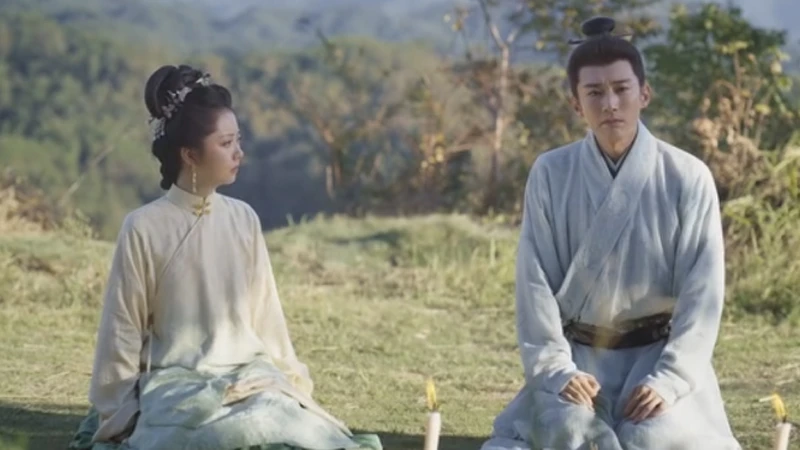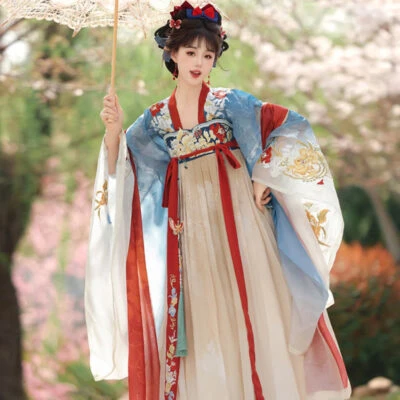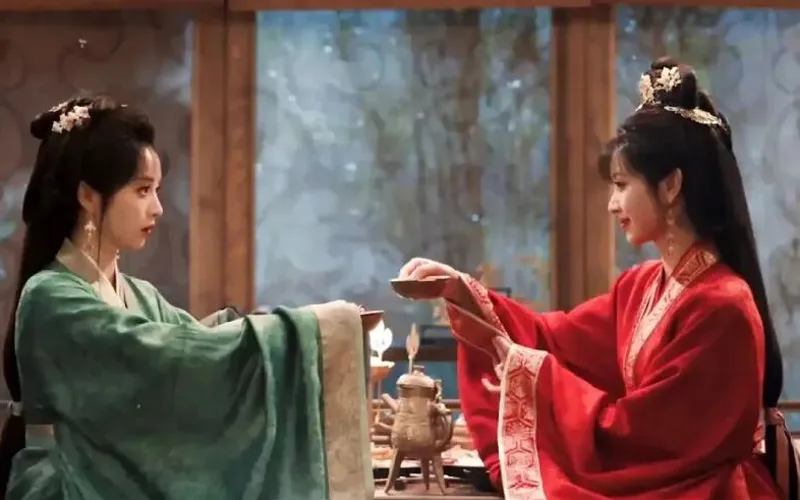
Jun Dai (君黛) smiles when the wine arrives. The Nine-Turn Mandarin Duck Pot sits between two polished cups, its hidden switch warm under her thumb. She has invited A Chou (阿丑), the woman now wearing Wei Rao’s (魏娆) name, for a quiet talk. Every detail is rehearsed: the polite refusal, the lifted cup, the first wrong breath, the scream Jun Dai will fake. She has even chosen which maid will run for help. What she forgets is simpler and more dangerous: the servant standing behind her. Bi Tao (碧桃) has watched her for years. The cup was meant for the face across the table, but the hand that turns the mechanism belongs to someone who never learned to see the people she used.
The Swapped Name
The swap began long before the banquet. Zhou Fu (周芙), a consort with royal ties, knew that a daughter with the wrong face was not a child but evidence. She sent her infant away before enemies could use her. In the confusion, Wei Heng’e (魏恒娥) slipped her own secret daughter into the fourth lady’s place. A Chou survived night-soil buckets and heavy labor; Jun Dai grew up in silk. Same face, crossed fates, one name. At the Gongguo Mansion (国公府), Lu Zhuo (陆濯) tests A Chou with calluses and speech, refusing the performance. Guo Yufeng (郭虞凤) sees the face and unravels, striking Chang Fumu (常傅母) and hunting a jar of bones. The audience blames her first. She has motive, means, and a cold mouth. Yet the deeper wound comes from Zhou Fu, whose choice made the whole masquerade possible.

Jun Dai does not see a family tree. She sees loose threads. Wei Heng’e, Guo Yufeng, Chang Fumu: each knows enough to speak. Each death feels clean because it proves a rule she invented—knowing her is dangerous. Fear drives her, not hatred. That fear is why she can erase a mother and still sleep. But one witness never enters her ledger. Bi Tao has served her for years, handing over tea, medicine, and silence. A scarred maid seems too small to count. Jun Dai mistakes invisibility for harmlessness. That mistake is the hinge of the whole story.
Bi Tao’s ruined face is not treated as a grand tragedy. The drama lets the result speak: people near Jun Dai can be broken without ceremony. A maid of many years is like a familiar tool, useful until inconvenient. No reason is required because Jun Dai’s logic has no room for reasons, only for convenience and mood. If she can remove her own mother, what is a servant’s face? She spares Bi Tao not from mercy but from contempt. The one person who knows every secret is filed under “not worth handling.” That filing error waits beside the wine.
Jun Dai’s plan looks airtight because it is built from other people’s habits. She knows how A Chou will hesitate, how a hostess should smile, how grief should look. She rehearses the aftermath more carefully than the murder. Yet her confidence has a crack: she assumes importance can be measured. A Chou matters because she carries the name. Wei Heng’e matters because she arranged the swap. Bi Tao, scarred and silent, is counted as background. In a house where faces are currency, a ruined face seems worthless. That is why the cup can change direction without Jun Dai sensing a thing.

The Unseen Servant
A Chou walks the opposite road. She has rolled in mud, been called ugly, and been bought for fifty thousand coins as a substitute bride. She knows how it feels to be priced and passed along. So she searches herbs for Bi Tao’s scar. She stands before Wu Fumu (吴傅母) to shield a beaten servant. She remembers Bi Tao’s hand injury while her own future burns. Burning the sale contract looks like a cheap loyalty scene in another drama; here it grows from memory. She was bought with money. She understands what that paper means. She treats Bi Tao as a person, and Bi Tao returns the gaze.
The final cup is almost ordinary. Jun Dai watches A Chou’s face, the pause before refusal, the lift of the cup, the first wrong breath. Her whole mind lives on the other side of the table. She does not look behind her. Bi Tao has stood there for years, close enough to be furniture. A hand that appears daily becomes invisible. So the hidden switch turns. The poison meant for A Chou slides into Jun Dai’s own throat. It is not a magic rescue. It is bookkeeping. The scar was an invoice. The day Jun Dai cut it, the payment date was already fixed inside that pot.
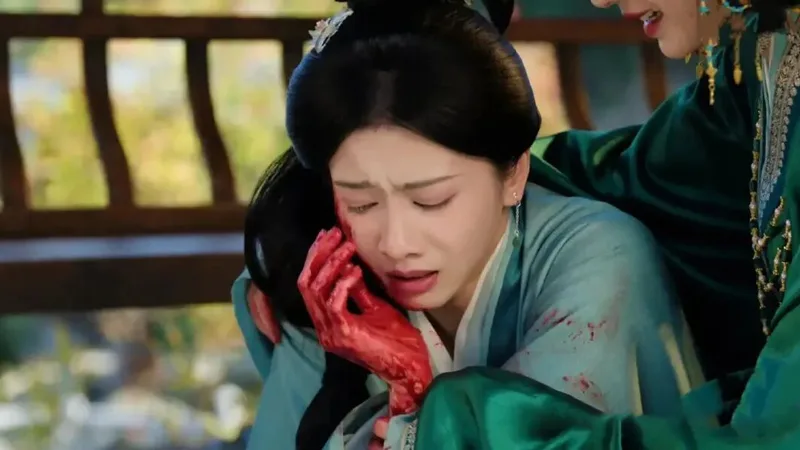
Jun Dai dies believing her rival is A Chou. In truth she has been fighting her own method of handling people. She turns humans into tools, then trusts the tools to stay still. Bi Tao turns. The same face ends in two places: one climbs up from night-soil buckets by gripping every rope offered and by treating Bi Tao as a person; the other reaches out from silk and kills until even her mother is on the list. A hairpin may be made of jadeite or nephrite, but the one in Where the Mask Ends (嫁金钗) is a badge of rank, not a gem. The real weapon is the servant nobody bothered to see.