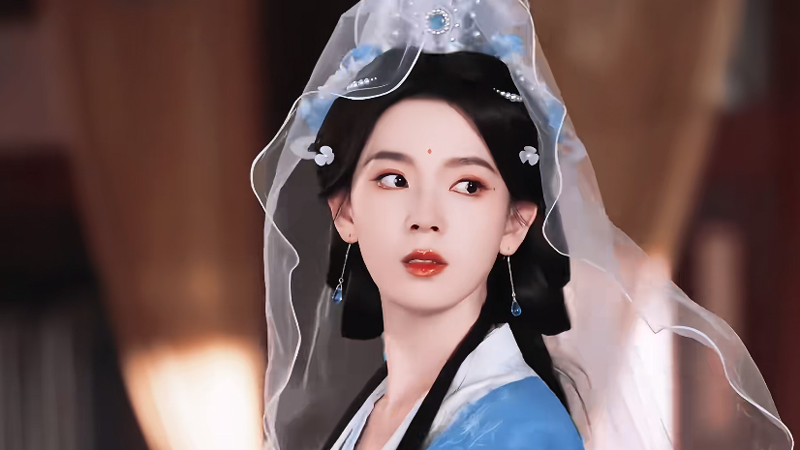
Leaked stills from Zhuo Hua Lu(灼华录) show Chen Yao wearing pale, almost weightless white gauze over her hair. It drops down her back with soft pleats along the edge. Many viewers instantly thought of a modern bridal veil. That reaction is fair, yet it misses an older source. A similar white cloth appears in Chinese religious art, especially images of Guanyin. People often call it “Guanyin’s draped gauze.” The drama did not invent the shape, but it also did not copy a museum piece. It borrowed a memory and bent it for television. This article follows that cloth through dynasties and asks why it suits Chen Yao’s character so well.
Temple Roots
During Northern Wei and Eastern Wei, Guanyin statues were often male-bodied bodhisattvas. Their clothing followed Indian models: heavenly robes and long shoulder scarves that crossed the chest and hung beside the arms. Crowns and flower garlands sat on the head. No white cloth covered the face or hair. Stone carvings show strong bodies, wide shoulders, and calm faces. The scarf was an ornament of movement, not a veil. It floated because of gravity and carving lines, not because it hid anyone.
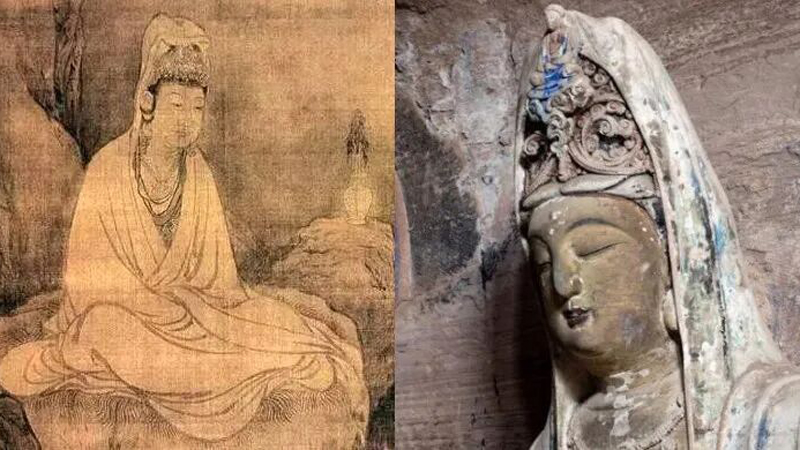
In Tang times, the figure became gentler and increasingly female. Dress moved closer to Central Plains women’s fashion. Cave shrines in Sichuan include White-Robed Guanyin niches with a cover resting on the crown and falling over shoulders and back. This is an early ancestor of the veil in the leaked stills. Artists wanted mercy to look approachable, so they borrowed soft local fabrics and modest covers. The white cloth no longer belonged only to foreign holy dress. It began to feel like something a Chinese woman might wear.
The Song dynasty made the image common. Gauze grew thinner, and its fall became more natural. Religious art and everyday women’s head covers influenced each other. Light veils outdoors hid the face, blocked sun, and kept off dust. A holy figure and a fashionable woman could share a similar piece of cloth. Painters liked the way it softened a face while leaving the eyes clear. In busy streets, the veil was practical. In temples, it became symbolic. That double life gave the shape a long future.
Yuan, Ming, and Qing kept this style alive. At Fahai Temple (法海寺), built in the Ming period, a Guanyin statue wears transparent gauze with a wavy edge. Qing clay figures, New Year prints, and woodblock pictures spread the White-Robed Guanyin with a white cover. The modern bridal veil is Western. It entered during the Republic of China and became standard at weddings. Today white gauze usually reads as marriage first, which is why the drama still caused confusion.
Why It Works
Why place that cloth on Chen Yao? One reason is character. White gauze gives her a cool, removed air. Before she speaks, viewers sense that she is not an ordinary girl in an inner chamber. The fabric suggests distance from ordinary life. It turns costume into personality. In a drama full of strong colors, this quiet white stands apart. It also makes her seem fragile and untouchable, which can hide strength underneath. The veil becomes a quiet warning: this person does not belong to the usual rules.
Another reason is the camera. Thin cloth falls from the head and moves with sleeves. In a side profile or a back view, it creates a drifting mood that a normal crown cannot. A solid robe with semi-transparent gauze adds visual layers. In wide shots, the white shape separates her from busy sets and keeps attention on her. Wind becomes part of the performance. Even a slow turn gains motion. The fabric turns still moments into scenes that feel alive.
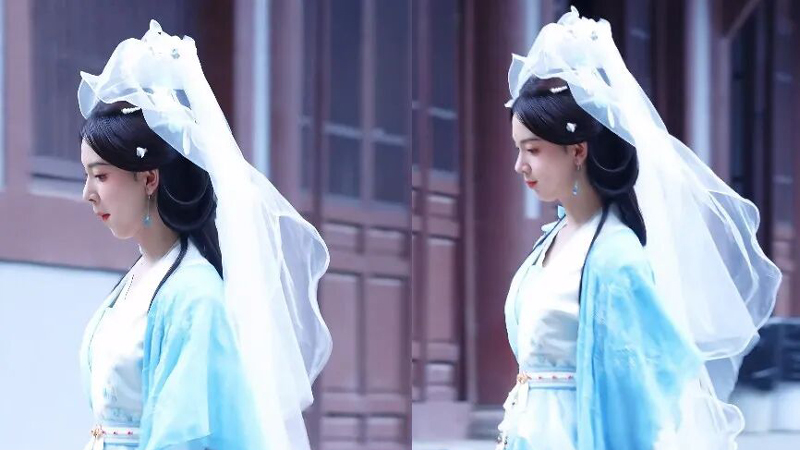
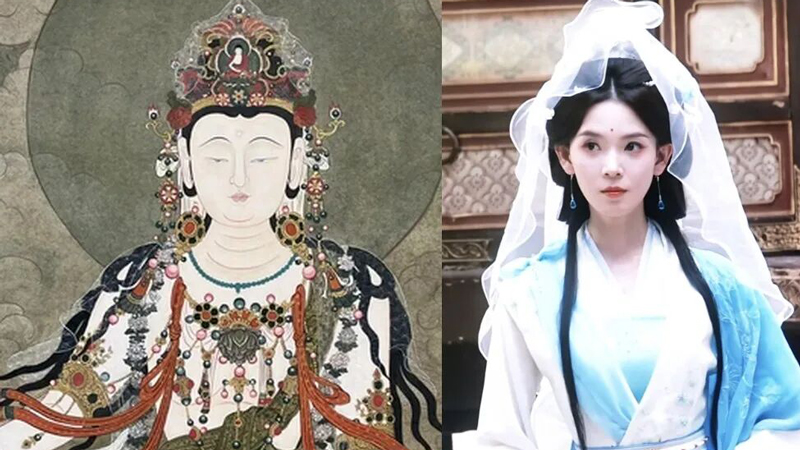
The crew also adjusted the past for the screen. They used double-layer mesh and placed the gauze above the forehead. It is not a strict re-creation. It is a television image that borrows from temple art, folk prints, and wedding fashion. The goal is not archaeological accuracy. The goal is a feeling that reads in one second on a small screen. Historical pieces often simplify texture and shape so cameras can catch light. Here, that choice makes Chen Yao glow without washing out her face.
Is it beautiful? Some will see a bride. Others will see Guanyin. That double reading is exactly what makes the look memorable. Chen Yao’s veil is not a history lesson. It is a small visual puzzle that invites viewers to look again. It also shows how old images can survive in new media without becoming dusty copies. A white cloth can mean purity, mourning, holiness, or marriage. Here it means all of them at once, and that is why the stills keep pulling people back.