In one recent historical drama, a simple undershirt causes a quiet scandal. A maid notices that a military household’s daughter wears Bone-Waking Gauze a fabric said to be priceless. The camera never gives the garment a close-up, which only makes viewers ask more questions. Was this cloth real, or did a writer invent a fancy name? The short answer is surprising: it was real, and it was less magical than its name suggests. It was an ancient summer blend, made for heat, sweat, and comfort. Its story says much about how people in earlier times mixed materials, saved money, and still dressed with cleverness. It also asks us to rethink why a “cheap” blend could become a treasure in the right context.
Drama Clue
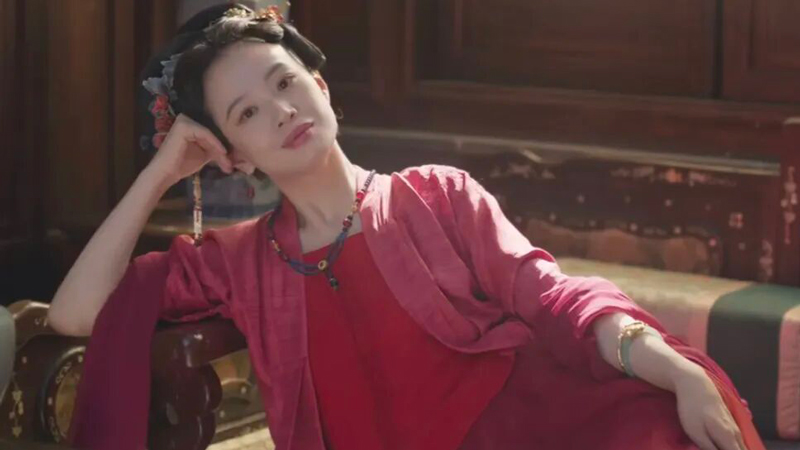
The scene in the drama works because clothing can reveal class, money, and secrets. A character named Du Cuique (杜翠雀), from a military family, wears a sweat-shirt made of this gauze. Other people are shocked. In their eyes, such cloth belongs to wealthier circles. Yet the show does not zoom in on the fabric. That gap turns a costume detail into a puzzle. What exactly was this material? Was it silk, plant fiber, or something else? Why would a single undershirt carry so much weight? The answer lies not in court intrigue but in weaving. The name sounds poetic, but the object itself came from practical experiments with fiber, thread, and summer heat.
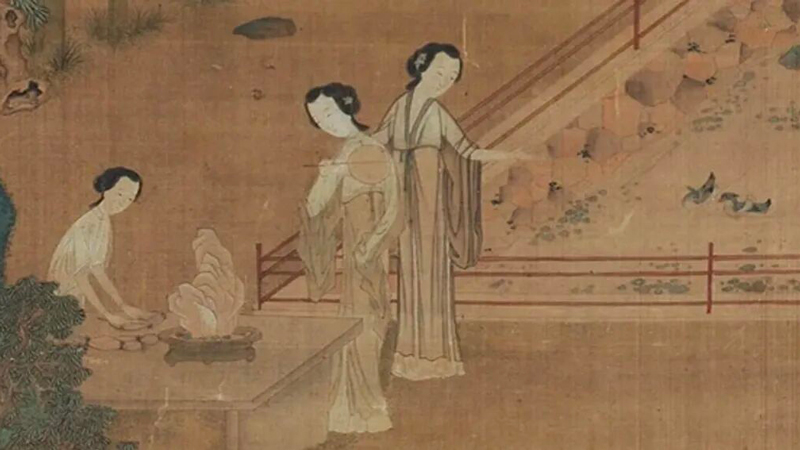
The earliest known record appears in Qing Yi Lu (清异录), a Northern Song collection by Tao Gu (陶谷). One line says people in Linchuan (临川) and Shangrao (上饶), in Jiangxi (江西), created the gauze during the Five Dynasties. They twisted pure silk together with banana-plant fiber. In summer, clothing made from it felt light and cool. That is the whole mystery, more or less. The name “bone-waking” describes a feeling: coolness sharp enough to wake your bones. It was also called banana gauze. The label was dramatic, but the technology was ordinary in the best sense.
This was not a single plant cloth. It was a blend before the word “blend” existed in fashion talk. Banana fiber gave structure, airflow, and moisture control. Silk gave softness, drape, and a faint shine. Together they made a thin fabric that cooled the body and cost less than pure silk. Banana plants grew widely; silk was precious. Mixing them created a practical luxury. The gauze was not cheap because it was bad. It was smart because it used each fiber for what it did best. That idea still shapes modern textiles, including sportswear and summer shirts.
Weave Logic
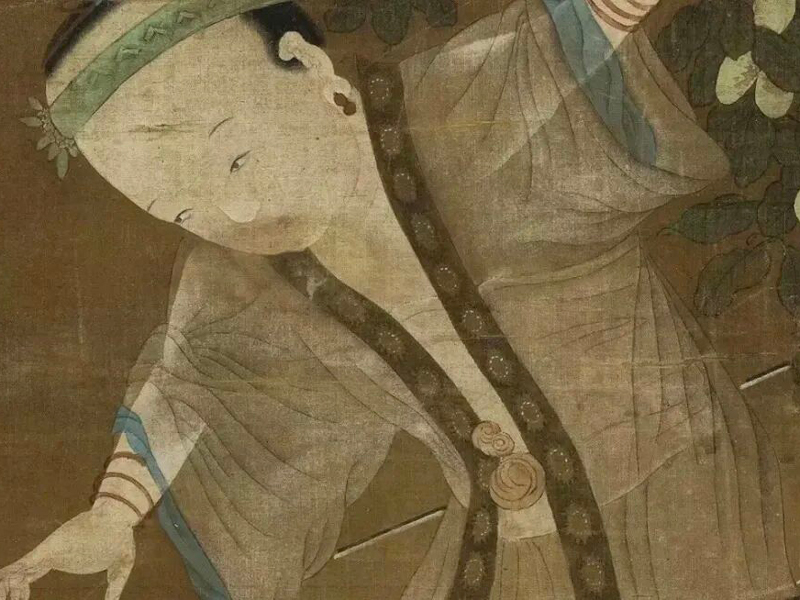
The old phrase “pure silk and banana bone twisted together” matters. Workers pulled fiber from banana stems, then twisted it with silk into a long thread. They wove that thread into a light gauze. Animal protein and plant cellulose shared one cloth. The result was airy, soft, and strong enough for daily wear. It also had a visual trick. Because the gauze was so thin, it could be almost transparent in sunlight. That made it unsuitable for formal occasions, but perfect for private rooms, hot afternoons, and lazy evenings. In a way, it was an early air-conditioned garment: not powered by ice or machines, but by fiber choice and weave structure.
Records mention Chen Fengge Qiao (陈凤阁乔), who used the cloth for outer robes. A long version was called a Taiqing Cloak (太清氅); a short, close-fitting shirt was called Little Taiqing (小太清). The names sound grand, yet the purpose was simple. In The Plum in the Golden Vase (金瓶梅), Li Ping’er (李瓶儿) wears such clothing at home. Sunlight reveals the white skin and body lines beneath. That detail shocks modern readers, but it also explains why the fabric stayed indoors. It was not for public display. It was for relief from heat, a private comfort that only became scandalous when seen by the wrong eyes.
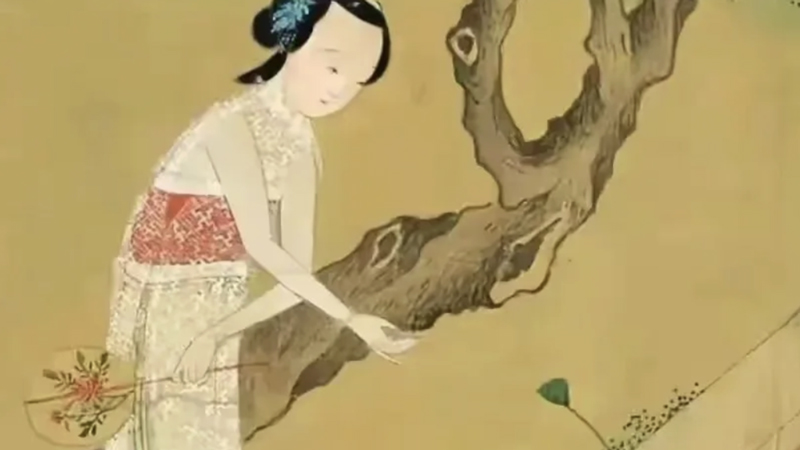
By the Ming Dynasty, the cloth was no longer a rare experiment. When the powerful official Yan Song (严嵩) was investigated, his confiscated goods included a bolt of Red Make-Flower Dueling-Bull Banana Cloth (大红妆花斗牛蕉布). The name is long, but the point is clear: a high-status pattern appeared on banana cloth. If such fabric could enter a powerful minister’s storehouse, it was not merely poor people’s summer wear. It had become a product with range, used by different classes and valued for different reasons. Practical cloth can gain prestige when fashion decides to notice it.
So the old gauze was banana fiber plus silk: a summer gauze that was light, sheer, and cool. It appeared in the Five Dynasties, survived into the Ming and Qing, and worked on the same basic principle as many modern blends. Pure silk is not automatically best. The right mix for the right season often wins. That is why the drama’s tiny detail still fascinates. It shows that ancient people did not just follow tradition; they engineered comfort. Would you wear a fabric like that on a hot day, or does sheer cloth feel too revealing for you?