When archaeologists excavated Mashan Tomb No. 1 near Jingzhou in 1982, they lifted out 152 pieces of silk fabric and 35 complete garments that had kept their weave for roughly 2,300 years. The haul covered nearly the whole pre-Qin silk repertoire: plain silk, fine silk, gauze, leno, damask, brocade, braided ribbon and cord. Staff in Hubei call the grave an underground silk treasury, and the textiles now sit in Jingzhou Museum as a reference collection.
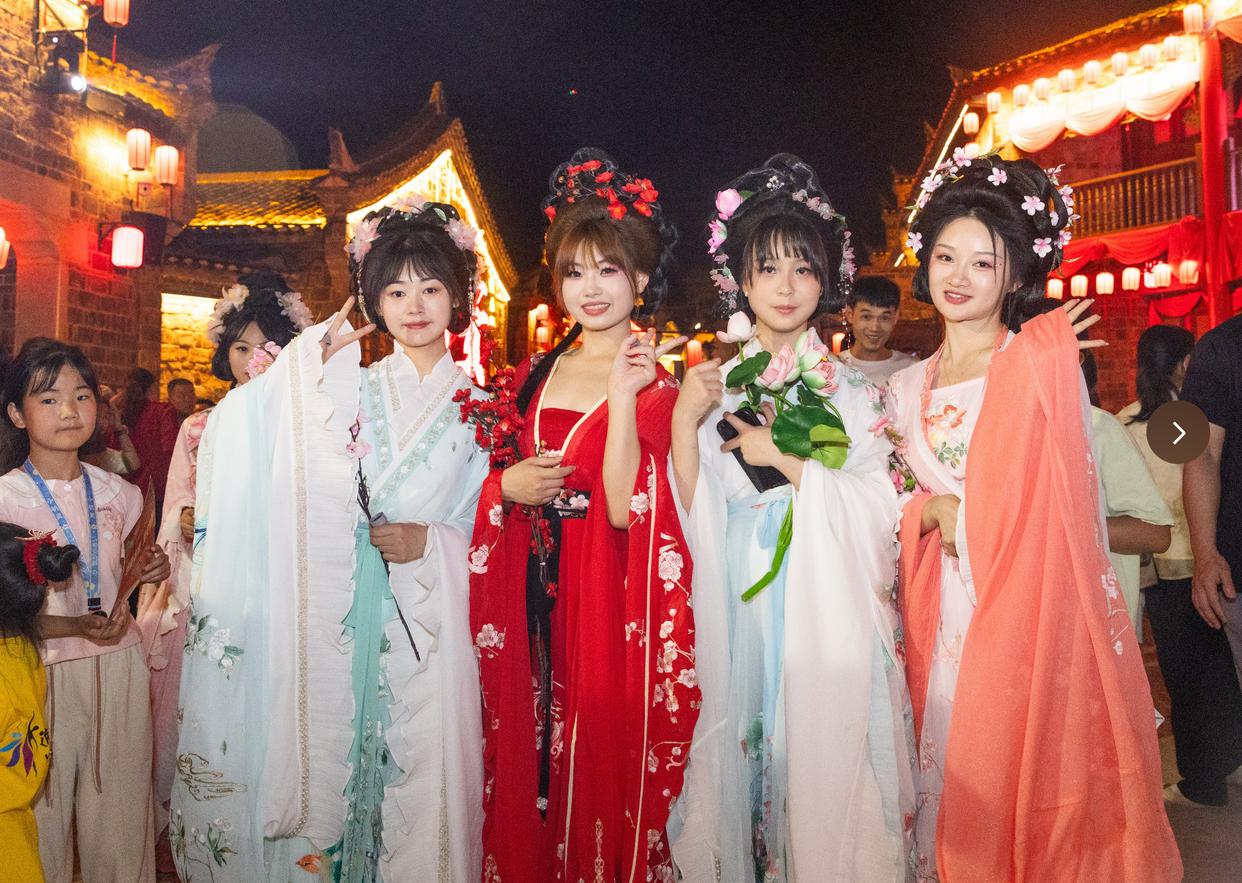
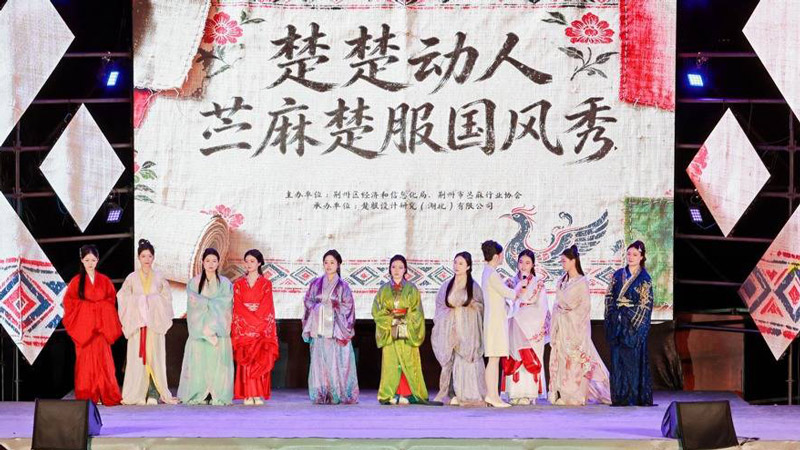
On the evening of October 1, those buried cuts walked a stage again. A National Day showcase that pairs restored Chu costume with ramie opened at the Old South Gate Square of the Jingzhou old city, drawing models, residents and visitors who held up umbrellas as rain set in.
Silk Treasures Unearthed at Mashan
Jingzhou is treated as the birthplace and center of Chu culture, and the Mashan grave anchors that claim. Dated to more than 2,300 years ago, it is held up as the city’s own costume archive: the fragments give restorers measurable evidence, from weave counts to seam lines, for rebuilding robes that otherwise survive only in paintings and on lacquerware.
That material basis is what separates a costume show here from a generic fashion parade. Every silhouette on the runway had to answer to a find, whether the width of a sleeve, the depth of a lapel or the placement of a patterned trim. The organizers worked up from the tomb’s silk, then set the results beside ramie pieces made today, so the two ends of a long local textile history could be read in a single evening.
Three Chapters Under the Old City Wall
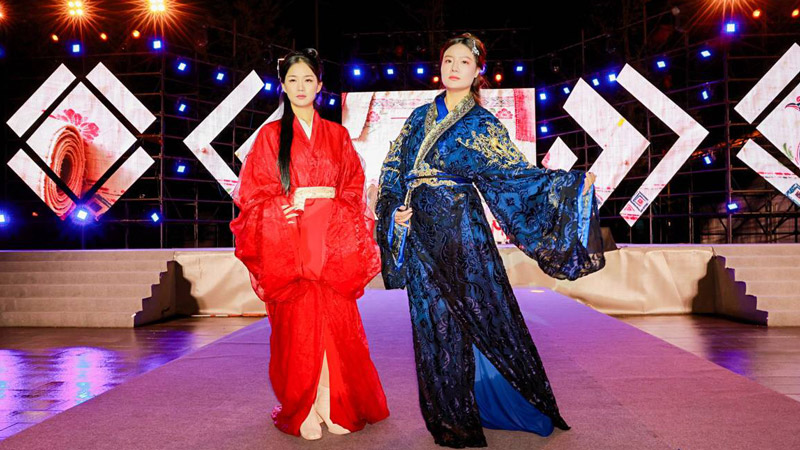
The performance ran in three parts. “Silk-Origin Chu Costume” began with professional models in silk robes rebuilt to Mashan forms: cross-collar right-lapel cuts, long bodies with wide sleeves, and brocade-trimmed embroidery that carried the ceremonial bearing of the pre-Qin court. “Splendid Showcase” handed the runway to ordinary visitors selected during the day at sign-up points on the East Gate, South Gate and Sanyi Street. “Ramie Finery” turned to ramie, showing improved ramie Chu dresses, silk-and-ramie blends and newer fabrics so that the fiber nicknamed China grass could hold a modern cut.
After the last walk, organizers handed “Chu costume promotion ambassador” trophies and gifts to the visiting models, among them grass-cloth handkerchiefs and ramie scarves, and set up booths where onlookers could try the robes and fabrics for themselves. Liu Zhengxin, founder of Chu Costume Design Research (Hubei) Co. and president of the Wuhan Fashion Designers Association, took the stage to talk through the origins of Chu dress, the properties of ramie and what he called the “one silk, one ramie” future of the industry. Hubei Daily reported that rain fell through the evening and the audience stayed on under a canopy of umbrellas to watch the models walk in wide-sleeved robes cut from local ramie.
Turning Ramie Into a Symbol
Ramie is a fiber native to China, long known as China grass for its breathability, quick-drying feel, natural antibacterial action and resistance to ultraviolet light. Jingzhou district is the country’s largest ramie production base: local ramie cloth holds more than 60 percent of the national market, its 30-plus mills ship to more than 20 countries, and much of that output has long left as grey cloth and contract work rather than finished goods.
Pairing the fiber with a staged costume tradition is the district’s attempt to shift that pattern. By tying fabric research, finishing and a regional brand to a live audience, organizers argue, a mill fiber can begin to read as a cultural one. The three-day run, which continued through October 3, mixed performance, interaction, experience and spending in a single loop, with sign-up points kept open at the East Gate, South Gate and Sanyi Street for visitors who wanted a place on the runway.
The wider aim is industrial upgrading. Local officials describe the push as one that runs through fabric development, better finishing and a shared regional brand, with the costume show as a public face for the effort. The district has leaned on the same logic in past seasons, using Chu culture as the draw while ramie supplies the raw material and the story. China News Service Hubei and Hubei Daily both covered the opening, and organizers framed the three-day run as a test of whether a producing region can also become the place where its own material is seen, tried and remembered.