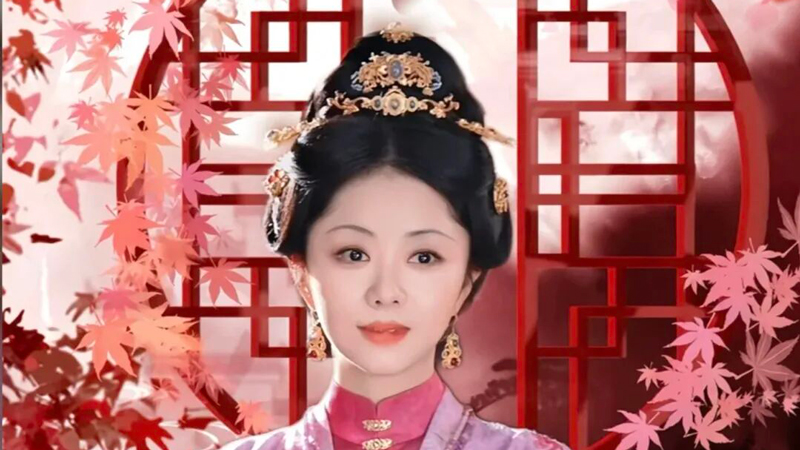
In Against the Current (兰香如故), Tan Songyun (谭松韵) plays Xu Lanxiang (许兰香). Once she becomes the household’s leading wife, her silhouette changes. The triangular bun is not a casual choice. It signals order, money, and a place near the inner seat of power. The older Lin Mu (林母) wears something similar, so the message is clear: the head is a quiet scoreboard.
The False Bun Behind the Look
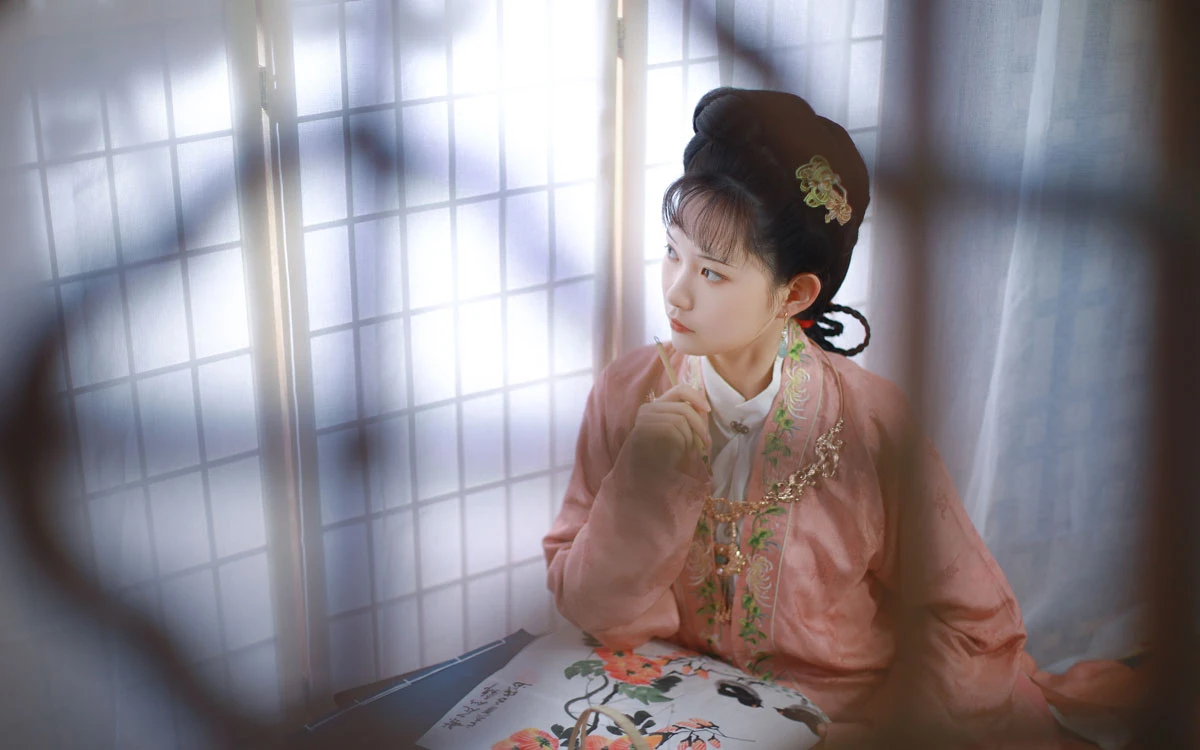
That shape belongs to a Jiuji (鬏髻), a false bun common in the Ming dynasty. A wire frame is wrapped with real human hair. Tied on, it lifts the hair high without waiting for nature. Shops sold versions such as Luohan Jiu (罗汉鬏) and Shuang Fei Yan (双飞燕), much like buying a hairpiece today. Formal rooms and court spaces favored this tall, controlled outline. It was practical theatre: hair could be rebuilt each morning, then pinned into place.
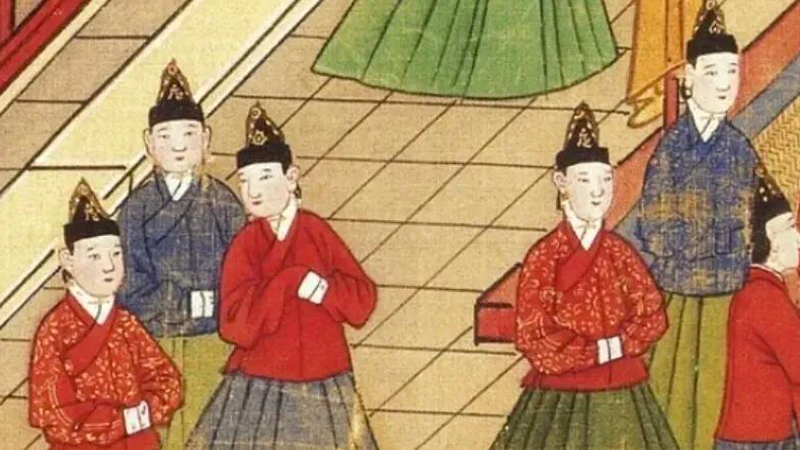
Yet the bun needs its Toumian (头面): a full set of ornaments. A complete set might include Tiaoxin, Fenxin, Manguan, Dingzan, Yanbin, Huadian, Weiji, pins, and earrings. Gold or gilt work marked a woman with stronger standing. Each piece had a job: some anchored the false bun, some framed the forehead, some flashed at the temples. A servant could copy a shape. She could not easily copy the metal. A full set told guests which woman could host, which could sit, and which merely served.
Only high-ranking noble women wore complete head ornaments, mostly crafted in solid gold or gilded metal for a luxurious texture.
Let’s talk about the function of each piece separately:
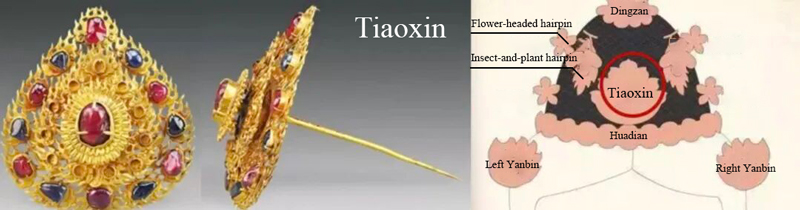
Tiaoxin (挑心): It sits at the most eye‑catching center of the bun and is usually the most exquisite piece. It holdsthe same importance as the main pendant on a modern woman’s necklace.
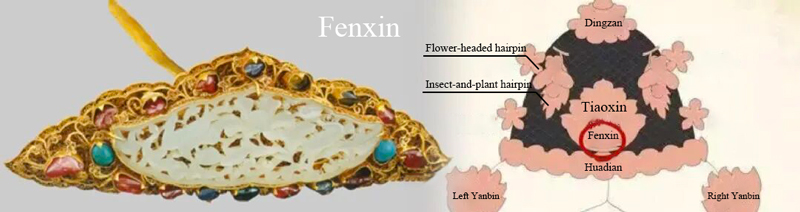
Fenxin (分心): This hairpin is placed below the tiaoxin. It may be omitted if a tiaoxin is worn, and it comes in front‑and‑back pairs. Similar to earrings today, it looks best when matched as a set.
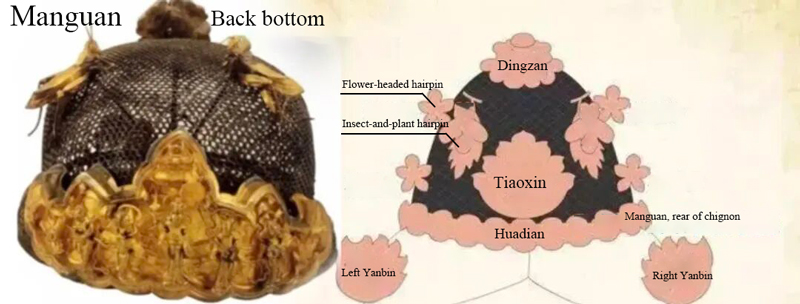
Manguan (满冠): Placed at the back of the bun as a supportive piece, it is the largest ornament in the full head set. Like a storage pouch inside a handbag, it serves both decorative and practical purposes.
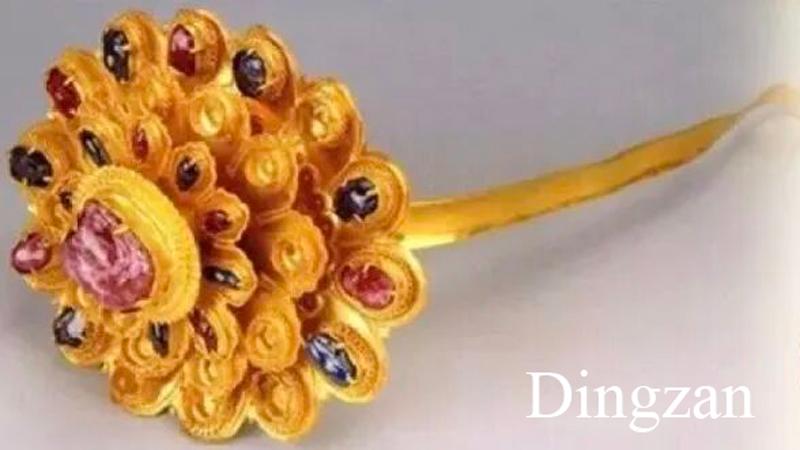
Dingzan (顶簪): Known as the stabilizer of the hairstyle, this top hairpin inserts downward from the crown to secure the whole bun firmly.
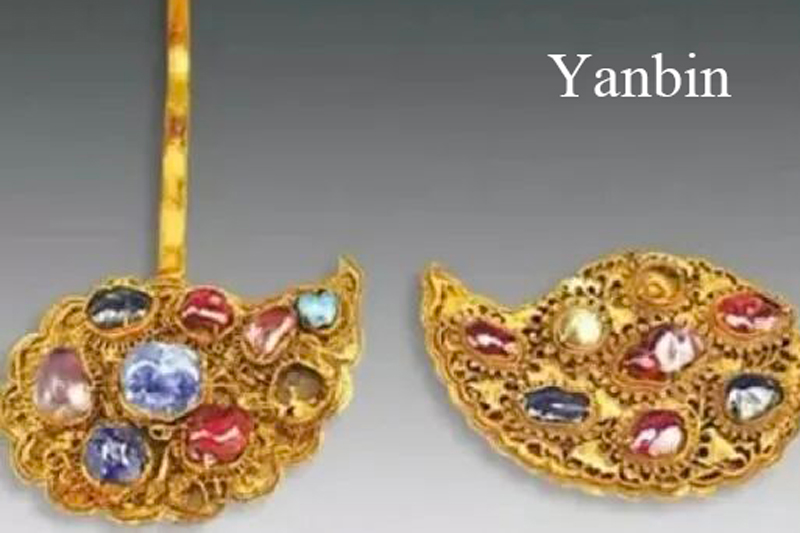
Yanbin (掩鬓): Ornaments worn on both temples, always made in pairs. Comparable to modern temple stickers, yet crafted with far finer workmanship.
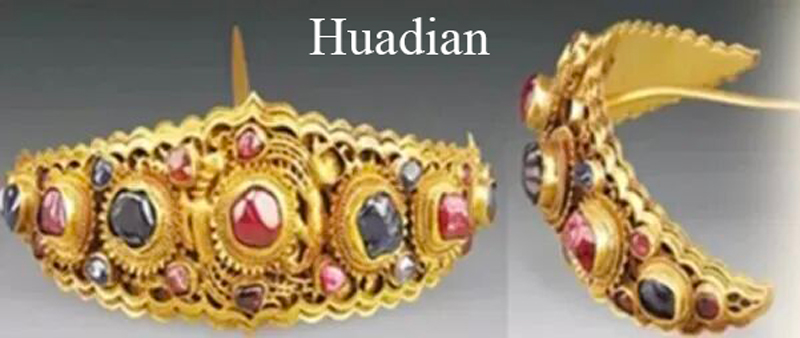
Huadian (花钿): Decorations for the forehead above the bun. Later versions evolved into headband‑style pieces wrapping halfway around the base of the bun.
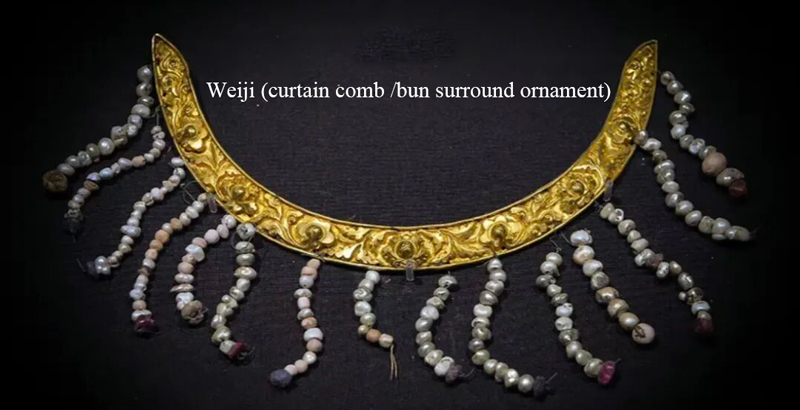
Weiji (围髻): Also called curtain comb, this ornament encircles the bun and is often adorned with jeweled garlands or tassels. It sways gently with movement just like tassel earrings. Usually fitted at the rear of the bun, it arranges loose hair and polishes the whole look, as seen on the back of Lanxiang’s hairstyle in the reference image.
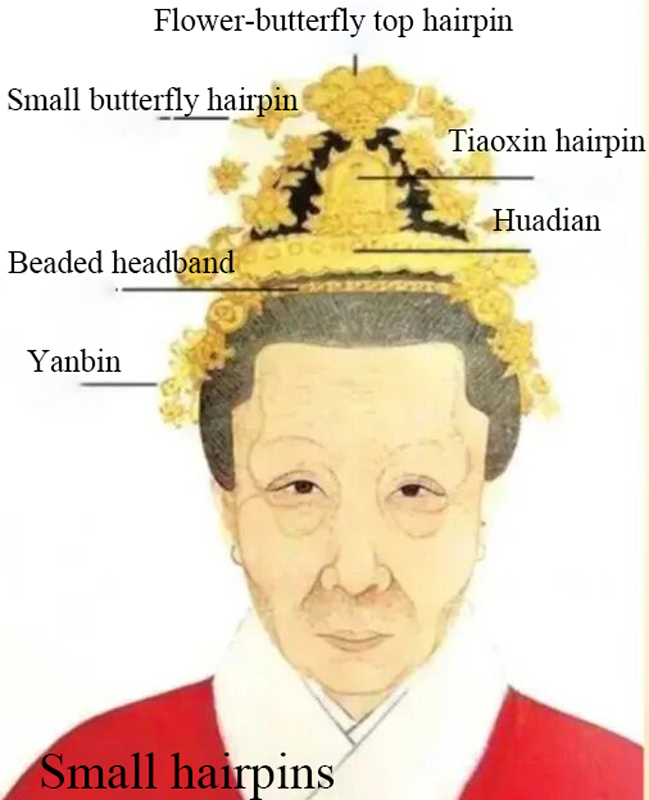
Small hairpins: Including flower‑topped pins and insect‑plant styled pins. Though unremarkable at first glance, they are vital for holding hairstyles in place. They work like modern black bobby pins but with elegant, refined designs.
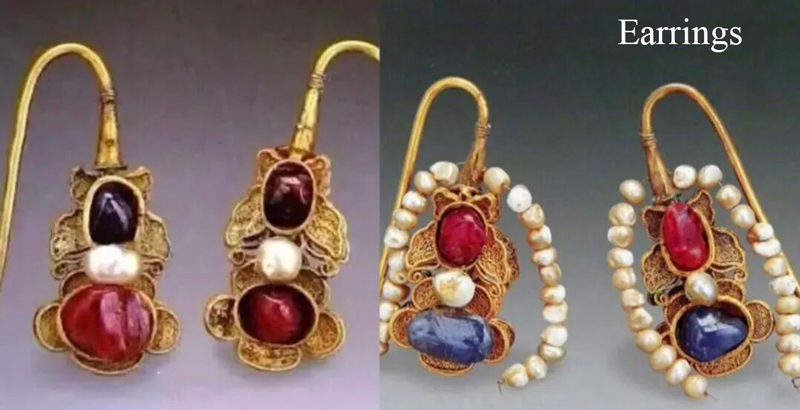
Earrings: They are divided into hoop earrings and drop earrings, often shaped like butterflies or dragonflies and strung with assorted gemstones. Women in the Ming Dynasty already used these accessories to show their unique personalities.
Combined, these ornaments deliver luxury with elegance instead of exaggerated opulence. Each classic hairpiece reflects the wearer’s taste and temperament, just like meaningful modern jewelry that showcases personal status and style. Do you admire Lanxiang’s refined new look?