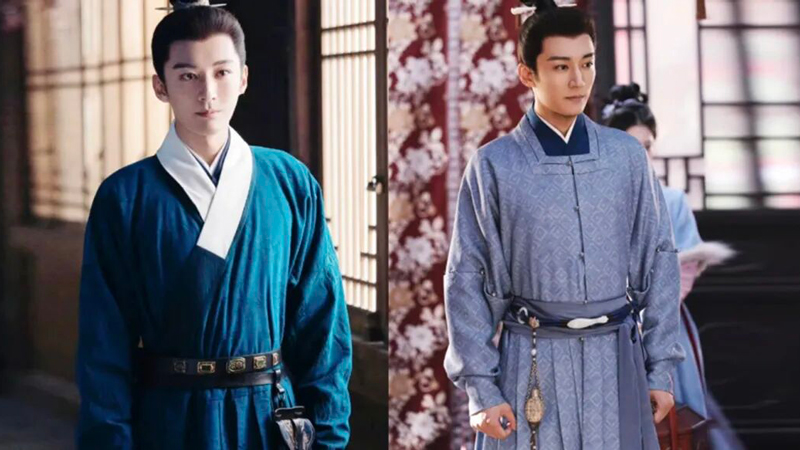
When Against the Current (兰香如故) reached viewers, one detail refused to stay quiet: Liu Xueyi (刘学义), playing Lord Lin Jinqi (林锦歧), kept sweeping across the screen in a long robe whose lower half opened like a modern puffy skirt. Fans called it cute, odd, even “out of period.” The question sounded simple. Did men in the Ming Dynasty really wear pleated, ballooning skirts? The answer is yes, though the garment is not a skirt at all. It belongs to a family of male robes called Tieli (贴里) and Yesa (曳撒). Both grew from Mongol dress in the Yuan dynasty, then became thoroughly Han Chinese in cut and use. Lord Lin is not wearing a costume mistake. He is wearing history with a dramatic filter.
Pleats, Not Puffs
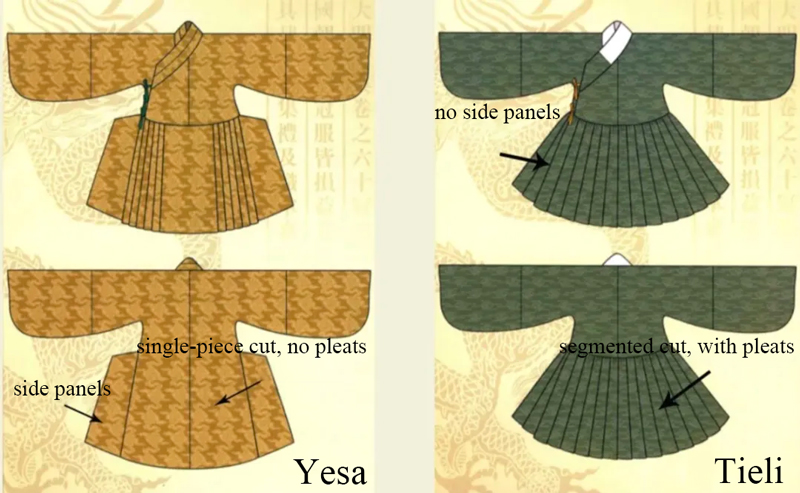
Tieli and Yesa look close enough to confuse almost anyone. The quick difference lives in the front. Yesa has a smooth, flat panel down the center, much like a horse-face skirt, with pleats gathered on both sides; its back is uncut. Tieli has no smooth center. Its lower half is pleated all around, front and back, so movement turns cloth into ripples. The Ming book History of the Ming Palace (明宫史) describes Yesa with a split front, side pleats, and a rear panel. That quote explains why Yesa feels more structured. Tieli, by contrast, gives the loose, rounded shape viewers joke about. A cross collar was common, but square collars existed too. The cut was practical: upper and lower sections sewn separately, with dense folds below. Those folds are the “puff.”
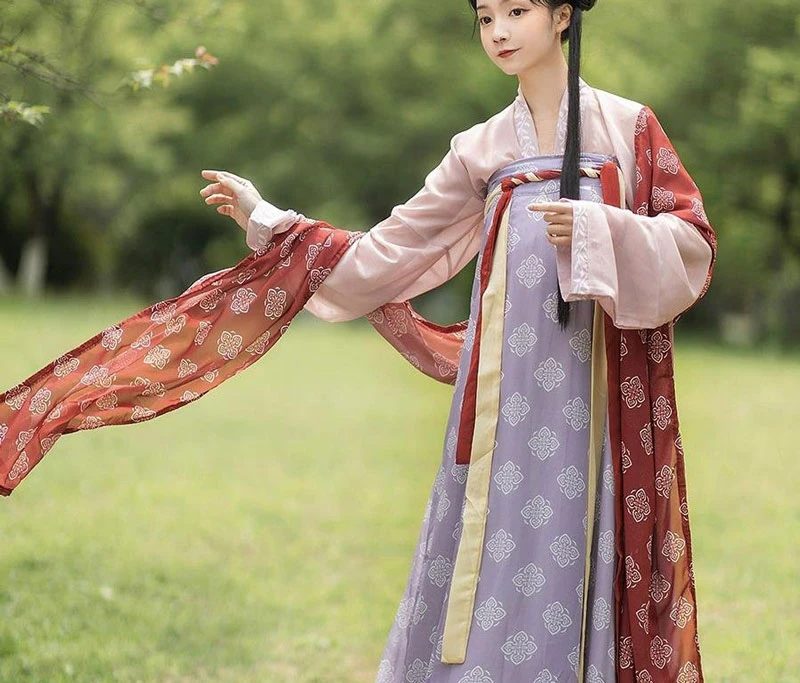
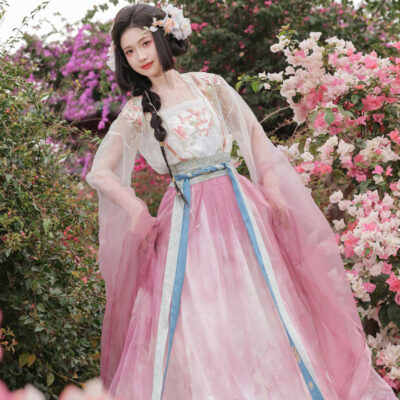
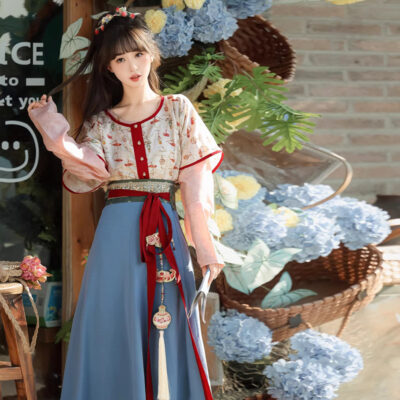
The small-screen fame of this shape did not begin with Lord Lin. In The Glory (雁回时), Zhuang Yushan (庄语山) appears in a pink pleated long dress that looks strikingly modern. Online viewers praised Ming taste as centuries ahead. The truth is quieter and more interesting: the design borrows from male Tieli, softened for a female character. The production did not invent the silhouette. It translated a real garment into a new mood. That translation matters. It shows how a strict male robe could become romantic, fluid, and elegant when fabric, color, and styling change. Once you notice the construction, the so-called puffy skirt stops being a joke. It becomes a clue to how Ming people cut, folded, and moved in their clothes.
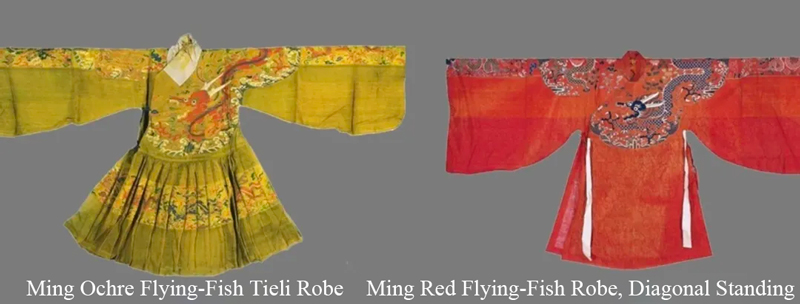
Then comes the famous flying-fish robe. On screen, it usually appears with a sword and the Embroidered Uniform Guard, so many people treat it as a uniform. That is a widespread mistake. A flying-fish robe is defined by its flying-fish motif, not by one fixed shape. The motif resembles a python, except it has a fish tail. Under Ming rules, it was a granted pattern for high officials, normally above the second rank, and the emperor personally approved its use. It could appear on Tieli, Yesa, or other cuts with different collars. So the same man could wear a pleated Tieli and still carry a flying-fish pattern. Rank, not job title, controlled the privilege. This detail breaks the idea that Ming menswear was stiff, plain, or limited to one official look.
Practical Elegance
Why did Tieli and Yesa become everyday favorites? They solved problems. Both were mid-length, roomy, and free of fussy fastenings. A man could dress quickly, walk, sit, ride, travel, or work without dragging around heavy layers. The pleated lower half was not only decorative. When the wearer turned or walked fast, the folds opened and closed, giving the body a lively, clean line. That motion looked confident rather than bulky. Yesa offered a sharper front panel; Tieli offered a softer, all-around sweep. Together they covered formal occasions and ordinary days. A garment that works for both a banquet and a street errand is rare in any century. That usefulness, more than royal rules or opera-like beauty, explains why the style spread so widely among Ming men.
Plain Tieli had another job: support. Worn under outer robes, it worked like a modern base layer or a traditional middle garment. It smoothed the silhouette, held shape, and kept heavier clothing from collapsing. This layering habit is easy to miss in dramas, where cameras chase embroidery and color. Yet it reveals a practical wardrobe logic. The inner robe did not need loud patterns. It needed clean lines, breathable fabric, and enough pleats to move without twisting. In daily life, that quiet function may have mattered more than any visual effect. The same is true today: the pieces we wear most are often the ones that disappear under everything else. Tieli played that role for Ming men, while Yesa took more of the spotlight.
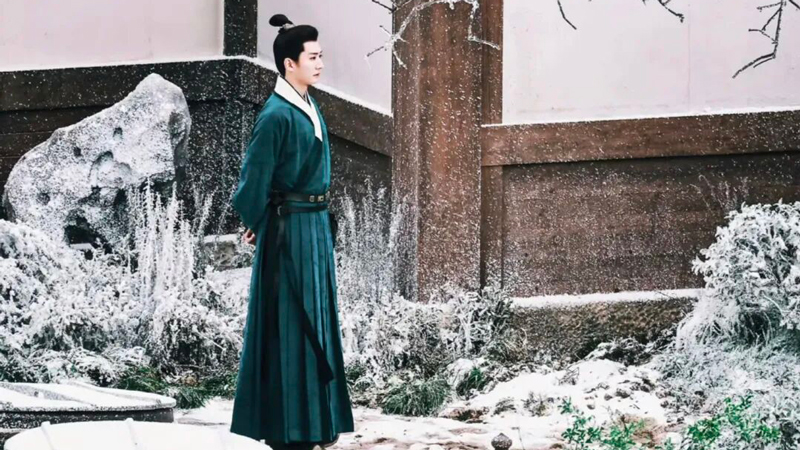
Modern viewers can still enjoy the look. Set aside plot armor and slow-motion wind, and Tieli or Yesa offers a balance many current clothes chase: relaxed shape, clear structure, and movement that feels alive. The pleated hem gives drama without weight. The mid-length cut suits streets, festivals, photography, and casual layered outfits. You do not need a sword or a court rank to appreciate it. You only need to see the construction. So would you wear Lord Lin’s puffy-skirt style? Maybe not to the office. But as a piece of living design, it deserves more than a laugh. It is a Ming answer to a modern question: how can men’s clothing be both useful and beautiful?