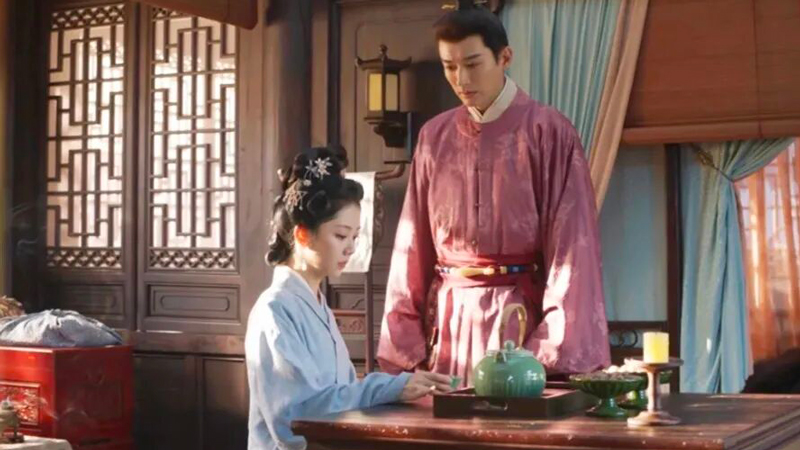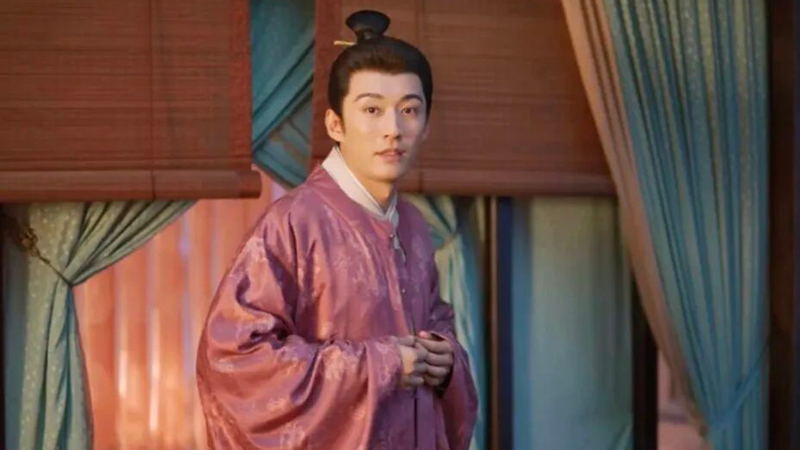
In Against the Current (兰香如故), Liu Xueyi appears as Master Lin (林) in a pink front-buttoned round-collar robe. The cut points to the Ming Dynasty. The color makes viewers pause. Did men in ancient China really dress this boldly? The question says more about modern habits than old ones. We often treat pink as feminine, soft, or childish. That rule is recent. In older Chinese art and writing, pink stands beside red, white, black, and green as a flexible tone. It can suggest youth, spring, romance, rank, or quiet taste. Master Lin’s robe is not a costume mistake. It is a signal. The garment hints at his mood and his changing role after marriage, before the story explains it in words.
Color Without Gender
Ancient pink was never one shade. It covered warm peach, pale lotus, deep rouge, and smoky plum. Chinese color names rarely worked like Pantone (潘通) numbers. They described mood and light. A tone could be named for a flower, a season, a cheek, or a line of poetry. Peach Blossom (桃夭), Rouge (胭脂), Spring Herald (报春), Consort Pink (妃色), and Su Mei (苏梅) all point to pinkish colors, yet each carries a different temperature. Some are bright and outgoing. Others are grayed, cool, or nearly white. That range lets a pink robe look loud in one scene and scholarly in another. The color does not simply mean “sweet.” It can mean vitality, style, or confidence.
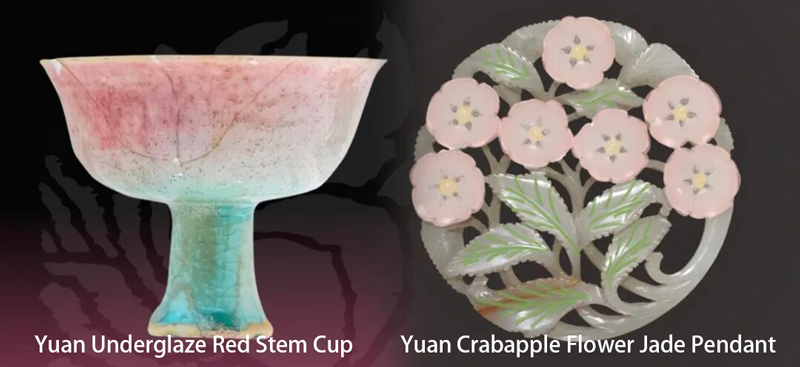
The belief that pink belongs only to women is not ancient Chinese wisdom. It is a later habit shaped by fashion markets, advertising, and Western gender codes. In early Chinese texts, beauty was not automatically female. The Classic of Poetry (诗经) uses peach blossoms to praise a bride, but the image also celebrates spring energy. Qu Yuan (屈原) wrote about a beautiful person who could stand for a ruler or an ideal. The word “beautiful” began as a judgment of spirit and presence, not a sex label. A man in pink could be handsome, cultured, or simply well dressed. His clothing did not make him less masculine. It changed the emotional key of his appearance.
Surviving objects show how wide traditional pink could be. Dyes came from plants, minerals, and layered mordants. Weather, water, and fabric changed the result. A robe worn in bright sun might read coral; the same robe in shadow might look dusty rose. Tomb figurines, silk fragments, and painted pottery reveal pinks that sit close to red, orange, purple, or white. There was no single approved pink. There was a family of pinks, each with its own name and use. This is why old art can feel alive. The colors were not flat labels. They were responses to material, light, and occasion.
Pink also carried social meaning. A young scholar might wear a light pink inner layer under darker outer robes. A festive outfit might use stronger rose tones. Court and religious art often placed pink near green, black, or gold, where it read as an accent rather than a sweetener. The color did not erase masculinity. It altered the outfit’s emotional weather. In Against the Current, Master Lin’s pink robe may suggest a new chapter in his marriage and identity. He is not hiding. He is shifting. The garment lets the audience see that shift before he explains it.
Poets and Painters
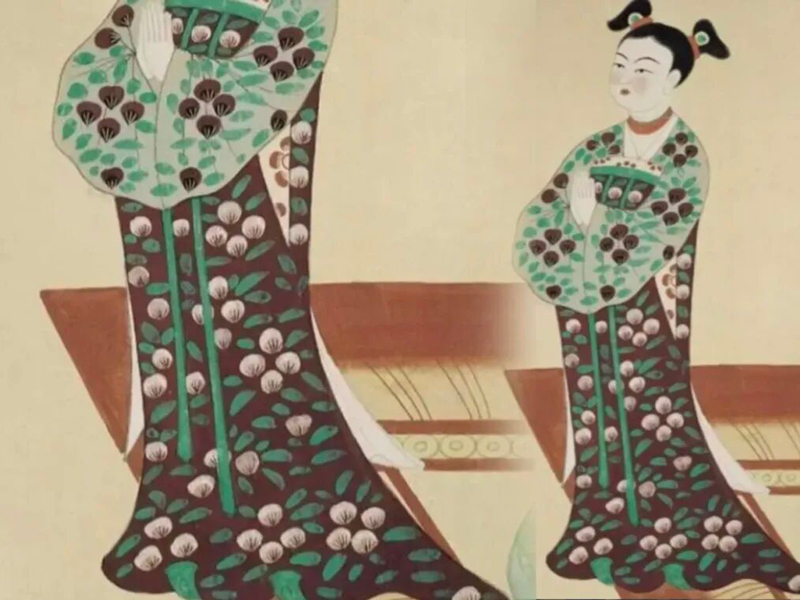
The strongest proof lives in images. At the Mogao Caves, painters used pink long before modern color theory. In Cave 114, a young woman’s dress and skirt combine black, green, yellow, and pink. The pink appears in petals and trim, calm rather than sugary. This mural belongs to the mid-to-late Tang Dynasty (唐代). The palette shows how pink could be quiet and elegant when set against darker colors. It was not a specialty color for one gender. It was part of a working system that artists used to create rhythm, depth, and contrast on cave walls. The same eye for balance appears in later scrolls and portraits.
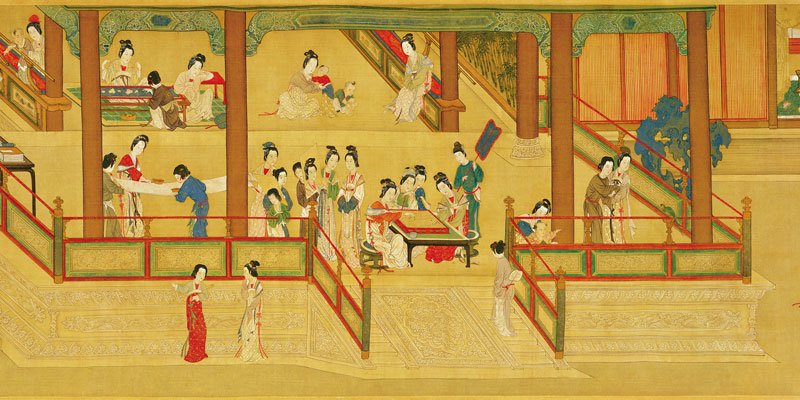
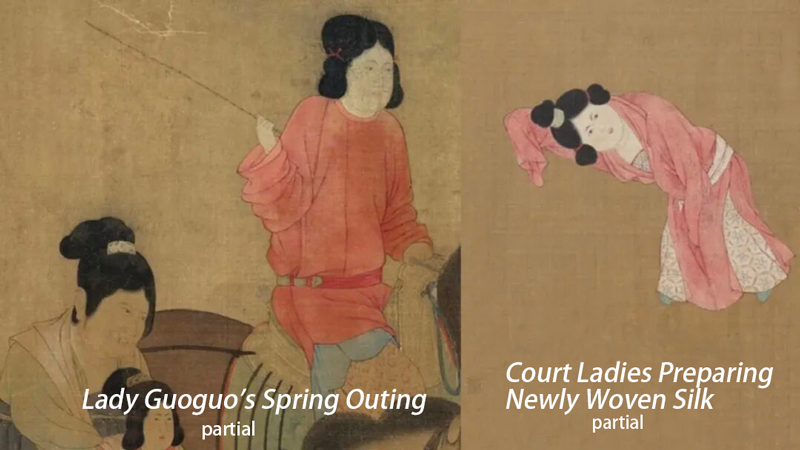
Tang scroll paintings make the same point. In Court Ladies Preparing Newly Woven Silk (捣练图) and Lady Guoguo’s Spring Outing (虢国夫人游春图), pink and light red move through pale, mid, and rich tones. The effect is lively and expensive, not fragile. Men appear in pink too. Zhou Fang (周昉) painted Palace Ladies Playing Double Sixes (内人双陆图), and several Ming scholar portraits show men in pink robes. Even after centuries of fading, the old silk and paper still hold a red-white warmth. The color survives as a record of taste. It says that a man could choose pink without becoming a joke.
The Song Dynasty pushed pale pink even further. With its love of clean lines and restrained beauty, Song fashion favored “light red and faint white.” Men and women both wore it. Flower pins and pink clothing became a trend for men in the Tang and Song periods. A pink robe could look bold, but it could also look elegant, especially with black or white. Liu Xueyi’s costume fits this longer history. It is not a fantasy invented for television. It is a reminder that color has no fixed gender. It only has context, and context can change.
Today, pink menswear still turns heads, yet it is no longer strange on runways or city streets. The old robe on Liu Xueyi is not asking us to copy the past. It asks us to drop a modern assumption. A man in pink can be serious, romantic, powerful, or playful. The color does not decide his character. The cut, the fabric, the posture, and the story do. That may be why the online reaction is so interesting. The surprise is real, but so is the pleasure of seeing an old rule break. Pink was never only for women. It was always a color with many lives.