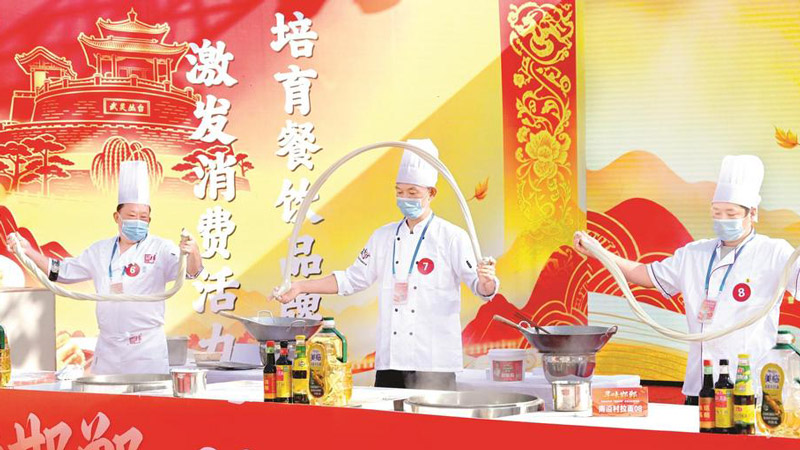
The morning contest filled the lane with the smell of hot iron and rendered fat. On October 3, inside the Handan Dao historical and cultural district, twenty restaurants, specialty hotels and independent cooks set up stations for the local-specialty dish competition, the centrepiece of this year’s Golden Autumn “Taste of Handan” food culture week. Each kitchen worked from ingredients grown or raised inside the municipality, and each plate on the judging table carried a regional claim that could be traced to a county.
On the Competition Floor
Two contests were set for the day. The morning belonged to regional cooking, with competitors weighing traditional technique against modern ideas and, in several cases, against the older logic of food as medicine. The afternoon belonged to one bowl of noodles.
Judging ran on five dimensions: choice of ingredients, cooking technique, flavour, cultural invention and presentation. That last category mattered more than it usually does, because organisers told competitors that the region behind each dish counted as much as the cooking, and the results were used to map the county-level food system into a single catalogue that visitors could read in an afternoon.
Plates That Quote the Region
Several entries reached back into local history. Wugu Fengdeng brought a peppercorn squab from Shexian county, a dish it traces to the farming culture of the Cishan site; Dushan Yetu, a farmhouse kitchen, sent out Shexian walnut and peppercorn chicken; Cizhou Minyao offered a whole pumpkin roasted over charcoal with eight-treasure stuffing; and Hongdou Mengguanmian entered a braised whole fish prepared with the county’s sealed-pot method, a technique the city treats as heritage in its own right.
Others argued for the modern city. Halal Fushengzhai reproduced a handmade sesame lamb that belongs to the old Muslim kitchen of Handan; Youmai Cun paired northern grains with a peppery kidney dish built on newer technique. Jiaoyimen, Yan Zhaoxia and the Jinan Hotel also put forward signature plates. Read together, the table covered the municipality end to end, and most entries balanced flavour against a stated health rationale and an idea tied to family reunion.
Pulling Noodles by Hand
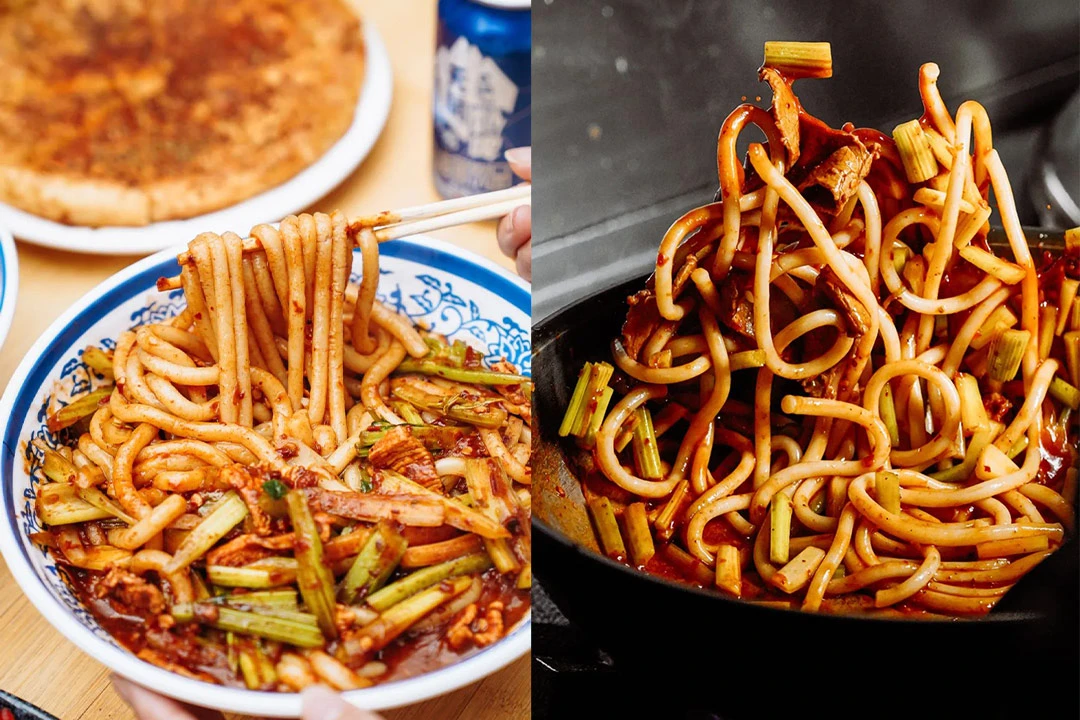
By afternoon the day turned on a single craft. Nanyancun hand-pulled noodles are a local staple with a market lineage that stretches back through several generations, and the contest drew inheritors of the technique as well as veteran noodle cooks. The sequence is unforgiving: kneading the dough, resting it, sliding and stretching the strips, then throwing and pulling until the strands separate. Done well, the noodles come out even in thickness and firm enough to spring back against the teeth.
Judges scored noodle texture and mouthfeel, broth flavour, the look of the finished bowl, the cook’s command of the technique and any considered improvement on the standard method. The stated purpose is to standardise the craft, build it into a recognisable brand and carry it toward larger-scale production, rather than leaving it to the reputation of individual stalls.
Judging Beyond Taste
Visitors moved between the stations through the day, tasting, taking photographs and filling the district’s teahouses between rounds. The food week runs to October 7 and involves every county, district and county-level city under Handan’s administration, using cooking contests, signature-dish showcases and snack tastings to widen the holiday’s tourism offering.
The municipal commerce department said it will keep developing the city’s food resources, with attention to transmission, innovation and promotion. It added that the city will continue to build out the “Taste of Handan” identity as part of the wider effort to draw visitors into the region’s commercial and cultural districts.