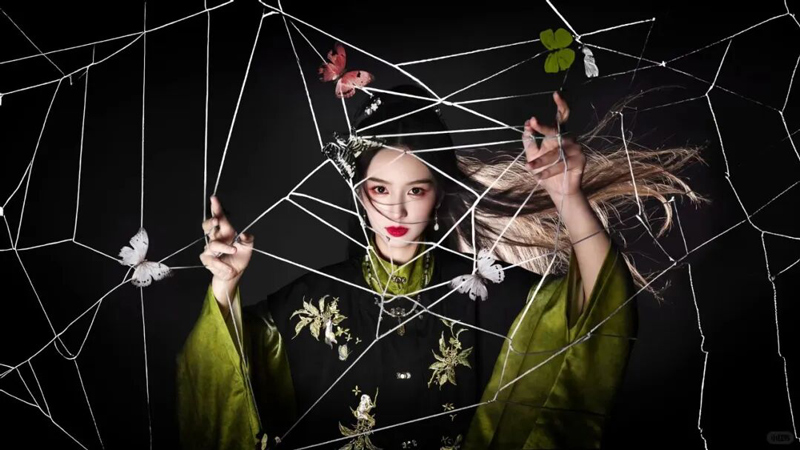
Zhou Ye (周也) has a new photo set, and it does not ask for gentle approval. Shot by Zuo Hetong (左和童), the images push a mood of bad and beautiful: cold, sharp, and strangely magnetic. The visual base is Chinese style, but not the soft kind. A Ming-style stand collar, black-green clash, butterfly embroidery, silk threads, blades, spider webs, and shadow puppetry build a dark fable. Each frame feels linked, as if one story is being cut into chapters.
The set may also send fresh heat toward Zhou’s drama Spring of the Blade (一瓯春), a project already sold on tension, romance, and hidden games. Here, beauty is not decoration. It is a weapon, a mask, and a clue. The camera does not simply admire her. It studies her like a suspect. The first glance is stylish; the second is unsettling. That double effect is the point.
Black-Green Shock
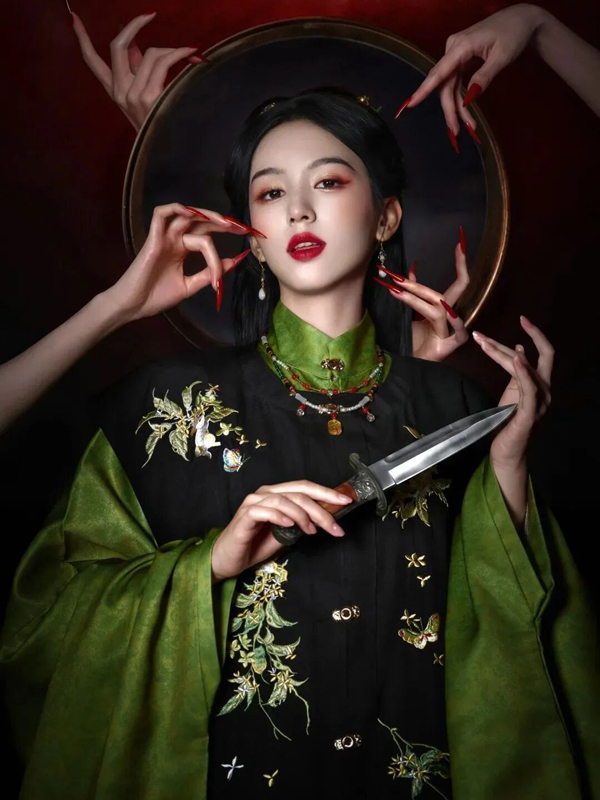
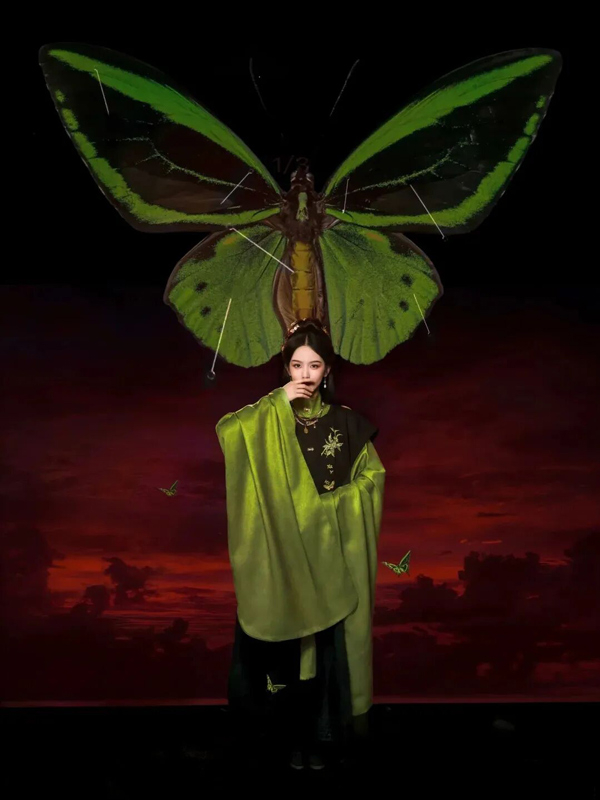
Clothing anchors the whole set. The black body is covered with fine gold-thread butterflies, while high-saturation emerald green sleeves break the calm. Heavy beaded pieces add an old Eastern texture without turning the look into a museum copy. Makeup favors a vivid red mouth and classical eye shape, keeping Zhou’s bone structure visible while giving her a chilly, eerie drama. The contrast matters: black holds the body down, green lifts it, gold catches the eye, and red cuts through. Nothing feels random. The outfit is not just pretty; it behaves like a character. It says this woman can bow, wait, and then strike. The camera loves that threat. It also makes the poster series feel like a single costume drama frozen in several dangerous seconds. Even the empty space around her seems to be holding its breath.
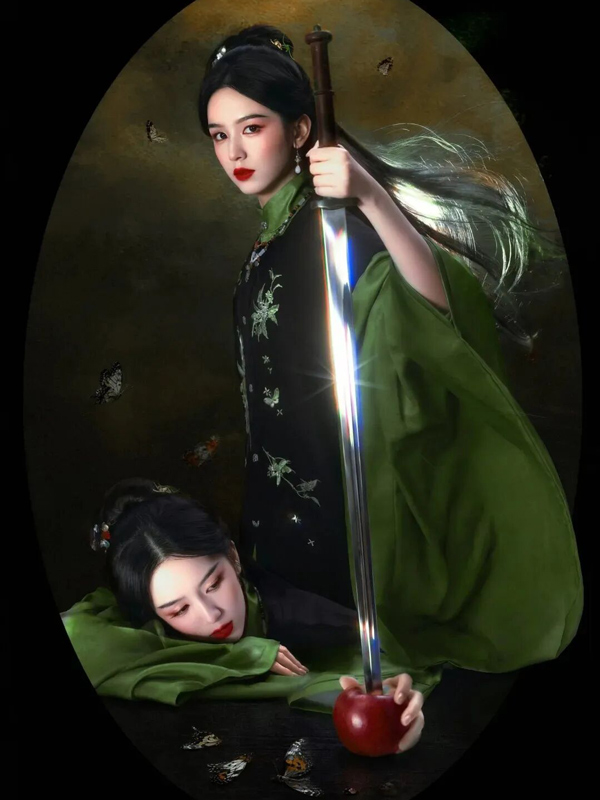
The set uses storyboard logic. Every image carries its own beat, yet together they track a fight against restraint. Twin figures face each other. A long sword pierces a red apple. Butterflies circle the blade. Good and evil share one body, one face, one breath. A hand pulls red threads above an old painted puppet, turning control into a quiet horror. The puppet does not speak, but the message is loud: fate is a string, and someone else is holding it. Then a close-up in an old bronze mirror catches a softer, fragile side. The mirror’s mottled surface breaks the image just enough to make the viewer lean in. It is a small pause before the next threat, and that pause makes the whole series crueler.
Other frames go further. Several red-nailed hands surround the figure, while a short blade waits near the wrist. The scene suggests eyes everywhere, pressure without exit, danger dressed in lacquer and silk. These choices make the series feel less like fashion and more like a puzzle. A butterfly is not only a butterfly. A thread is not only a thread. A blade is not only a blade. They are warnings, promises, and traps. Zhou does not play the victim in these pictures. She looks like the person who knows the rules and may still break them. That is why the images linger: they offer pleasure and unease at the same time. You want to trust her, but the posters keep asking why you would.
Cage and Flame
The official posters for Spring of the Blade also reject the usual soft ancient style. They mix dark Chinese style with layered storytelling, packing old-house schemes, love-hate pulls, and fate into tiny details. A fine-brush poster gathers the whole cast into one painted scene. Every line has a mood; every smile hides a thought. Song-era elegance sits beside a suffocating mystery. Paper-cut layers shape Jiangnan (江南) gardens, stone bridges, pavilions, green bamboo, and lotus leaves around the players. Light and deep greens soak the old residence with daily warmth and undercurrents. The group stands inside a delicate landscape, yet family grudges and personal doom press down on them. The image looks calm because the pressure is buried, not absent. Look longer, and the garden starts to feel like a locked room.
The two-person poster uses one umbrella as a wall. Two people look across the gap. A red rope wraps around them, hinting at growing feeling, while a hidden blade in a sleeve hints at trouble. A bright flower field makes the pull between the leads feel doomed, not safe. Spring is both a meeting and a risky game. Countdown posters use a birdcage as a frame. Fire, red silk, and iris flowers speak for three states of mind. Inside the cage, hands touch, eyes meet, bodies sit face to face. Love and hate share the same small space. Change the objects, and the same cage tells a new story of slow downfall in an old house. The bars never move, but the meaning shifts each time.
The strongest point is that taste and plot work together. Spring of the Blade carries Song grace and suspense, with a style clash that sticks in memory. The posters fit Zhou’s cool, sharp, beautiful-but-bad character type. They also sell the show’s core: everyone hides a thought, every step is a chess move. This is not empty decoration. The details do narrative work. A cage, a rope, a blade, a flower, a mirror, a puppet: each object shifts the mood and adds a new question. The result is polished, readable, and full of story. If the drama matches this visual confidence, viewers may find it hard to look away. The campaign has already done its first job: it made curiosity feel dangerous. It invites debate before the first episode even arrives.