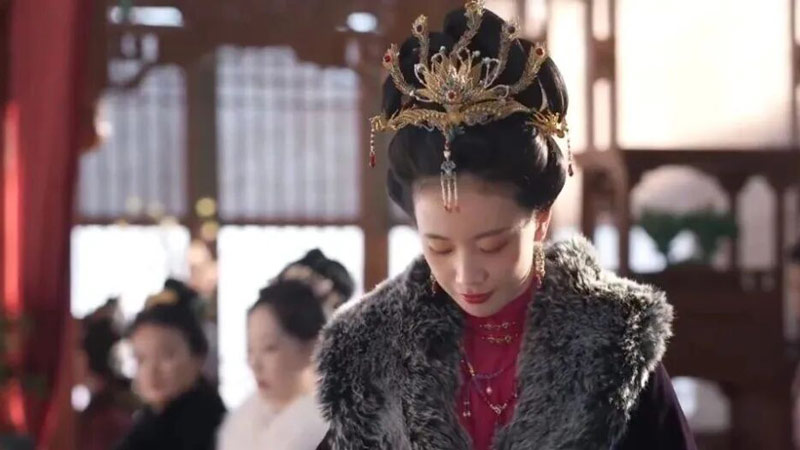
In Against the Current (兰香如故), Li Meng (李梦) plays Zhao Xingtang (赵星棠), a sharp, bright mistress of a rich household. Her high bun carries one huge phoenix hairpin. It stretches across most of the bun. A gilded base holds colored gems. The bird’s wings open wide. Red beads hang below. The effect is grand, almost like a costume drama from years ago.
Li Meng also appeared in The Double (墨雨云间) as Princess Wanning (婉宁), a role that showed her explosive acting. That memory makes this new ornament stand out even more. Most current costume shows choose small pins by the temple or the side of the bun. A full, large phoenix hairpin is rare. Why did it become so uncommon? The answer is not just about fashion. It involves history, filming habits, actor comfort, and audience taste.
Old Court Glamour
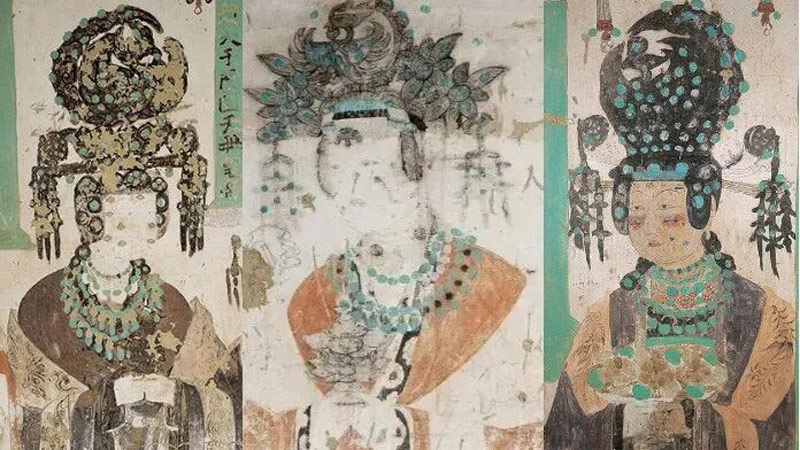
A phoenix hairpin is a hairpin whose head is shaped like a phoenix. It can be small or very large. Gilded examples from Tang dynasty tombs often passed thirty centimeters. At the Mogao Caves, some female donors wear phoenix-shaped headpieces. The crown rises high. The phoenix pattern sits at the top, bold and exaggerated. Such images explain why old costume dramas loved big hairpieces. They were not mere decoration. They told viewers who mattered. A queen, a noble wife, or a household matriarch could be understood at a glance. The bigger the headpiece, the higher the status.
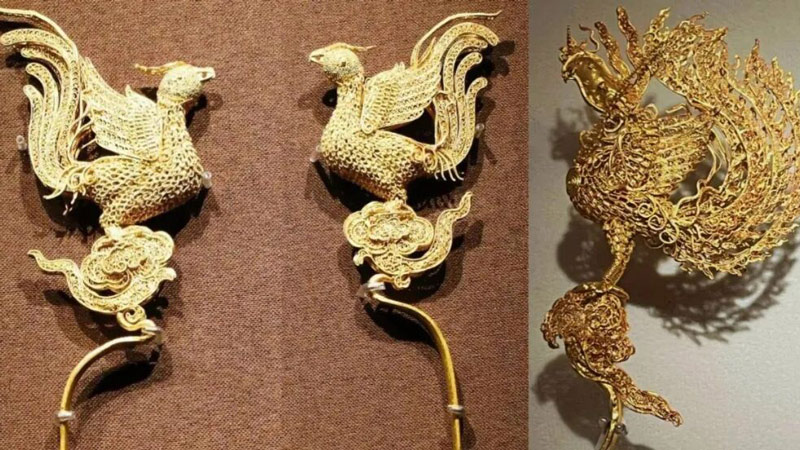
In the Song dynasty, ceremonial dress rules included phoenix hairpins. Empresses and titled wives wore several large pins with formal robes. The Ming dynasty kept this habit and added kingfisher-feather inlay and filigree. The work became finer and more complex. Many Ming tombs have yielded phoenix hairpins, including the Tomb of Lady Xu Fu (徐俌夫人墓) and the Tomb of Prince Yizhuang (益庄王墓). For centuries, a big phoenix hairpin signaled rank, ceremony, and wealth. It was also a practical screen device. Older cameras were softer and grainier. Large ornaments held the frame better. They gave the image a clear center.
Early costume dramas used that signal well. A queen, a titled lady, or a household matriarch could be placed in seconds. The bigger the headpiece, the more direct the rank. Zhao Xingtang fits this language. She is loud, vivid, and powerful in her house. The large pin supports her aura. Li Meng’s fuller face and heavy bun also balance the size. The result looks stately rather than crowded. The hairpin does not hide her. It frames her. That is why this choice feels connected to older television, even though the show is new.
Why It Faded
One reason is face shape. Earlier actresses often had rounder or squarer faces with fuller soft tissue. Many actresses today have smaller, leaner faces. A huge hairpin can cover too much of the frame. The face looks smaller. The ornament seems to press down on the actor. Expressions become harder to read. Directors want the face to carry emotion, so they choose lighter pieces. A small pin near the ear may seem safer. It keeps attention on the eyes and mouth.
Another reason is weight. A pure metal phoenix hairpin is not light. It needs hairspray and many pins to stay in a high bun. An actor may wear it all day. Her scalp hurts. Turning her head or bowing can shift it. Fixing it takes time. Small hairpins are easier for the crew and kinder to the actor. Efficiency matters on a tight shooting schedule. A loose giant pin can ruin a take. A tiny one rarely causes such trouble.
Taste has changed too. Many costume idol dramas focus on a young heroine’s growth. Early episodes favor a lively, light look. Later episodes may add small pins in layers. A single giant phoenix hairpin can feel too formal or too old. Audiences used to delicate styles may read it as a throwback, like a show from over a decade ago. That is why many teams avoid it. They fear the pin will make a young character look stiff or dated.
Still, rules are made to be broken. Against the Current gives Li Meng a large phoenix hairpin because it suits Zhao Xingtang. The character is bold, bright, and powerful. The pin makes her status visible. It also gives the scene a strong silhouette. Would this look work for every drama? No. But for this role, it lands. Do you like Li Meng’s big phoenix hairpin?