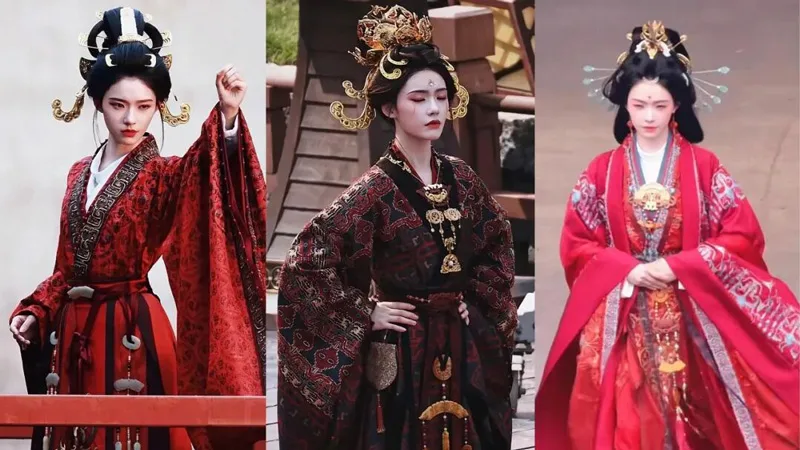
Leaked stills from Gui Luan (归鸾) have placed Lin Yun (林允) in a long, swinging waist ornament. Jade plaques, arc-shaped huang (璜), and bead strings fall from her waist toward the skirt. Some viewers call the look too much for ancient China. The truth is more layered. The piece echoes a composite jade pendant set, a real accessory worn by early Chinese elites. It was never one charm. It was a small architecture of jade, beads, and cords, made to move, sound, and signal.
The drama may simplify the count and length, but the basic idea—many jades linked, worn at the waist, falling in uneven lines—has deep roots. Viewers may argue about exaggeration, yet historical dress often used exaggeration to communicate rank, mood, and money.
Neck Then Waist
The earliest forms appeared in Liangzhu (良渚) tombs. Necklaces held jade tubes and beads, simple and close to the throat. They were not yet the elaborate sets of later centuries, but they show that jade strings already carried meaning. People wore them in life and placed them with the dead. The Liangzhu people carved small tubes, beads, and pendants with smooth surfaces. Strung together, they became necklaces for ritual or burial. The habit of linking small jade pieces into one ornament began there, long before any costume designer needed a dramatic silhouette.
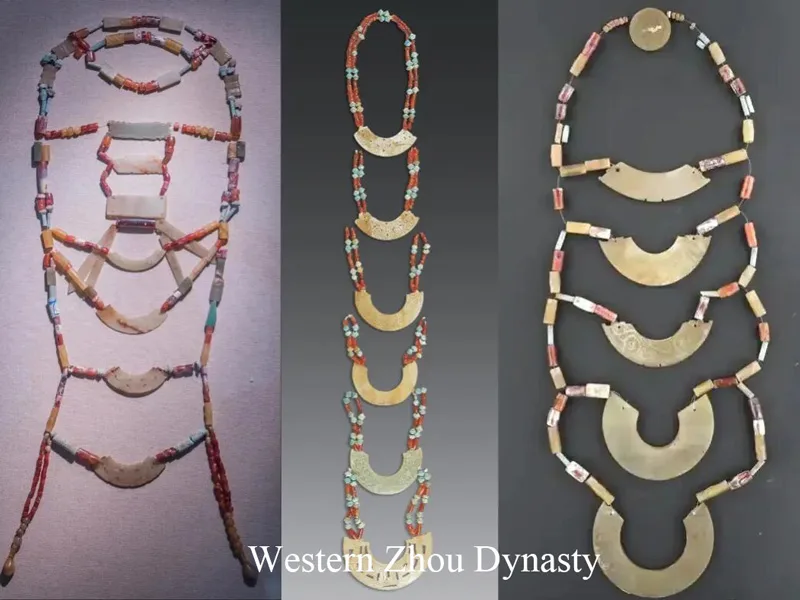
By Western Zhou (西周), these strings became tools of order. Kings, lords, and ministers wore different sets. Material, length, and the number of parts changed with rank. Most hung at the neck. Some reached below the chest and belly. A six-huang linked-bead set found in Henan (河南) stretched nearly 1.4 meters. That length was not random. It turned the body into a map of status, and every step made the map speak. The set was not jewelry in the modern sense. It was a costume of government, worn in public and buried with care.
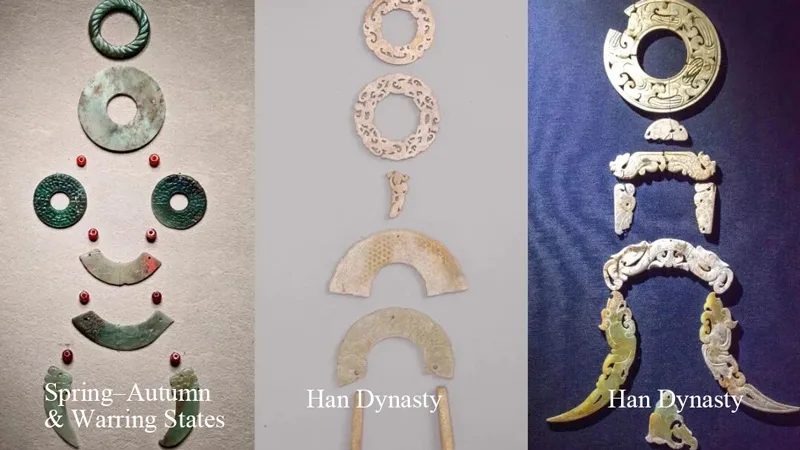
During the Spring and Autumn and Warring States periods, the center of gravity moved down. Elites began tying sets at the waist, much like Lin Yun’s screen look. Designs grew busier: dragons, phoenixes, beast masks. Ritual control loosened. The sets became displays of wealth and taste. Examples have come from Hubei (湖北), Henan, and Hebei (河北). A waist pendant could now advertise a family’s resources while still carrying old ceremonial weight. The waist placement also freed the neck and made the body’s movement more visible, so the ornament performed with every turn.
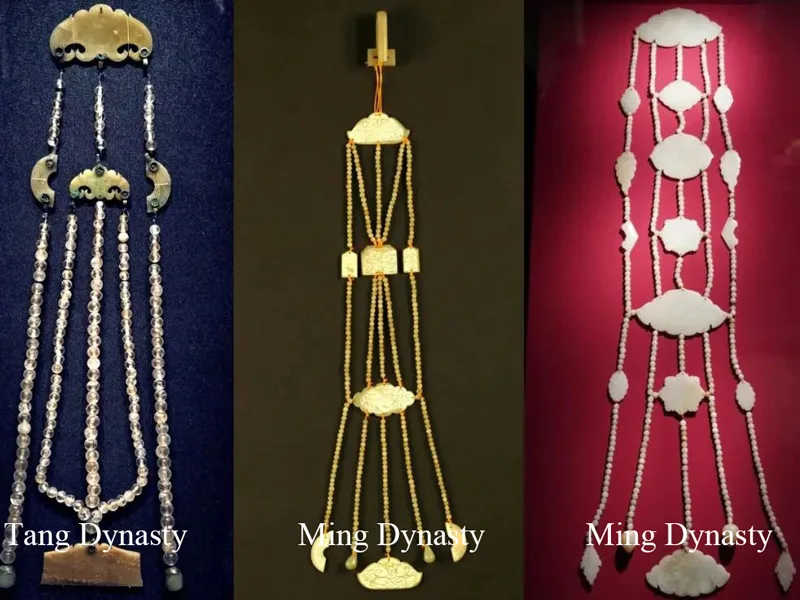
Han examples kept the splendor but added daily-life motifs. Jade dancers, cicadas, and she-shaped (韘形) pendants appeared. After Han, large sets became rare in ordinary life, yet they did not vanish. They survived as ceremonial gear. Finds from the Northern and Southern dynasties through the Yuan show them. The Ming had them too. The Tang and Ming even placed them in ritual codes, with changing forms and parts. Each dynasty edited the formula, keeping the memory while changing the shape.
Why They Wore It
First, identity. Jade was precious. A full set could consume several complete stones, plus cutting, polishing, matching, and stringing. Only wealthy and powerful families could afford it. At a glance, the waist ornament told others who belonged to the elite. It was a receipt of rank, worn in public. A commoner might own one jade bead; a lord could wear a whole sentence of stone. The longer and richer the set, the louder the claim.
Second, posture. A long pendant punishes hurry. Walk too fast, and jade knocks against jade, making a messy noise. For nobles, that was rude. The set worked like a portable ruler. A calm pace and steady bearing became part of aristocratic grace. The wearer had to think about every step. In that sense, the ornament was not only decoration; it was a daily rehearsal of self-control. Even anger or excitement had to be filtered through stone.
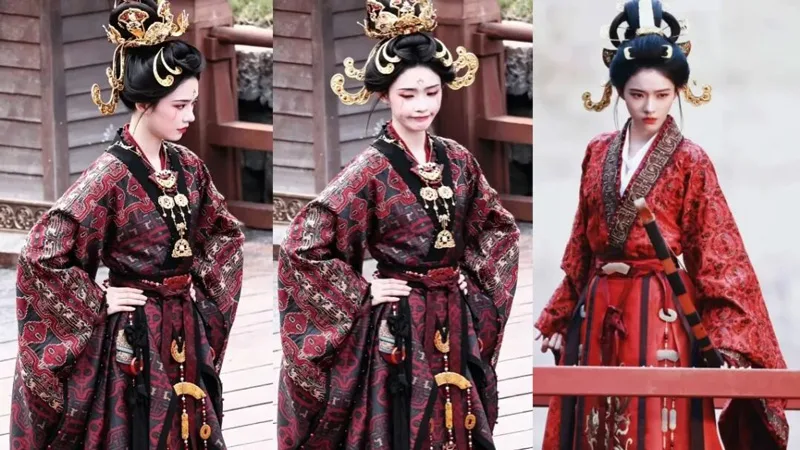
Third, moral feeling. The elite said a gentleman compares his virtue to jade. Unless there was a special reason, jade was not removed. A composite set gathered many jade forms on one body. It decorated the wearer and reminded him to control himself. The stones were cold, hard, and slow to form. Those qualities matched the ideal of a patient, restrained noble. Wearing them was a public promise, even when no one spoke. The clink of jade made that promise audible.
For Gui Luan, the team did not copy a tomb find. It cut the number of jade pieces and adjusted the drop. Yet the linked jades, waist placement, and uneven lengths still follow the old form. So the look is not pure fantasy. It is a televised cousin of a real tradition, changed for camera and character. Do you find Lin Yun’s pendant beautiful?