When leaked photos from Jiangshan Datong (江山大同) appeared, viewers spotted Yang Mi (杨幂) wearing a square, sleeveless layer over a long robe. It sat across her chest and stomach, with no sleeves and a boxy edge. Many fans joked that it looked like a modern bib. The first reaction was confusion: why would a costume team put a bib on a historical heroine?
The answer is not a mistake. The piece is Liangdang (裲裆), a garment from the Northern Wei (北魏). Its odd look comes from distance. Earlier dramas rarely showed it, so modern eyes have no memory of it. In its own era, it was common, useful, and sometimes fashionable. Understanding it means looking at cloth, armor, horse riding, reform, and everyday style.
What Was It?
Liangdang was not a single shirt. It had two separate panels, one in front and one in back. Cloth straps or cord loops joined them at the shoulders. A sash or belt tied the sides at the waist. Most versions stopped near the stomach or lower ribs. The cut stayed square, and there were no sleeves. That shape left the arms free. A woman could cook, work, or ride without cloth pulling at her elbows. In the Han dynasty, people often wore it as underwear. Its task was simple: keep the chest and belly warm. It worked like a fitted vest, hidden under other layers. It was not meant to be seen.
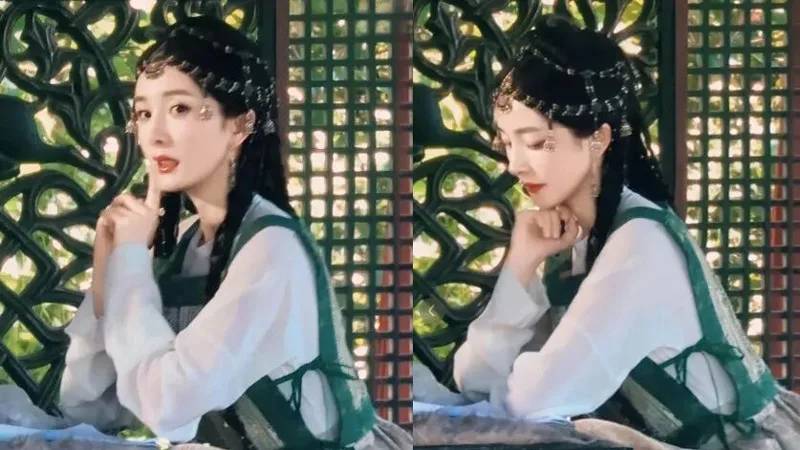
By the Wei, Jin, Southern and Northern Dynasties, the garment moved outward. Texts such as Jin Shu: Wuxing Zhi (晋书·五行志) and In Search of the Supernatural (搜神记) mention women wearing it on the outside. Art and burial objects show more than one method. Some women wore Liangdang as an outer layer. Others placed it over an inner robe but under a crossed-collar coat. Yang Mi’s costume follows that second route. The square top is visible, yet it sits inside a larger outfit. This layering explains the bib effect. On camera, the front panel draws attention. The back panel, shoulder ties, and waist cord are harder to see. A quick glance misses how the pieces connect.
Armor makers borrowed the same design. They created Liangdang Kai (裲裆铠), a chest-and-back armor. Leather straps or metal clasps linked the plates at the shoulders. It was lighter than full-body armor and easier to put on. A rider could swing a sword or pull a bow without the plates blocking the arms. For cavalry, that freedom was vital. Cloth Liangdang and armor Liangdang shared one idea: guard the torso, free the limbs. The name stayed, but the material changed with the user. A noblewoman might wear brocade. A soldier wore iron or leather. The same outline served both.
Modern viewers call it a bib because a bib is a single front piece with no back and no waist structure. Liangdang has both front and back, plus shoulder links and a waist tie. In Yang Mi’s look, the long robe underneath hides the side openings, so the eye reads only the square front. The fabric also sits flat instead of draping like a robe. That contrast makes it look separate, almost attached. Historical paintings often show the whole outfit, including the ties and layers. A still photo or leaked set image can crop that context away. The garment is not strange. The camera angle is.
Why Northern Wei?
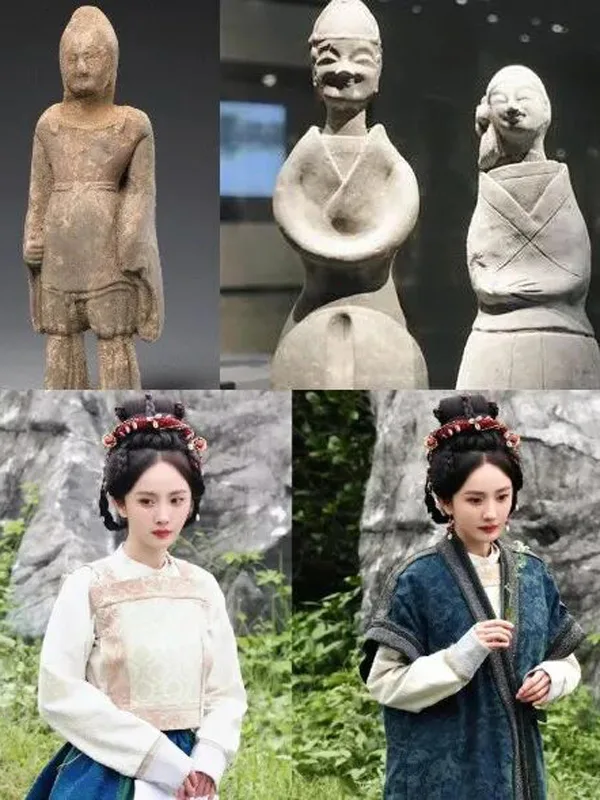
The Northern Wei was founded by the Xianbei (鲜卑), a people who moved on horseback and favored light, practical clothing. A sleeveless layer that protected the chest and stomach while leaving the arms open fit that life. Figurines and wall paintings from the period show many Liangdang looks. When Emperor Xiaowen (孝文帝) moved the capital to Luoyang (洛阳) and pushed reforms that adopted Han customs, dress rules became a key part. Liangdang entered the formal clothing system. It could be worn in court and in streets. It was no longer only hidden underwear or a soldier’s gear. It became part of daily order across ranks.
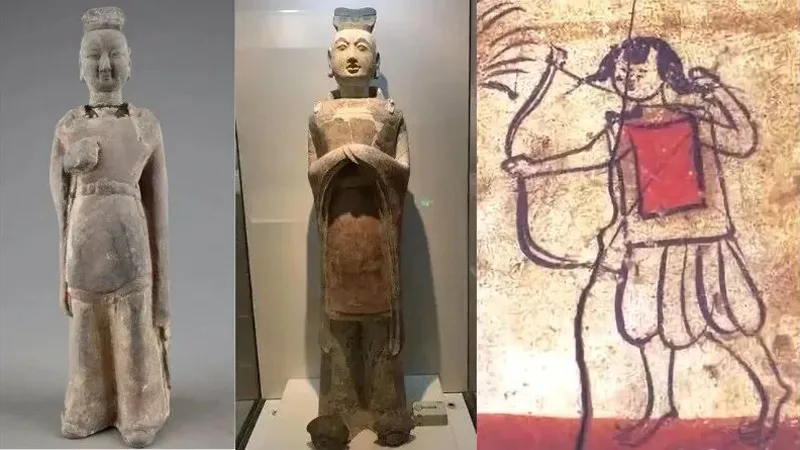
Practicality kept it alive. Wealthy women could choose fine brocade, embroidered patterns, or small bead decorations. The garment warmed the body and added ornament at once. Common women used coarse cloth or hemp. They wore it while farming, walking, or traveling. The same basic cut served different budgets. Its simple shape was easy to sew, repair, and adjust. In a period of movement and contact between groups, clothes that worked had value. Liangdang did not demand much fabric, and it did not restrict the body. That everyday usefulness gave it an edge over heavier, formal robes. It was not luxury for its own sake. It was comfort with a purpose.
Fashion also played a role. The social mood of the era was less tied to old rules. An item once meant for the inner layer could become a visible outer piece. People treated Liangdang as a casual cover, much as a tank top or vest might be worn over a shirt today. It looked relaxed and slightly different. Aristocrats and commoners copied one another, and the garment moved out of the inner layer and became street wear. After this era, it did not vanish. New forms such as Banbi (半臂) and early Beizi (褙子) carried its DNA. Later, its name faded, and its shape blended into the waistcoat and sleeveless jacket. Yang Mi’s costume is not a random invention. It is a rare screen visit to a real Northern Wei habit.