Cruise boats on the Bianhe in Kaifeng now hand out embroidered life jackets. The change came after crews noticed a pattern among passengers: visitors who had booked Hanfu styling were slipping the vests off once the boat pulled away from the dock.
How the Jackets Keep Their Buoyancy
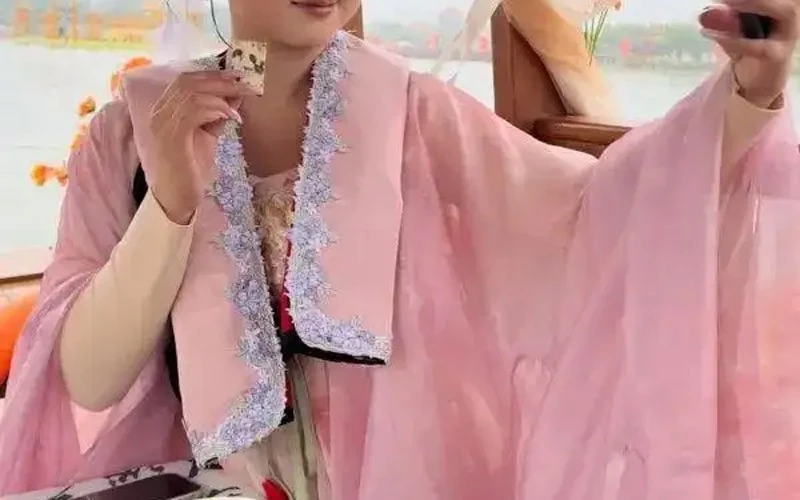
Decoration sits along the binding at the edge of each vest, a seam that carries no load, and the lace is attached to the outer fabric rather than laid over the inflatable chamber. Buoyancy material and the strap system are untouched. Sun Yitong, who manages the boat performance department, said the rule that every passenger wears a jacket has not moved; what the team altered was how the jacket looks.
The order of work matters more than the design. Staff first tried the pieces on performers during shows, ran the safety checks, and only then moved the embroidered jackets into the kit handed to tourists. Scenic-area upgrades usually fail the other way around, with the look settled before anyone tests it, and a decorative piece that catches on a buckle or trails in water is worse than a plain orange one.
Judged as kit rather than costume, the modification is small: an outer layer, a stitched edge, a colour range pulled back toward earth tones. Nothing in that list changes what the vest does in the water, which is the only reason a tourism office can order it at all.
Photographs Drive the Demand
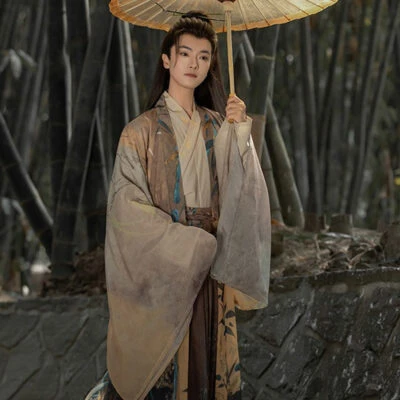
Visitors from Hubei and Shandong stopped to ask about the jackets on the boats. One said there were too many colours to choose from and that the vest no longer read as safety equipment, more like a piece added to a garment; another added that wearing one felt like stepping into the Song period. Guests who had paid for hair and makeup said they had expected the vest to spoil their photographs.
That expectation is the real subject. A full Hanfu look is assembled for the camera, from the hair to the fabric, and an industrial vest breaks the frame at the last moment. Taking the jacket off was a trade between two rules, one written by the operator and one kept for the photograph, and the scenic area’s fix was to make the required item something people would put on without being asked twice.
Small details decided whether that worked. Visitors pointed to the stitching and said the embroidery matched the colours of what they were already wearing, which is the difference between an accessory and a costume piece bolted on at the dock.
Choosing Song-Era Motifs
Kaifeng was the Northern Song capital, and Song dynasty clothing ran to muted colours and restrained cuts, with geometric and floral patterns rather than dense figural scenes. Embroidery drawn from that vocabulary sits closer to the layers a visitor is already wearing, in a way a cartoon mascot or a park logo would not.
There is a practical side to the choice as well. Motifs lifted from local material do not fight the clothes underneath, so the jacket can stay on through a whole ride and through the photographs afterwards. Scenic areas now hand out more than tickets: audio guides, wristbands, rain ponchos, and for anyone in traditional chinese clothing, every one of those objects shows up in the frame.
Treating that gear as part of the set is a cheap way to keep a scene intact. It only holds, though, on the same condition the Kaifeng boats set for themselves: the safety test comes first, and the embroidery is what gets added afterwards.