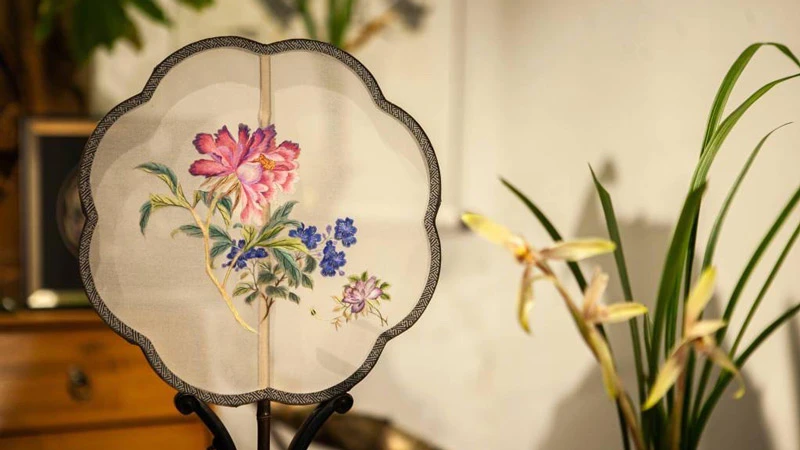
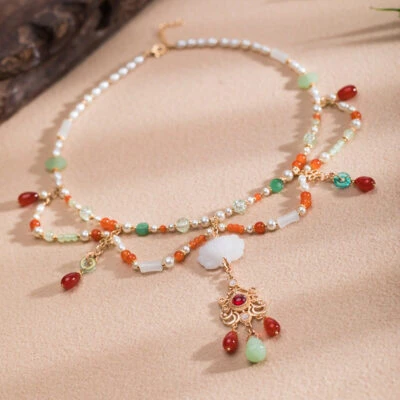
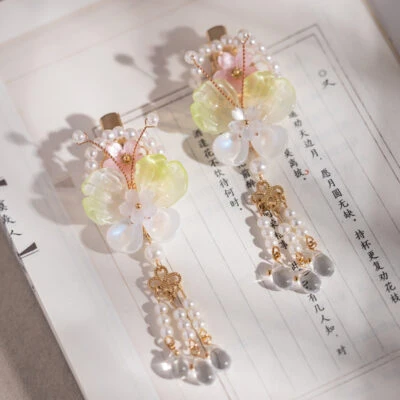
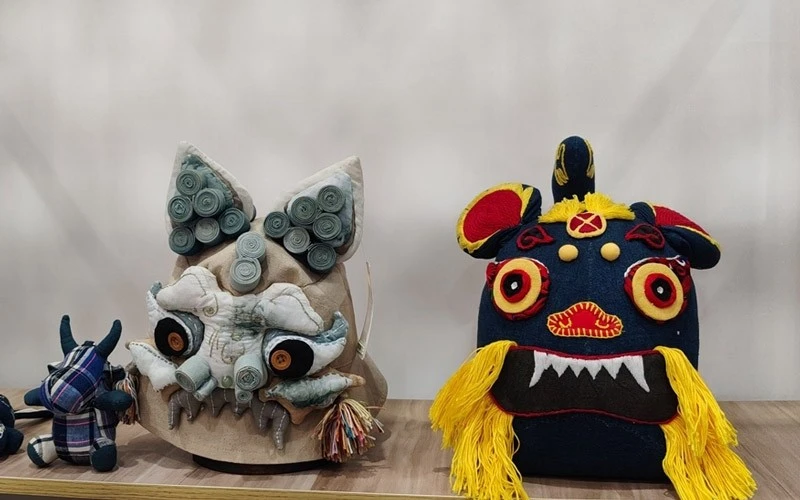
Inside the Guizhou Xiu Niang workshop in Majiang County, in Qiandongnan, Guizhou, computerised embroidery machines and hand stitchers share one production line. The machines run patterns in batches. The stitchers are finishing craft pieces against a Dubai order, and when the consignment ships it will go on display at Dubai International Airport.
Machines and Hands on One Line
General manager Liu Tianyu puts the company’s problem in one sentence: the difficulty with heritage crafts is that they are hard to industrialise, and that is the problem the firm set out to solve. The Dubai order is the evidence that the attempt is working, not because the craft has been replaced, but because a workshop in a mountain county can now quote a delivery date to a buyer 5,000 kilometres away.
Production is organised so that the two halves do not compete. Machines take the repetitive pattern work, where speed decides cost. Hands take what machines cannot hold: assembly, finishing, the parts of a piece a buyer will look at closely. Neither side is decorative. A factory that only stitched by hand could not fill this order; a factory that only ran machines would be selling printed cloth.
Cutting Two Hundred Layers at a Time
The equipment list explains how a county workshop takes bulk work at all: a tracing machine, a laser cutter, a multi-layer cloth cutter, a UV printer, a heat-transfer unit with a powder shaker. With those in place the workshop handles wax resist, yarn twisting, weaving, dyeing and printing, cutting, sewing and cotton filling under one roof instead of sending pieces out and waiting.
One purchase changed the throughput. The old laser cutter became a bottleneck whenever a large order arrived, so 300,000 yuan of east-west cooperation funding from Foshan went toward a multi-layer cutter that slices 200 layers of cloth in a single pass. The company measures the gain at ten times the previous efficiency. Ordering was productised as well: a mini-program lists toys, accessories, footwear and clothing, and buyers can set quantities from four pieces up to more than 2,000.
Rebuilding Handloom Cloth From Its Parameters
Raw material was the harder constraint. Handwoven soil cloth gives craft products a better hand and sells better, so the firm bought it in volume. Costs climbed year on year, stocks thinned, and substitute fabrics sourced outside did not reproduce the result.
The research team’s answer was to take the cloth apart rather than replace it. They separated the fabric, measured yarn count and fibre composition, then commissioned loom makers to build machines to those specifications and yarn mills to spin and dye to match. Modern equipment reproducing the physical parameters of handloom cloth cleared the supply bottleneck.
That distinction is worth keeping. The goal was never to pass machine cloth off as handmade. It was to make a batch deliverable with a consistent hand, which is the question an overseas buyer actually asks. Craft rhetoric tends to stop at authenticity; procurement starts at whether the thousandth piece feels like the first.
Why the Workshops Went to the Villages
Labour followed a different logic. The stitchers are skilled, but they are scattered across the prefecture, they look after households, and they will not move into a factory. The company’s solution was to invert the layout: six large factories act as hubs, and 42 village workshops sit around them. Staff drive out twice a week to drop semi-finished work and collect what is complete, and each workshop runs standardised training. More than 4,000 embroiderers now work through that network.
Design capacity was built the same way, from the ground up. The team of 110 is made up of Guizhou-born graduates of Guizhou University, Guizhou Minzu University and Qiandongnan Vocational and Technical College, recruited through university partnerships and sponsored design competitions, with three national-level inheritors retained as technical advisers. Liu’s argument for why it matters is blunt: however good the craft is, without design and sampling ability the heritage stays invisible to the outside world. Designers are also pushed toward management early, and most of the factory directors across the six plants are in their early twenties.
Two sets of figures, published eight months apart, show the direction. In March, Qiandongnan Daily reported 26 village embroidery workshops across Majiang and Kaili, more than 3,400 women earning at home, six product categories, over 500 new designs a month, placement in more than 80 percent of well-known scenic areas, and 2025 output of 1,500-plus mass-produced products, 300,000-plus heritage craft items and annual sales above 13 million yuan, with custom work for Sanxingdui Museum and the Datang Never-Night City. By November, Nanfang+ reported 42 workshops, more than 4,000 embroiderers and a design team of 110. The two counts are not measuring the same thing, workshops against embroidery studios, women reached against women absorbed, but both point one way.
Domestic channels run through Alibaba and Tongrentang. Overseas, the firm has worked the Paris International Fair and the Milan International Handicraft Exhibition, and used the trips to visit the Louvre, the Picasso Museum and local design businesses. Liu reads the overseas market as favourable to handmade cultural goods and the company as holding a cost advantage, and the next step is a dedicated team on Xiaohongshu plus AI-generated multilingual video. Product development is moving toward museum and literature IP, including a line built on the Fengshen Bang cycle.
Three gates stand between a craft tradition and a shipping container: fabric that can be specified, equipment that can hold a tolerance, and labour that can be organised without uprooting anyone. Passing all three is what turns an exhibit into a product. Whether one airport order becomes a standing channel is a question the next two years will answer.