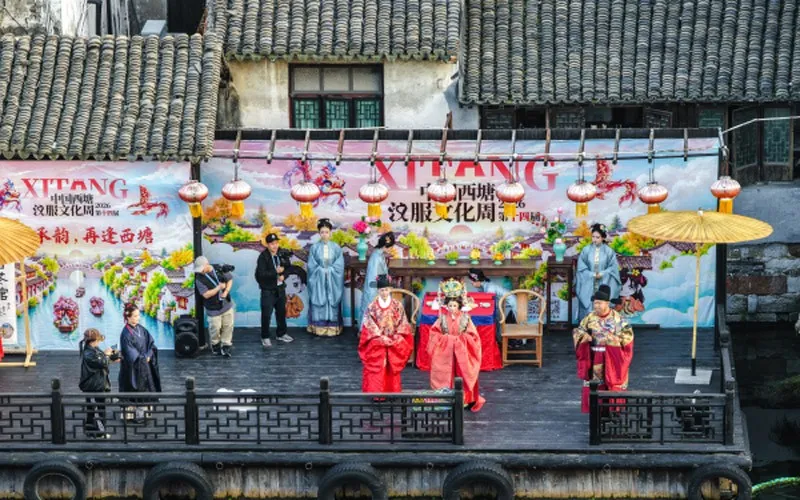
Fuyan, the banquet day of the 14th Xitang Hanfu Culture Week, falls on 4 November, four days into an eight-day run in the old town of Xitang, Jiashan county, Zhejiang. Ten-dish tables, autumn menus and food stalls are spread along the canals, and the week closes on 8 November.
| Dates | 31 October to 8 November 2026; banquet day 4 November |
| Venue | Xitang Ancient Town, Jiashan county, Jiaxing, Zhejiang |
| What it is | 14th edition of the Xitang Hanfu Culture Week, run in a one-plus-three format |
| Scale | Dynasty parade of close to a thousand wearers at the opening; an international block from eleven countries; more than a million visitors across fourteen editions |
| Tickets | Free entry to the scenic area for visitors in full Hanfu; yuanbao credits earned on site can be spent on food, craft and boat rides |
| Theme days | Huanshang, styling, 2 November; Fuyan, banqueting, 4 November; Shangyue, music, 5 November |
What a Banquet Day Adds to a Dress-Up Week
This edition runs on a one-plus-three structure. The main programme carries the parade, the boat processions and the wedding segments, and three theme days follow in sequence: styling on 2 November, banqueting on 4 November and music on 5 November. Putting food second is a deliberate choice, because a banquet is the one part of Hanfu culture that cannot be photographed into existence. Dress, hair, seating and tableware can all be staged in a lane; a meal has to be cooked, served and eaten in an order.
The mechanism that ties the day together is currency. Visitors collect yuanbao, or ingots, by arriving in Hanfu, joining story tasks and completing stamp stops along a twelve-shichen route that maps the old Chinese day onto the town’s lanes. The credits convert into local dishes, craft goods and a ride on a rowing boat. Food stalls and restaurants take part as vendors rather than as scenery, which is also how the county gets a return on a free-admission event.
Historical cover for a banquet inside a water town is not hard to find. The Qunwo banquet (裙幄宴) was a Tang custom in which groups of women spread their skirts as screens and picnicked behind them, an arrangement that turned fabric into furniture. This year’s programme books a Qunwo gathering as one of its standing activities, and the ten-dish table it serves follows a Jiangnan convention rather than a restaurant invention: ten set dishes in a fixed order, cold plates first, a whole fish at the centre, soup and a sweet at the close. The count signals completeness, and the local tourism office brands its version as a Jia-shan menu.
The Order Behind the Table
Banquet etiquette in the Chinese tradition is spatial before it is culinary. Seat order follows seniority and guest status, with the host’s position fixed and the most honoured seat facing the door. Cups are counted as the evening proceeds, and the sequence of toasts carries more information than the menu does. Serving order separates cold from hot, and courses arrive in a rhythm rather than at once.
Xitang wraps that structure in its own local identity. Two of Jiashan’s historical figures, Yuan Liaofan, the Ming official whose family precepts became a widely read moral text, and Lu Zhi, a Tang chancellor, appear as story characters alongside Li Bai and Li Qingzhao. The town’s gate ritual borrows a Ming military form, with three drum rolls before the gate opens and a travel document and seasonal flowers handed to the first visitors of the day. In the lanes, pitch-pot, archery etiquette and the ball game chuiwan run as games rather than demonstrations, and a stamped travel document doubles as the ticket for each station.
What survives the week is the logic underneath. A ten-dish table is a system for pacing a meal: it fixes how many decisions a host has to make, how many breaks a kitchen gets, and how a table of ten strangers can be seated without argument. The rite does not depend on the costumes in the room, which is why restaurants across the region still run some version of it for weddings and for the first meal of the lunar new year.
The Parade That Comes Before the Meal
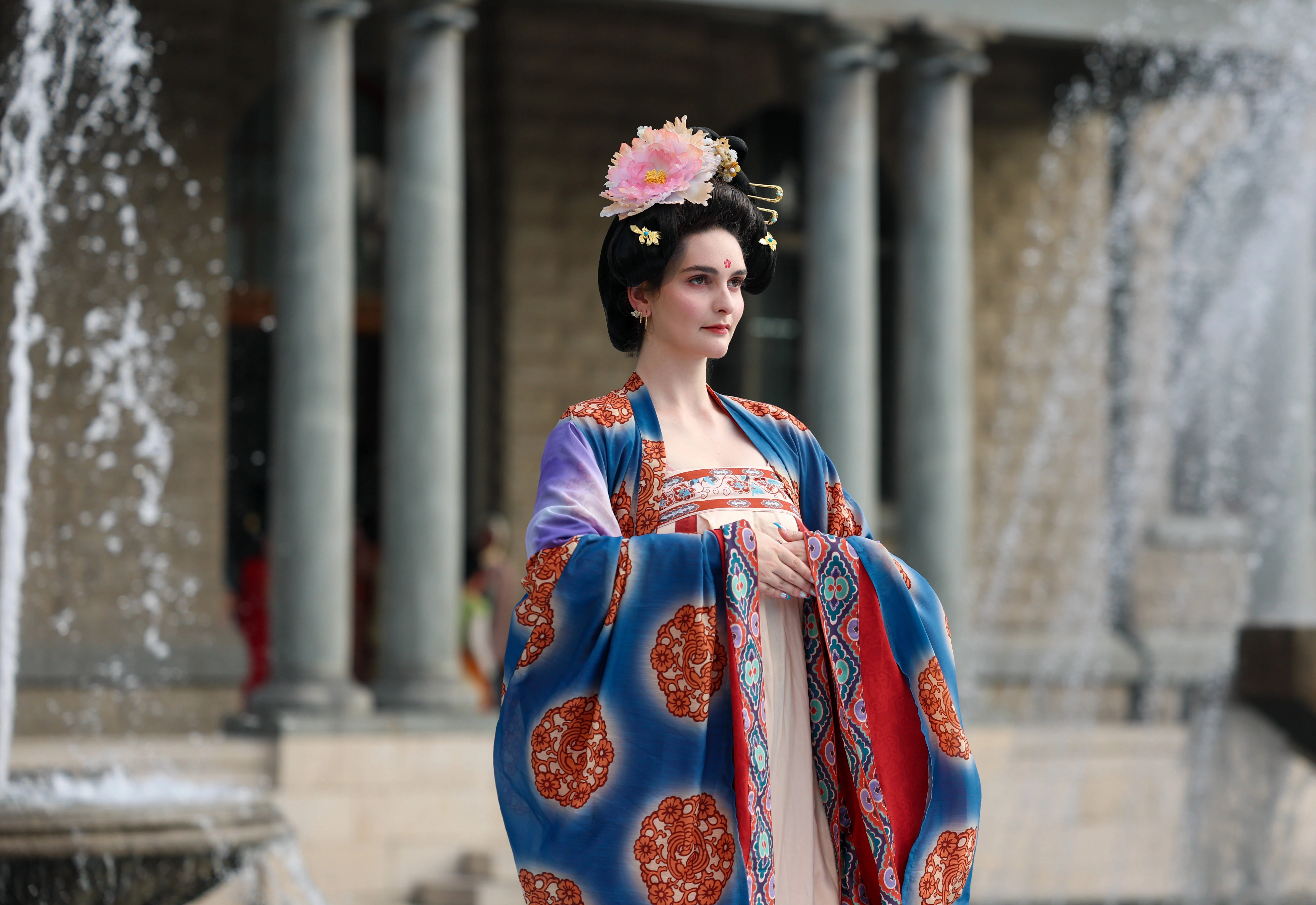
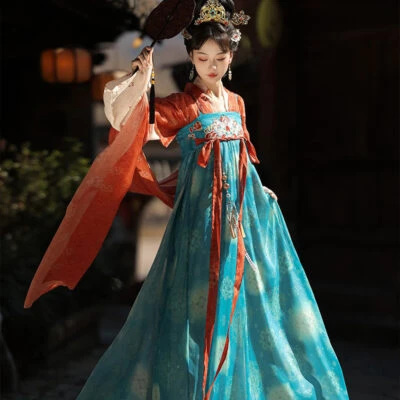
The opening set the visual register for everything after it. Under a chant of raise, bow, rise and turn, dynastic blocks filed past in Han dynasty clothing, Zhou and Jin dress and later periods, joined this year by three new groups: Tang hairpin ladies, Song market trades and a Ming scholars’ gathering. Objects were animated too. A Changxin palace lamp, a galloping bronze horse and a Tang three-colour camel carrying musicians walked as costumed figures, their make-up copied from the artefacts themselves, and a painting section lifted compositions from A Thousand Li of Rivers and Mountains and from a Sui-dynasty necklace of gold and pearl insects.
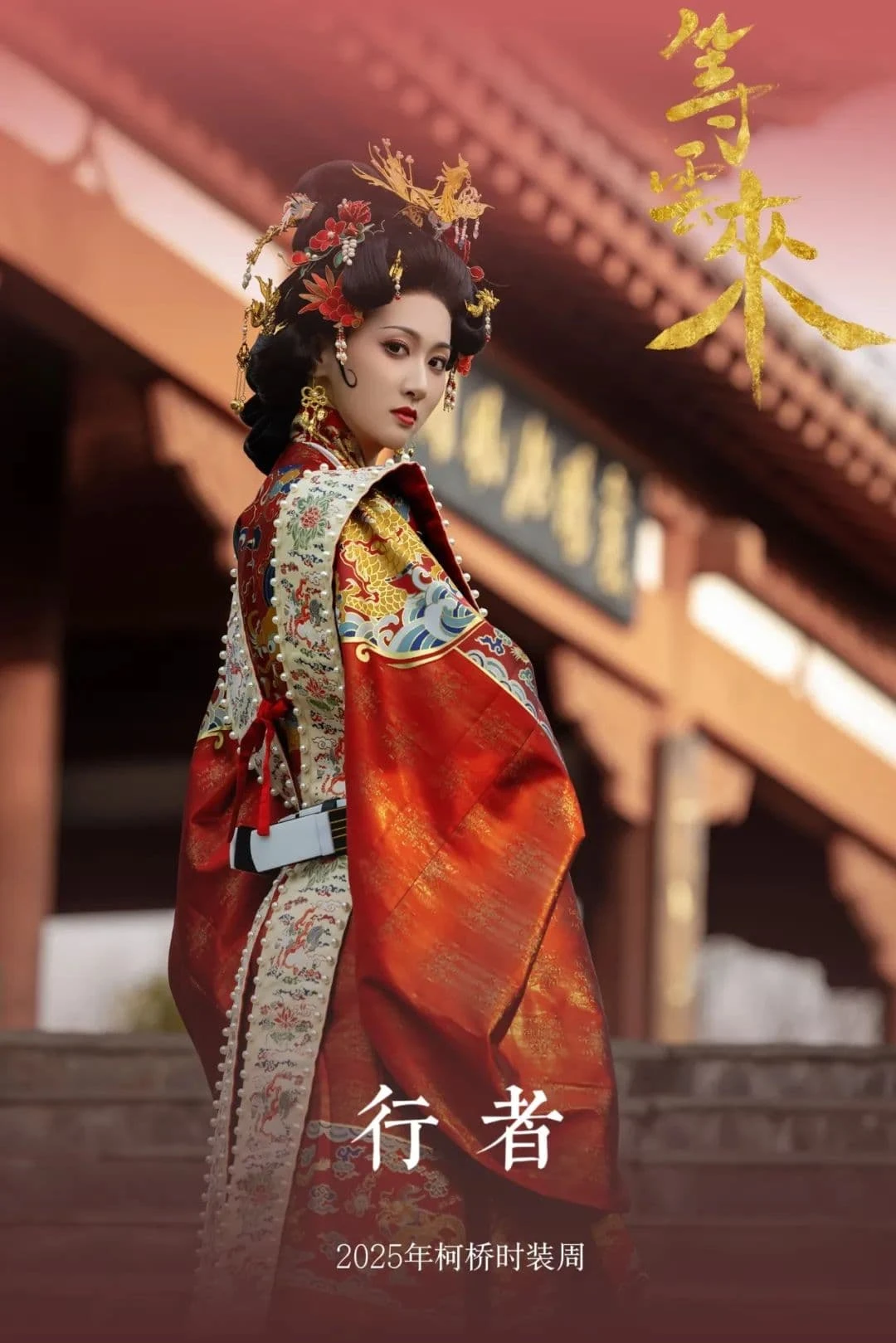
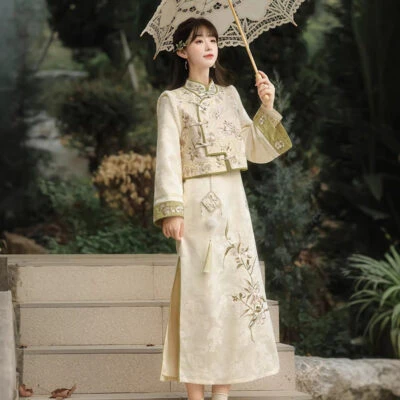
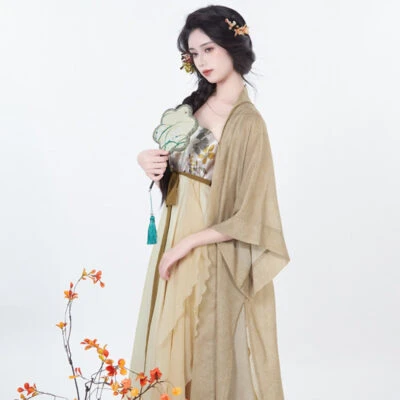
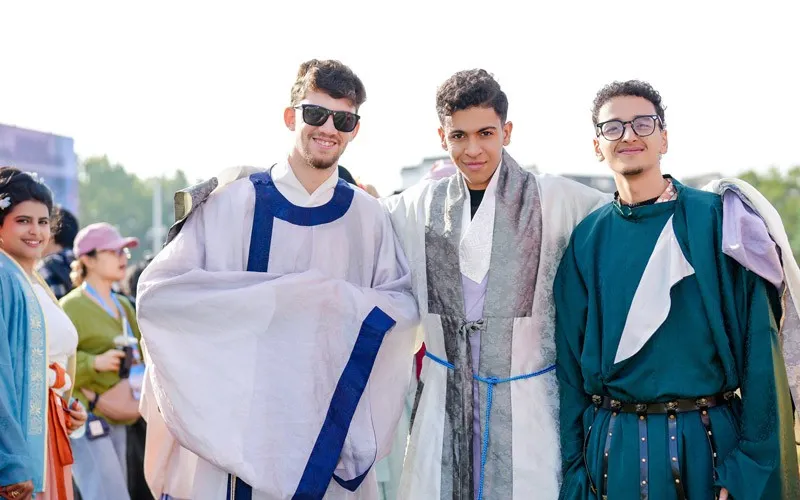
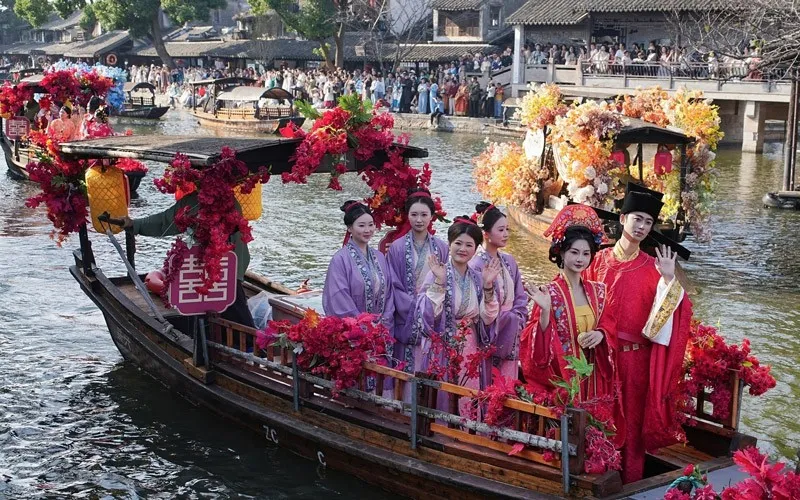
Close to a thousand wearers moved through the covered corridors and stone lanes, with the water procession taking the same story onto the canals in decorated boats, and eleven countries represented in an international block whose members exchanged hand-over-fist salutes with local wearers along the route. Zhou Luyang, a Xi’an native attending her sixth edition, came as a figure lifted from a Dunhuang mural of a Tang official’s wife, in a deep red Qixiong Ruqun with a printed shawl and a tall hairpin coiffure, carrying a gilt lotus censer she had adapted from a wall-mounted original so it could be held.
Fourteen years is long enough to measure. The first edition drew fewer than ten thousand visitors; the organisers now put cumulative attendance above a million, and the town has stopped treating Hanfu as a novelty. A Shanghai wearer quoted by Zhejiang Daily’s news app remembered being asked, a decade ago, whether she was in costume. Nobody asks that now. The question has moved on to which dynasty and which cut, which is a different kind of pressure and a more interesting one.