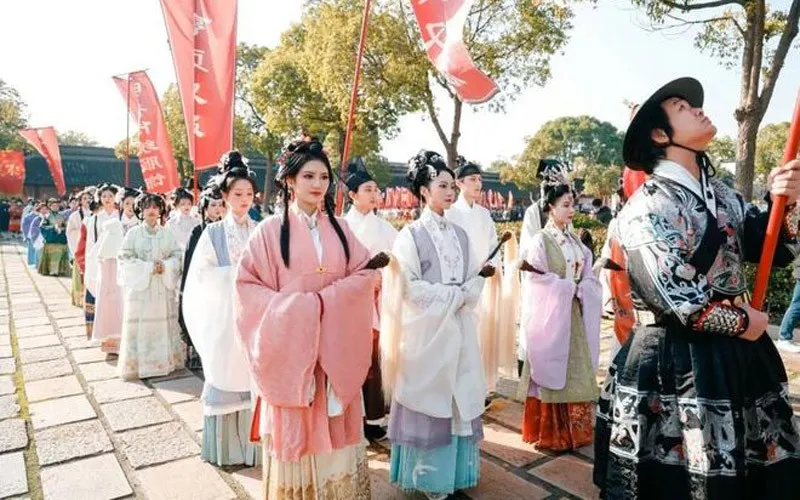
Jiashan, a county under Jiaxing in Zhejiang, has split its autumn Hanfu week into six themed tour routes covering villages, a museum, a resort, a dinner theatre and the county shopping districts, running between 24 October and 8 November 2026. One route is free at the gate for anyone in Hanfu. Another hands out 5,000 paper passports whose discounts outlast the programme by seven weeks.
The Six Routes and Where Each One Goes
Six Hanfu tour routes are one county’s attempt to move a costume festival out of a single water town and into its hinterland. Each has its own window, venue and entry condition, and only the village route crosses village boundaries that a visitor would otherwise never cross.
| Village route | 24 Oct to 8 Nov | Demonstration villages including Changxiu and Xinfeng | Eight small Hanfu events, one theme per village, cross-village stamp collection |
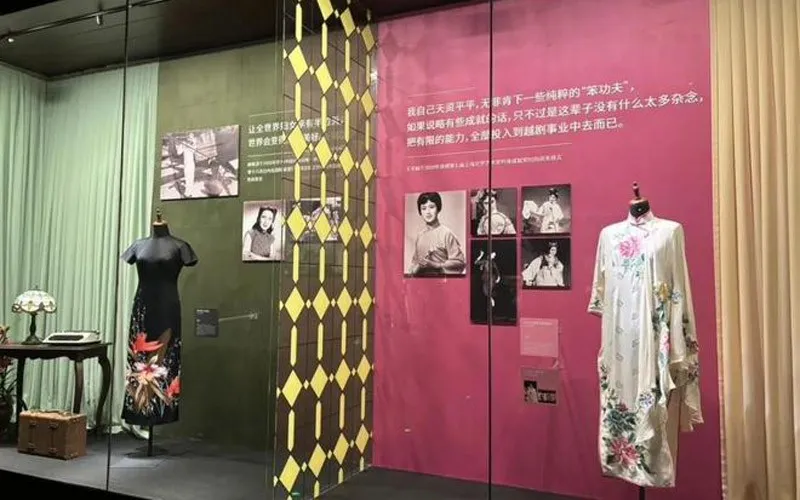
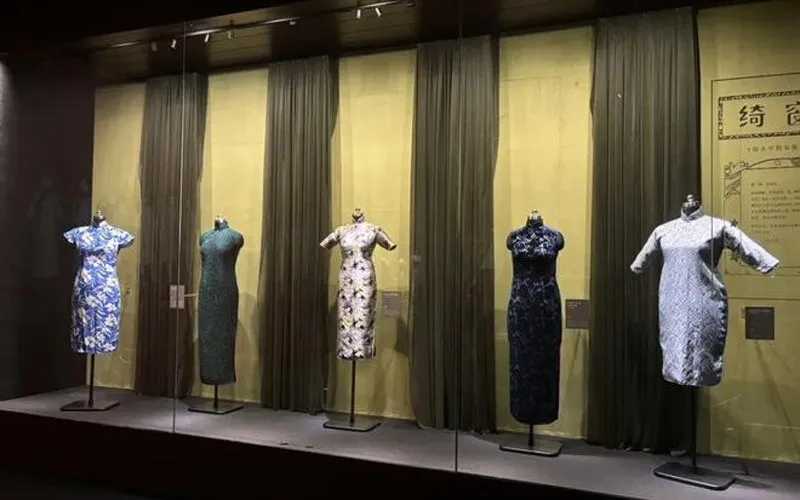
| Exhibition route | 29 Sep to 10 Jan 2027 | Jiashan Museum | Qipao exhibition plus music gathering, Pankou workshops and a commemorative stamp |
| Market route | 31 Oct to 1 Nov | Jiayouji, Xitang old town | More than 20 stalls of local food, farm produce and craft, plus two town-level sales |
| Resort route | 31 Oct to 8 Nov | Dayun tourist resort | Free admission in Hanfu, discounts at more than 20 outlets, archery invitational |
| Food route | 31 Oct to 8 Nov | Yunlanwan scenic area | Dinner theatre with five rotating pieces, buy-one-get-one seats for Hanfu diners |
| Commercial route | 31 Oct to 8 Nov, benefits to 31 Dec | County-wide | 5,000 passports, over 100 benefits, 22 youth-run shops |
Villages carry the only route that spreads across more than one site. Eight small events run under a one-village-one-theme rule at demonstration villages such as Changxiu and Xinfeng, with a stamp card that works across them. The stated purpose in the county announcement is blunt: pull Xitang’s Hanfu visitors out to the villages to spend there. This route creates no new stage. What it adds is the road between the old town gate and the village square.
A museum exhibition supplies the second route. The county museum’s qipao show, running since 29 September to 10 January 2027, is wrapped in a music gathering, a Pankou knot workshop, merchandise discounts and a limited commemorative stamp, all scheduled around the Hanfu week. Wearing Hanfu in the morning and looking at qipao in the afternoon is the whole product idea, and it is the only route in the set aimed at a neighbouring costume audience rather than at Hanfu wearers alone.
Shopping occupies Xitang’s Jiayouji hall, which listed 30 categories and close to 1,000 local products when it opened for a soft launch on 28 October, then ran 20-plus stalls of heritage food, farm produce, coffee and handmade craft once the week began. Two town-level clearance sales in Luoxing and Tianning sit alongside it. Dayun resort carries the fourth route: free admission for visitors in Hanfu, discounts at more than 20 businesses inside the resort, and the first year the Xitang Cup archery invitational and an archery-rite demonstration were extended onto its flower terraces.
Yunlanwan runs the food route through an immersive dinner theatre called He Yan, Cloud-and-Wave Flavours, where pieces such as the Xiangji Dance, Xi Shi Bids Farewell to Yue and the Luming Banquet rotate with the courses and Hanfu diners get a buy-one-get-one seat. The commercial route is the widest of the six, and the only one built as a booklet: a passport covering scenic spots, restaurants, hotels, supermarkets, factory outlets and 22 youth-run shops, more than 100 benefits in total.

Entry Rules and the Spending Behind Them
Free at the gate applies to one route without qualification. Dayun resort waives admission for anyone wearing Hanfu for the length of the week and states the discount terms separately, so the entry condition can be read without reading the small print of every outlet. Jiashan Museum follows the convention for county-level museums and charges nothing for the exhibition itself; the Pankou workshop and the commemorative stamp are things a visitor does once inside.
Shopping brings no ticket charge, but Xitang’s old town keeps its own admission rules, and free entry for visitors in Hanfu is a practice the town has kept for years rather than a benefit created for this week. Costs are stated just as plainly. Village activities are scheduled by session, the He Yan dinner is a paid theatre with a buy-one-get-one seat rather than a free meal, and the passport is free to collect but is a discount booklet, not a voucher: what a visitor saves depends on which counters they actually use.
Read together, the design is free entry and paid spending. Passing a visitor in Hanfu through a gate costs the county nothing, and the revenue question is settled in restaurants, rooms, workshops and night tours. The passport is the instrument that carries that logic across the county line, which is why the announcement describes one booklet as a county-wide consumption pass.
Stamps, the Passport and the Two Deadlines
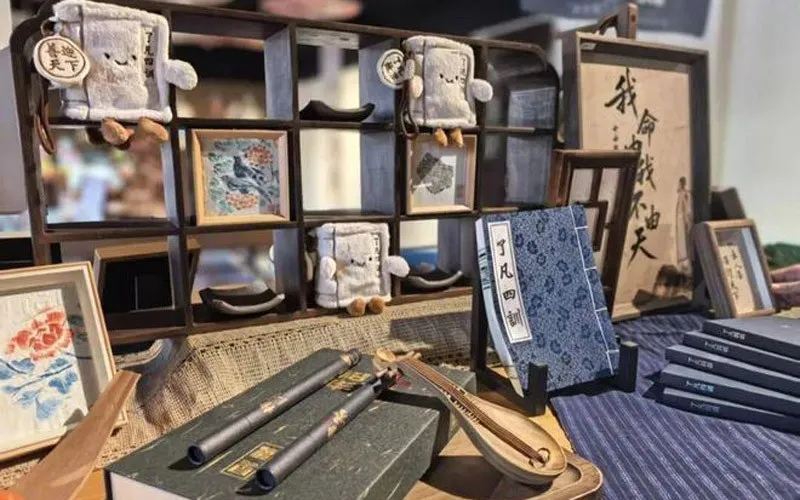
Stamps exist on one route only. Visitors collect them by checking in at different demonstration villages, and a completed set earns the title of Shancheng Hanfu Experience Officer plus a craft gift. The announcement does not publish how many stamps are required, what the gift list holds, or which village hands out the first card. Those three answers have to be collected on site at Changxiu or Xinfeng, and the page that pretends otherwise is inventing them.
Documentation is where the passport gets specific. Five thousand copies follow the model of the county’s earlier sports-tour passport, free at three counters: the Xitang old town visitor centre, the Dayun resort visitor centre, and the Jiashan library-museum-archive centre. Two dates matter and they are not the same date. Issuing and the routes stop on 8 November, while the benefits stay redeemable until 31 December 2026. Anyone arriving in mid-November finds the programme over and the booklet still valid, which makes it the only product in the scheme designed to outlive its own launch.
Why a County Split Its Hanfu Week
Xitang received 10.01 million visitors in the first nine months of 2026, up 2.24 percent, and generated 1.614 billion yuan in tourism revenue, up 1.35 percent. Both figures are positive and both are single-digit. A flagship water town that already fills its lanes has little room left in organic growth, which is the arithmetic the six routes were built to answer: one more night, one more village, one more shop.
County-level numbers point the same way. Jiaxing’s retail sales reached 228.122 billion yuan in the first three quarters, up 5.3 percent, the fastest in Zhejiang and 3.7 percentage points above the provincial average. The city staged 59 large performances and sports events in the same period and drew more than 2.1 billion yuan in associated spending through a ticket-stub alliance of over 300 businesses. If a concert ticket can be converted into a restaurant bill, a costume festival can be made to do the same thing, provided the visitors are moved around.
Two cheap instruments do the moving. Stamps draw a line between villages; the passport creates a settlement relationship between merchants. Neither is new, since passport-and-stamp schemes have run in Chinese heritage tourism for years. What changed is the population they are pointed at and the size of the print run. Five thousand copies is large enough to register as a programme and small enough that the discounts do not collapse under their own uptake, which is the number a county has to guess before it knows how many merchants will actually honour them.
Planning a Trip After the Routes Close
For a visit before 8 November, two benefits are the most concrete: free admission at Dayun resort in Hanfu, and the buy-one-get-one seat at the Yunlanwan dinner theatre. The village route runs the longest continuous programme and is the only one that needs a car or a taxi between stops, since the eight events sit in different villages rather than on one site. A base in Xitang and a day on the road works better than trying to reach every village from the old town in one morning.
After 8 November the routes end and the passport keeps working at county merchants until 31 December. The museum exhibition is the other thing that survives the window, running to 10 January 2027, so a late-November or December trip is a different proposition: fewer events, the same exhibition, and a discount booklet no longer attached to a crowd.
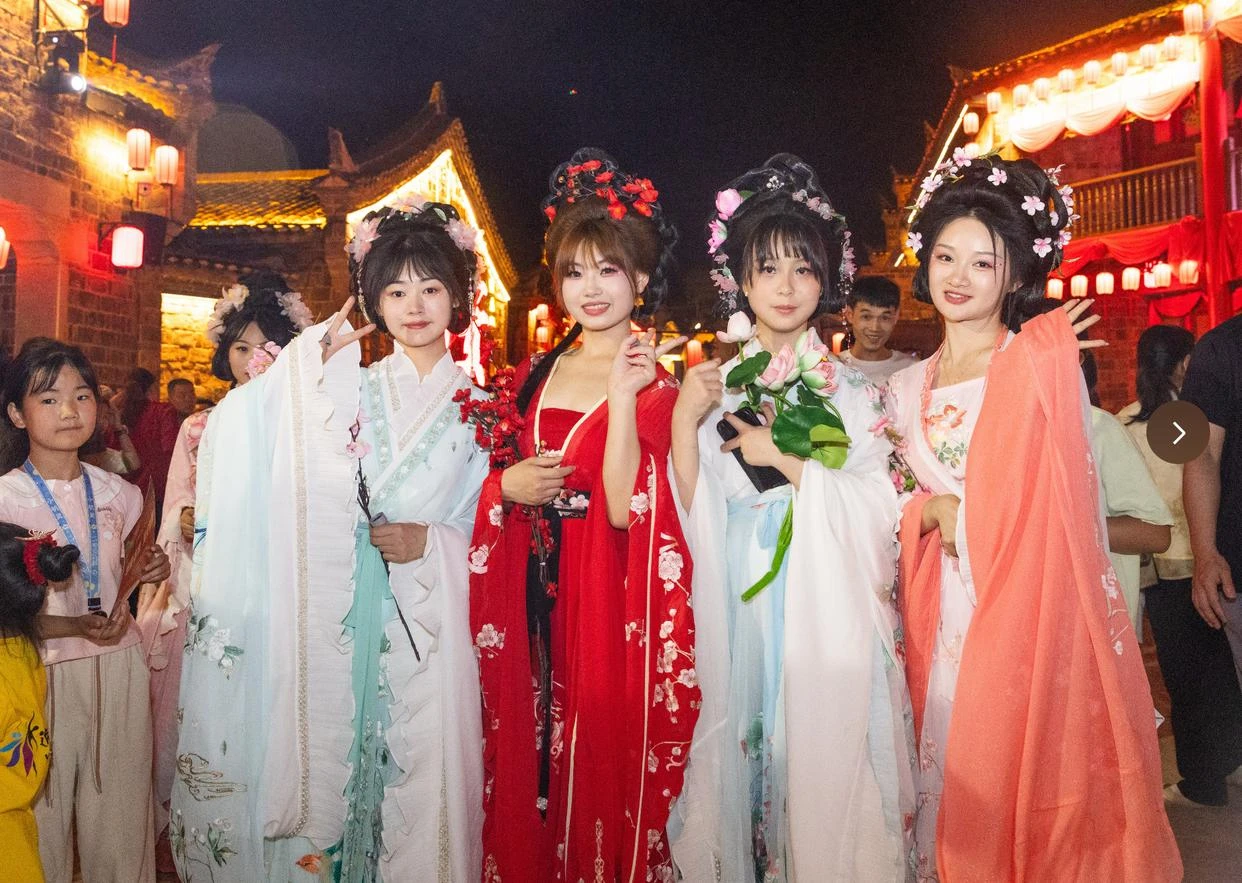
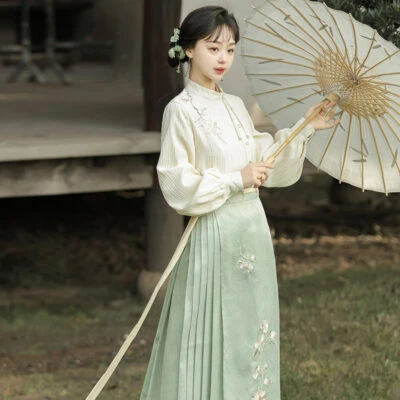
Rental is the constraint the announcement never addresses. Xitang’s shops carry most types of Hanfu, from Ming-style pleated skirts to Tang-style high-waisted dresses, and a day’s rental with hair styling is the standard package, so the free entry condition at Dayun is reachable by anyone willing to change clothes first. For a reader treating this as an introduction to traditional chinese clothing, the county layout rewards two nights rather than one: the old town as a base, one day for the villages, half a day for the museum.