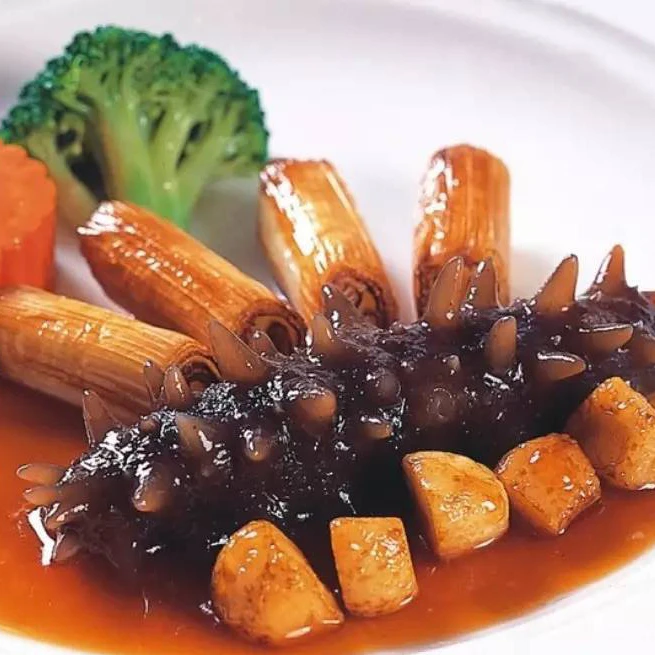
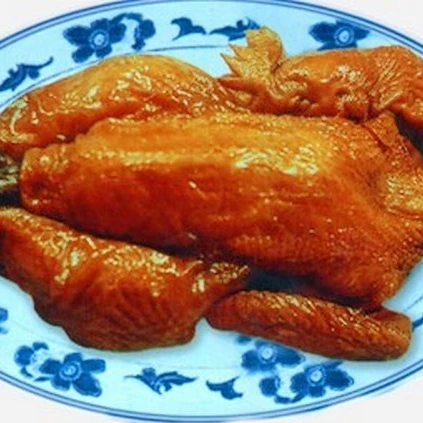
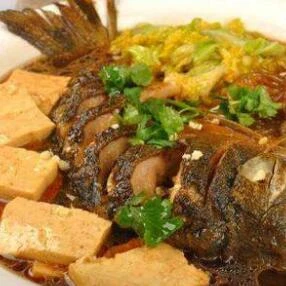
The 27th China Food Festival opened in Foshan on 29 October and closes on 1 November, built as conference, exhibition, competition and market at once. Regional restaurant branding sits at the centre of this edition, and the organisers have tied the four-day programme to consumption policy rather than to a single city’s menu.
| Dates | 29 October to 1 November 2026 |
| Venue | Foshan, Guangdong, with the main venue in Nanhai district |
| Programme | One opening and industry conference, seven parallel meetings, 25 themed events |
| Highlights | A time-honoured and heritage food market, a Cantonese dim sum week, a landmark-food promotion |
| Vendors | Tongli meat swallow, Li Liangui smoked pancakes, Shengzhou xiaolongbao, Donglaishun, Xi’an Restaurant, Wangzhihe, Liuluju, Qingfeng |
| Reach | Ten restaurant brands across multiple outlets, plus township programmes across Nanhai |
A Report That Reframes the Plate
Two industry bodies used the opening to set the frame. Wang Min, party secretary and president of the China General Chamber of Commerce, described 27 consecutive editions as a calling card for service consumption in the distribution sector. Chen Xinhua, president of the China Hotel Association, put the emphasis on new formats, new settings and new models as the engine, with regional restaurant brands named as the target of the build-out.
The 2026 China restaurant industry annual report was released on the same stage, and its argument is that eating has shifted from enough food and then good food toward quality, culture and health as purchase criteria. Alongside it came a launch: the association started a landmark-food brand programme with Nanhai and Shunde districts and with restaurant associations in Jinan, Wenzhou, Ganzhou and Xinyang, aimed at regional Chinese food and at clusters of specialty snacks. Delegates also signed a safe-consumption pledge.
What Nanhai Brings to the Table
Liu Xiayuan, deputy head of the district’s publicity department and director of its culture, tourism, sports and media bureau, made the local case under a slogan about daring to be first with freshness. The numbers behind it are industrial. The district’s food and health cluster is worth more than 80 billion yuan a year, two of every three shrimp dumplings sold nationwide are made there, and Haitian Flavouring anchors a supplier base that also includes aquaculture firms.
History supplies the other half. Nanhai’s polder farmland has fed the delta for centuries, and the district claims the Cantonese private banquet as its own invention, naming the Tan family kitchen and the Taishi family feast as its ancestors. It also lists the world’s largest Cantonese seafood restaurant and the first group standard for dragon-boat feast catering, which is a telling pairing: a banquet tradition and a written specification, held up as the same achievement.
Dim Sum as a Supply Chain
Those two of every three shrimp dumplings are the reason this festival’s exhibition floor looks different from a food fair. Once a dim sum leaves a teahouse kitchen and becomes a product with a wrapper specification and a cold-chain window, its competitive question stops being who folds the pleat best and becomes who holds the pleat’s appearance after freezing. Three shows answer that directly: a supply-chain exhibition for dim sum and prepared ingredients, a digital equipment hall, and a display of AI-assisted food production.
Conference topics follow the same logic outward. A delivery-industry meeting, a hotel-group and landmark-food matchmaking session, and a session on service ecosystems for Chinese restaurant brands going abroad all sit on the schedule next to an annual gathering of new-food entrepreneurs and a case-sharing forum on heritage craftspeople and regional restaurant brands. The pairing of a going-abroad service track with a production-equipment hall reads as one bet: standardised back ends travel better than recipes do.
Songyuanwei, the Water Behind the Flavour
To see why the main venue landed here, look at the polder. Songyuanwei is a dike-and-pond system begun in the Song period, in which ponds were dug for fish, the dredged mud was piled into dikes, and mulberry and fruit were planted on top. Fish, mulberry, silkworm and orchard formed a loop that fed itself, and the loop set the local ingredient list rather than merely the local scenery.
Pond fish supply the savoury base, silkworm waste fed the fish, orchards added sour and sweet, and the resulting pantry is what Cantonese cooking in Shunde and Nanhai draws on when it talks about freshness. That word usually reads as an adjective in restaurant copy. Here it has an agricultural address, which is also why the district can claim a banquet lineage and an industrial cluster without contradiction.