On 24 and 25 October, the Three Kingdoms and Water Margin City in Wuxi, Jiangsu, held a Hanfu carnival that set Han, Tang and Song dress on one stage, added Ming costume the following day, and closed with a hundred-wearer parade through both studio parks.
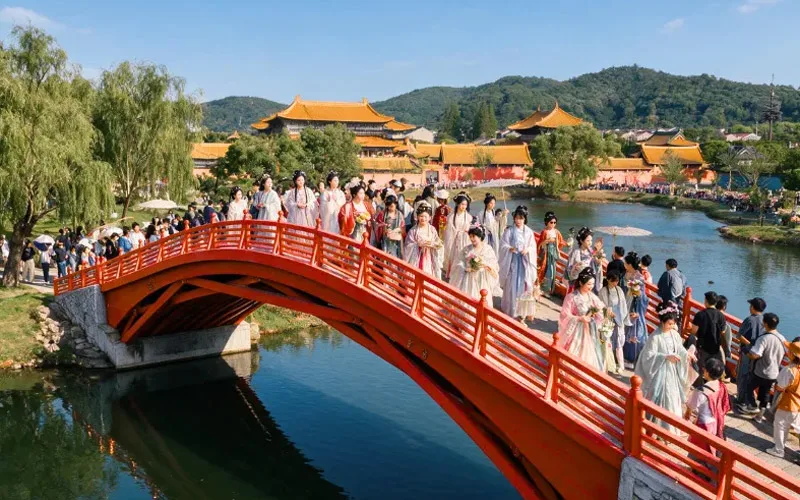
| Dates | 24 and 25 October 2026 |
|---|---|
| Venue | Three Kingdoms and Water Margin City, Wuxi, Jiangsu |
| What it is | Hanfu carnival with a four-dynasty costume show and a hundred-wearer parade |
| Route | King of Wu Palace to Daxiangguo Temple and the Leitai Theatre, crossing both parks |
| Scale | Fifteen Hanfu clubs from other provinces; about 100 wearers in the parade |
| Tickets | 150 yuan all-inclusive, one outfit and styling included (was 338); 130 yuan bring-your-own |
| Booking | On sale to 30 October, valid 16 to 31 October, buy at least one day ahead |
Steam reached the square first. A bronze-kettle pouring act from Nantong sent long arcs of water across the paving, a Yixing broadsword set followed with a harder, faster rhythm, and the drum dance from the park’s own “Liu Bei Takes a Bride” show closed the warm-up. Organisers billed the carnival under the slogan “Han Rhyme, Fine Robes, Refined Three Kingdoms”, and the opening said what kind of gathering this was: three acts of very different texture, none of them a catwalk.
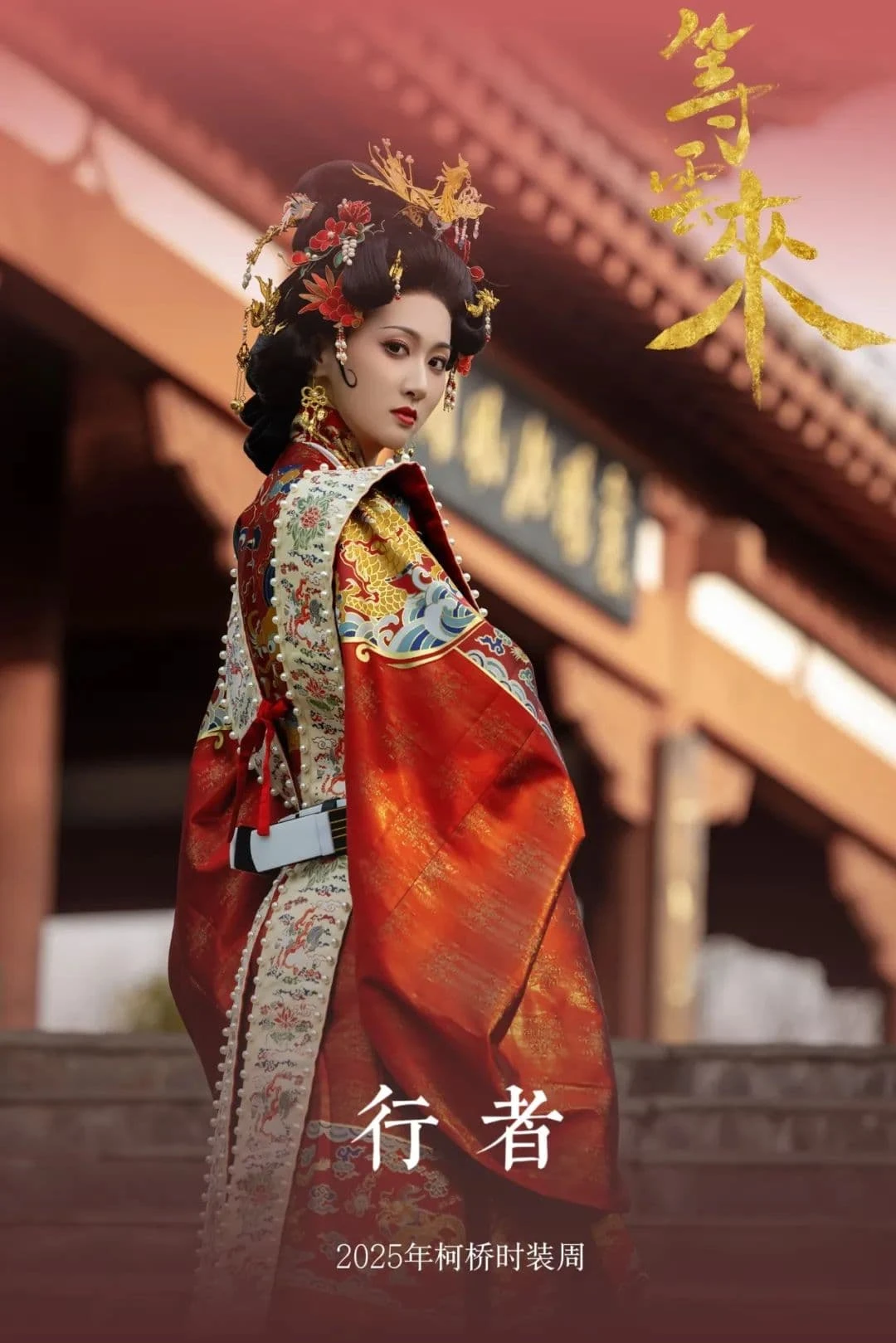
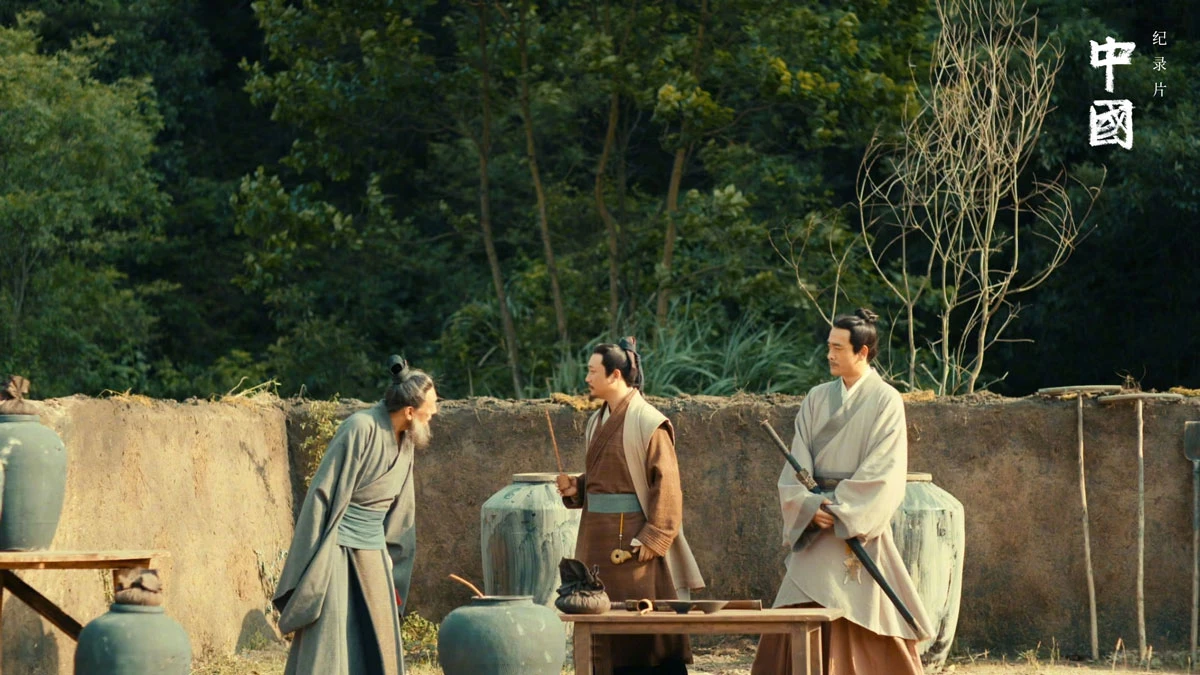
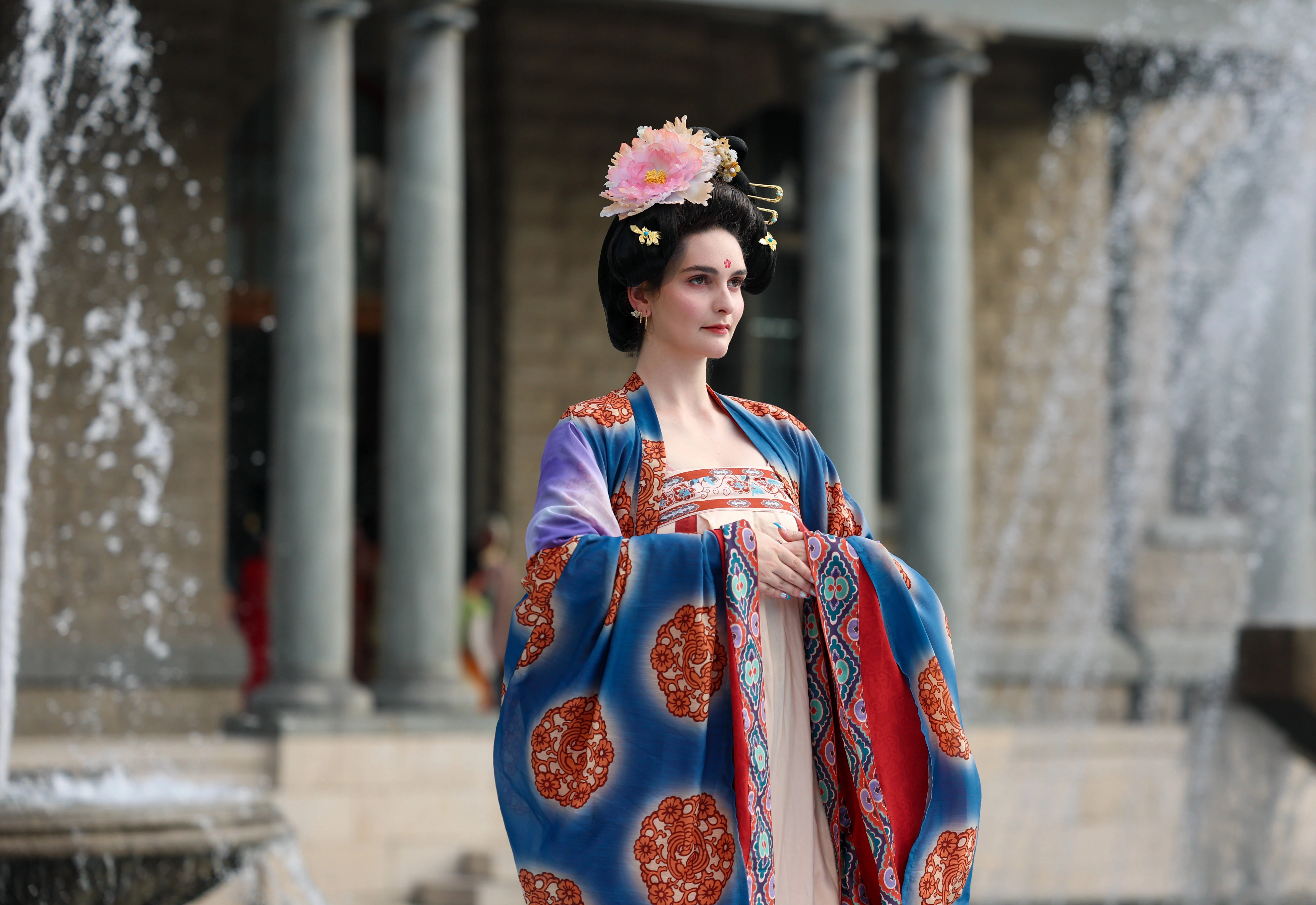
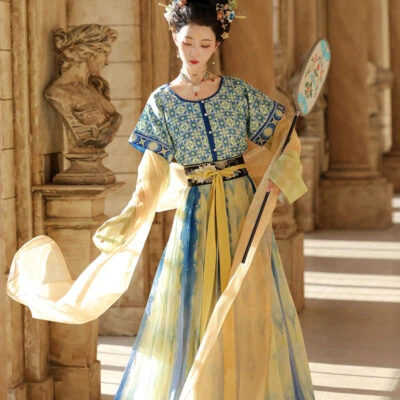
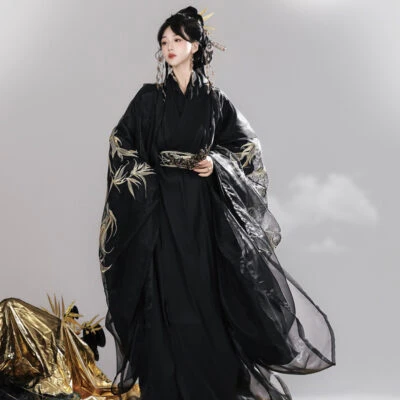
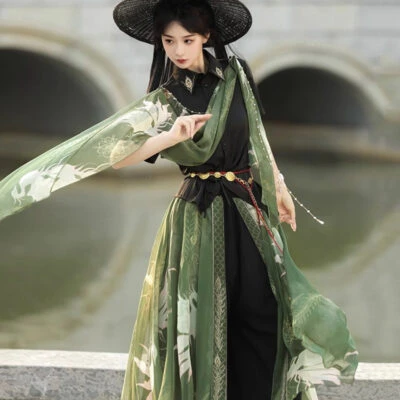
Costume blocks came next, in dynastic order. Han dress appeared in Quju (曲裾) wraps and Shenyi (深衣) robes cut as one continuous panel, both built on close vertical lines. Tang dress lifted the waist and let the skirt carry the volume, with Pibo sashes and short jackets adding width at the shoulder. Song dress pulled the line back in with the Beizi (褙子), a straight-collared coat with side slits and no closures. Ming dress, held back for the second day, split the body between jacket and skirt and raised the density of gold weaving and rank badges.
Six Hanfu content creators took a segment of their own between the costume blocks, among them Xuelizhou, Dongxiaomi and Xu Yue’er, mixing talent sets with games and photographs. For the visitors standing three deep along the square, the gap between watching a show and joining one came down to that half hour.
Where the Parade Route Leaves the Backlot
The parade formed at the King of Wu Palace and walked through the Han-Song Gate, the Grand Commandant’s Mansion, the Song Imperial Palace, the Imperial Garden, Wende Hall and the Imperial Street before finishing at Daxiangguo Temple and the Leitai Theatre. About a hundred wearers moved in formation, with fifteen clubs from other provinces in the line, and the route crossed from one park into the other halfway through.
Its two halves were built to different briefs. The Three Kingdoms park raised its halls from the novel of the same name; the Water Margin park laid out a Song street grid around a temple and a performance arena. A procession moving between them puts costume and architecture in the same frame twice, which is why the organisers scheduled the walk for the middle of the afternoon rather than the opening.
Live shows ran all day around the route: “Three Heroes Battle Lü Bu”, “The Death of Ximen Qing”, “Emperor Huizong Grants a Marriage”, a water-stage “Nymph of the Luo River”, a storyteller set, a county magistrate role-play, acrobatics, “Uprooting the Willow”, a Song fashion revue and a cyber god-of-wealth walkabout.
Four Silhouettes a Reader Can Tell Apart
Four dynasties in two afternoons are easier to read by cut than by ornament. A Quju spirals around the body, its hem coiling in layers; a Shenyi joins top and skirt into a single panel and hooks the border closed. Tang dressing lifts the waist and opens the skirt, so the eye registers horizontal volume before it registers a motif. The Song Beizi falls straight from a centre-front opening, and Ming dress separates jacket from skirt again, embroidery gathered at collar and hem. Readers who want the differences ordered dynasty by dynasty can start with our Hanfu by dynasty reference.
The park priced the carnival so the clothes stay on after the show ends. A 150 yuan all-inclusive ticket covers one outfit and styling, down from 338; a 130 yuan ticket assumes visitors arrive in their own. Two styling counters sit inside the parks, and from 16 to 31 October anyone wearing Hanfu pays 20 yuan for the shuttle bus instead of 40 and 20 yuan for the lake boat instead of 45.