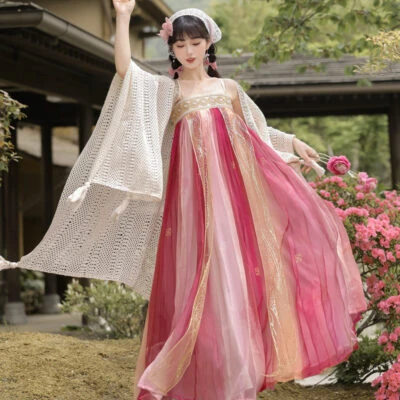
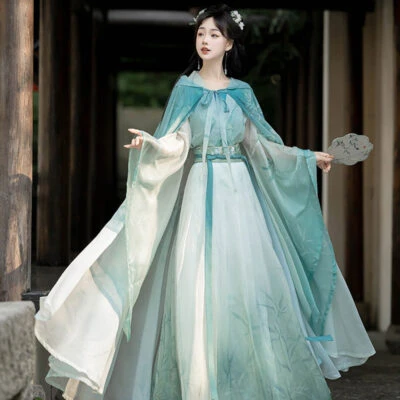
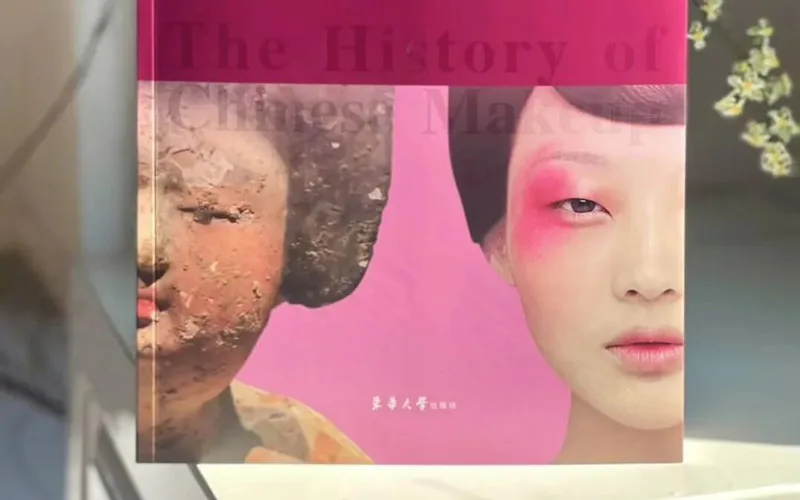
Song dynasty makeup is the origin story the neo-Chinese beauty market keeps borrowing from without naming. On 21 October 2026 Donghua University Press published an editorial piece that traced the actual recipes, working from Li Ya’s history of Chinese cosmetics and matching each technique to excavated murals and surviving court portraits. What it documents is not an absence of makeup but a very controlled amount of it.
Breaking the Plain-Face Misreading
Two assumptions collapse under the sources. The first is that Song women went without cosmetics. They wore a thin application, adjusted rather than abandoned, and Song writers described the effect in their own words as powder applied lightly with no wish to add more.
The second assumption is that face patches disappeared. They did not. Court and gentry women still wore them; what changed is scale. Late Tang faces carried patches across the cheeks in dense patterns, while Song patches shrank into single small marks placed with intent. The shift followed the intellectual climate of the period, in which Neo-Confucian writing on restraining desire pulled the visual language away from Tang saturation. Our file on Tang dynasty makeup shows what the previous standard looked like, and the contrast is the point: the same apparatus of powder, rouge and patches, run at a fraction of the density.
Where the Colour Sat
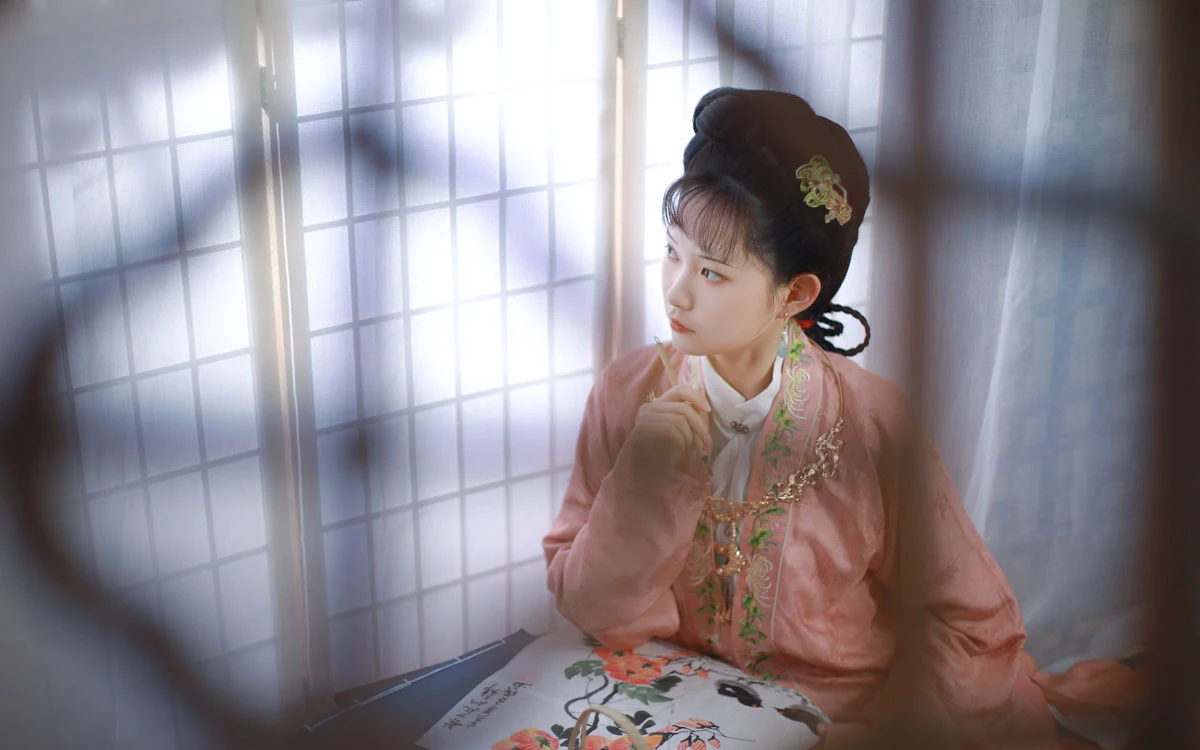
Its signature face, the tanyun look (檀晕妆), paired a lead-white base with a thin veil of warm sandal-toned powder, the colour held at the centre of the cheek and diffused outward so that no edge is visible. A variant brushed the same tone lightly under the brow instead, which reads as haze rather than blush.
Contemporaries wrote about the thinness directly, comparing a light application of the tone to rouge that had been worn away. The physical reference point is a theatrical mural in a Northern Song tomb at Hancheng in Shaanxi, where the painted performers wear exactly that soft centred flush. For a modern wearer the technique is closer to a wash than to contouring: one tone, one placement, edges deliberately unfinished. Our explainer on traditional Chinese makeup covers the material vocabulary if the terms are new.
Brows, Patches and a Smaller Mouth
Brows carried the strongest break from Tang practice. The broad, heavy guiye brow disappeared. Everyday fashion favoured the long moth brow, a slender sweep shaped like an antenna; formal court dress used the daoyun brow (倒晕眉), a wide crescent that fades from dark at the head to almost nothing at the tail. Servants in the Song Renzong empress portrait held by the National Palace Museum wear the daoyun brow with pearl face ornaments.
Under the shapes sits a materials story that explains why Song painted brows read black rather than green. Workshops popularised an incense-loaded brow ink cake (画眉集香圆), made from lamp soot bound with camphor and musk, and soot ink displaced the mineral blue-black pigment that had dominated earlier. Blue and green brows left daily use, and the black brow became the default.
Ornament followed the same logic of one mark rather than many. Plum-blossom forehead patches stayed in circulation; aristocratic formalwear used pearl and kingfisher-feather patches, visible in the Song Qinzong empress portrait. A Song-specific ornament called the yumeizi was cut from black glossy paper and fish swim-bladder membrane into a small plaque for the cheek. Lips were drawn smaller than the natural mouth, ideally a cherry bud, with late Northern Song fashion reducing the application to a touch on the lower lip alone.
The working rule for anyone rebuilding the look today is seasonal rather than historical: bright for spring, mobile for summer, clear and cool for autumn, warm for winter. The tanyun face and a small mouth belong to the autumn register; add the daoyun brow and pearl patches back only for formal dress. Pairing the face with the right robe matters more than the makeup itself, and the Hanfu form index is the place to check how much layering a Song-style set carries before deciding how much colour the face can take.