Three Kingdoms fans know the epic battles of Red Cliffs and the strategic genius of the later era. But what about the very beginning? The new animated feature Three Kingdoms: The Fight for Luoyang (三国第一部:争洛阳), hitting Chinese cinemas on July 10, skips the familiar turf and dives straight into the chaos of 190 A.D. It doesn’t show you the empire’s fall; it shows you the first crack. And that crack started in one city. This isn’t just another period piece. It is a story about young men who believed they could save a dynasty, only to accidentally tear it apart. The film focuses on the power vacuum left by a dying Han Dynasty, where the real battle wasn’t for land, but for the soul of the crumbling empire itself.
The City
Why Luoyang? For centuries, it was the heart of the Han Empire, a symbol of its cultural and political might. The film’s director, Xie Junwei (谢君伟), deliberately chose this setting because it represents the center of the world that is about to shatter. Here, the protagonists Cao Cao (曹操) and Yuan Shao (袁绍) are not yet warlords; they are idealistic young officials. He and his ally plan to use the brutal general He Jin (何进) to purge the corrupt eunuchs. It was a classic power play. In their minds, they were saving the empire. But their plan, born in the grand halls of Luoyang, had a fatal flaw: it invited the wolf into the henhouse.
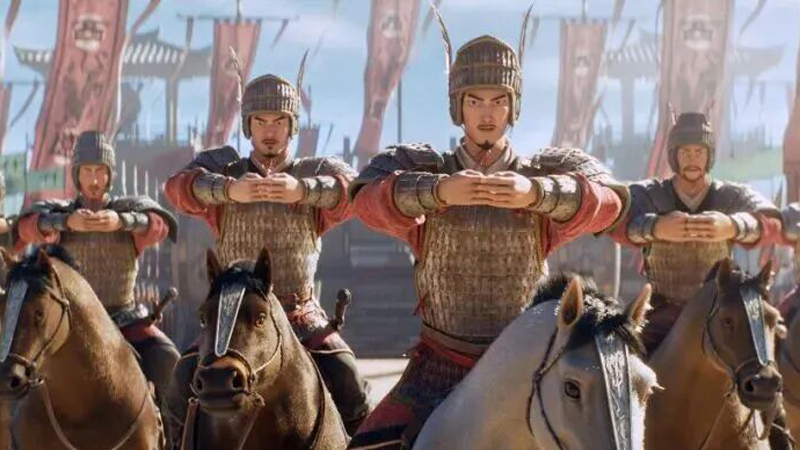
That wolf was Dong Zhuo (董卓), a frontier warlord who marched his army into the capital not to save it, but to own it. He burned the city’s order to the ground and placed a puppet on the throne. The film’s tension lies in this specific moment. The characters’ noble intentions curdle into a nightmare. The strategic games of the court become a literal battle for survival in the city streets. For the audience, Luoyang is a pressure cooker, and they are trapped inside with these ambitious, desperate figures. It is a masterclass in how a political crisis becomes a military one, and how that military crisis births an era of endless war.
The Hands
Creating this world required immense technical craft. The animators, the same team behind the acclaimed Chang’an (长安三万里), built a sprawling digital city where every brick and banner carries weight. The film’s producer, Song Yiyi (宋依依), noted that the team was obsessed with “extreme” authenticity. This obsession is visible in the detail of the armor. Each set is composed of hundreds of individual plates. The production didn’t just create costumes; they created a visual language for rank and status. You can see Cao Cao’s armor darken and grow more complex as he rises in power, moving from a simple officer’s gear to the intricate battle dress of a regional lord.
But the real challenge was the chaos. During the battle sequences, like the decisive clash at Yingchuan (颍川), every soldier and horse on screen moves independently. This wasn’t a simple copy-paste crowd. Animators had to manually program the movements of thousands of figures to ensure each one was performing a unique action. When the heroes fight through the palace, the environment itself changes; pillars fall, screens tear, and the destruction feels visceral. The technology was pushed so hard that the computers would crash under the weight of the massive 3D data. It’s a testament to the team’s drive that they didn’t take shortcuts, choosing instead to craft every moment of pandemonium with painstaking effort.
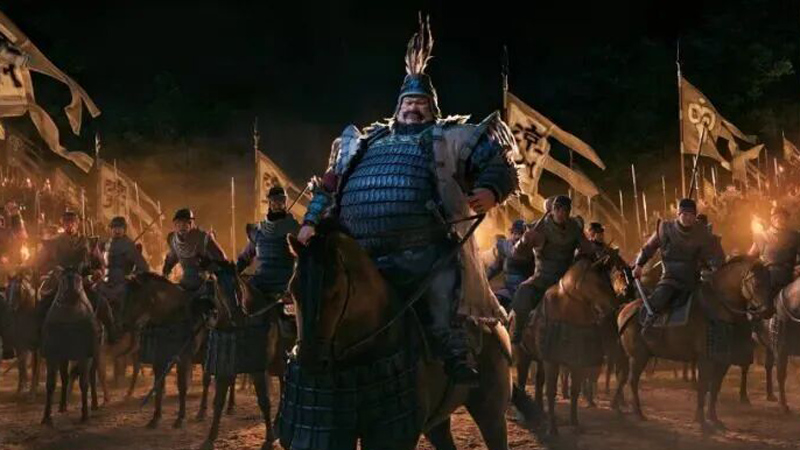
In the midst of this visual spectacle, the film also embeds quiet details of Han civilization. At one point, Cao Cao sits with a text called The Nine Chapters on the Mathematical Art (九章算术), a nod to the era’s intellectual achievements. We also see the graceful Pangu Dance (Pan Gu Wu), a traditional performance using plates and drums, adding a layer of cultural texture that feels authentic to the period. These elements are not just set dressing; they ground the chaos, reminding he audience that what was lost in the fires of Luoyang was not just a government, but a sophisticated, rich civilization.
The Future
By grounding the story in this specific moment, the film does something rare for a franchise starter: it establishes the rulebook of the entire world. The producers have stated that if this film is the “0 to 1” process, it sets the stage for everything that follows. The heroism of the later period is born directly from the tragedies of this one. The film doesn’t just show the beginnings of the Three Kingdoms; it shows why the world demanded that three kingdoms exist. It explains the psychology of a generation that had to fight for a future because their present was stolen from them.
This focus on the early days also allows the film to introduce a full ensemble. While Cao Cao and Yuan Shao are the central figures, the film wisely gives screen time to other legends. It shows Lü Bu (吕布) as a young, intimidating warrior, and Sun Jian (孙坚) as a man biding his time. For the first time, we see the famous brothers not as seasoned generals, but as ambitious newcomers, just beginning their journey. The film is a tapestry of origin stories, weaving them all into the fabric of the fall of Luoyang. It suggests that this city was a crucible where the fate of millions was forged from the actions of a few ambitious men.
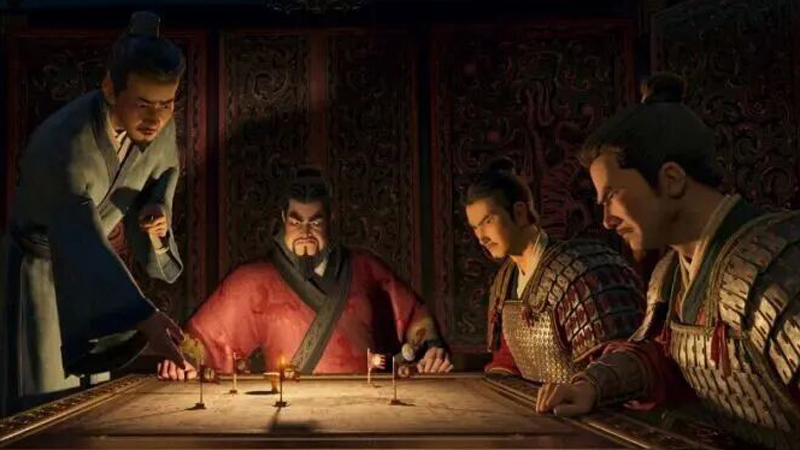
The film invites us to witness the birth of the chaos. It asks a simple but profound question: what does it take to become a hero? In Cao Cao’s case, it was surviving the destruction of everything he believed in. This portrayal promises to challenge the audience’s perception of a classic story, offering a fresh and visually stunning entry point into one of history’s most beloved epics. As it hits theaters, The Fight for Luoyang is poised to redefine how we see the dawn of the Three Kingdoms.