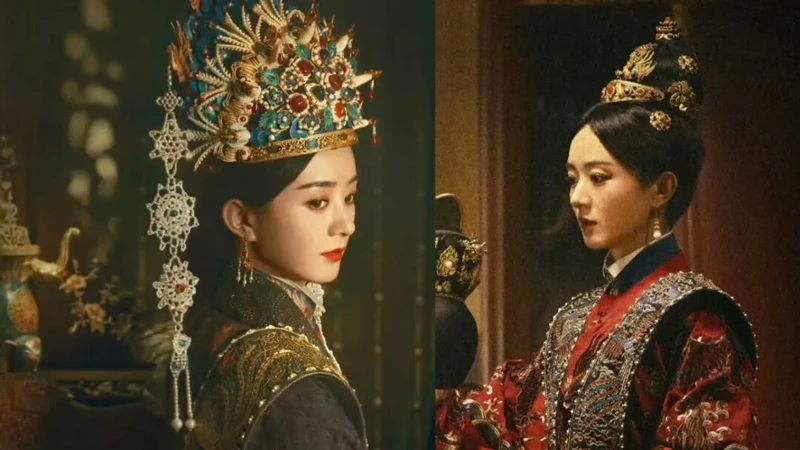
When the trailer for The Battle of Penghu (澎湖海战) dropped, a single frame stopped viewers cold. Zhao Liying (赵丽颖), as Huang Heniang (黄和娘), appeared in two strikingly different Ming Dynasty outfits. One featured a towering, jeweled crown. The other showed a modest, coiled hairpiece. Fans immediately compared her look to Minglan (明兰) from The Story of Minglan (知否).
But this time, something felt more intense, more historically grounded. Was she playing a first-rank noblewoman? A secret empress dowager? The answer lies in two Chinese words: Zhai Guan (翟冠) and Di Ji (䯼髻). One meant power at court. The other meant grace at home. Together, they reveal how a single hairstyle could dictate a woman’s entire social standing in the late Ming era.
Royal Headdress
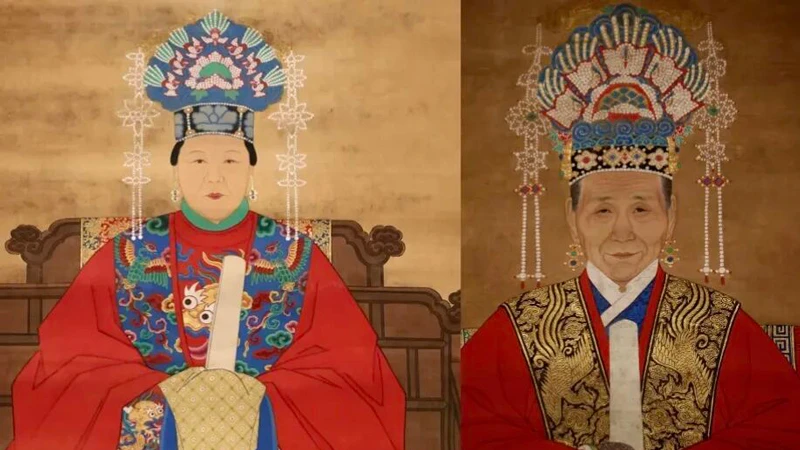
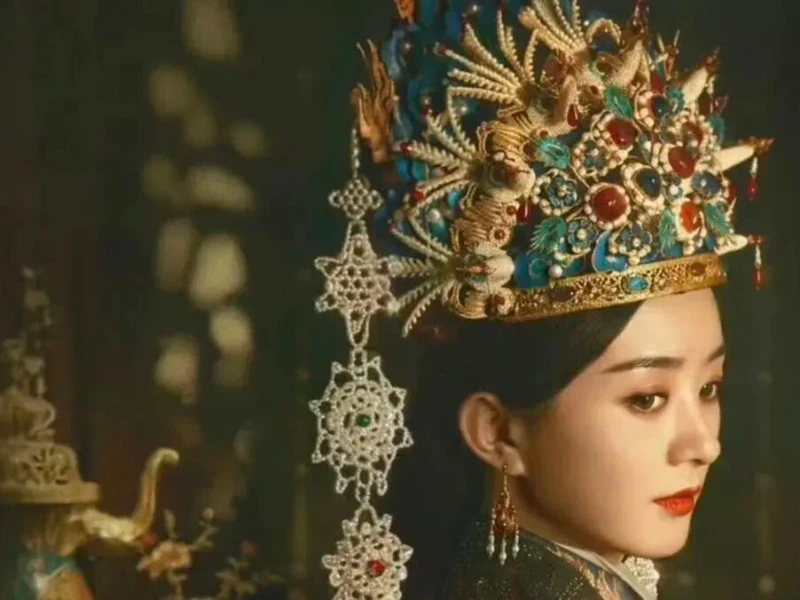
The first look that grabbed everyone’s attention was the golden, phoenix-like crown. But here is the twist: it was not a true phoenix crown. That honor belonged only to the empress and the crown prince’s wife. Instead, Zhao Liying wore a Zhai Guan, a crown decorated with Zhai birds. How to tell the difference? Look at the tail feathers. A phoenix’s tail flares like flames.
A Zhai bird’s tail shoots straight like an arrow. That single detail separated an empress from a consort, a first-rank wife from a second-rank lady. In the film, her character Huang Heniang was never formally enthroned as queen mother. Yet as the mother of the last Zheng (郑) king, she wielded real power. The costume designers gave her the five-Zhai crown, the highest tier allowed for a first-rank noblewoman. It was a political statement woven in gold and pearls.
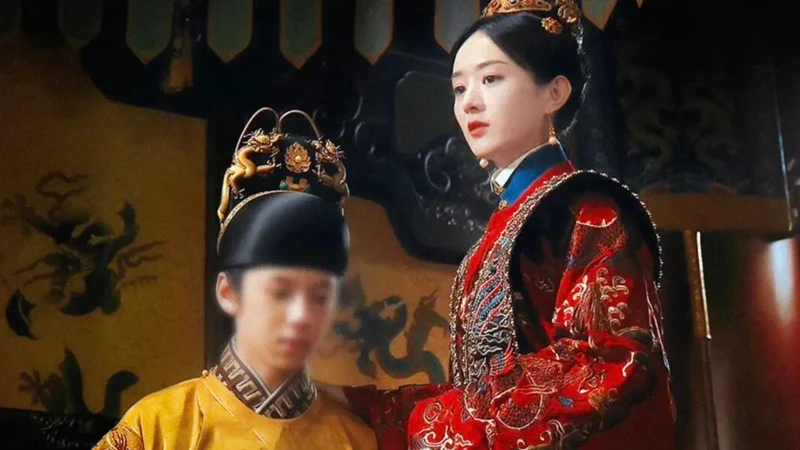
The crown itself was a masterpiece of restraint. Gold formed the base. Gems were set with precision. Zhai birds circled the structure in clear order, not crowded or chaotic. Matching pearl tassels hung symmetrically on both sides. Their length and number followed strict rules. This was not decoration for its own sake. It was a visual code. Anyone at court could read her rank from ten paces away. Compare this to her previous role as Minglan. In The Story of Minglan, her wedding crown also featured Zhai birds, but the show added side ornaments called Bobin (博鬓) that did not belong on a noblewoman’s crown. For The Battle of Penghu, the team chose a round-collar robe, a formal jacket, and a Xia Pei (霞帔) scarf. These matched the mid-to-late Ming style for titled ladies. Every stitch followed historical records.
Why does this matter? Because the Ming court had zero tolerance for dress code violations. Wearing the wrong bird pattern could lead to impeachment or worse. The system was not just about beauty. It was about control. By giving Huang Heniang the five-Zhai crown, the filmmakers silently argued that she deserved the highest non-royal honor. In life, she never received that title. In art, she finally gets her due.
Daily Elegance
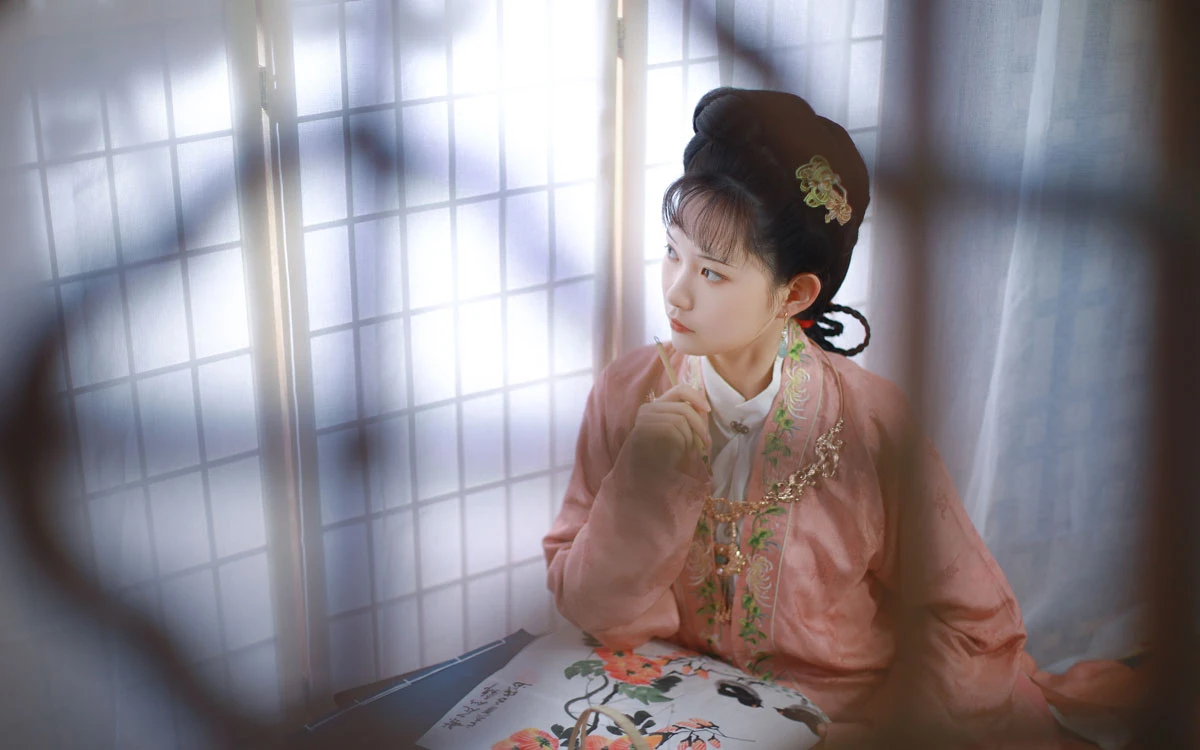
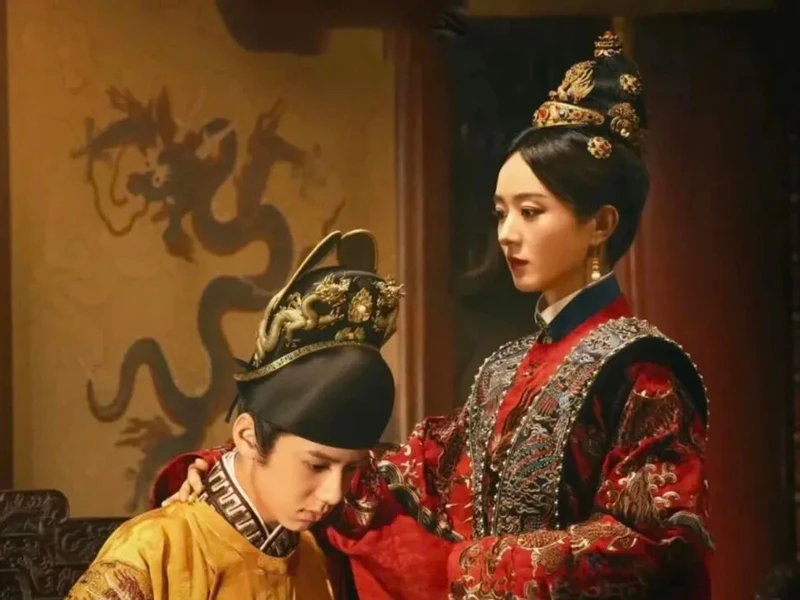
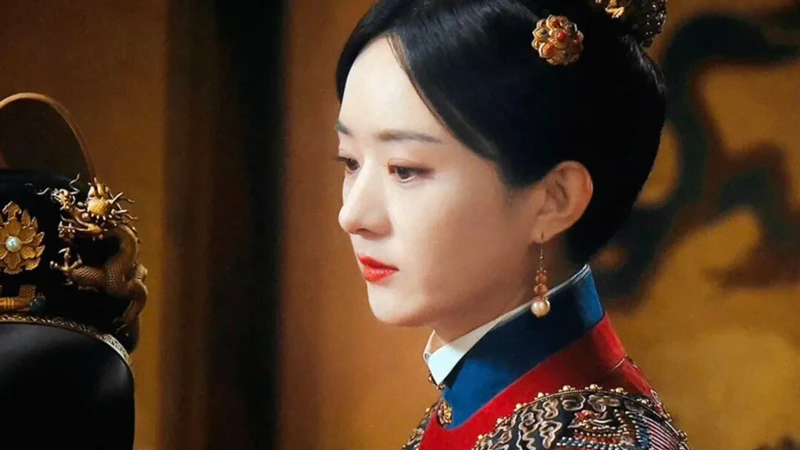
Then comes the second look: the Di Ji. This was the everyday hairstyle for a Ming gentlewoman. Think of it as the difference between a royal tiara and a silk headband. The Di Ji was a mesh hairpiece shaped like a cone. Women would pin it over their real hair, then secure it with hairpins, top pins, and temple ornaments. No heavy gold. No dangling tassels. Just clean lines and subtle sparkle. Zhao Liying’s Di Ji in the trailer shows a woman at ease: receiving guests in her chamber, walking through a garden, or managing household affairs. It is the face of power that does not need to announce itself.
Historically, the Di Ji emerged as a signature Ming innovation. Unlike the Tang Dynasty’s sky-high wigs or the Song’s modest buns, the Ming Di Ji created a structured, helmet-like silhouette. Women from wealthy merchant families to government officials’ wives wore it daily. The difference lay in the materials. A commoner might use silver or copper. A noblewoman like Huang Heniang would use gold and jadeite or nephrite. But the shape remained the same. This universality is what makes the Di Ji so democratic. At a glance, you recognized a respectable lady. Only upon closer inspection did you learn her exact wealth.
The contrast between the Zhai Guan and the Di Ji tells a complete story about Ming women. They lived in two worlds. One world required them to wear their rank like armor. The other allowed them to breathe, to move, to manage estates and raise children. Both were essential. Neither could be ignored. Zhao Liying’s performance likely hinges on this duality. In court, she must perform authority with every pearl in place. At home, she can show grief, cunning, or tenderness without a crown weighing her down. The costume department understood this. They did not just dress her. They gave her a second language.
Rare Relics
Here is a sobering fact. Only four complete Ming Dynasty phoenix crowns exist today. All are locked in Beijing’s museums. Genuine Zhai Guan crowns are even rarer. Most were melted down for gold or destroyed over centuries. That is why films like The Battle of Penghu matter. They bring these lost objects back to life through research and craftsmanship. The production team studied tomb excavations, Ming paintings, and surviving textile fragments. They noticed how Qing Dynasty crowns, which came later, piled on decorations in a looser, busier style. Ming crowns, by contrast, followed strict hierarchies. Every bird had its place. Every gem had a meaning.
Sadly, many period dramas today mix up these rules. They take a Qing-style crown, add Song Dynasty elements, and call it “ancient Chinese.” The result confuses audiences. When Zhao Liying’s Zhai Guan appeared online, some fans initially thought it was too simple, not “magnificent” enough. They had been trained by decades of fantasy costumes. The fact that a real Ming crown is orderly, not chaotic, surprised them. That surprise is exactly why accurate representation matters. It rewires our eyes.
Ultimately, a great historical drama does three things. It tells a gripping story. It respects real events. And it transmits culture. By reviving the Zhai Guan and the Di Ji, The Battle of Penghu lets modern viewers touch a lost world. We see that a woman’s headwear was never just fashion. It was law, status, and identity rolled into one. And when Zhao Liying steps onto the screen wearing that five-Zhai crown, she is not just an actress. She is a bridge across four hundred years. She reminds us that the past is not dead. It is waiting in a museum drawer, a faded painting, or a three-second trailer shot. All we have to do is look closely enough to read its code.