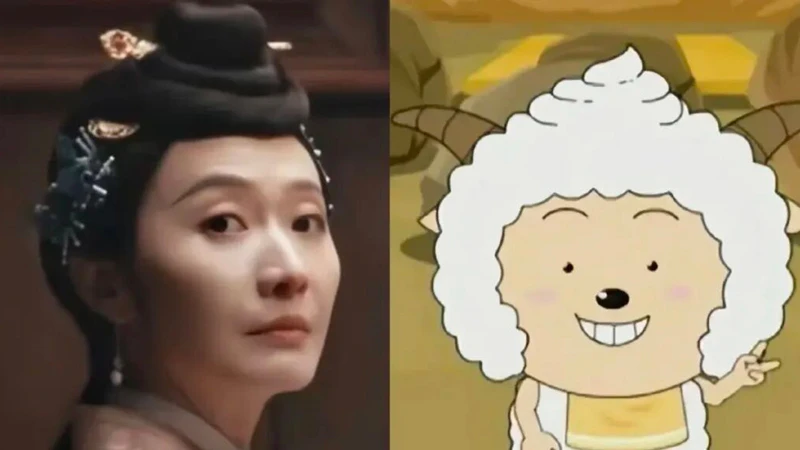
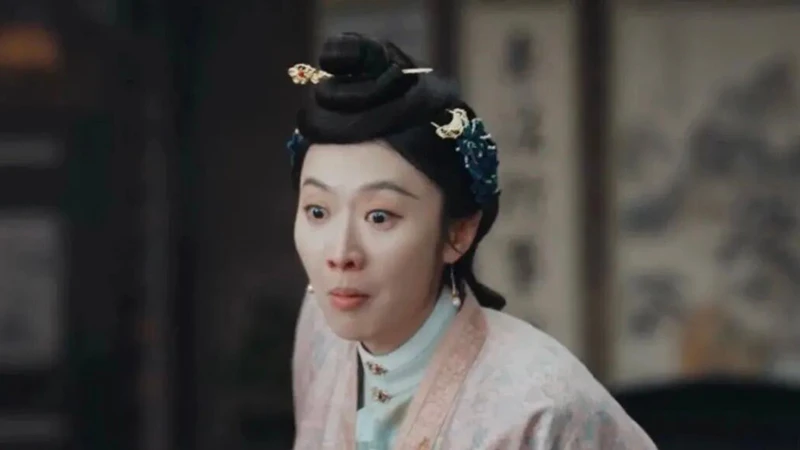
When ian Jiangyue (田绛月) first appeared in the historical drama The Mo (家业) with a round, coiled bun perched high on her head, Chinese social media erupted in laughter. “That looks exactly like Lazy Sheep’s poop bun!” viewers joked, referring to the famously lazy cartoon character from Pleasant Goat and Big Big Wolf (喜羊羊与灰太狼).
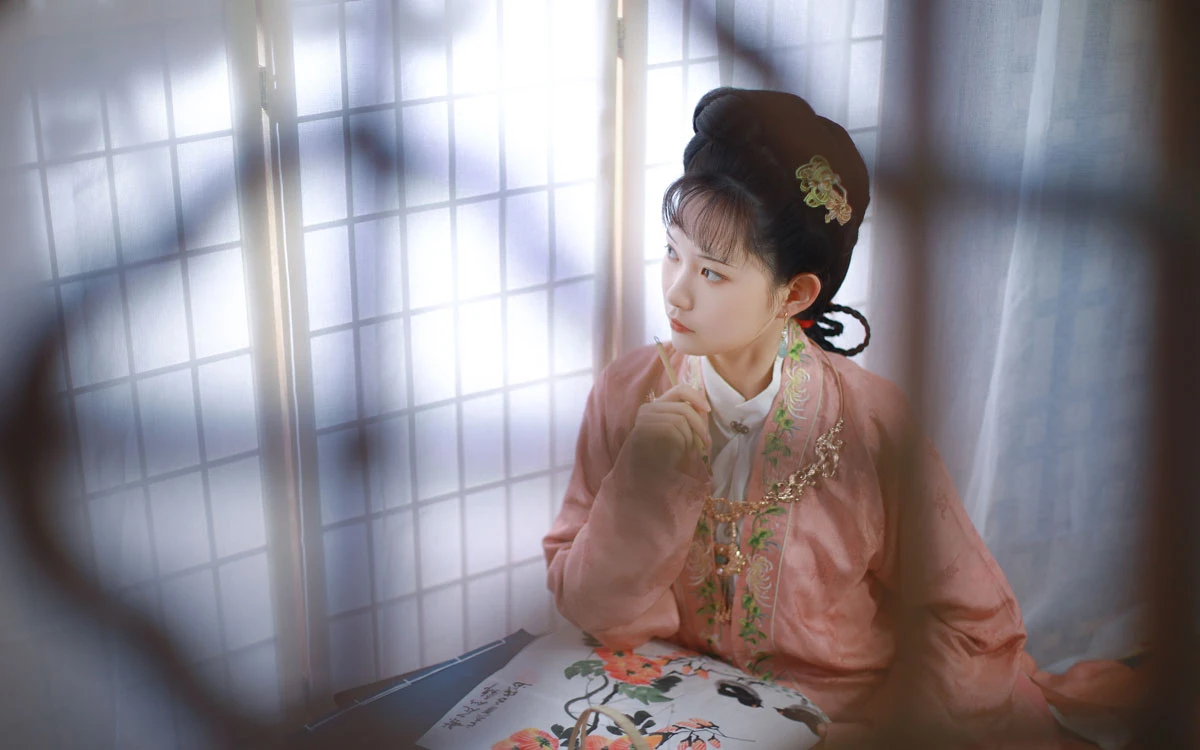
The resemblance was undeniable: a plump, smooth doughnut of hair sitting squarely on top. But what seems like a funny costume mistake is actually a faithful recreation of a traditional Tuan Ji (团髻), a “round bun” hairstyle worn by women during the Song Dynasty (960–1279) and Ming Dynasty (1368–1644). Far from being a cartoonish invention, it was once the height of understated elegance.
A Hairstyle That Divides Opinions
Many people imagine ancient Chinese hair as either the towering, jewel-crammed styles of the Tang Dynasty or the ornate, flower-bedecked headpieces of the Qing court. The Tuan Ji feels foreign in comparison. Yet it was one of the most common hairstyles for centuries, favored by both commoners and noblewomen. The concept is simple: gather all hair to the crown, twist it into a neat, compact circle, and secure it with a single pin. No elaborate braiding, no glittering tiaras—just clean lines and a gentle silhouette.
That simplicity is exactly why modern eyes mistake it for a cartoon sheep’s bathroom joke. Lazy Sheep’s signature “bun” is a soft, rounded pile on his head, drawn for comic effect. But the Tuan Ji shares the same geometry: a full, circular shape that sits high above the forehead. In an age of layered haircuts and messy buns, our brains jump to the familiar—a poop emoji or a child’s toy. But the ancient wearer saw something else: restraint, dignity, and a quiet kind of beauty that didn’t need shouting.
The nickname “poop bun” is not entirely unfair. Remove the historical context, and any round, dark lump on a head will invite giggles. Yet that very roundness was intentional. The Tuan Ji was designed to highlight the natural shape of the skull and the face, not to compete with it. It frames the features like a full moon behind clouds—soft, complete, and serene. What we laugh at today, a Ming noblewoman wore as a quiet statement of refined taste.
An Imperial Painting to Your Screen
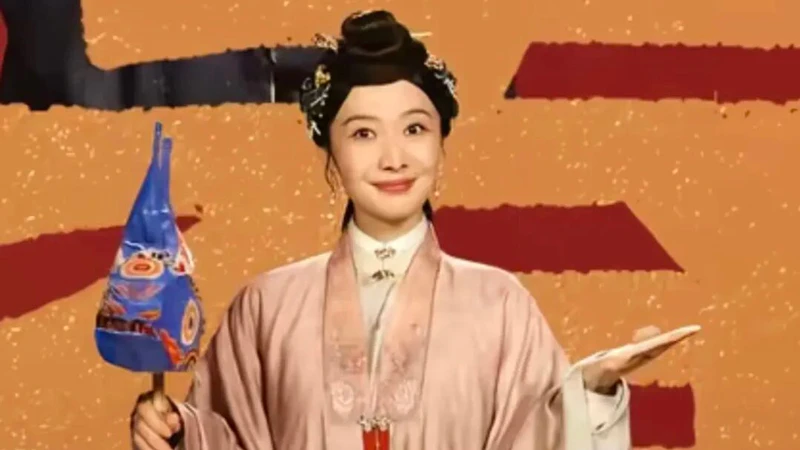
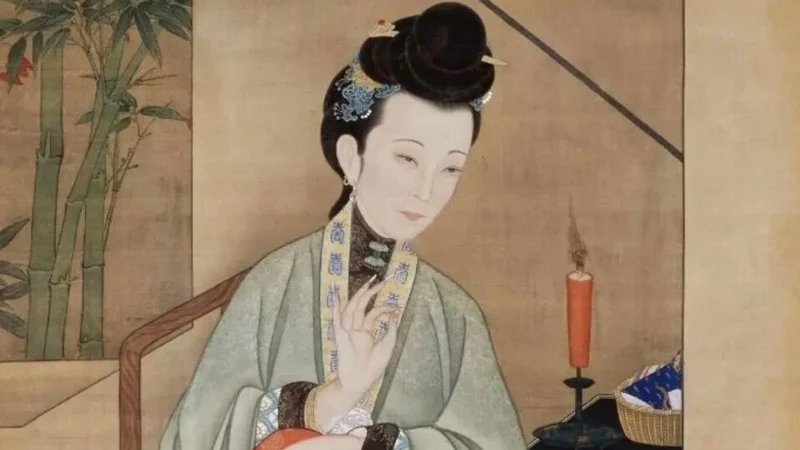
One of the clearest historical records of the Tuan Ji appears in Twelve Beauties of the Qing Court (十二美人图), a set of life-size paintings from the early 1700s that depict idealized female figures in a Ming-style setting. The fourth panel, titled Baking Stove and Watching Snow (烘炉观雪), shows a lady seated by a window as snow falls outside. Her hair is swept entirely to the top and wound into a perfect circular bun. Only a single jade hairpin adorns one side. Compare this to Tian Jiangyue’s look in The Mo, and the similarity is striking—same height, same roundness, same lack of excess. The drama slightly simplified the style for everyday realism, but the DNA is identical.
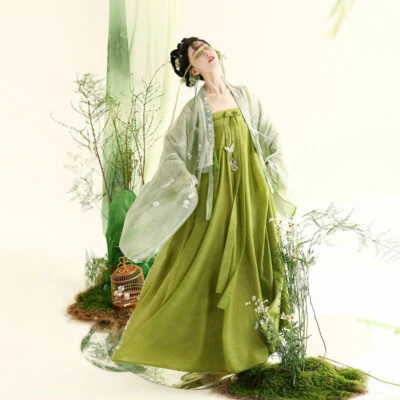
Why did the Tuan Ji flourish during the Song and Ming dynasties? The answer lies in shifting cultural values. The Song court emphasized literary refinement over martial bravado, and art moved toward introspection, monochrome ink painting, and subdued colors. Gaudy Tang hairstyles—some requiring false hairpieces reaching two feet high—felt out of step. Women’s fashion followed suit. A Tuan Ji was practical for working women (easy to tie up and keep clean) yet easily dressed up for banquets by adding a few pearl hairpins or a dangling step-sway ornament. It was the little black dress of ancient Chinese hair: appropriate everywhere, flashy nowhere.
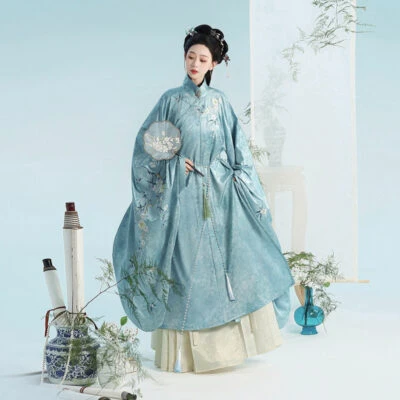
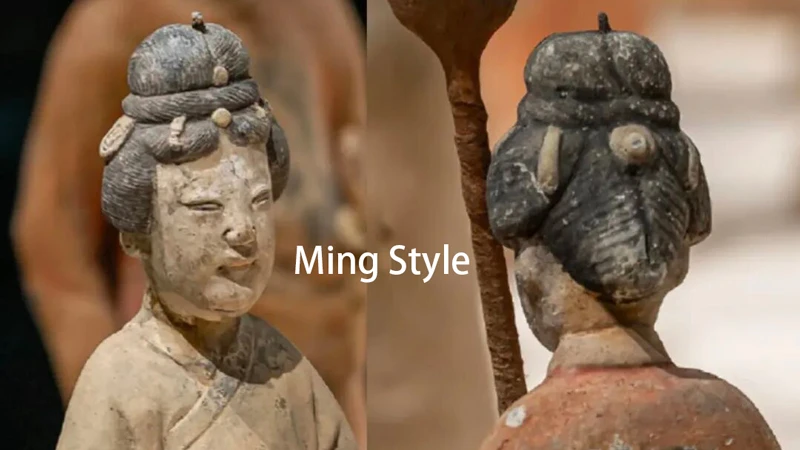
In the Ming period, the Tuan Ji grew slightly fuller and more structured. Women sometimes left a few loose strands near the temples for a playful, airy touch. Accessories became more intentional—a jadeite jadeite hairpin for formal occasions, a gold butterfly clip for weddings. But the core remained unchanged. This continuity across two major dynasties proves that the Tuan Ji was not a fleeting fad. It was a staple, as fundamental as a linen robe or a ceramic bowl. And it survived because it worked: it stayed put, it flattered almost every face shape, and it cost nothing but a bit of practice.
Why “Simple” Is Harder Than It Looks
Creating a Tuan Ji is surprisingly straightforward. First, comb all hair upward and tie the ends tightly with a ribbon. Then twist the bundled hair into a ring, coiling clockwise until it forms a snug donut. Finally, slide a long pin—wood, bone, or silver—horizontally through the center, piercing the coil and anchoring it against the scalp. That’s it. No curling irons, no hairspray, no three-hour sessions with a lady’s maid. Ancient women with thin hair would pad the bun with false hair pieces; those with thick hair would divide it into layers to avoid bulk. The result always aimed for a smooth, uninterrupted circle.
In The Mo, Tian Jiangyue’s Tuan Ji sits noticeably farther forward on her head than historical examples, almost sliding toward her forehead. This small adjustment brings it closer to another classic style—the Wo Duo Ji (倭堕髻) or “drooping bun” of the Tang and Ming, which tilted forward like a falling fruit. The drama’s version is a hybrid, mixing the roundness of the Tuan Ji with the forward-leaning charm of the Wo Duo Ji. It’s not a pure reproduction. But it captures the spirit: hair as architecture, simple yet sturdy, elegant without effort.
Why does this matter for a TV show? Because every historical drama makes a silent promise to its audience: we will transport you to another time. That promise lives in the details—the cut of a collar, the glaze on a teacup, the way a woman pins her hair. When viewers first mocked the “poop bun,” they were reacting honestly. But after learning its lineage, that same bun becomes a bridge to a vanished world. The Tuan Ji was never meant to wow. It was meant to endure. And in The Mo, it endures again—not as a costume meme, but as a quiet lesson in how real beauty often looks, at first glance, like nothing special at all.