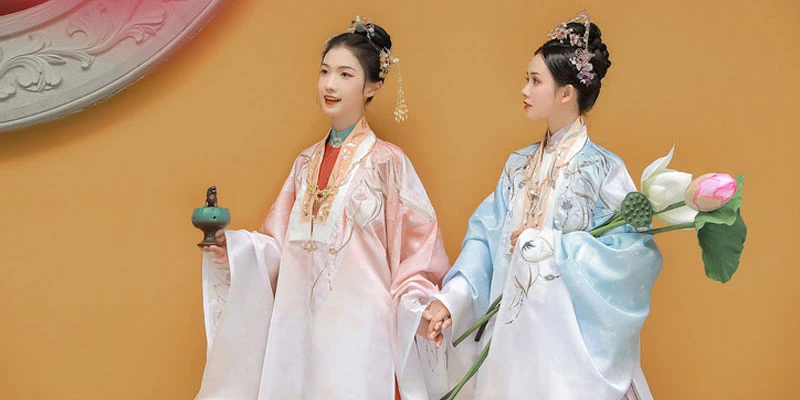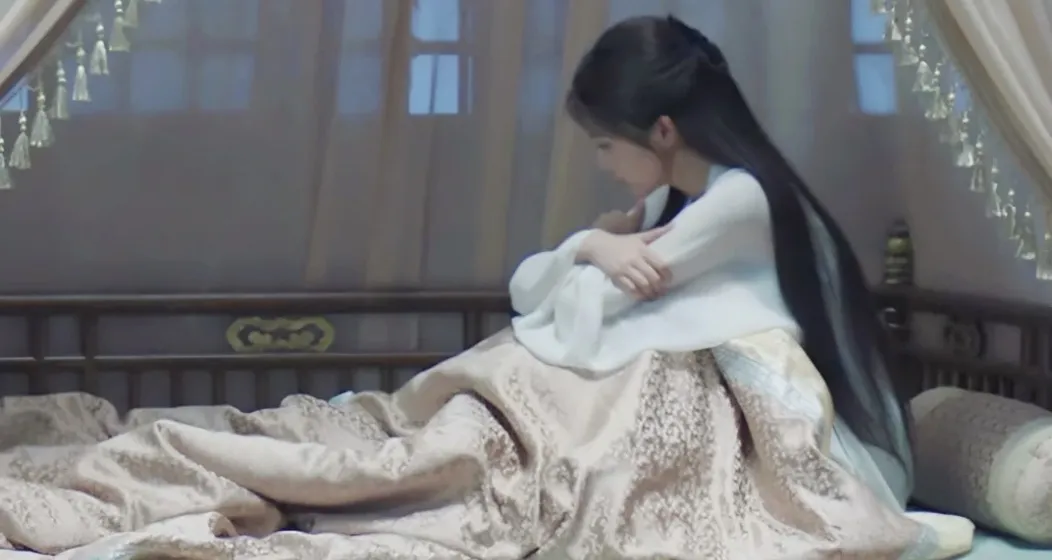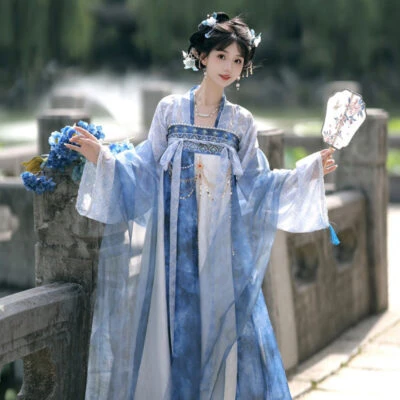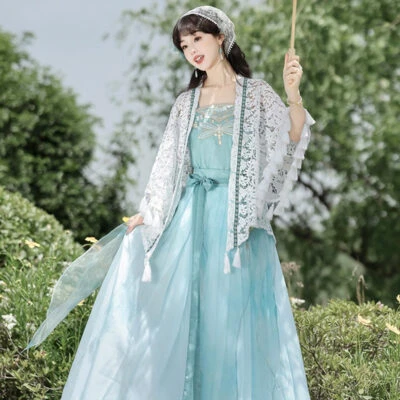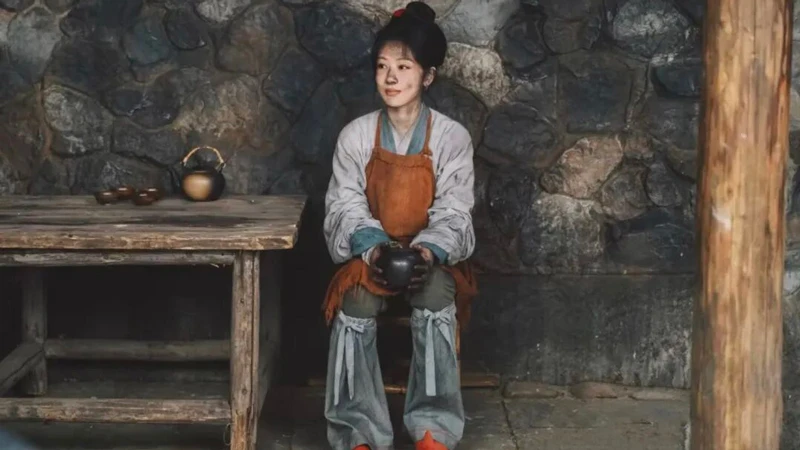
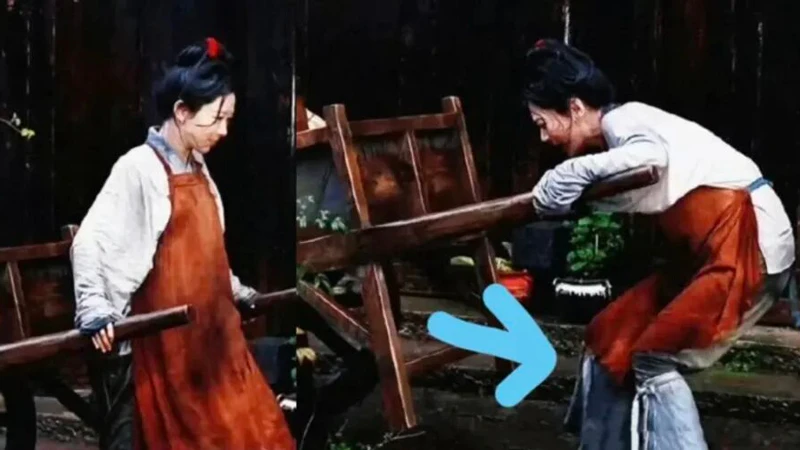
In the Ming Dynasty (1368-1644) ink workshop of The Mo (家业), a small piece of cloth wrapped around the calf steals the show. Yang Zi (杨紫), playing the skilled ink maker Li Zhen (李祯), never wears a dress under her tunic. Instead, she ties on a pair of close-fitting leg sleeves that look just like the “stack socks” young women wear today.
But why would a hardworking woman in Huizhou (徽州) choose leg coverings over a skirt? The answer is pure logic: she works. This is not a fashion statement. It is her first line of defense against cold, dust, and muscle strain. And it tells a much bigger story about how the Chinese working class, past and present, has always known exactly what it needs.
The Working Girl’s Secret
That humble leg sleeve has a proper name: Xi Ku (膝裤), or knee-pants. Its earliest version, called Jingyi (胫衣, literally “shin clothes”), appeared in the Han Dynasty (202 BCE–220 CE). It was simply two separate tubes, one for each leg, with no crotch or seat. By the Song (960–1279) and Ming dynasties, it had evolved into a popular everyday item. In The Mo, Li Zhen spends her days hammering ink paste, sieving soot, and mixing glue. She stands for hours. She bends constantly. Her knees and calves take a beating. So she wraps them in a Xi Ku. It is her work uniform, exactly like a modern warehouse worker wearing compression sleeves or a chef putting on non-slip shoes.
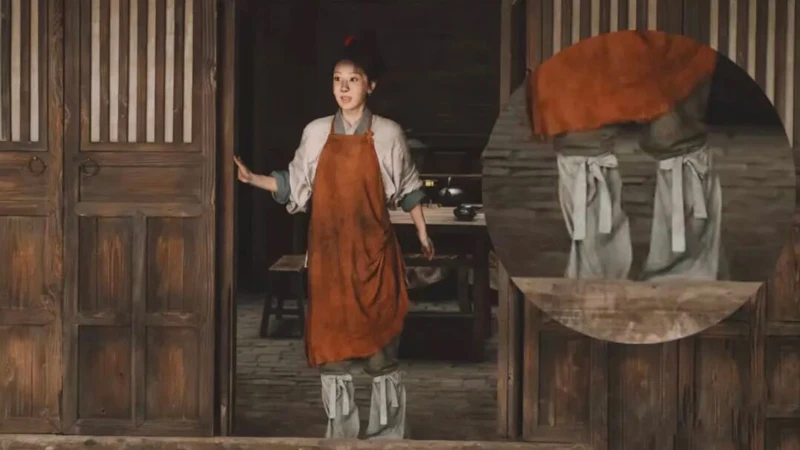
Ancient texts make the function crystal clear. The book Zhi Gu Zi (炙毂子, a Tang dynasty encyclopedia) records that the knee-pant was originally called “horn sock” because two pieces were joined by a center tie. Over time, people made two types: a bottomed version called a sock, and a bottomless version called half-sock. Li Zhen wears the bottomless kind. Why? Because she needs her toes free to grip her cloth shoes while she steps on ink blocks. The open bottom also lets her shake off dust and ink waste easily. It is a perfect design for a messy, physical job.
Think of it this way: a Ming dynasty ink worker could not wear thick cotton pants. They would restrict her arm and leg movements when she lifted heavy hammers or reached into high sieves. A thin silk or cotton leg sleeve, tied snugly around the calf with a cloth tape, gave her warmth without weight. It also protected her pants from soot and splashing glue. This was not luxury. It was necessity. And it worked so well that women in cold, damp Huizong swore by it for centuries.
More Than Just Warmth
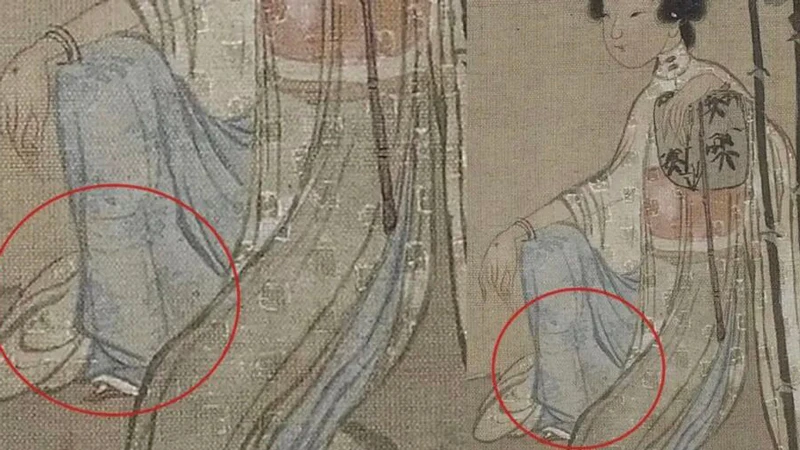
But a Xi Ku was never only about utility. By the Tang Dynasty (618–907), noblewomen had already turned it into a decorative piece. The famous beauty Yang Yuhuan (杨玉环, also known as Yang Guifei), beloved consort of Emperor Xuanzong (玄宗), wore knee-pants embroidered with paired mandarin ducks and lotus flowers. Her emperor joked that her socks showed real mandarin ducks, not just patterns. That story, written in the Song dynasty collection Zhi Xu Za Zu (致虚杂俎, “Miscellaneous Notes on Reaching Emptiness”), proves that knee-pants had become a status symbol as early as the 8th century.
In The Mo, the same rule applies. When Li Zhen’s family loses their fortune early in the story, her Xi Ku are plain, undyed rough cloth. No patterns, no silk. That matches her identity as a poor craftsman. But later, after she rebuilds her family’s ink business and becomes a leader in the Huizhou ink industry, her knee-pants change. They gain simple dark patterns, woven subtly into the fabric. They match her outer robes without screaming for attention. It is a perfect example of how working people used small, affordable details to show their rising status—without offending the wealthy.
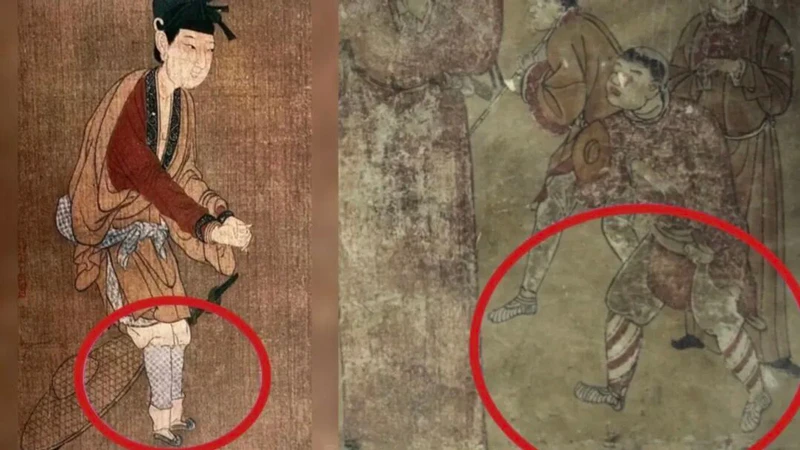
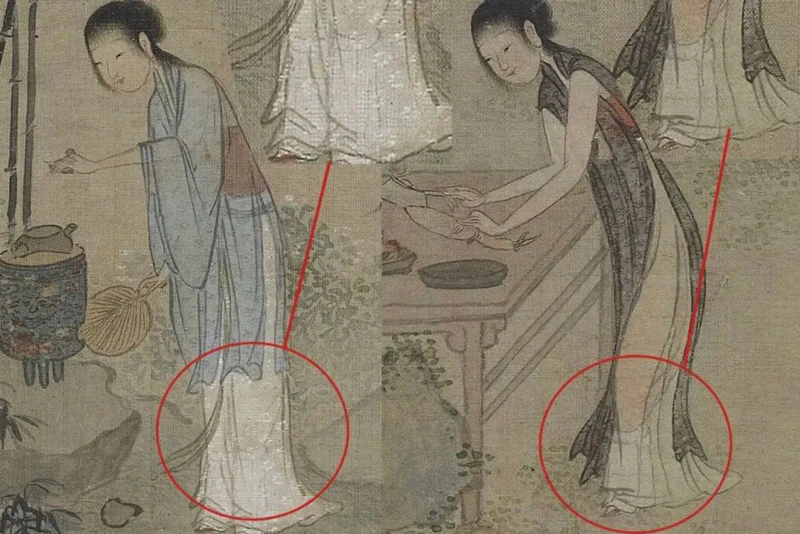
The knee-pant was not just for women, either. Men wore them too. But after the late Ming Dynasty, a split appeared. As Zhao Yi (赵翼) wrote in his Qing dynasty work Gai Yu Cong Kao (陔馀丛考, “Miscellaneous Examinations from the Remaining Steps”), common custom held that men’s foot coverings were called socks, and women’s were called knee-pants. Yet ancient texts show the opposite: women once called theirs socks, and men called theirs knee-pants. The difference was that socks had a bottom, and knee-pants did not. By the Ming, however, the bottomless version had become so closely tied to female labor and domestic life that it was rarely seen on men. Novels like Xing Shi Yin Yuan Zhuan (醒世姻缘传, a Qing dynasty morality tale) mention giving “a pair of knee-pants” as a common gift to ordinary women, from rich ladies to street vendors.
A Fashion Loop Back to You
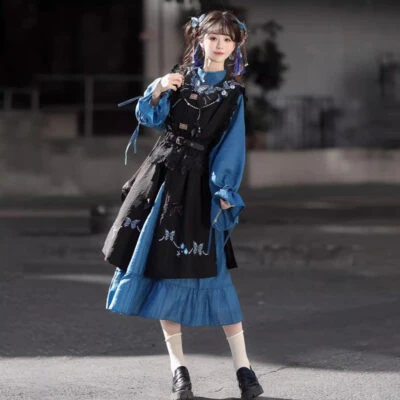
Now look at your own closet. Do you own a pair of leg warmers? Compression sleeves for running? Fuzzy socks that stop at the knee? Those are direct descendants of the Xi Ku. Today, young women call them “stack socks” or “leg mufflers” and wear them over jeans or tights for a cute, layered look. Fitness lovers pull on neoprene calf sleeves to keep muscles warm during winter jogs. Even high-fashion brands sell knitted leg warmers for hundreds of dollars. The shape has changed, and the materials are now elastic synthetics or merino wool. But the principle is exactly the same as Li Zhen’s 16th-century design: wrap the calf, free the foot, and stay warm without restricting movement.
Online game designers have also noticed. Many Wuxia and fantasy games feature characters in half-socks or leg sleeves, almost always on female avatars. Players call them “spicy girl socks” because they look good and give a practical adventurer vibe. But the real genius is that game artists are borrowing from real history. A female blacksmith in a virtual world, just like Li Zhen in a Ming Dynasty workshop, needs to protect her shins from flying sparks. The Xi Ku solves that problem so perfectly that even a pixelated version makes sense.
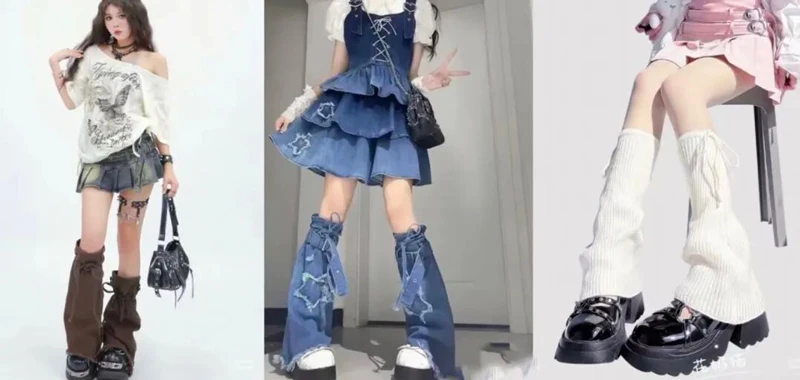
So did the ancients outsmart us? Not exactly. They simply faced the same problems we do: cold legs, dirty pants, and the need to move freely. Their solution was so elegant that it never really disappeared. It just changed names and materials. The next time you pull on a pair of leg warmers before a morning run, remember Li Zhen tying her cloth tapes at dawn, ready to hammer ink for twelve hours. That small piece of fabric is not a trend. It is a thousand-year-old conversation between working women. And Yang Zi’s character wore it with the same quiet pride that a modern nurse feels when she puts on her compression socks after a double shift. Would you wear a pair of Xi Ku today? You probably already do.