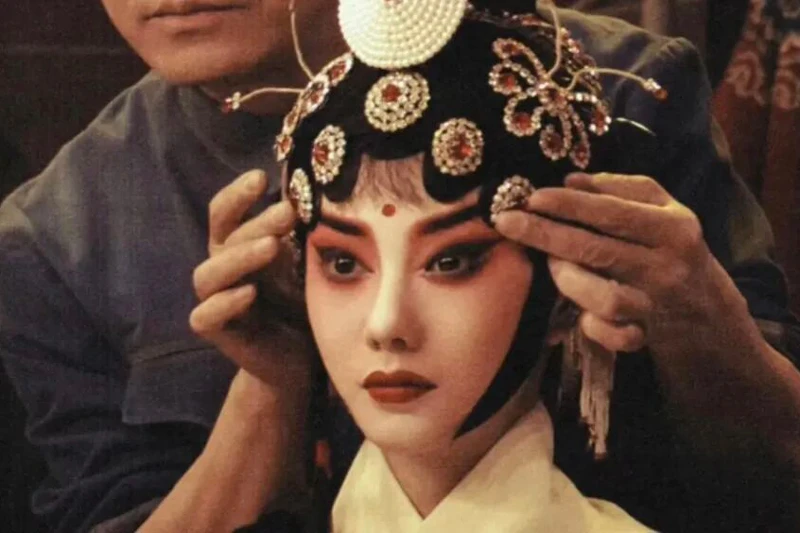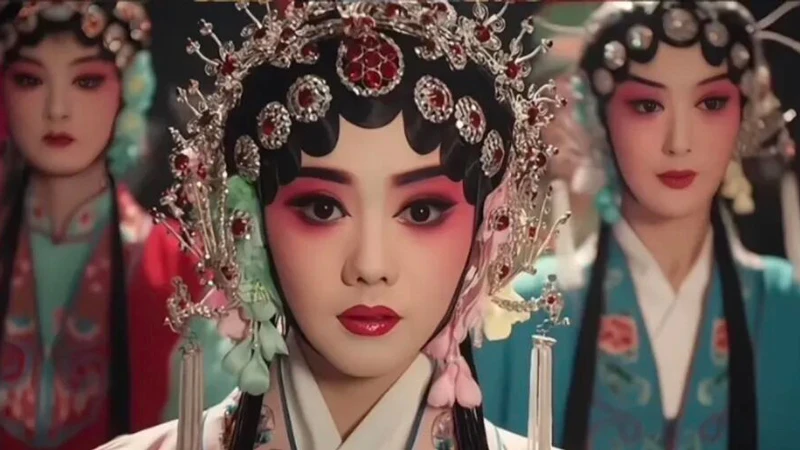
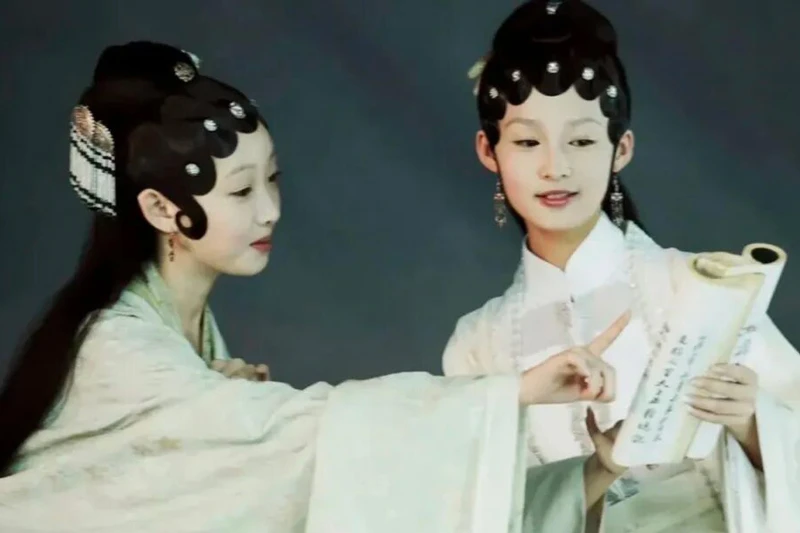
When Zhu Jue (主角) dropped its first teaser, viewers couldn’t stop staring at Liu Haocun’s (刘浩存) forehead. The actress, playing a young opera prodigy named Yi Qin’e (忆秦娥), wears a striking set of curved black hairpieces arranged like neat coins along her hairline. Some called it bizarrely beautiful; others wondered why so many period dramas borrow this look. Is it real ancient fashion? Or pure stage invention?
The answer lies in over a thousand years of Chinese women’s beauty rituals, Buddhist statues, and opera masters who turned a simple forehead patch into a lasting visual code. This is not the Qing dynasty’s “queue” hairstyle. It’s a coin-shaped hairpiece — nicknamed “copper coin head”— that traveled from dusty mural figures to glittering theater stages, and finally onto your screen. Let’s trace its curious journey.
Ancient Echoes
The earliest hint of this coin-like ornament appears in the Wei and Jin dynasties (魏晋时期), when a trend called E Huang (额黄, yellow forehead) swept through women’s chambers. Buddhist art was everywhere. Carved images of enlightened beings glowed with golden foreheads, and mortal women copied that divine shimmer using yellow powder or even thin gold leaf. A painting from 550 AD, Collating Books (校书图), shows a servant girl with a neat yellow patch right between her brows — the oldest visual ancestor of today’s opera ornament. Back then, it wasn’t a thick hairpiece; it was just a dab of color. But the obsession with framing the forehead had begun.
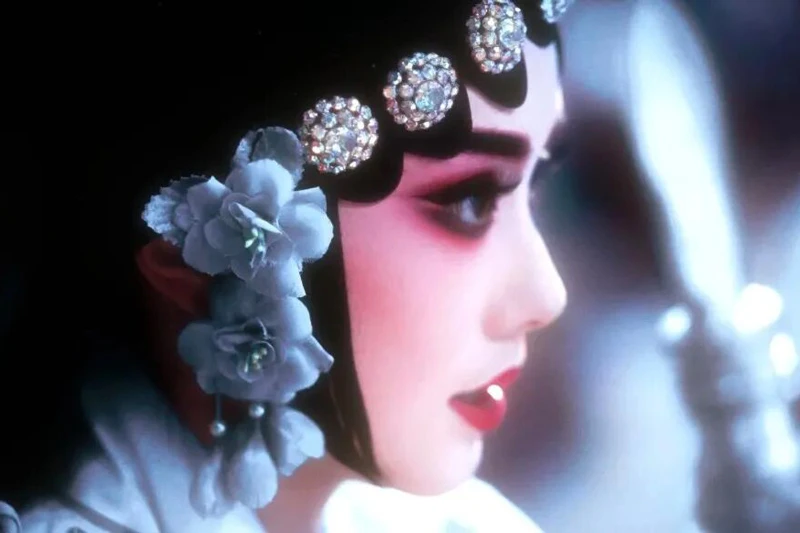
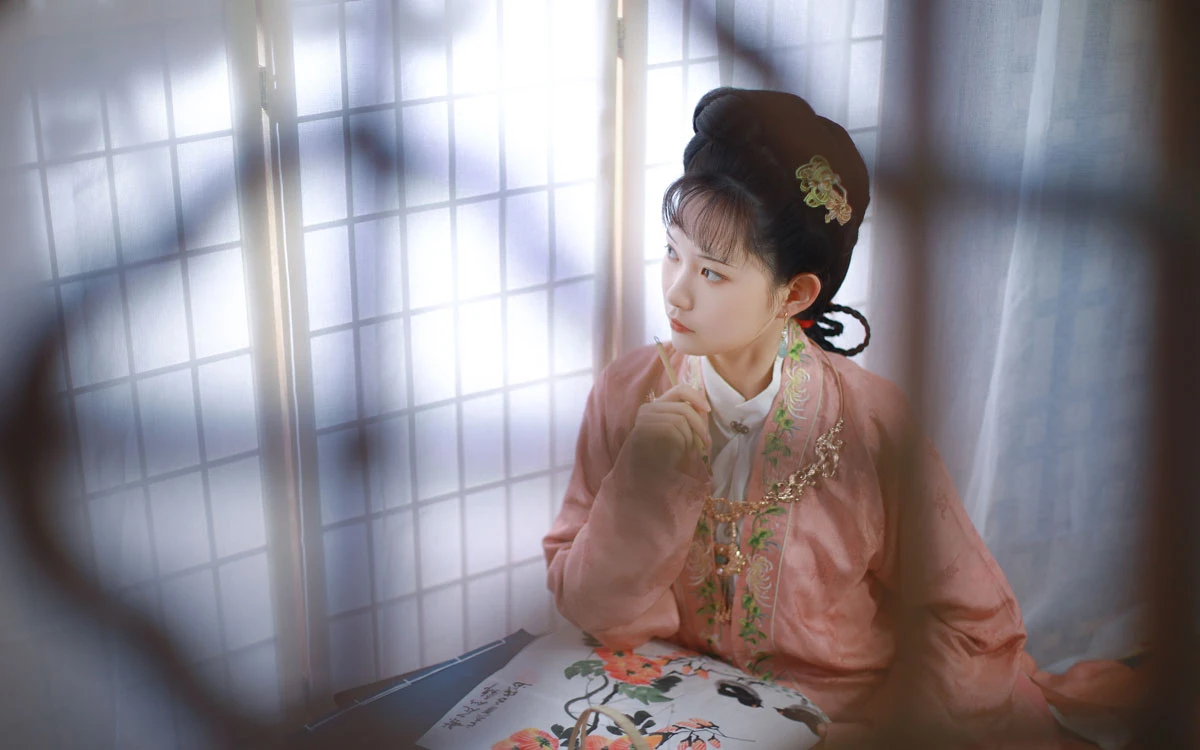
By the Song dynasty (宋代), ladies upgraded the look. They called it Yun Jian Qiao E (云尖巧额, cloud-tip delicate forehead). Instead of powder, they used real hair. Women would comb their baby hairs upward and twist them into soft, rounded shapes that sat just above the eyebrows — like tiny clouds resting on the brow. Meng Yuanlao (孟元老), in his Dreams of Splendor of the Eastern Capital (东京梦华录), describes street scenes where every well-dressed lady wore this “cloud bun” with flower pins. Scholars today believe this song-era cloud bun directly inspired the opera “copper coin” shape: round, symmetrical, and deliberately placed to soften the face.
But here’s the twist. Ancient women never glued stiff hairpieces to their skin. Their Yun Jian was natural hair, softly pinned. The hard, shiny opera version came later, when men started playing female roles on stage. And that’s where the real magic — and the real departure from history — happened.
Operatic Codification
Fast-forward to the Ming and Qing dynasties. Kunqu (昆曲) opera was peaking. Male actors played dan (旦, female) roles, but their square jaws and heavy brows broke the illusion. So they borrowed the ancient Yun Jian idea and made it extreme. They carved hard, oval hairpieces from sticky materials and pasted them onto their foreheads. From a distance — under flickering oil lamps, with the audience sitting far away — those shiny black curves transformed a man’s face into a woman’s gentle oval. The first true “copper coin head” was born. It was not daily wear. It was stage armor for femininity.
Later, Peking Opera (京剧) refined the tool. Instead of hard plaques, artists soaked human hair in elm bark water, a natural gel, to create soft, flexible side pieces called Shui Bin (水鬓, water temples). These clung naturally to the cheekbones and could be adjusted for each actor’s face. The master Mei Lanfang (梅兰芳), in his memoir Wutai Shenghuo Sishinian (舞台生活四十年), standardized the look: seven small curves on top, two long pieces on the sides — the “seven bends and two big willows” rule. He would shift them slightly for a shy maiden versus a proud noblewoman. That’s when the copper coin head became an art, not just a trick.
Theater scholar Zhang Geng (张庚) once said that opera’s job is to extract beauty from real life, strip away the messy details, and freeze the essence into repeatable movements. The copper coin head is that idea made visible. It’s not a real hairstyle. It never was. It’s a sign — a visual shorthand for “this person is gentle, disciplined, and slightly otherworldly.” And that sign proved too powerful to stay inside theaters.
Visual Legacy
The moment opera aesthetics hit mainstream TV, the copper coin head exploded. The most famous example is director Li Shaohong’s (李少红) 2010 adaptation of The Dream of the Red Chamber (红楼梦). Her costume designers went all in on opera references. Every young lady in the Grand View Garden — from the sickly beauty Lin Daiyu (林黛玉) to the warmhearted Xue Baochai (薛宝钗) — wore neat, coin-like forehead pieces and slicked sideburns straight out of Peking Opera. It looked stunning on screen. But it also sparked a fierce debate. Critics argued that opera is anti-realistic by nature. Why force its exaggerated codes onto a classic novel that prides itself on everyday detail? Defenders shot back: traditional Chinese aesthetics never demanded photographic replication. Opera itself is a filter, not a photograph.
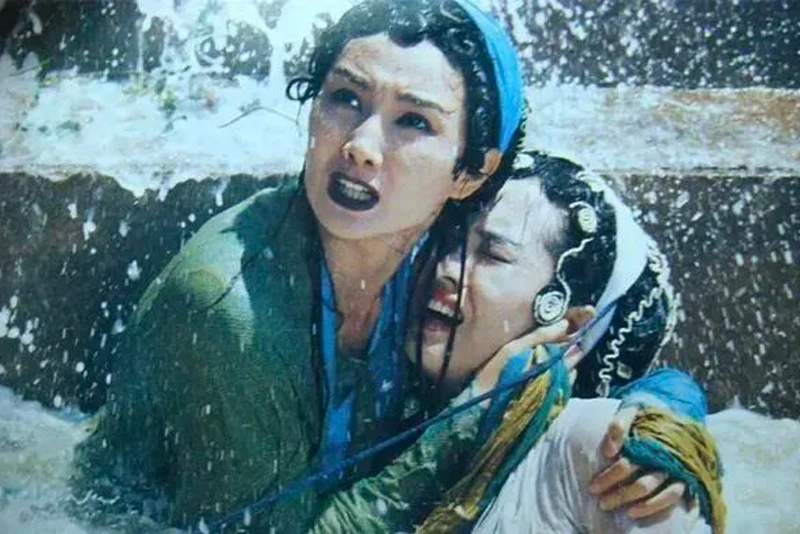
Beyond that one drama, the influence is everywhere. Think of Maggie Cheung’s seductive Green Snake in Green Snake (青蛇) — those sharp, curved side pieces framing her demonic smile. Or countless low-budget web dramas where actresses wear simplified black curves on their foreheads to signal “ancient beauty.” Even historical epics that claim accuracy quietly borrow opera’s forehead geometry because it photographs well. The copper coin head has become a ready-made symbol for “classical Chinese woman” — even if no real woman ever wore it.
So where does that leave us? Some purists reject the trend as lazy costuming. They say opera rules are sacred: the coin head belongs with specific robes and headdresses, and breaking that system is just ignorance. Others welcome the evolution. They argue that Chinese costume culture has always been a remix. The opera masters themselves borrowed from ancient murals, folk customs, and Buddhist statues. Letting the copper coin head wander into movies and TV is just the next verse of the same song. What do you think? Would you wear this look? And more importantly — should Yi Qin’e’s glossy, stage-born forehead patch define how we imagine all ancient women on screen?