
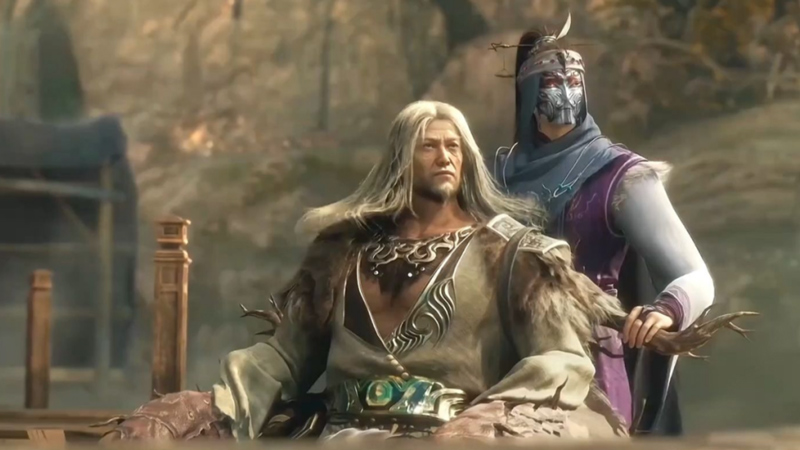
In the sprawling universe of Chinese fantasy fiction, power levels are often clearly defined, yet some battles defy logic. Within the pages of the novel Tale of Herding God (牧神记), readers encounter a perplexing scenario: two warriors at the exact same cultivation stage, the Shen Qiao (神桥) peak, yet one dismantles the other with effortless ease. Why can Su Muzhe, the village chief, toy with Old Tathagata as if he were a mere novice, despite them sharing the same realm? The answer unravels the very fabric of what it means to be strong in this world, revealing a profound truth about cultivation, philosophy, and the indomitable human will.
The Buddha Who Built His Own Prison
Old Tathagata is not merely a powerful monk; he is the ancestral master of the Great Thunderclap Temple, the pinnacle of the Buddhist faith in this realm. His life's work was the pursuit of perfection within a defined system. He mastered the supreme Scripture of Tathagata's Great Perfection, achieving the legendary Three Buddha Bodies representing Past, Present, and Future. This trinity allows him to theoretically manipulate power across different dimensions of time, a feat most cultivators spend eons dreaming of. In his prime, his cultivation bordered on the absolute truth of the universe, making him a cornerstone of the celestial order.
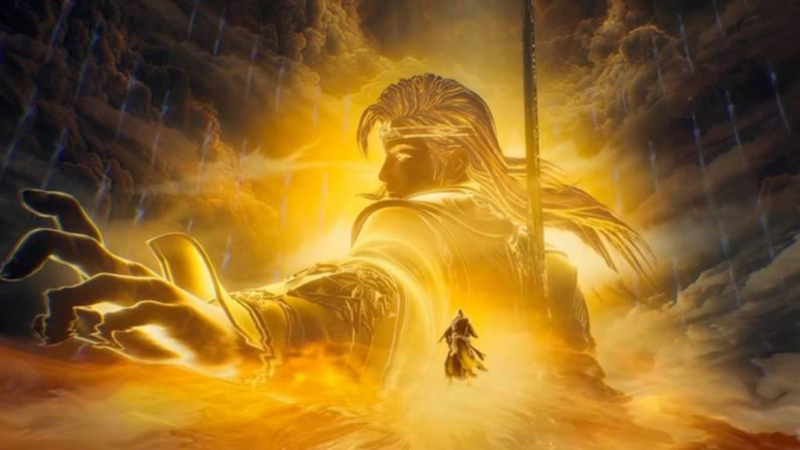
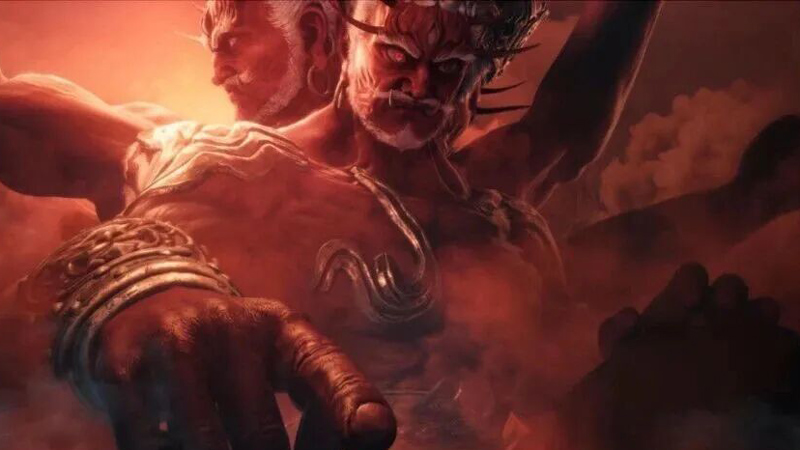
When he unleashes his full power, the heavens themselves seem to bow. He can manifest the vision of the Twenty Heavens, supported by the chanting of one hundred arhats. His techniques, like the Eight Thunderclap Forms, are not just attacks but instruments of cosmic law, capable of pacifying conflict or enforcing divine rules. His ultimate move, the Buddha's Palm, operates on the level of causality itself; to be struck by it is to have one's end written into the fabric of fate. As the de facto leader of the Buddhist faction, he was a political and spiritual heavyweight who could stand as an equal against the Celestial Court and demonic sects alike.
However, this immense power came with an invisible chain. Old Tathagata's entire being was dedicated to preserving the Buddhist orthodoxy. His techniques, while magnificent, were designed for suppression and enlightenment, not absolute destruction. He was a guardian of a pre-existing order, a defender of a cosmic castle. In his later years, with his vitality waning, this defensive nature became a critical weakness. He could hold a fortress, but he had forgotten how to burn it down. His power lacked the ultimate sharpness needed for a kill, making him ill-suited for a duel against a force that sought only to obliterate.
The Man Who Turned Himself Into a Sword
Su Muzhe (苏幕遮), the limbless village chief of the Cripples' Village, is the living antithesis of everything Old Tathagata represents. He is no mere hermit but the previous Human Sovereign, a title earned by being the sole protector of humanity against the gods. Known as the Sword God, his legend is written in the scars he left on the celestial realm. He once single-handedly fought the forces of the Upper Firmament, his sword suppressing the heavens and slaying gods until none dared face him. Even after having his limbs severed and his divine sword bone ripped out by true deities, his disabled body, hidden away in a humble village, still radiates a silent, deadly threat.
His power transcends physical form. Having lost his hands, his entire being—his muscles, meridians, and even his soul—was reforged into a living sword array. Without feet, he can still tread the heavens. Even his hair strands are imperceptible sword auras, capable of piercing a god's brow without warning. In the ruined village where a sacred rule forbids going out at night, Su Muzhe walks freely in the darkness, the man-eating monsters instinctively fleeing from his presence. He once walked into that same darkness seeking death, only to find himself too powerful to die, a tragic testament to his overwhelming might.
His swordsmanship isn't just an art; it's a rebellion. The Nine Forms of the Sword Diagram are not mere techniques but a manifesto. The Eighth Form can suppress the gods of the Upper Firmament, while the legendary Ninth Form, a fusion of his lifelong defiance, can sever a foe from thousands of miles away. This is a god-slaying sword, honed specifically to cut through divine law and cosmic rules. He is a "rule-breaker," a mortal who clawed his way to godlike power by shattering every boundary imposed upon him. His sword is not just a weapon; it is his spine, his will, and his unwavering path to freedom.
The Difference Between Worshipping Rules and Breaking Them
The battle between Su Muzhe and Old Tathagata is a classic confrontation between a guardian and a revolutionary. On the surface, they are both at the Shen Qiao peak. But cultivation realms are merely signposts on a road; they do not define the traveler. Old Tathagata's power is borrowed from the system he serves. He is strong because the Buddhist path is strong, but he has become one with its limitations. His dharma is a beautifully constructed prison, and he is both the warden and the inmate. When faced with an attack that seeks not to be pacified but to kill, his rules become his coffin.
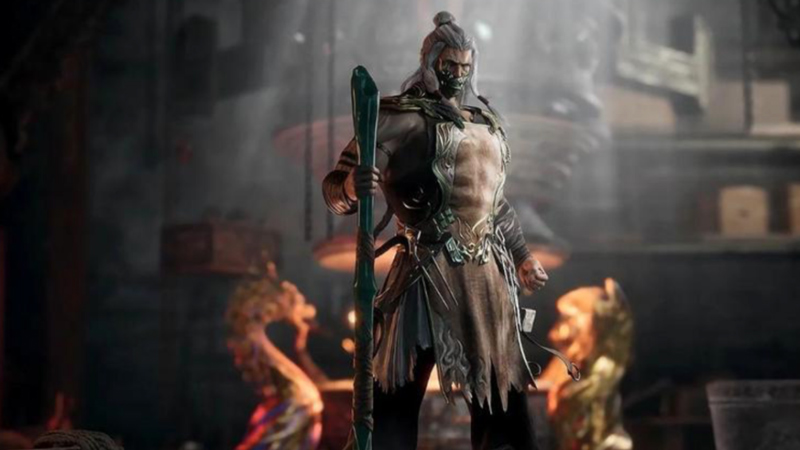
Su Muzhe, in contrast, owns his power because he forged it himself from nothing. He did not follow a path; he carved one with his own blade. His Dao is not about preserving the world as it is, but about the eternal, forward momentum of the sword. It is the Dao of the Human Sovereign, which exists to break the chains of tyranny, be it from gods, demons, or fate itself. This fundamental difference in philosophy manifests in combat as an unbreachable gap. Old Tathagata's Twenty Heavens are just more scenery for Su Muzhe's sword to cut through. His causal-level palms are meaningless against a man whose very existence is a cause that defies the gods' effect.
Ultimately, their clash teaches a vital lesson about strength. One can spend a lifetime accumulating power within a system, becoming its most perfect product, yet remain a prisoner. The other spends a lifetime breaking systems, and in doing so, becomes truly free. Su Muzhe's effortless victory is not a matter of higher cultivation, but of a higher purpose. He proves that a sharpened will, aimed at shattering limitations, will always cut deeper than a gilded fist trying to enforce them. It is the difference between being a master of a game and being the one who questions why the game exists at all.
