When seven core creators sat down together for an interview, it was Light Chaser Animation's idea.
Six directors helm this anthology film, pushing creative boundaries after their Tang dynasty epic's success.
Over the past decade, this studio has evolved from an independent workshop into a leading force in Chinese animation. Unlike many studios, Light Chaser embraces a collaborative approach. Different directors helm their projects, new talent regularly steps into the director's chair, and dedicated story development teams work within an established pipeline. It's filmmaking by committee, in the best sense.
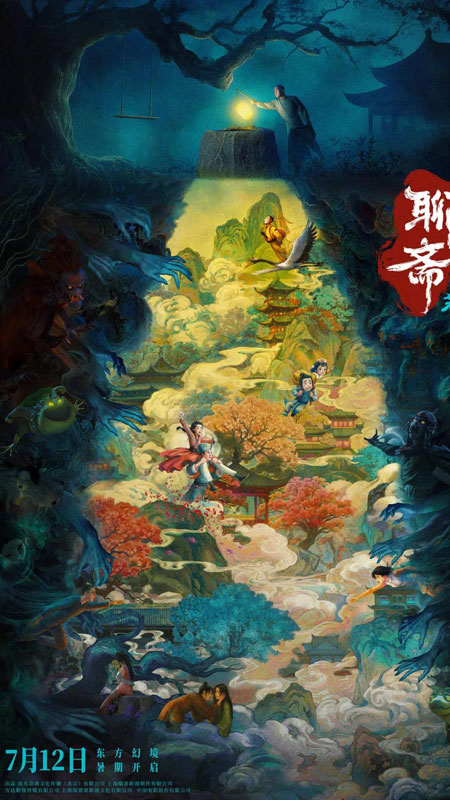
Following the massive success of Chang'an, the team faced a crucial decision for their next project. They chose a bold path. Their new film, Curious Tales of a Temple, breaks the mold as an anthology–directed by six different filmmakers.
Why not stick with the proven formulas of Chang'an? How could six distinct chapters feel like one cohesive film? How did they achieve stunning visual styles inspired by felt art and Song Dynasty paintings? Driven by these questions, I sat down with the seven creators (six screenwriters and the producer). Our conversation became a chance for them to reflect on their craft.
 Story Selection & Unity
 Story Selection & Unity
Curious Tales of a Temple is the second installment in Light Chaser's "New Culture" series, following Chang'an, crafted by the same core team.
Producer Song Yiyi explained the unanimous choice to adapt Pu Songling's classic tales. "Pu Songling used fantastical imagination to explore deep truths about social realities and human nature," she noted. Since the original Strange Tales from a Chinese Studio is itself a collection of 491 short stories, an anthology structure felt like the natural way to capture its eclectic spirit.
For the film's segments, they first selected universally recognized stories: Nie Xiaoqian, Painted Skin, and The Taoist Priest of Laoshan. Next, they prioritized tales embodying core emotions of truth, kindness, and beauty. They designed an emotional arc: the opening chapters (The Taoist Priest of Laoshan and Princess Lotus) are pure, charming, like bite-sized fables. Then comes a deliberate pairing: Nie Xiaoqian offers transcendent love amidst chaos, while Painted Skin reveals marital betrayal within seeming calm. The Daughter of Magistrate Lu unfolds most fully, burning with intense passion. Finally, The Story from the Well, featuring Pu Songling himself, serves as the linking finale, leaving a resonant, lingering note.
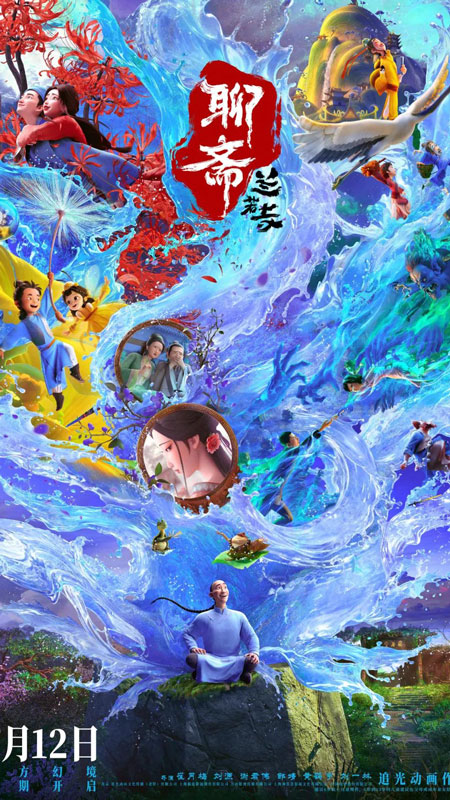
Though each story stands alone, together they form a complete cinematic journey. The structure builds emotionally, avoiding the feel of watching five separate shorts.
During production, the teams behind each segment stayed connected. They frequently gathered to review the evolving whole.
Shared elements appear across the six stories set in different eras: the Temple of Orchid Pavilion, a distinctive tree, a well. Each chapter boasts a unique visual style, meaning the temple and tree's appearance shifts slightly. Yet, the goal was seamless integration–ensuring audiences always feel these stories inhabit the same physical space, no matter the perspective.
Pu Songling's The Story from the Well serves as the film's connective thread. Each transition into and out of this segment required close collaboration between its director and the directors of the preceding and following chapters. After the five main stories conclude, Pu Songling reappears. He touches the ancient tree, observes the fish, and passes by elements like a swing, bees, and roof tiles reminiscent of Laoshan–essentially guiding the audience on a rapid visual recap of the Liao Zhai journey. Finally, his gaze settles on a newly sprouted bud on the tree. This symbolizes a fresh surge of life and implies that Liao Zhai, this treasure of Chinese culture, will continue to be passed down through time.
"While striving for overall harmony, we also wanted to maximize distinctiveness in each segment. This inevitably required bringing different creators together," explained Producer Song Yiyi.
The six Light Chaser directors "claimed" different chapters based on their individual strengths and interests. Some chapters were directed by a single director, while the most complex involved three directors working jointly. The producers' role was to match resources and balance investments based on the specific technical and narrative challenges of each segment, seeking the optimal overall solution.
Segment Styles & Techniques
 Segment Styles & Techniques
1. The Taoist Priest of Laoshan
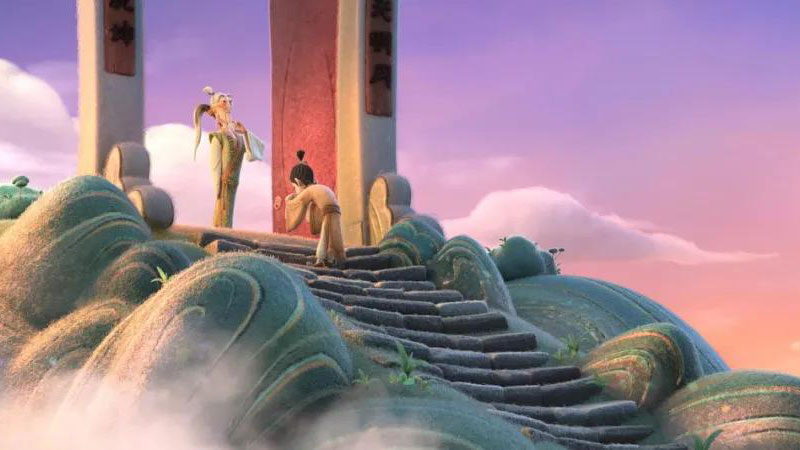
This short fable, familiar to some audiences due to a classic adaptation by Shanghai Animation Film Studio, serves as the opening chapter of Curious Tales of a Temple. Its job was to quickly immerse viewers in an imaginative, kaleidoscopic wonderland–it had to be fun. After extensive experimentation, directors Cui Yuemei and Liu Yuan developed a unique style: felt-textured animation for a fuzzy look, scene transitions mimicking stage machinery shifting sets, and a slightly exaggerated, very cartoonish and squishy performance style. Felt-textured animation had never been seen before on the Chinese big screen. When the protagonist performs his "wall-penetrating magic," audiences will notice a subtle CG 'threading' effect between the felt fibers, creating a novel viewing experience. Remarkably, despite being only about 15 minutes long, the hair/fiber rendering workload for this segment was on par with a feature-length film.
2. Princess Lotus
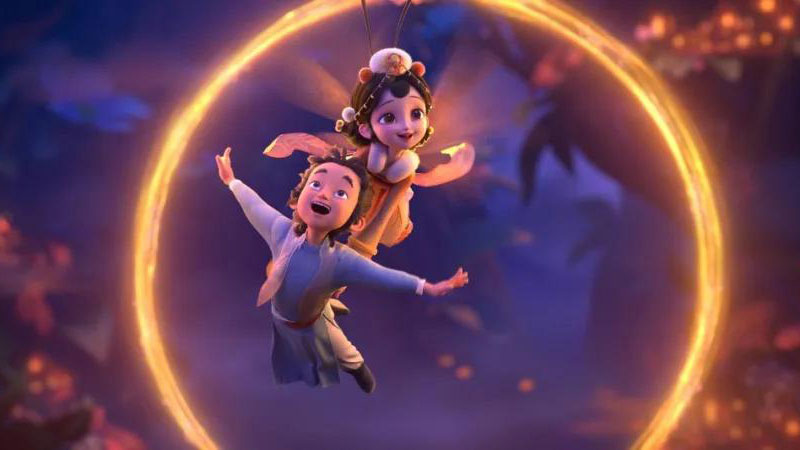
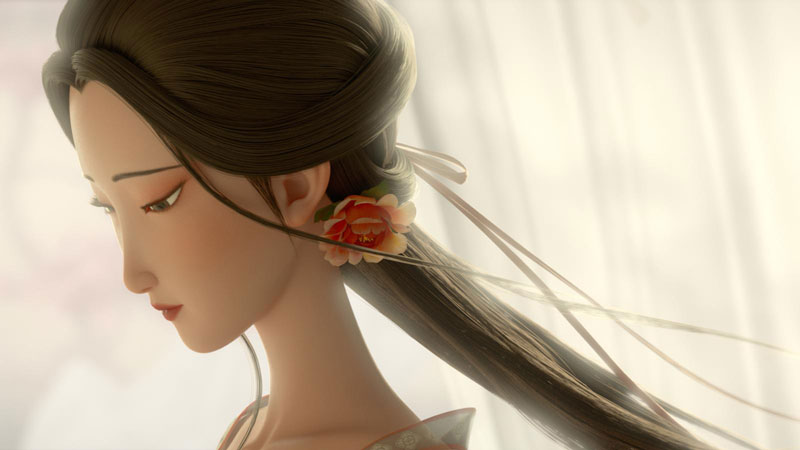
Director Xie Junwei (one of the directors behind Chang'an) approached this more dreamlike, childlike tale by drawing from his own experience as a father. Set in the Tang Dynasty like Chang'an, its scenery and art design embody distinct Tang aesthetics. "What struck me most when I first read this story was the connection between reality and dreams," Director Xie said. "We wanted this segment to feel lighthearted, so we adjusted the protagonists' ages to be around eight or nine years old, focusing on their pure friendship." Visually, Princess Lotus, royalty of the Bee Kingdom, features a fuzzy orb on her head, a round belly, and small wings, giving her a distinctly bee-like appearance. The film showcases the bustling, dazzling Bee Kingdom and the Huachao Festival (花朝节), scenes requiring massive VFX assets filled with elements like flowers, honey, and hexagons. The kingdom's defense against invaders reflects biologically-inspired defenses. The epic battle scene where the Queen leads her bee soldiers against the Great Black Demon is particularly grand and impactful, Xie explained, because it represents "Princess Lotus's awe of her mother and the figure she aspires to become."
Another link to Chang'an emerges in this segment: prominent Tang poetry. The lines "Who first saw the moon beside the river? When did the moon first shine upon man?" serve not only as a philosophical meditation on time and existence, but also as an exploration of the boundary between reality and dreams. Ultimately, when Princess Lotus's name is inscribed on the painting, reality and the dream world–two distinct realms–are connected through art, visually embodying the poem's meaning within the film.
3. Nie Xiaoqian
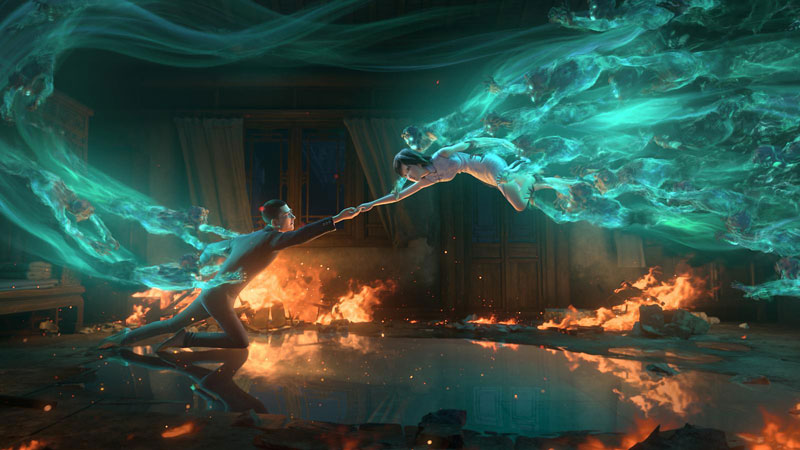
This is the most frequently adapted story from Pu Songling's hundreds of tales. In Light Chaser's early trailers and promotional materials, details about this segment were kept under wraps. It was later revealed that its setting was shifted to a turbulent, modern-era warzone.
Director Zou Jing (who also directed parts of Chang'an) helmed three segments for Curious Tales of a Temple and is known for his skill in portraying emotion. "In the original text, Xiaoqian isn't exactly 'good' when she first appears," Zou explained. "The descriptions of the Demon Matriarch ('Grandmother') are also quite specific; she's not purely evil. That era felt haunted by malevolent spirits and corrupted hearts. So, we wondered, could we set it in a chaotic, modern upheaval? Ning Caichen breaking the barrier between human and ghost, daring to defy taboos–that has a certain modern resonance."
The chapter's core essence is "Strange Love in Chaotic Times, Eastern Phantoms." Audiences will notice that from this segment onwards, the tone deepens significantly, becoming visually and thematically more mature and somber.
The creators designed Xiaoqien with short, modern hair and a green qipao. Initially, the qipao's green has a subtle, color-shifting quality, hinting at her dual nature as both human and ghost. Yan Chixia is an eccentric figure dressed in ancient styles. The Demon Matriarch, having died roughly during the Qing dynasty, retains the physical trait of bound feet (裹小脚). A technically demanding long take sequence involving Yan's magical leather pouch posed a significant challenge for the animators, though the final result justified the intense effort.
Overall, Nie Xiaoqian is beautiful yet melancholic. Even though Ning Caichen and Nie Xiaoqien overcome obstacles to be together, the backdrop remains one of distant warfare. It underscores the powerlessness of individuals against the currents of their time.
4. Painted Skin
This chapter delves deeper into the challenges couples face transitioning from romance into marriage, exploring emotional cooling, mistakes, and loss of control.
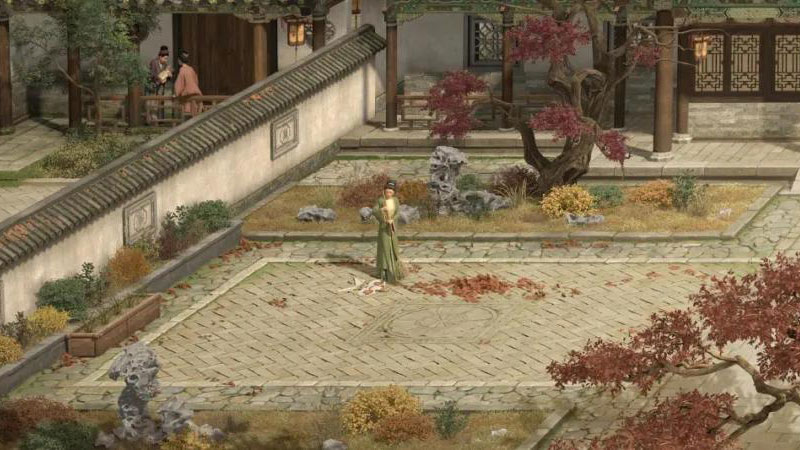
Visually, this segment is stunning. It draws inspiration from Song Dynasty painting techniques: meticulous gongbi (工笔) brushwork and scattered perspective (散点透视). The team flattened perspective using slanted model cuts and top-down camera angles, reducing the typical CGI slickness to pursue the decorative beauty of flat painting. Heavy use of symmetrical compositions, a palette echoing ancient paintings' yellowed tones and faded quality, along with desaturated colors and subdued highlights, further minimized CGI feel, creating a deliberately flat and static aesthetic. This visual style mirrors the couple's calm, monotonous, and ultimately stifling life.
The rendering of trees and figures also incorporated characteristics of classical paintings. To enhance the ancient atmosphere, movement capture for the Painted Skin Demon was performed by an opera performer, lending the creature's movements a distinctively traditional, theatrical grace.
"Technically, the team backed us massively," directors Huang Heyu and Liu Yilin explained. "They ran tons of tests upfront, building a whole new pipeline just to nail that flat, painterly feel and artistic atmosphere. Later, for the study scenes, we added lots of fluttering gauze curtains and ethereal elements–letting the audience sense the crisis brewing beneath the calm surface."
Viewed through a contemporary lens, Painted Skin tells a story of marital infidelity, but the creators left room for interpretation. "What happens when the spark fades in a marriage? This remains a timeless question. The original tale cautioned men, reflecting a time when women were often seen as possessions. Here, we focused more on the wife's perspective as the marriage unravels. She grapples with confusion, resentment, sacrifice, and fear. After this turbulent journey, what choice will she make? We wanted to leave that with the audience."
5. The Daughter of Magistrate Lu
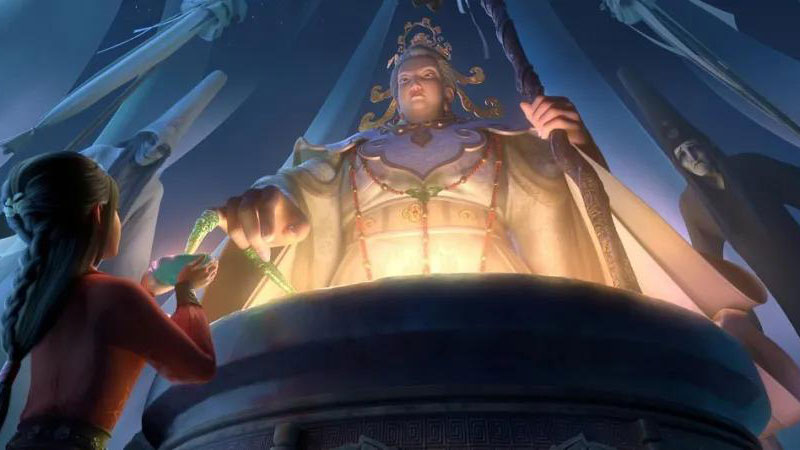
Positioned as the climactic final story in this "storytelling contest," the creators envisioned this chapter as passionate, vibrant, and unrestrained. The first half plays like a youthful romantic comedy–bursting with bright colors and tender emotions, showcasing pure joy. The second half confronts life, death, and the cosmos, shifting to a somber palette and deep shadows, emphasizing profound emotional weight. "What does love mean to you?" the directors posed. "It carries deep pain, yet it might move nature itself, transcend death, and affirm our very humanity. That's the grandeur we hoped audiences would feel."
The Daughter of Magistrate Lu visually realizes traditional Chinese concepts of the afterlife: the Yellow Springs (黄泉), Bridge of Helplessness (奈何桥), Gate of Rebirth (往生门), Lady Meng who serves the oblivion soup (孟婆), and , the Black and White Impermanence, soul guides (黑白无常). These needed concrete visual forms while retaining an element of suggestion and restraint. "There are two scenes set in the underworld," the directors noted. "The first submits to fate; the second rebels against it. We needed to convey the earth-shaking power of primordial cosmic forces (天地玄黄). The greater this power, the more fragile and precious the opposing emotional force becomes. Both scenes are set in Huangquan, but their atmospheres are worlds apart."
"Modern life moves fast, yet a promise made between two people can still endure across time. This kind of devotion is rare, but it exists. That's what we aimed to convey through this story," directors Zou Jing and Liu Yuan stated.
Legacy & The Song of Fate
 Legacy & The Song of Fate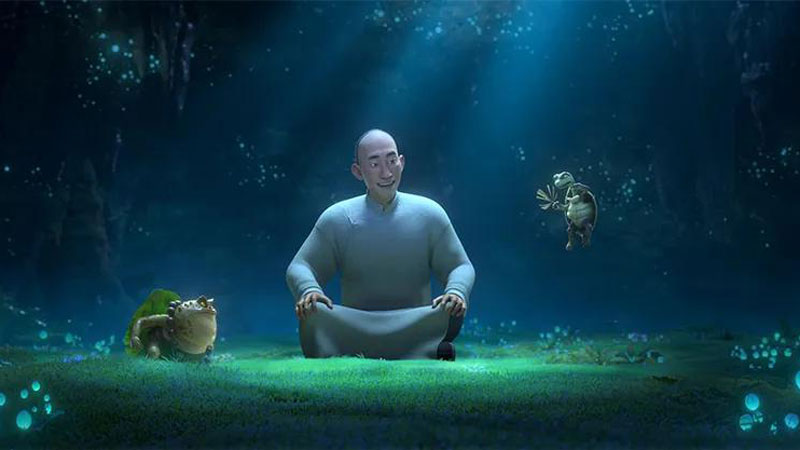
The film's coda features Pu Songling, portrayed as an optimistic, hearty scholar who laughs freely. His lifelong passion for collecting stories is what gifted us Strange Tales from a Chinese Studio. As his figure recedes into the distance, the Temple of Orchid Pavilion, its ancient tree, and its well remain–enduring through centuries, poised to witness the emotions and memories of generations yet to come.
The choice to end the film with Secondhand Rose's popular song Fate surprised many viewers. Producer Song Yiyi revealed it was a choice the entire creative team strongly endorsed:
"The song speaks of fate flowing through generations, perfectly mirroring the film's core theme. We wanted a joyful track over the end credits. We didn't want people to leave feeling Liao Zhai is just heavy or scary. We want them to see the genuine humanity beneath the supernatural tales. Strange Tales from a Chinese Studio was incredibly avant-garde for its time. That inspired us to innovate in how we expressed its spirit. We're also eager to hear the audience's response–perhaps there's even a Liao Zhai sequel in our future."